Last updated October 30, 2026
Insulation Cost Breakdown: The Van Nuys Homeowner’s Reference for 2026
A $1,200 attic insulation quote and a $4,800 quote can both be legitimate for the same Van Nuys home. The difference isn’t padding or markup. It’s scope: whether the bid includes air sealing, permit fees, haul-away of old material, and HERS verification. Most insulation cost articles give national averages that mean nothing in Van Nuys, where labor costs, permit fees, and the predominance of 1,400 to 2,200 square foot single-story stucco homes create a very specific pricing environment. This guide gives you actual cost ranges by zone, material, and scope, so you can evaluate a real bid instead of guessing whether you’re being overcharged.
Quick Answer
In Van Nuys, attic insulation costs between $1.50 and $7.00 per square foot installed in 2026, depending on material and method. Blown-in fiberglass or cellulose runs $1.50 to $3.00 per square foot, batt insulation runs $2.00 to $4.50, and spray foam runs $3.50 to $7.00. A typical 1,600 square foot Van Nuys home with a blown-in attic upgrade falls between $1,800 and $3,200 before any rebates or incentives are applied.
Table of Contents
- The Van Nuys Cost Reality: Why National Averages Fail Here
- Installed Cost by Material: What You’ll Actually Pay in 2026
- Cost by Zone: Where the Money Goes in a Van Nuys Home
- The Line Items That Separate a Complete Bid From a Stripped-Down One
- How California Rebate Programs Reduce Your Out-of-Pocket Cost
- Why Two-Story Homes and Tile Roofs Cost More
- The ROI Math: Payback Period for a Typical Van Nuys Ranch
- Common Mistakes to Avoid
- When to Call a Professional
- Frequently Asked Questions
The Van Nuys Cost Reality: Why National Averages Fail Here
National insulation cost guides quote $1.00 to $2.50 per square foot for blown-in attic insulation. Those numbers assume a low-cost labor market, a straightforward attic, and no California-specific requirements. Van Nuys sits in a different reality. Los Angeles Department of Building and Safety permit fees apply to attic insulation work here, and those fees add between $200 and $600 to a typical project—details you’ll want to confirm against our Insulation Permits, Codes & Inspections in CA: What You Need to Know. The San Fernando Valley’s heat also changes the calculation: attics in Van Nuys regularly hit 140 degrees in August, which means insulation crews work shorter shifts, and the recommended R-value for our climate zone (CZ3B, for the building science nerds) drives material volume higher than what a national guide would assume. A 1,600 square foot Van Nuys ranch with a standard attic will typically need 16 to 22 bags of blown-in fiberglass to hit R-38, and that’s before we talk about access challenges, recessed can lights, or a low-slope roof that leaves a 22-inch crawl space at the eaves.
We see bids from other contractors all the time, and the range is wide because the scope is wide. One bid might cover blowing 14 inches of fiberglass over existing material. Another might include removing 40 years of compressed, rodent-damaged insulation, air sealing every top plate and penetration, installing baffles at the eaves, and verifying final depth with a HERS rater. Both are real prices for real work. They are not the same project.
Installed Cost by Material: What You’ll Actually Pay in 2026
Here’s the honest price table for Van Nuys, based on what we’re seeing in 2026. These ranges assume a standard attic of 1,200 to 2,000 square feet, single-story, with reasonable access. Tile roofs, cathedral ceilings, and two-story homes will push toward the high end or beyond.
- Blown-in fiberglass (Owens Corning, Johns Manville, Knauf): $1.50 to $2.75 per square foot installed. This is the workhorse option for Van Nuys attics. It’s affordable, installs fast, and hits R-38 to R-49 in a single afternoon.
- Blown-in cellulose (GreenFiber): $1.75 to $3.00 per square foot installed. Recycled content, better air-blocking properties than fiberglass, and slightly higher material cost. We carry GreenFiber because some homeowners want the sustainability story as much as the thermal performance.
- Fiberglass batts (CertainTeed, Knauf): $2.00 to $4.50 per square foot installed. Batts make sense in open attics with easy access and no odd joist spacing. They’re labor-heavier than blown-in, which is why they cost more, but they’re the right call when you plan to use the attic for storage or need to work around existing framing.
- Mineral wool batts (Rockwool): $3.00 to $5.50 per square foot installed. You pay more for fire resistance and moisture resistance. In Van Nuys, where the wildfire season now extends into fall, some homeowners choose Rockwool for the perimeter walls around an attached garage or in utility spaces.
- Open-cell spray foam (Icynene, Demilec): $3.50 to $5.50 per square foot installed at the roofline. Open-cell foam creates an air seal that fiberglass can’t match. We use it when the attic is part of the conditioned envelope or when a homeowner wants to convert attic space into a usable room.
- Closed-cell spray foam (Icynene, Demilec): $5.00 to $7.00 per square foot. Higher R-value per inch, structural rigidity, and a vapor barrier in a single application. This is the top of the price ladder, and in Van Nuys it’s usually reserved for specific applications: a room over a garage, a low-slope roof with no venting path, or a homeowner who wants the attic genuinely sealed.
One note on brands. We carry eight product lines across fiberglass, mineral wool, foam, and cellulose because no single material is right for every Van Nuys home. A 1958 stucco ranch with a vented attic and existing fiberglass is a different project than a 2004 two-story with a sealed attic and a heat pump. We’ll tell you which material actually makes sense here, and sometimes that means telling you the cheaper option is the correct one.
Cost by Zone: Where the Money Goes in a Van Nuys Home
Most homeowners think of insulation as one line item. The reality is that a complete insulation job in Van Nuys breaks down by zone, and each zone has its own pricing logic.
Attic Floor (The Big One)
The attic is where most Van Nuys homes lose the most conditioned air. Attic insulation work accounts for 60 to 75 percent of a full-home insulation budget. For a 1,600 square foot attic, blown-in fiberglass to R-38 will run $2,400 to $4,400, including basic air sealing around the top plates and penetrations. If you have existing insulation that needs removal, add $1.50 to $2.50 per square foot for extraction and disposal.
Exterior Walls
Wall insulation in an existing Van Nuys home is expensive and invasive. Most 1950s through 1970s stucco homes in this area have empty wall cavities or a thin R-7 batt that’s long since sagged. Retrofit options include drill-and-fill blown-in cellulose or fiberglass, which runs $2.50 to $4.00 per square foot of wall area, or spray foam injected through similar access holes at $4.50 to $6.50 per square foot. The catch is that exterior stucco repairs and repainting often add $2,000 to $5,000 to the project. Wall insulation makes sense when you’re already replastering or replacing siding, not as a standalone retrofit for most Van Nuys homeowners.
Crawl Space and Floor
Many older Van Nuys homes have raised foundations with vented crawl spaces. Floor insulation here is a smaller line item, typically $1.50 to $3.00 per square foot for fiberglass batts installed between floor joists. It’s not the highest ROI zone in our climate, but it matters if you have uninsulated ducts running through the crawl space or a floor that stays cold in winter.
Ductwork (Often Overlooked)
Insulating and sealing ducts in the attic is inseparable from attic insulation. A complete attic insulation project in Van Nuys should include sealing duct joints and wrapping any uninsulated runs. Duct work adds $800 to $2,500 to a typical project, but skipping it means your newly insulated attic still leaks conditioned air through the ducts. For more on how we approach attic work specifically, see our Attic Insulation in Van Nuys guide.
The Line Items That Separate a Complete Bid From a Stripped-Down One
Here’s what actually moves the price on a Van Nuys insulation bid. When you’re comparing quotes, ask whether each of these items is included. A bid that omits them is not cheaper. It is incomplete.
- Old material removal: If your attic has 30 or 40 year old fiberglass that’s compressed, damp, or rodent-infested, it needs to come out before new material goes in. Removal and disposal runs $1.50 to $2.50 per square foot in Van Nuys. This is the single most common surprise line item in the Valley.
- Air sealing labor: Blowing insulation over an unsealed attic is like putting on a jacket with holes in the back. Proper air sealing means crawling the entire attic and foaming or caulking top plates, plumbing penetrations, electrical boxes, and the gap around the chimney or flue. Air sealing adds $500 to $1,200 in labor on a typical Van Nuys attic. It’s the highest-ROI line item on the bid.
- Attic hatch replacement or insulation: A standard pull-down attic ladder or hatch leaks more air than a half-open window. Insulating and weatherstripping the hatch costs $100 to $300. Replacing it with an insulated unit runs $400 to $900. Either way, it’s a line item you should see on any serious quote.
- Eave baffles: If you have soffit vents at the eaves, insulation needs to stay off them to keep the attic venting properly. Baffles cost $2 to $4 each, and a typical Van Nuys attic needs 20 to 40 of them. Small money, big impact on moisture control.
- Permit fees: Los Angeles County requires a permit for insulation work in most residential applications. Permit fees for a typical attic insulation project in Van Nuys run $200 to $600, and yes, the homeowner pays the fee whether the contractor includes it as a line item or buries it in the total. A contractor who says “we don’t pull permits for this” is not saving you money. They’re exposing you to liability and a red tag.
- HERS verification: If you’re claiming a rebate or participating in an energy efficiency program, you’ll need a HERS rater to verify the insulation was installed correctly and meets the required R-value. This adds $300 to $600 to the project, but it’s often required to access rebate money, so it pays for itself.
How California Rebate Programs Reduce Your Out-of-Pocket Cost
California has real money on the table for insulation work in 2026, and Van Nuys homeowners are eligible for most of it. The programs change quarterly, but here’s how the main ones work as of this year.
Southern California Edison Home Efficiency Rebates
SCE offers rebates for attic insulation upgrades that bring the attic to R-38 or higher. The typical rebate for a Van Nuys single-family home runs $300 to $800, depending on the square footage and whether air sealing is included. The process is straightforward: a contractor submits the project, an SCE-approved HERS rater verifies the final R-value, and the rebate check arrives in 8 to 12 weeks. For homes with electric heating or cooling, the rebate tiers are generally higher.
TECH Clean California
TECH Clean California has historically focused on heat pump HVAC and water heating, but the 2026 program cycle expanded incentives for envelope improvements when they’re paired with a qualifying heat pump installation. If you’re replacing an old gas furnace with a heat pump and adding attic insulation at the same time, the combined incentive package can knock $1,500 to $3,000 off the total project. This is the biggest single incentive opportunity for Van Nuys homeowners who are planning both upgrades together.
Federal Tax Credit (25C)
The federal Energy Efficient Home Improvement Credit, extended through 2026, covers 30 percent of the cost of qualifying insulation and air sealing materials, up to $1,200 per year. Labor is not included for insulation, but the credit applies to the material cost. For a typical Van Nuys attic insulation job, that’s $300 to $700 back at tax time.
- Confirm your project qualifies for a rebate or credit before the insulation is installed, not after. Most programs require pre-approval or contractor submission.
- Use a HERS rater through the program’s approved list. A rater your contractor hires directly is the standard path.
- Keep every receipt and the HERS verification report. The tax credit specifically requires documentation of the insulation material and R-value.
- Apply for the SCE rebate and the federal credit separately. They stack. Many Van Nuys homeowners assume it’s either/or and leave $500 on the table.
Why Two-Story Homes and Tile Roofs Cost More
The online “average cost” charts assume a single-story home with a composition shingle roof and a walkable attic. A significant share of Van Nuys housing stock doesn’t fit that profile, and the pricing difference is real.
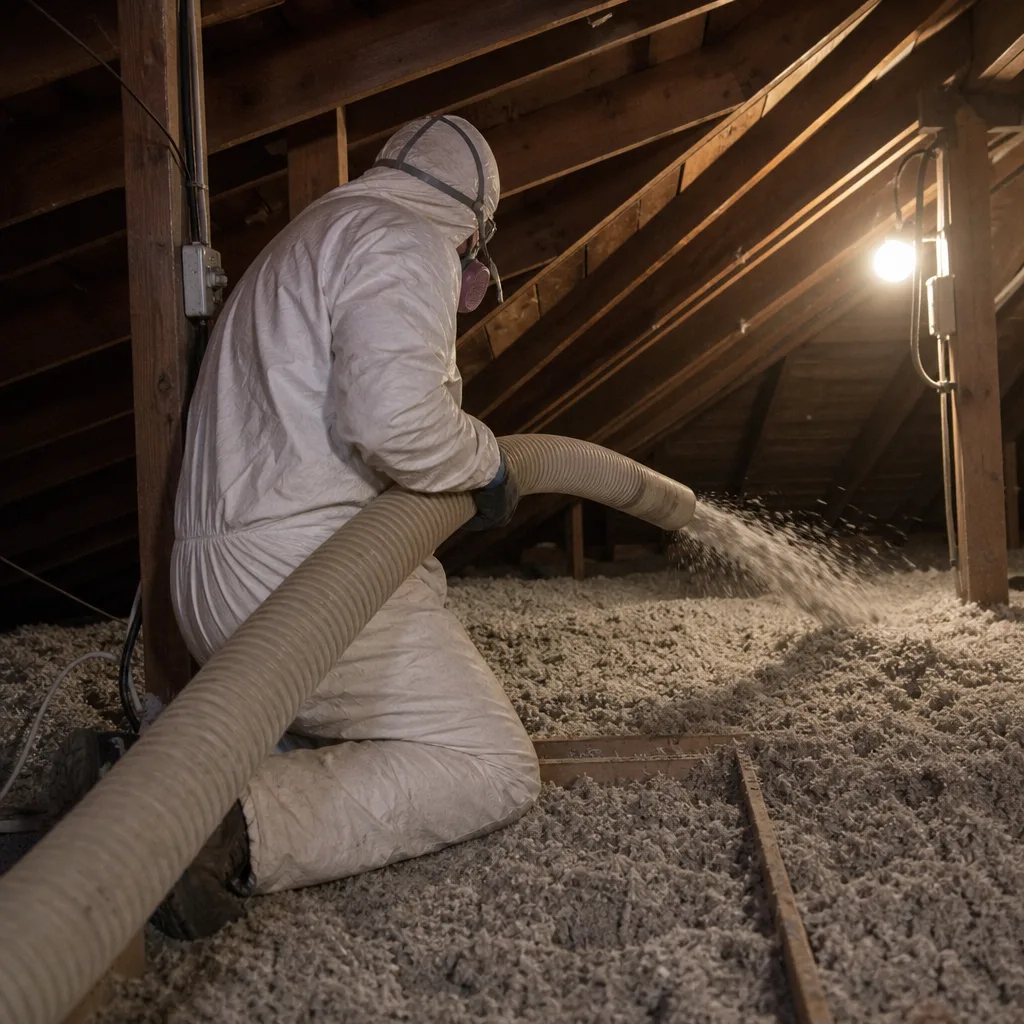
Two-story homes add 20 to 40 percent to attic insulation labor. The crew is working higher, moving material up a ladder or through an interior hatch, and handling longer hose runs for a Blown In Insulation in Van Nuys installation. A two-story home also typically has a smaller attic access, which slows the work and requires more setup time. None of this shows up in a national cost calculator.
Tile roofs are the bigger variable. Spanish tile and clay tile roofs are common in Van Nuys, and they change the attic insulation project in two ways. First, tile is heavy and walking on it to access roof-level vents or to install baffles requires a crew with tile-specific training. Second, tile roofs often have a different eave and vent configuration than composition shingle roofs, which means more time spent on baffle installation and air-sealing work at the roofline. A tile roof can add $500 to $1,500 to a standard attic insulation job, and it’s not a markup. It’s the actual labor difference.
If your Van Nuys home has a cathedral ceiling or a flat roof with no attic at all, the pricing conversation shifts entirely. In those cases, Spray Foam Insulation in Van Nuys at the roofline or a hybrid approach is often the only practical option, and the cost runs toward the top of the material table above.
The ROI Math: Payback Period for a Typical Van Nuys Ranch
Let’s run the numbers for a representative Van Nuys home: a 1,600 square foot single-story stucco ranch built in 1963, with a gas furnace, central AC, and an attic with R-11 fiberglass that’s seen better decades.
Project scope: Remove old insulation, air seal the attic, install R-38 blown-in fiberglass, replace hatch weatherstripping, pull permits, and complete HERS verification. Total installed cost: $3,800 to $5,200.
Energy savings calculation: SCE’s residential tiered rates in 2026 run approximately $0.28 to $0.52 per kWh depending on the tier and time of day. A home with R-11 attic insulation and significant air leakage will use 25 to 35 percent more cooling energy in Van Nuys summers than the same home at R-38 with sealed penetrations. For a home spending $2,400 per year on cooling, that’s $600 to $840 in annual cooling savings. Add $100 to $200 in heating savings for winter months, and the total annual savings lands between $700 and $1,000.
Payback period: $3,800 to $5,200 divided by $700 to $1,000 per year gives a payback window of 4 to 7 years. That’s a 14 to 22 percent annual return on the insulation investment, which beats most home improvement projects and certainly beats leaving the money in a savings account. The payback shortens to 3 to 5 years when the SCE rebate and federal tax credit are factored in.
One honest caveat: if your AC is a 25-year-old unit with failing ductwork, insulation alone will not deliver these numbers. Insulation fixes the envelope. The equipment and duct system are a separate efficiency variable.
Common Mistakes to Avoid
- Skipping air sealing because the bid is cheaper. Blowing insulation over an unsealed attic in Van Nuys is a half-measure. The air leaks are doing as much damage as the missing R-value, and a bid that omits air sealing isn’t a real apples-to-apples comparison.
- Choosing R-value based on a national chart. Climate zone 3B is not zone 5. R-38 is the practical minimum for a Van Nuys attic, and going to R-49 costs only 20 to 30 percent more while delivering measurable summer cooling benefit.
- Not asking whether old insulation will be removed. If a bid just says “add blown-in insulation to R-38” without addressing what’s already there, you need to ask. Compressing old fiberglass and blowing over it reduces the effective R-value of both layers.
- Assuming permit fees are optional. LADBS requires permits for insulation work, and unpermitted work can flag problems when you sell. A contractor who waives permits is not doing you a favor.
- Ignoring the attic hatch. The hatch is the single biggest air leak in the ceiling plane of many Van Nuys homes. A $200 hatch weatherstrip delivers more comfort per dollar than almost any other line item.
- Forgetting about rebate pre-approval. If you wait until after the installation to apply, you may have missed the window. Most California programs require the contractor to submit before work begins.
- Waiting until August. Insulation crews in the Valley are busiest in summer, and attic work in a 140-degree attic is miserable for the crew and slower for the schedule. Spring and fall are the right time to schedule attic work in Van Nuys, and you’ll often get faster lead times.
When to Call a Professional
Insulation is not a casual DIY project, and in a Van Nuys attic in summer, it’s actively dangerous. The heat alone is enough to cause heat exhaustion or worse in a confined attic space. Beyond that, you need a professional when your attic has old material that may contain vermiculite (a pre-1990 product that can contain asbestos), when you have recessed can lights that need clearance from insulation, when the home has knob-and-tube wiring that must be evaluated before insulation touches it, or when you’re planning to claim any rebate that requires HERS verification. A trained crew knows how to work around these conditions safely. If your attic has any of these situations, or if you simply want a bid that’s actually scoped to your home rather than a generic square-footage quote, Thermal Insulation Co offers free estimates in Van Nuys. Call (855) 382-3451 to schedule a walkthrough, and we’ll tell you what your attic actually needs and what it should cost.
Frequently Asked Questions
Attic insulation in Van Nuys costs between $1.50 and $7.00 per square foot installed in 2026, with most complete blown-in fiberglass projects running $2,400 to $4,400 for a 1,600 square foot home. The final number depends on whether the bid includes old material removal, air sealing, permit fees, and HERS verification. Call (855) 382-3451 for an exact quote on your attic, and estimates are free.
The attic is significantly cheaper, at $1.50 to $3.00 per square foot versus $2.50 to $6.50 per square foot for wall retrofits in Van Nuys. Attic insulation also delivers a higher return because attics are the primary source of heat gain in our climate. Wall insulation makes sense when you’re already doing exterior work, not as a standalone project.
In most cases, yes, depending on crew availability. Attic insulation is a one-day job for most single-story Van Nuys homes, and we’ll work around your schedule. Two-story homes, tile roof work, and projects with old material removal may take two days. Call (855) 382-3451 and we’ll schedule a site visit within the week.
In climate zone 3B, the practical minimum is R-38, which is about 14 inches of blown-in fiberglass or 11 inches of cellulose. Many Van Nuys homeowners choose R-49 for the incremental cooling benefit in our long summers. The right call depends on your AC usage, your roof type, and what you’re willing to spend.
Yes, Los Angeles County requires permits for residential insulation work. Permit fees for a typical attic insulation project in Van Nuys run $200 to $600. A licensed contractor pulls the permit on your behalf, and the inspection is typically a quick final check of the installed R-value and coverage.
SCE offers rebates for attic insulation that reaches R-38 or higher, with typical payouts of $300 to $800 for a Van Nuys single-family home. The contractor submits the project before installation, a HERS rater verifies the final result, and you receive the rebate in 8 to 12 weeks. The rebate stacks with the federal 25C tax credit, which covers 30 percent of insulation material costs up to $1,200.
The Bottom Line
Insulation pricing in Van Nuys can’t be boiled down to a single national average. Your home’s age, attic configuration, roof type, and existing insulation all move the number, and the line items that separate a complete bid from a stripped-down one are precisely the items that determine whether the project actually performs. A well-scoped attic insulation project on a typical Van Nuys ranch runs $3,800 to $5,200 before rebates, pays for itself in 4 to 7 years, and improves comfort in the first week. The right insulation for your home starts with a real site visit, not a square-footage phone quote. To learn more about how we approach insulation work across the Valley, visit the Thermal Insulation Co home page or call (855) 382-3451 for a free estimate.
Written by the team at Thermal Insulation Co, serving Van Nuys since 2012. For more guides & resources, visit our blog.