
Last updated October 30, 2026
Insulation Permits, Codes & Inspections in CA: What You Need to Know
An insulation job done without the required HERS rater verification in California can legally prevent you from closing a home sale. The buyer’s lender won’t fund it. That’s not a hypothetical scare tactic. We’ve watched homeowners in Van Nuys scramble to retrofit documentation months or years after an insulation install, simply because nobody told them the paperwork mattered as much as the product. This guide explains exactly when permits are required, what inspectors and HERS raters actually check, and which documents protect you when you sell, refinance, or file an insurance claim. For more guides & resources, see our blog. We’ll walk through Title 24 Part 6, California Residential Code Section R303, and the quirks of LA County versus City of Los Angeles jurisdictions.
Quick Answer
In California, insulation work requires a building permit any time new insulation is installed in new construction, additions, or when existing insulation is being replaced as part of a larger remodel that already has a permit open. Adding insulation on top of existing insulation in an existing home generally does not require a permit, but it does trigger Title 24 Part 6 compliance, which means the work must meet minimum R-value requirements for California’s climate zones. If the project exceeds $500 in combined labor and materials for a home improvement, California contractor law may also require a written home improvement contract. For most retrofit attic insulation work in Van Nuys, no permit is needed, but code compliance documentation is still required.
Table of Contents
- When Is a Permit Legally Required for Insulation in California?
- Title 24 Part 6: The Energy Code That Governs Every Insulation Decision
- What a HERS Rater Actually Verifies (And Why They’re Separate From the Building Inspector)
- The Disturbance Rule: Replacing vs. Adding Insulation
- Documentation to Keep: What Goes in Your Home File
- LA County vs. City of Los Angeles: Why a Van Nuys Address Can Go Either Way
- How Insulation Work Can Void or Protect a Roofing Warranty
- Common Mistakes to Avoid
- When to Call a Professional
- Frequently Asked Questions
- The Bottom Line
When Is a Permit Legally Required for Insulation in California?
California Residential Code Section R303 contains the mechanical and thermal requirements for residential buildings, and R105 governs when permits are needed. Under the California Residential Code, insulation is classified as part of the building envelope, and most retrofit insulation installations do not require a standalone permit. The triggers that make a permit legally required fall into a few specific categories. If insulation is part of new construction, an addition, or a remodel where walls or ceilings are opened up and the existing work already has a permit, then the insulation is covered under that permit and must be inspected as part of it. If a homeowner is converting an unconditioned space, like a garage or enclosed porch, into conditioned living space, that conversion requires a permit and the insulation must meet current Title 24 standards for the new use. If the insulation is being installed as part of a re-roofing project in certain jurisdictions, the roofing permit may include insulation requirements. If the total project exceeds $500 in combined labor and materials, California Business and Professions Code Section 7159 requires a written home improvement contract between the contractor and the homeowner. That’s a licensing requirement, not a building permit, but it’s often confused with one and it’s equally enforceable.
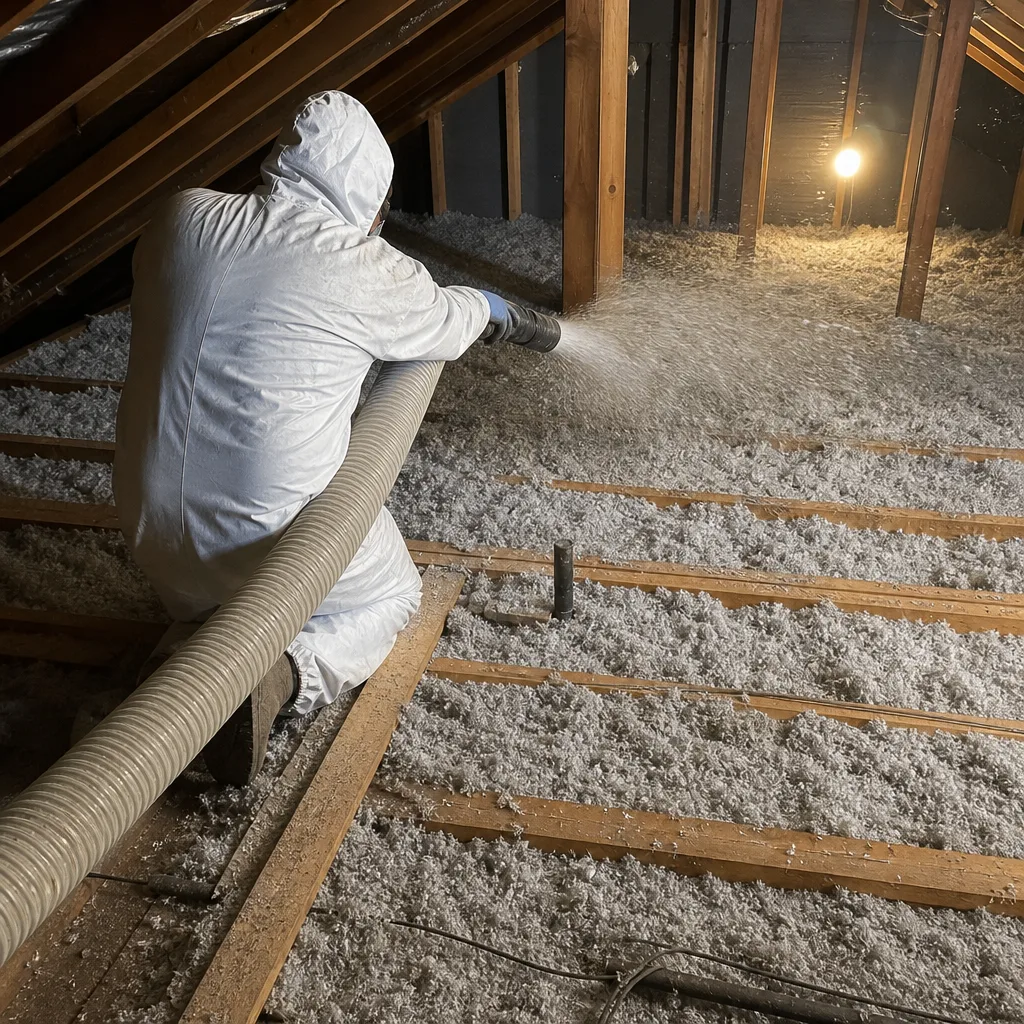
For the most common scenario we encounter at Thermal Insulation Co home in Van Nuys, a homeowner wants to add blown-in insulation to an existing attic that already has some insulation. That work typically does not require a separate building permit in the City of Los Angeles. What it does require is compliance with the prescriptive R-value minimums in Title 24 Part 6, which vary by climate zone. Van Nuys sits in Climate Zone 9, where the prescriptive minimum for ceiling insulation in a standard wood-framed home is R-30, though many homes we work on in older Van Nuys neighborhoods like Victory Park or Midvale were built with R-11 or R-13 batts in the attic, well below what the current code expects. Here’s the key distinction: adding insulation on top of what’s already there is a code compliance matter, not a permit matter. Replacing insulation because the old material was removed due to water damage, rodent infestation, or disturbance during a re-roofing project puts you in different territory. If the insulation is part of a change to the building’s thermal envelope during a permitted remodel, the city inspector has the authority to require correction if the installed R-value doesn’t match what the approved plans called for.
What no contractor should tell you is that insulation permits are “never” required or “always” required. The correct answer depends on scope, the existing permit situation, and jurisdiction. That’s why we look at every Van Nuys job individually rather than applying a blanket answer.
Title 24 Part 6: The Energy Code That Governs Every Insulation Decision
Title 24 Part 6 is the California Energy Code, updated every three years, and it sets the minimum insulation performance standards for residential and nonresidential buildings in California. The current code cycle has been in effect since January 1, 2023, and its insulation provisions are the most stringent in the United States for new construction and major alterations. Climate Zone 9, where Van Nuys sits, requires an attic insulation R-value of R-30 in prescriptive compliance for existing homes undergoing re-insulation, while new construction is typically designed for R-38 or R-49 ceilings depending on the project’s overall energy budget. In Climate Zone 12, which covers much of the west San Fernando Valley’s adjacent foothill communities, requirements shift again. The point is that the R-value you need isn’t a single number for all of California, and a contractor who quotes a flat “R-38 attic” for every home is ignoring the code’s climate-zone logic, not simplifying your decision.
The prescriptive path is one of two main ways to demonstrate compliance. It’s the simpler path: meet or exceed the minimum R-values listed in Table 150.1-A for each building component. The performance path allows trade-offs using approved compliance software, which matters when a home has unusual framing or limited cavity depth. For most retrofit projects in Van Nuys homes built before 1980, the prescriptive path is what applies, because full software modeling is only cost-effective for major renovations and new builds. Title 24 Part 6 also includes mandatory measures that apply regardless of which compliance path you use. One is that insulation must be installed per manufacturer’s specs and California Energy Commission installation guidelines, which is where HERS raters come in later. Another is that recessed can lights in insulated ceilings must be IC-rated and air-sealed, which drives many of the attic air-sealing corrections we perform during blown-in insulation upgrades in the San Fernando Valley.
What the code doesn’t do is tell you which material to use. R-30 can be achieved with fiberglass batts, blown-in cellulose, blown-in fiberglass, mineral wool, or spray foam. The code cares about the tested R-value of the installed system and whether the installation meets quality standards, not about the brand name on the bag. That’s why we carry eight brands across the major material categories. We can meet any prescriptive target with the material that actually makes sense for a specific Van Nuys attic, whether it’s moisture-resistant mineral wool in a vent-challenged bungalow or recycled-content cellulose for a homeowner whose priority is embodied carbon, or open-cell spray foam for a roof deck in a sealed-attic design.
What a HERS Rater Actually Verifies (And Why They’re Separate From the Building Inspector)
A Home Energy Rating System rater is a certified third-party professional who verifies that energy code compliance measures were actually installed, not just specified on paper. Their role is different from, and in addition to, the local building inspector’s. A building inspector checks for life-safety and structural compliance, like minimum stair width or shear wall nailing patterns. A HERS rater checks performance and energy compliance, like whether the insulation depth on the attic floor matches the R-value claimed on the compliance documentation. In California, HERS verification is mandatory for new homes and for many major alterations, and in certain cases, when a permit was pulled and Title 24 compliance documentation lists HERS-required measures, the project cannot receive final sign-off until the HERS rater files their data with the appropriate registration database.
For insulation, the HERS rater’s job involves several specific checks. They determine whether the installed insulation achieves the R-value claimed in the compliance documentation by using depth markers or rulers to measure lofted blown-in materials and by visually confirming batts are split around wiring and fitted to cavity width. They check for insulation quality defects: compressed batts, gaps at the eaves, missing coverage behind the attic access hatch, and voids around recessed lights or flues, which require code-mandated clearances. They also verify that the insulation was installed on the correct side of the envelope and that the required minimum coverage extends to the exterior wall top plates. If any piece of that fails, the HERS rater can issue a correction notice, and the permit won’t close until corrections are verified. One correction that frequently trips up Van Nuys homeowners is the absence of an attic access cover or dam that meets the code’s insulation requirement for the hatch itself.
What we tell homeowners is that HERS verification is not optional when the compliance documentation calls for it, and it’s not something your insulation contractor can substitute for. Some contractors will tell you “inspectors don’t actually check insulation depth.” When a HERS rater is in the loop, that’s simply false. In our experience, the most cost-effective way to avoid a failed verification is to have the insulation contractor understand exactly what the rater will measure before the material goes in.
The Disturbance Rule: Replacing vs. Adding Insulation
The distinction between “adding to” existing insulation and “replacing” it matters more than most homeowners realize, and it’s a rule many contractors never explain because it complicates a simple sales pitch. When you add insulation on top of existing material in an attic, you’re improving the assembly without changing what’s already there. That’s a retrofit. It typically doesn’t require a permit, it doesn’t require destructive verification of the existing material, and it can be done in a single visit. Code compliance for the overall ceiling assembly is evaluated prescriptively: you need to reach the minimum R-value for the climate zone by adding the appropriate amount of new material on top. If a Van Nuys attic has R-11 batts from the 1960s, adding enough blown-in cellulose or fiberglass to reach R-30 or R-38 brings the assembly into compliance without triggering full replacement obligations.
Replacing insulation is different because it means the existing material is being removed first. There are several legitimate reasons to remove existing insulation: water damage from roof leaks, heavy rodent or pest contamination, fire damage, or extensive disturbance during a re-roofing project. Once the old insulation is pulled, you’re not just adding. You’re re-establishing the thermal envelope from scratch, and that means the new insulation has to meet the current prescriptive minimums in full. You can’t replace R-11 with R-11 and call it compliant. If the removal and replacement happens as part of a larger permitted remodel, the permit covers the work and the insulation has to be listed on the permit’s scope. If the removal happens outside a permit, for example, if a homeowner pulls out wet batts after a leak and then calls us to re-insulate, the replacement still has to meet current Title 24 minimums even though no separate permit is required. The code applies to the installed condition, not just to whether a piece of paper was filed.
What gets homeowners into trouble is not the physical work. It’s the documentation gap. When insulation is replaced without documenting the before and after condition, and then a home sale or refinance triggers a compliance review, there’s no file showing that the current insulation meets code. For anyone in Van Nuys who’s planning to sell in the next few years, we always recommend keeping the contractor’s invoice, which should state the material, brand, installed depth, and resulting R-value. Our Insulation Warning Signs: A Van Nuys Homeowner’s Reference Guide covers other red flags to watch for before listing. A one-line invoice that says “attic insulation” is not adequate documentation for Title 24 verification purposes.
Documentation to Keep: What Goes in Your Home File
The paperwork side of insulation matters because it’s what stands between you and a smooth transaction when the house changes hands or when an insurance claim involves the building envelope. We recommend homeowners maintain a simple home performance file, and it doesn’t need to be elaborate. Just consistent. What goes in it depends on what kind of work was done. Here’s the minimum list for any insulation project, whether it required a permit or not.
- The contractor’s invoice: It should specify the material brand (for example, Owens Corning blown-in fiberglass or GreenFiber cellulose), the installed depth in inches, the conditioned floor area covered, the resulting R-value, and the date. This is the single most important document for future resale.
- The Title 24 compliance documentation: If the work was part of a permitted remodel, this is the CF-1R and CF-2R or equivalent. The CF-2R is the installation certificate that gets filed, and you should keep a copy. If a HERS rater was involved, retain whatever verification document they provided.
- A photo record: Before and after photos of the attic with a ruler or depth marker showing installed depth. Ten photos take five minutes and can resolve disputes years later.
- The building permit and final sign-off: If a permit was pulled, keep the permit number and the final inspection sign-off. This applies even if the permit was primarily for another scope, like a re-roof, and the insulation was incidental to it.
- Any material data sheets: For spray foam installations, particularly closed-cell, keep the product data sheet identifying the foam brand and formulation. This matters for future re-insulation or roof-deck work.
One thing we hear from Van Nuys homeowners is that they expected the contractor to “file everything” and assumed they didn’t need to keep anything. The reality is that the jurisdiction files some things, the contractor keeps some things, and the homeowner is the only party who benefits from keeping the complete set. If you sell your home in Valley Glen or Sherman Oaks and the buyer’s lender or appraiser asks for insulation documentation, the contractor who did the work may have changed phone numbers, gone out of business, or simply not retain records beyond the warranty period. Your file is the only dependable source. That’s a point we stress during Attic Insulation in Van Nuys consultations because it’s the kind of thing nobody thinks about until closing is on the line.
LA County vs. City of Los Angeles: Why a Van Nuys Address Can Go Either Way
Van Nuys is a neighborhood within the City of Los Angeles, which means most addresses in Van Nuys proper fall under the Los Angeles Department of Building and Safety, not LA County Building and Safety. But the distinction matters, and it creates genuine confusion because some San Fernando Valley addresses carry a Van Nuys mailing address while sitting in unincorporated Los Angeles County territory. Those properties are governed by LA County’s building department, which follows the same California Residential Code and Title 24 but has different forms, different fee schedules, and sometimes different inspection practices. This affects permit timing, plan check requirements, and even whether an over-the-counter permit is available for a simple insulation job versus requiring submittal and plan review.
Why does this matter for an insulation job that typically doesn’t require a permit? Because most insulation in existing homes happens alongside something that does. A re-roofing project in Van Nuys requires a permit through LADBS, and if insulation replacement is part of that scope, it’s covered under the same permit and inspected on the same schedule. In a county pocket like the areas around Valley Glen or the older sections near Sepulveda Basin that fall under county jurisdiction, the same re-roof requires a county permit with different inspection workflows. When a contractor tells you “no permit needed for insulation,” they’re usually right for the insulation itself, but if the insulation is part of a re-roof, a room addition, or a garage conversion, the permit for that larger project governs. A homeowner who hears “insulation doesn’t need a permit” and applies that to a garage conversion that included insulation is going to have a problem when the unpermitted conversion comes up during a sale appraisal.
We’ve also seen this create warranty complications. Certain roofing manufacturers’ warranties require that insulation work under the roof deck meet code and be documented. If the re-roof permit was handled through one jurisdiction and the insulation was done by a different contractor under a separate scope, the documentation has to be tied together for the warranty to remain enforceable. That’s less about the building department and more about not assuming a verbal statement from one contractor covers another contractor’s scope.
How Insulation Work Can Void or Protect a Roofing Warranty
Homeowners rarely connect insulation with roofing warranties until something goes wrong. The connection is real, particularly in California’s climate, where attic temperatures in Van Nuys routinely exceed 130°F in summer, and trapped moisture from improper insulation or ventilation can degrade roof sheathing over time. Roofing manufacturers’ warranties, such as those from major shingle brands, typically include language requiring proper attic ventilation as a condition of the warranty. For year-round maintenance tips, see our Seasonal Insulation Care for Van Nuys: Year-Round Homeowner’s Guide. If insulation blocks eave vents, or if spray foam is applied to the underside of a roof deck without a properly designed ventilation channel, the roof could be operating with inadequate ventilation, and the shingle manufacturer can deny a premature-failure claim on that basis.
What does that mean in practice? Before adding blown-in insulation to an attic, someone needs to check whether the eave vents are open and whether baffles or vent chutes are installed to keep the insulation from covering them. In many older Van Nuys homes, eave vents were never installed, or they were installed and then buried under prior insulation. When we run into this during blown-in attic insulation work, we correct it with vent baffles before adding material. That’s a code-driven correction (the California Energy Code requires that insulation not obstruct ventilation) and a warranty protection measure at the same time. If an insulation contractor simply blows material over an eave vent and calls it done, the roof still looks fine from the outside, but the attic ventilation is compromised and the shingle warranty could be voided by a manufacturer’s inspector who spots the blockage after a failure claim.
When insulation replacement is part of a re-roof project, similar logic applies. When the roof sheathing is removed, that’s the right time to inspect the attic insulation condition, check for moisture damage, and decide whether to replace or supplement it. Some of the most efficient insulation work we do in North Hills and Panorama City happens during re-roofing because access is already open and the entire attic assembly can be evaluated at once. The alternative, waiting until after the new roof is on to discover the attic has four inches of compacted, rodent-damaged insulation, is more expensive and produces worse results.
Common Mistakes to Avoid
- Assuming “no permit needed” means “no documentation needed.” A retrofit insulation job in Van Nuys may not require a building permit, but the contractor’s invoice showing material, depth, and R-value is the document that proves compliance when you sell or refinance. Get it in writing, not in a text message.
- Letting a contractor bury the eave vents. In many San Fernando Valley homes, especially 1940s and 1950s track housing, eave vents are small and easily covered. Blocking them during blown-in insulation work creates a moisture and warranty problem that may not show up for years.
- Replacing insulation after water damage without checking the code minimums. If you remove old R-11 batts after a roof leak, the replacement needs to meet current Climate Zone 9 minimums. Reinstalling the same low R-value because “that’s what was there before” violates Title 24 and creates a compliance gap.
- Pulling insulation permit work into an unpermitted larger project. A garage conversion or unauthorized addition that included insulation is still an unpermitted project. The insulation being “to code” does not make the structure legal, and it can block a home sale in Van Nuys regardless of the insulation’s quality.
- Trusting verbal HERS compliance claims. If a project’s compliance documentation lists HERS-required verification, the HERS rater has to file their data for the permit to close. A contractor saying “we don’t need that because it’s just attic insulation” may be wrong, and the mistake surfaces during final inspection, not during the install.
- Using the wrong insulation material for the application without asking why. The code establishes the R-value target. It does not choose the material for you. In a vent-limited Van Nuys attic, recycled cellulose with moisture-management attributes or mineral wool may be a better fit than fiberglass batts. If a contractor only carries one product line, you’ll never hear about the alternative.
- Throwing away the contractor’s invoice after the job. Everyone keeps receipts for a water heater, but insulation invoices get tossed because the product is invisible. That invoice is your compliance record. File it with your home documents.
When to Call a Professional
Some insulation scenarios are straightforward enough for a homeowner to evaluate from a ladder. Others are not, and getting them wrong has real consequences. Call an insulation contractor when you see black or gray staining on attic insulation, which indicates air movement carrying dust and moisture into the material, something that happened long before you looked at it and won’t fix itself. Call one when you find loose vermiculite insulation in a pre-1990 home, because some vermiculite sourced from Libby, Montana contained asbestos and disturbing it without testing is a health risk. Call one when your attic has recessed can lights that are not IC-rated, because air-sealing around non-IC-rated fixtures requires specific clearance handling to meet both the energy code and the manufacturer’s safety listing. Call one when a re-roof is planned and you want the attic insulation evaluated while access is open, rather than paying for a separate mobilization later. Thermal Insulation Co offers free estimates in Van Nuys, call (855) 382-3451 to have someone evaluate the existing insulation, identify code compliance gaps, and recommend the correct material and method without trying to force a single product on a home that needs something different.
Frequently Asked Questions
Adding insulation on top of existing attic insulation in an existing home in Van Nuys typically does not require a separate building permit, provided it is not part of a larger remodel with an open permit. The work does need to comply with Title 24 Part 6 minimum R-value requirements for Climate Zone 9, which means the combined existing-plus-new insulation should reach the prescriptive minimum. Call (855) 382-3451 if you’d like us to evaluate your attic and confirm what your specific home needs before you start. Estimates are free.
For Climate Zone 9, which includes Van Nuys and most of the City of Los Angeles, the prescriptive minimum ceiling insulation level under the current Title 24 Part 6 code is R-30 for existing homes undergoing re-insulation. New construction in the same zone is often designed to R-38 or R-49 depending on the project’s compliance approach. If your attic currently has thin, settled insulation, adding enough material to reach R-30 or higher is the code-appropriate target. Call (855) 382-3451 for a specific recommendation based on your attic’s current condition and framing.
A HERS rater verifies that the installed insulation depth corresponds to the R-value on the compliance documentation, checks for quality defects like compressed batts or gapped coverage, confirms required clearances around recessed lights and flues, and verifies that the attic access hatch is insulated to the same standard. If the project’s Title 24 documentation lists HERS-required verification, the permit cannot close until the rater files their data, regardless of what the building inspector observed. Call (855) 382-3451 if you’re unsure whether your project requires HERS verification.
Yes, in most cases you can replace old attic insulation in an existing Van Nuys home without pulling a separate permit for the insulation itself, as long as it is not tied to a permitted remodel with a different scope. However, the replacement insulation must meet current Title 24 minimums for Climate Zone 9. You cannot legally replace old R-11 insulation with new R-11 and claim code compliance. The installed condition after replacement matters, not the condition before.
It can. In California, when a home sells, the buyer’s lender or appraiser may request compliance documentation for improvements, including insulation work. If the work required a permit and no permit exists, or if Title 24 compliance documentation is missing for a HERS-required measure, the lender can condition the loan on resolving the issue. Retroactive permits and HERS verification can be done, sometimes at meaningful cost, but it’s far cheaper to document the work correctly the first time. This is a recurring issue in Van Nuys real estate transactions, particularly with homes built in the 1950s and 1960s that have had multiple unpermitted improvements over the decades.
Spray foam insulation is treated the same as any other insulation type for permitting purposes in California: the permit trigger depends on the scope of work and whether it’s part of a larger permitted project, not on the material. However, spray foam installations have additional installation-specific requirements under the California Energy Code and the California Fire Code, including thermal barrier requirements when foam is left exposed in occupied spaces. For Spray Foam Insulation in Van Nuys, the material choice should be driven by the application, whether it’s a vented attic floor, a sealed cathedral ceiling, or a crawl space rim joist. Call (855) 382-3451 if you’re considering spray foam and want to understand which open-cell or closed-cell product makes sense for your specific enclosure.
At minimum, the contractor should provide an invoice that states the material brand, installed depth, area covered, and resulting R-value, plus the installation date. For jobs under a building permit, you should also receive a copy of the permit’s final sign-off and any Title 24 installation certificate, such as a CF-2R. For Blown In Insulation in Van Nuys where HERS verification is required, retain the rater’s filed verification document. These records belong in your permanent home file.
The Bottom Line
California’s Title 24 Part 6 code sets the insulation bar higher than any other state’s residential code, and the enforcement structure around it includes multiple layers: building permit, HERS verification, and documentation, each with its own rules and consequences. For most retrofit insulation work in Van Nuys, no standalone permit is required, but code compliance is not optional and neither is documentation. The difference between a compliant job and a problem waiting to surface is whether the homeowner has an invoice that states material, depth, and R-value, whether the ventilation was protected, and whether any HERS-required verification was actually completed. If you’re planning attic insulation, spray foam, or blown-in insulation in Van Nuys, call Thermal Insulation Co at (855) 382-3451 for a free estimate and a code-informed recommendation matched to your specific home. You can also review our Attic Insulation Maintenance Checklist for Van Nuys Homeowners to prepare.
Written by the team at Thermal Insulation Co, serving Van Nuys since 2012.