
Last updated October 30, 2026
Insulation Emergency Preparedness Guide for Van Nuys Homes
During the July 2021 heat dome, something happened in Van Nuys that most homeowners never noticed. Homes with properly insulated, air-sealed envelopes held interior temperatures 12 to 18 degrees lower than comparable unsealed homes after eight hours without air conditioning. That’s not a comfort gap. In a prolonged grid outage during a 110-degree Valley summer, that’s the difference between a survivable house and an evacuation. The insulation inside your walls and attic isn’t just a monthly utility line item. It’s emergency infrastructure, and this guide and our Insulation Warning Signs: A Van Nuys Homeowner’s Reference Guide will show you how to assess yours before you actually need it.
Quick Answer
Insulation emergency preparedness in Van Nuys means treating your home’s thermal envelope as a passive survival system: sealing attic bypasses to block wildfire smoke infiltration, confirming your attic’s R-value can hold temperature during a summer grid outage, and documenting your insulation specs before a claim requires them. In our experience across the Valley, most homes fall short on air sealing, not insulation thickness, and that gap is where emergencies find their way in.
Table of Contents
- The Grid Outage Problem: Why Van Nuys Is Different
- Wildfire Smoke and Your Insulation: The Air-Sealing Connection
- Assessing Your Home’s Thermal Mass and Envelope Tightness
- The 48-Hour Pre-Event Checklist for Extreme Heat
- Post-Earthquake Insulation Inspection: What Moves and Why It Matters
- Documenting Insulation for Insurance: What Adjusters Look For
- Common Mistakes to Avoid
- When to Call a Professional
- Frequently Asked Questions
- The Bottom Line
The Grid Outage Problem: Why Van Nuys Is Different
Van Nuys sits in the San Fernando Valley’s heat sink. The Valley’s geography traps warm air, and Van Nuys routinely runs 5 to 8 degrees hotter than coastal Los Angeles during summer afternoons. When a heat advisory hits and the grid strains under regional AC demand, rolling outages or voltage reductions are the predictable result. Your insulation becomes the only thing standing between your family and a house that heats up like a parked car.
Most homes in Van Nuys were built between 1950 and 1980, which means original insulation that ranges from R-11 to R-19 in attics where current code calls for R-38 or better. But the raw R-value number is only half the story. Air moves through a house through specific, predictable channels: attic bypasses around recessed lights, gaps around plumbing vents, the unsealed top plates of interior walls, and chases that run from the garage to the attic. Heat doesn’t need much of an opening to overwhelm a decent insulation layer. A one-inch gap around a single ceiling penetration can move more air per hour than a wide-open window.
We’ve worked in neighborhoods across Van Nuys, from the older post-war homes north of Victory Boulevard to the newer builds near Lake Balboa, and the pattern is consistent: homes with original fiberglass batts and no air sealing lose their temperature control within three hours of an AC shutdown. Homes that have been air-sealed and upgraded to current insulation levels stay livable for twelve hours or more, even in August.
The Passive Cooling Reserve Concept
Your house is a battery. It stores coolth the same way a battery stores charge. When the AC runs at night, the framing, drywall, and insulation mass absorb the temperature shift. When the power dies at 2 PM on a 105-degree day, that stored thermal reserve is all you have. The rate at which you lose it depends on two things: how well your envelope resists heat gain from outside, and how many uncontrolled air pathways let hot air in and your residual coolth out.
An unsealed attic acts as a convection engine. The sun heats the roof deck to 140-plus degrees, that heat radiates into the attic space, and if you have even modest air bypasses between attic and living space, the hot air finds its way down by simple stack effect. Seal those bypasses and add insulation that actually touches the attic floor without gaps, and the heat stays on the other side of your ceiling. That’s the difference we measure with thermal imaging before and after our Attic Insulation in Van Nuys projects, and the temperature spread we recorded during the 2021 heat dome matched the physics: sealed homes stayed 12 to 18 degrees cooler at the eight-hour mark.
Wildfire Smoke and Your Insulation: The Air-Sealing Connection
Van Nuys doesn’t sit in a wildfire zone the way Agoura or Calabasas do, but smoke doesn’t respect city boundaries. During the 2020 Bobcat Fire and the 2018 Woolsey Fire, Van Nuys experienced days of unhealthy air quality indices above 150, with fine particulate matter (PM2.5) drifting across the Valley from distant burns. The same building science that governs heat transfer also governs smoke infiltration: air movement through the envelope carries whatever is in the air.
The air-sealing work that makes attic insulation perform better is identical to the work that keeps smoke out. A sealed top plate around an interior wall doesn’t care whether the air pressure difference is driven by temperature or a slight inversion layer carrying smoke; a sealed penetration doesn’t discriminate. That’s why the homes we’ve air-sealed with certain types of insulation report noticeably less smoke odor during Valley fire events, even when they don’t have dedicated filtration systems. The smoke simply has fewer routes in.
Fiberglass insulation itself does not filter smoke effectively. It’s designed to resist heat flow, not air flow; air passes through fiberglass batts almost without impedance. The barrier against smoke is air sealing, which is performed in conjunction with the insulation upgrade, not as a substitute for it. Mineral wool like Rockwool is denser and offers better fire resistance and air resistance than standard fiberglass, which is one reason we recommend it for certain Van Nuys applications. Closed-cell spray foam, which we install using Demilec products, goes a step further by acting as both the insulation layer and the air barrier in a single application.
Where Smoke Actually Gets In
If you think smoke enters through open windows or under exterior doors, you’re looking at maybe twenty percent of the problem. The rest comes through the hidden pathways that connect your attic to your living space:
- Recessed can lights: older Van Nuys homes have non-IC-rated fixtures that vent directly into the attic. Warm, smoke-laden outdoor air can be drawn down through these openings by the negative pressure created when bathroom fans or a running AC blower exhausts interior air.
- Attic access hatches: a poorly sealed hatch in a hallway ceiling can leak as much air as a bedroom window left cracked open.
- Top plates of interior walls: the stud wall cavities in your interior walls connect directly to the attic in many older homes, creating chimney-like channels that pull attic air downward.
- Plumbing and electrical penetrations: every pipe and wire that runs through the ceiling is a potential air pathway if it wasn’t sealed at construction.
- Ductwork connections: leaky ducts in a vented attic can suck smoky attic air into the supply side, distributing it through every register in the house.
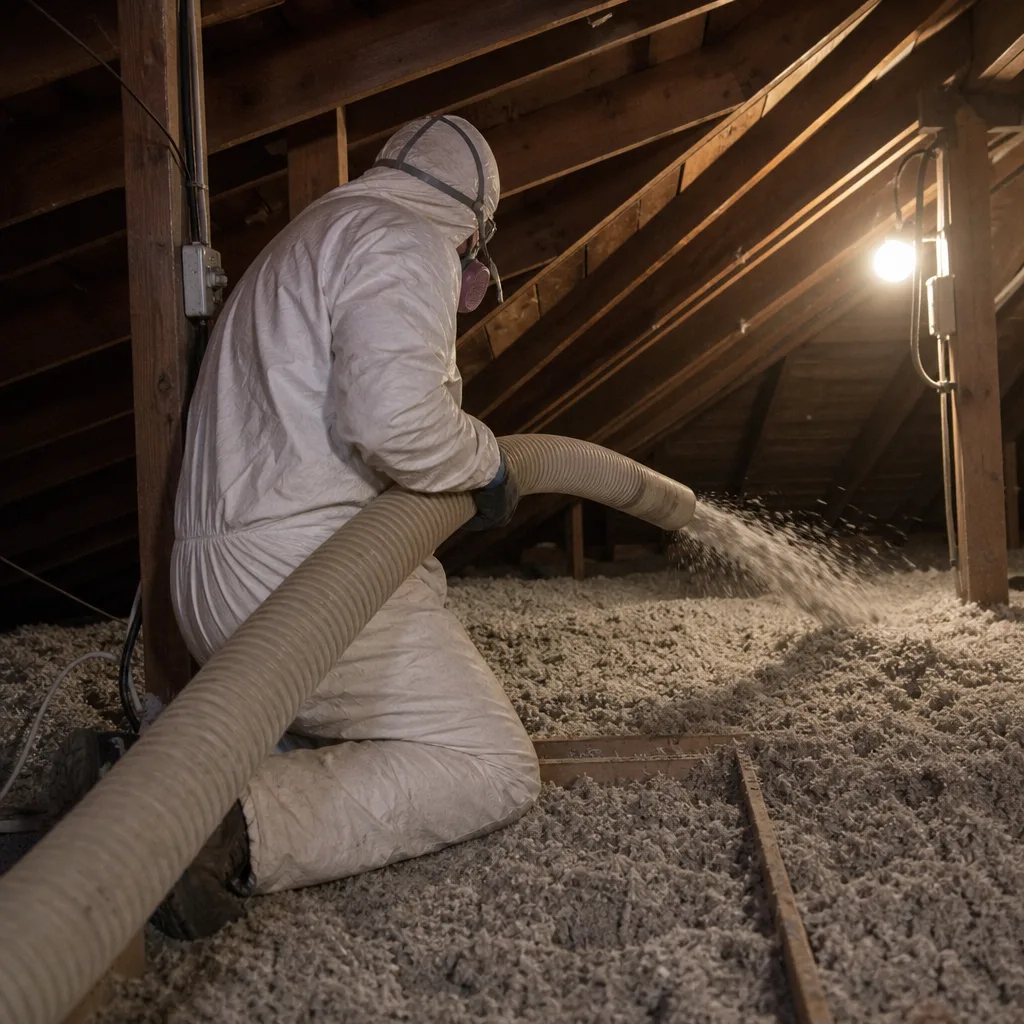
When we conduct a Spray Foam Insulation in Van Nuys assessment, the air-sealing phase closes these pathways using the same foam material that insulates, so the smoke barrier and the thermal barrier are installed as one continuous layer. For homeowners not ready for foam, we seal the same pathways with canned foam and caulk, then install air-sealed blown-in insulation over the top using GreenFiber cellulose or Johns Manville fiberglass. Both approaches work; the choice depends on the home’s construction type and budget.
Assessing Your Home’s Thermal Mass and Envelope Tightness
You don’t need a thermal camera to start assessing whether your Van Nuys home holds its temperature. You need a field observation approach, a $25 infrared thermometer, and about two hours on a sunny afternoon. This matters because your insulation’s emergency performance depends on how it’s installed, not just what the bag says it will do.
The Field Assessment Method
- On a day when outdoor temperatures are above 90 in Van Nuys, close all windows and doors and run your AC until the house reaches your normal set point. Mark the thermostat reading.
- Turn off the AC and start a timer. Record indoor temperature every hour for four hours. If you lose more than 3 degrees in the first hour, your envelope has significant leakage or your insulation is under-served.
- At the four-hour mark, place the back of your hand on the ceiling surface in the middle of each room. If the ceiling feels noticeably warmer than the walls, heat is radiating from an uninsulated or under-insulated attic. An infrared thermometer makes this more precise: a ceiling that reads 8 degrees or more above the wall temperature means the attic insulation is failing or thin.
- Walk the perimeter of each room at dusk with a damp hand and hold it up near electrical outlets, window frames, and floor-to-wall transitions. Air movement you can feel is a direct indication of a leak path that will also carry heat and smoke.
- Open your attic access panel and inspect the insulation layer yourself. If you can see the joist tops, the insulation is compressed or inadequate. If the insulation is uneven or dark-stained in areas, you’re seeing the visual signature of air movement carrying dust through the insulation, which indicates a bypass below.
What “Good” Looks Like in Van Nuys
A properly prepared Van Nuys home should have an attic insulation layer that is even, uncompressed, and thick enough to cover the joists entirely. For our climate zone, that typically means R-38 to R-49, which translates to roughly 14 to 18 inches of blown-in fiberglass or cellulose, or 7 to 9 inches of open-cell spray foam. Wall cavities in older homes should be checked with a borescope or by inspecting from the attic side; many 1960s Van Nuys homes have no wall insulation at all, and that wall void is a major thermal mass liability during an outage.
Rockwool batts introduce a thermal mass advantage that merits mention here. Mineral wool is denser than fiberglass and holds its shape and position far better over decades, which means an old Van Nuys attic with Rockwool installed in the 1970s may actually be performing better than a newer fiberglass attic that was installed poorly. We carry multiple brands because the assessment should determine the material, not the other way around.
The 48-Hour Pre-Event Checklist for Extreme Heat
When the National Weather Service issues an excessive heat warning for the San Fernando Valley including Van Nuys, you have a short window to maximize your home’s passive thermal performance before the worst of the heat arrives. These steps, along with our Seasonal Insulation Care for Van Nuys: Year-Round Homeowner’s Guide, won’t add insulation but will stretch the performance of what you already have.
- Pre-cool the thermal mass. Run your AC two to three degrees cooler than normal for the final 12 hours before the heat event peaks. This lowers the temperature of the framing, drywall, and slab, creating a deeper thermal reserve that will release slowly once power is constrained.
- Close and cover south- and west-facing windows. In Van Nuys, the strongest afternoon solar gain comes through southwest-facing glazing. Draw blinds and close curtains before 10 AM, even if the air outside feels pleasant in the morning. Solar radiation is what loads the walls and floors; blocking it early is far more effective than reacting to it at 3 PM.
- Seal the attic access with painter’s tape. If you have a pull-down attic stair or a hallway hatch, apply tape around the perimeter seam to create a temporary air seal. This is a two-minute fix that closes one of the largest single leak pathways in most Van Nuys homes.
- Stop unnecessary air exchange. Turn off bathroom exhaust fans, range hoods, and any whole-house fan. Each of these actively pulls outside hot air into the home through whatever leak paths exist. In a smoke event, this is the same mechanism that pulls PM2.5 indoors.
- Schedule heavy appliance use for early morning. Clothes dryers, ovens, and dishwashers add heat to the conditioned space. Running them between 5 AM and 8 AM lets the AC remove that heat before the afternoon peak and avoids stacking an internal load on an already-stressed envelope.
- Check your attic access for drafts. If you feel air moving at the hatch seam, seal it now and schedule a permanent fix. The temporary tape buys you the weekend, but a proper Blown In Insulation in Van Nuys job with an air-sealed hatch is what carries you through the next event.
Post-Earthquake Insulation Inspection: What Moves and Why It Matters
Van Nuys sits on the Northridge fault zone, and the 1994 Northridge earthquake remains the most instructive recent event for understanding what seismic movement does to insulation systems. What most homeowners don’t realize is that the visible damage after an earthquake, cracked drywall, broken windows, fallen chimneys, is only part of the envelope disruption. Inside the attic, batt insulation can be displaced from joist bays by the violent lateral shaking, and the displacement isn’t visible from the living space below.
Batts are friction-fit between joists. When the house shakes, the batts can shift, sag, or fall entirely out of position, particularly along rafter edges and in areas where the original installation was over-cut. A batt that has slipped three inches leaves a thermal gap that runs the full length of the joist bay. The R-value of that bay drops to nearly zero, and the gap also creates a fire-spread path through the attic floor if an electrical fire ever starts in the wall cavity below.
After any significant earthquake, we recommend a three-point attic check that any homeowner can perform or have performed:
- Look for daylight. With the attic darkened, look for any visible light from the living space below. Light penetrating through the attic floor indicates a clear air and thermal channel.
- Check joist bay coverage. Every bay should have insulation touching the top plates of the ceiling framing. If you can see bare drywall or joist tops across more than a few inches, the insulation has moved.
- Inspect the perimeter. The outer edges of the attic are the most vulnerable to seismic displacement, particularly where batts were cut around roof trusses. This is also where most Van Nuys homes lose their stack-effect protection.
Blown-in insulation, whether fiberglass or GreenFiber cellulose, doesn’t displace the way batts do during shaking, but it can settle. A quake can accelerate settling in spots where original installation was uneven. Spray foam is mechanically bonded to the substrate and is the most quake-resistant insulation method we install because it can’t shift out of position.
Documenting Insulation for Insurance: What Adjusters Look For
Homeowners’ insurance claims related to heat events and smoke damage are becoming more common across Los Angeles County, and Van Nuys homeowners are filing with new scrutiny from insurers trying to determine whether a home’s condition contributed to the loss. When an adjuster evaluates a smoke-infiltrated home or a heat-damaged interior, Insulation Permits, Codes & Inspections in CA: What You Need to Know documentation is one of the first things they request. Homowners who can produce it get claims resolved faster and with fewer disputes.
Here’s what an adjuster is actually looking for, based on what we have seen in multiple Van Nuys-area claims over the years:
- Insulation type and R-value. The specific product and its rated thermal resistance per inch. Adjusters use this to calculate the home’s baseline thermal performance before the event.
- Installation date. Insulation that’s 40 years old is assessed differently than insulation installed 18 months ago, both for current performance and replacement value.
- Installation method and coverage area. Whether the attic was fully covered, whether walls were dense-packed, whether air sealing was performed. Adjusters want to know if the envelope was intact before the event.
- Air-sealing documentation. A record that penetrations were sealed, with photos if possible, establishes that your home wasn’t unsealed to begin with.
- Pre-event photos. Dated photos of the attic insulation surface condition, showing even coverage and no visible problems.
We recommend homeowners create a one-page insulation spec sheet and store it with their insurance documents. It should include the insulation type, brand, R-value, date of installation, covering contractor, and any air-sealing work performed. A photo from the attic access point is sufficient visual documentation for most claims.
Common Mistakes to Avoid
- Assuming more insulation is the only answer. Doubling attic insulation on a home with unsealed air bypasses is like putting a thicker blanket on a drafty bed. The air movement overwhelms the thermal resistance. Air sealing first, then insulation: that’s the sequence in every Van Nuys retrofit we quote.
- Ignoring the attic hatch. The access panel is typically 1 to 2 percent of the ceiling area but accounts for 10 percent of the heat transfer in an otherwise-insulated attic. A garage-sale plywood hatch with no weatherstripping is a thermal hole.
- Running the whole-house fan during a smoke event. Whole-house fans pull outside air into the attic and then into the living space through the attic floor. In a smoke event, that’s an active smoke infiltration machine. Disable it.
- Checking insulation only in summer. The same envelope gaps that cause heat gain in August cause heat loss during January’s cold nights, and smoke infiltration is seasonal in Southern California. An annual inspection before both peak seasons is the right cadence for Van Nuys.
- Trusting the original developer’s insulation. Many mid-century Van Nuys homes were built with R-11 batts and no air sealing. That barely meets current code for a mild coastal climate, and Van Nuys is not mild in summer. Assume original insulation is underperforming until proven otherwise.
- Documenting nothing. If an adjuster asks for insulation records and you have none, you’re arguing from a disadvantage. Two minutes of documentation today saves weeks of back-and-forth later.
When to Call a Professional
If your field assessment shows temperature loss faster than 3 degrees in the first hour without AC, you feel air movement at outlets or the attic hatch, inspect attic insulation that’s uneven or shows dark air-movement staining, or can see joist tops in your attic floor, call for a professional evaluation. These are not conditions that resolve themselves. Thermal Insulation Co offers free estimates in Van Nuys and we’ll assess the insulation type, method, and air-sealing needs against your home’s actual construction, call (855) 382-3451.
Frequently Asked Questions
A well-sealed, well-insulated Van Nuys home will typically hold its indoor temperature within 10 degrees of the set point for 8 to 12 hours during an outage, depending on outdoor conditions, while an unsealed home will lose 5 degrees or more in the first two hours. The primary driver is air sealing, not insulation thickness alone.
Insulation itself doesn’t filter smoke, but the air-sealing work that goes with a proper insulation retrofit, closing attic bypasses, sealing penetrations, and tightening the building envelope, is the single most effective way to reduce passive smoke infiltration into your living space. Homes we’ve air-sealed in Van Nuys report noticeably less indoor smoke odor during Valley fire events.
Yes, a basic visual inspection from the attic access point can tell you a lot: if you can see joist tops, the coverage is inadequate; if the insulation is uneven or has dark staining, air is moving through it. For a full evaluation of air-sealing and thermal performance, a professional assessment with thermal imaging is faster and more precise.
Most attic air-sealing and insulation retrofits in Van Nuys homes run between $1,500 and $5,000 depending on attic size, current insulation condition, and whether you choose blown-in, batts, or spray foam. Thermal Insulation Co offers free estimates so you can get exact numbers for your specific home by calling (855) 382-3451.
Pre-cool your house before the event, block solar gain on south and west windows by 10 AM, tape your attic hatch seam, and turn off exhaust fans that pull outside air in. These low-effort steps help maximize whatever thermal performance your current insulation already offers.
Yes, all loose-fill insulation settles somewhat, particularly after seismic activity, and the settled depth is rarely visible without an attic inspection. Fiberglass and cellulose settle at different rates, but both should be checked every five to ten years and topped up as needed to maintain the rated R-value.
The Bottom Line
Your insulation is not a one-time purchase or a behind-the-scenes building product. It’s the passive system that determines how your Van Nuys home behaves when the power fails, when smoke fills the Valley air, or when an earthquake shifts your attic batts out of position. The homes that stay comfortable during emergencies are the ones whose owners treated the building envelope as a system: sealed, insulated, documented, and inspected. If your attic hasn’t been assessed in the last five years, or if your field check suggests your home loses temperature faster than it should, the fix is usually straightforward and the timing is better before the next emergency than after it. For more guides & resources, explore our blog.
Written by the team at Thermal Insulation Co, serving Van Nuys since 2012.