
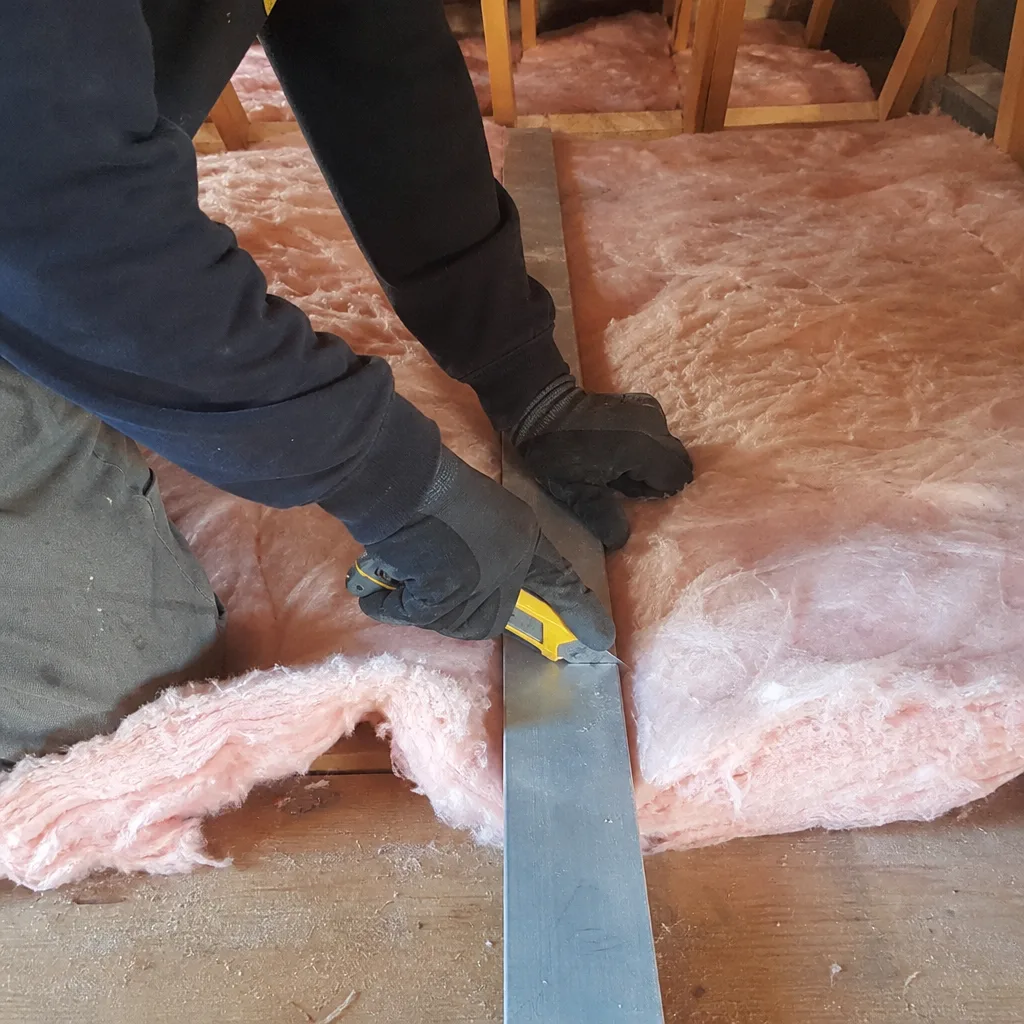
Insulation Company in Crestline, CA
Blown in insulation is the workhorse retrofit for Crestline’s stock of 1950s-to-1980s mountain cabins and A-frames, most of which were built as weekend getaways with little or nothing in the walls. At roughly 4,500 feet in the San Bernardino Mountains, those thin walls mean real heating bills from November through March and cold floors all summer. We specialize in dense-packed cellulose and fiberglass retrofits that work around the vaulted ceilings, exposed framing, and older wiring common up here. If your Crestline home was never insulated properly, call (855) 382-3451 for an honest assessment.
Why Crestline Homes Are Different
Crestline sits high enough that winter is the dominant insulation problem, not summer. Freezing nights arrive in October and linger into May, and periodic heavy snowstorms put real weight on roofs that were often framed with 2×4 rafters and skip sheathing. The original insulation in most of these cabins is either nonexistent or a thin layer of fiberglass that has slumped and compressed over 40 or 50 years. Attics under steep A-frame roofs frequently have no access at all, which means we are working from the interior or dense-packing walls rather than blowing an attic floor.
The wildfire exposure cannot be overstated. Crestline is surrounded by the San Bernardino National Forest, and dry Santa Ana winds in late summer and fall turn the whole ridge into ember territory. Insulation choices here have to account for fire resistance and ember intrusion at soffit and vent lines, not just R-value. A material that makes sense for a Riverside County ranch house is often the wrong call for a Crestline cabin. We factor that into every recommendation we make.
Our Main Crestline Services
Most Crestline homeowners call us about two things: what to do with an uninsulated attic or roof deck, and whether spray foam is safe and practical for an older wood-framed mountain home. Here’s how each one plays out up here.
Attic Insulation in Crestline
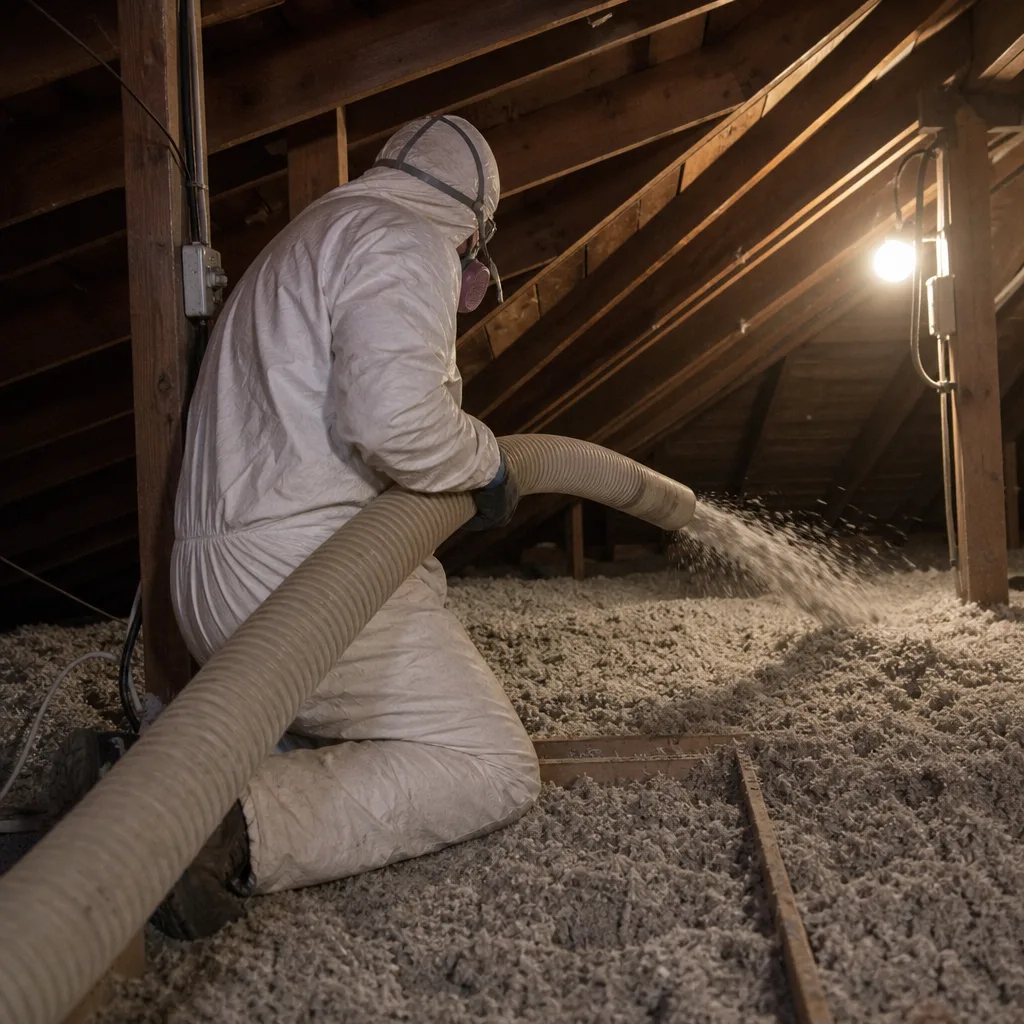
Crestline attics tend to be shallow, awkward, and in many A-frames, not accessible at all. Where an attic floor does exist, we typically find compressed fiberglass batts from decades past and gaps around chimney chases and recessed lights. Blowing loose-fill over or into these spaces is the standard fix, but the roof itself often needs attention too, since warm air leaking through a thin ceiling melts snow on the roof deck and refreezes at the eaves. That ice-dam cycle is a Crestline signature. Attic Insulation in Crestline covers the full scope, including vaulted-ceiling work.
Spray Foam Insulation in Crestline
For Crestline’s vaulted-ceiling cabins with no attic cavity, closed-cell spray foam applied directly to the underside of the roof deck is often the only way to hit a meaningful R-value without rebuilding the roof. It air-seals the assembly, which matters when wind-driven snow and embers are working against your vents. Open-cell foam can work in wall cavities and interior sound applications, but closed-cell is the usual choice here because it handles the moisture loads and adds structural rigidity to older framing. Spray Foam Insulation in Crestline explains the material differences in more detail.
What happens when you call
- 1
A real person answersNo phone trees — you reach a local pro.
- 2
You get an upfront price rangeHonest numbers before anyone is dispatched.
- 3
A background-checked tech heads outLicensed & insured, dispatched right away.
- 4
You approve before work beginsNothing starts until you say go.
Blown In Insulation in Crestline
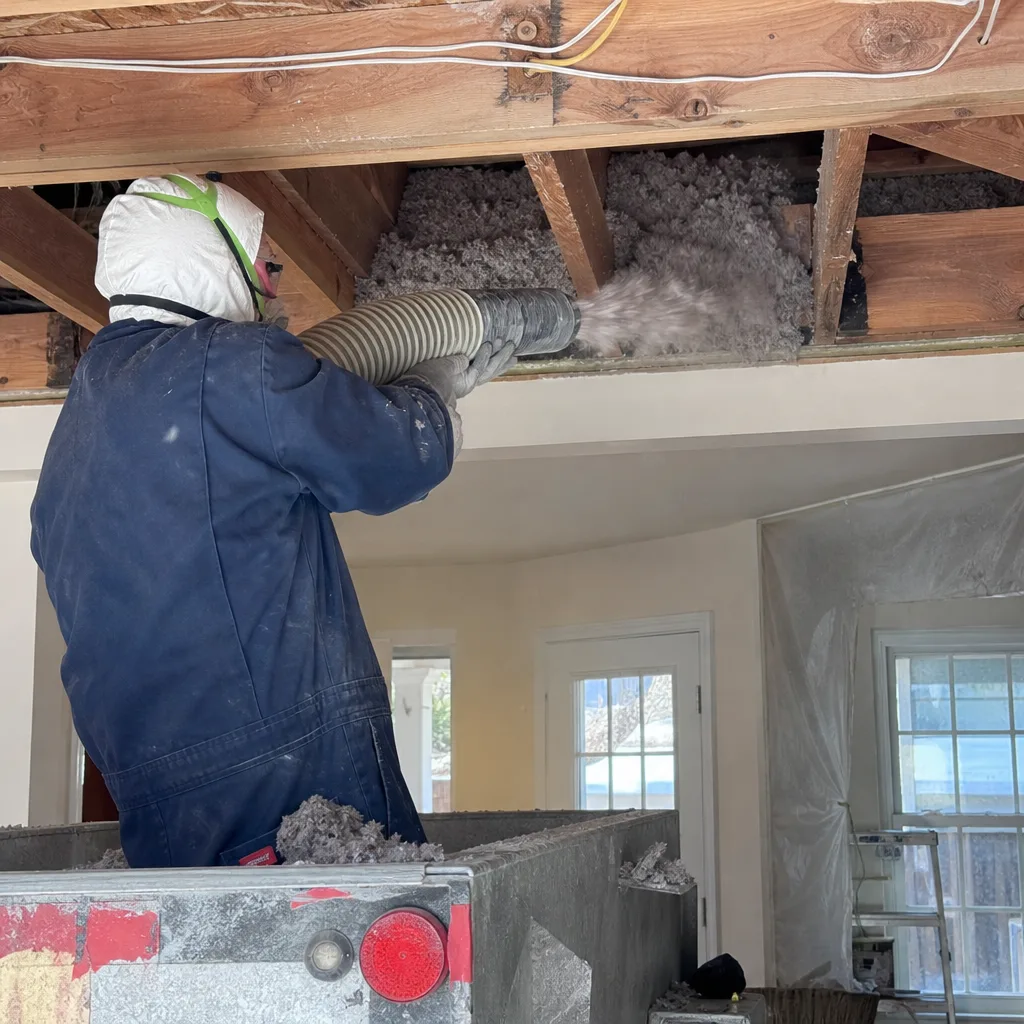
Blown in insulation is the most common retrofit we perform in Crestline because it fits the housing stock. Most of these homes have enclosed wall cavities and attic spaces that were never insulated or were insulated poorly decades ago. Dense-packed cellulose or fiberglass can be blown into those cavities through small access holes, which preserves the original interior finishes and works around the older wiring we often find in mid-century mountain cabins. Blown In Insulation is our core service for exactly this reason. For walls, dense-packed cellulose at a higher installed density resists settling and cuts air movement through the cavity. For attics, loose-fill fiberglass or cellulose on the attic floor brings the assembly up to a level that actually holds heat in January.
Cellulose Insulation
Signs you need it
Rooms stay cold even with the heat running, and exterior walls feel noticeably colder than interior walls on winter nights.
What it costs in Crestline
Dense-packed cellulose in Crestline walls typically runs $1.60 to $3.20 per square foot, depending on cavity access and depth.
How we do it
We drill small access holes at each stud bay, dense-pack the cavity with GreenFiber cellulose to roughly 3.5 pounds per cubic foot, then plug and patch the holes.
Blown In Attic Insulation
Signs you need it
Icicles or ice dams form at the eaves after snowfall, and the attic floor insulation is thin, compressed, or missing entirely.
What it costs in Crestline
Blown-in attic insulation in Crestline generally falls between $1.20 and $2.50 per square foot for the attic floor area.
How we do it
We air-seal penetrations first, then blow loose-fill fiberglass or cellulose across the attic floor to the target R-value for this climate zone.
Blown In Cellulose Insulation
Signs you need it
Your energy bills climb through Crestline winters while certain rooms stay 5 to 10 degrees colder than the rest of the house.
What it costs in Crestline
Blown-in cellulose for a typical Crestline attic or wall retrofit runs $1.60 to $2.80 per square foot installed.
How we do it
We run a hose from the truck to the attic or wall cavity and dense-pack or loose-fill the cellulose to the specified depth and density.
Loose Fill Insulation
Signs you need it
The attic has old, settled fiberglass batts or scattered debris, and snow on the roof melts unevenly while interior ceilings feel cold.
What it costs in Crestline
Loose-fill insulation over an existing Crestline attic floor typically runs $1.20 to $2.00 per square foot for new material added on top.
How we do it
We clear the attic floor of debris, mark target depth lines, and blow loose-fill material evenly across the entire floor, including over the existing batt layer where code allows.
What Blown In Insulation Costs in Crestline
| Item | Typical range in Crestline |
|---|---|
| Dense-packed cellulose (walls) | $1.60 – $3.20 / sq ft |
| Loose-fill attic insulation (cellulose or fiberglass) | $1.20 – $2.50 / sq ft |
| Blown-in fiberglass (attic floor) | $1.20 – $2.30 / sq ft |
How long does blown in insulation last in a Crestline cabin?
Cellulose and fiberglass loose-fill both last 20 to 30 years when kept dry and rodent-free. Crestline’s dry summers help, but roof leaks and ice dams can shorten that life. We inspect existing material before adding new insulation.
Can you blow insulation into vaulted ceilings?
Vaulted ceilings without an attic cavity cannot take loose-fill. We dense-pack the walls and either spray foam the roof deck or install rigid foam board. The right approach depends on the framing and the roof condition.
Brands We Service in Crestline
We install Owens Corning and Johns Manville fiberglass, GreenFiber recycled cellulose, and Demilec spray foam in Crestline homes. Each brand gets specified because it fits the application: high-R-value cellulose for dense walls, closed-cell foam for exposed roof decks, and fiberglass for open attic floors. See our brands for the full breakdown.
Pricing for Insulation Company in Crestline, CA
| Service | Typical range in Crestline |
|---|---|
| Dense-packed cellulose (wall retrofit) | $1.60 – $3.20 / sq ft |
| Blown-in attic insulation | $1.20 – $2.50 / sq ft |
| Loose-fill insulation (attic floor) | $1.20 – $2.00 / sq ft |
| Spray foam (closed-cell, roof deck) | $2.60 – $4.50 / board ft |
| Spray foam (open-cell, interior) | $1.20 – $2.40 / board ft |
| Fiberglass batt installation | $1.10 – $1.80 / sq ft |
Crestline prices run higher than the flatlands because of steep driveways, tight crawlspaces, and the extra time it takes to work safely around older knob-and-tube wiring and fragile framing. Every quote we give is the price you pay; if an unexpected condition changes the scope, we tell you before we do anything else.
Neighborhoods We Serve in Crestline
We work across the entire 92325 ZIP code, from the flatter streets near Lake Gregory up to the steep lots and cabin clusters off Highway 138 and around Valley of Enchantment. Our trucks make the drive up from the San Bernardino Valley on a regular schedule, so we can usually schedule a Crestline visit within a few days.
- Valley of Enchantment
- Cedar Pines Park
- Lake Gregory area
- Southend of Crestline
- Top Town / Crestline Village
Service Area – Cities Near Crestline
Thermal Insulation Co serves Crestline and the surrounding mountain and valley communities. We regularly work up and down the Rim, including Lake Arrowhead, CA and the mountain routes through San Bernardino, CA. We also cover the foothill and valley areas, including Highland, CA and Muscoy, CA. If you are unsure whether we cover your road, call and ask.
Serving Crestline, CA — Our Local Coverage Area
We’re based in the Crestline area and know this community well. Use the map below to see our service coverage — if you’re nearby, we can almost certainly help.
FAQs About Insulation Company in Crestline
We typically schedule Crestline jobs within three to five business days. In winter, we coordinate around snow and road conditions, but our crews are familiar with the mountain routes and carry the right equipment for cold-weather work.
Most retrofit insulation jobs in San Bernardino County do not require a permit, but any work that changes the building envelope, such as spray foam against the roof deck, can trigger a permit review. We handle the paperwork when it is needed and work with the local building department.
Yes, but carefully. We inspect every cavity before dense-packing, and where older wiring is present, we adjust our method to stay within code and avoid covering active knob-and-tube circuits with insulation. We will tell you if an electrician needs to come first.
Contact Thermal Insulation Co in Crestline
If your Crestline home is cold in the winter, hot in the summer, or just costing too much to heat every month, call (855) 382-3451 for a free estimate. We will tell you which material and method actually fits your home, and what it will cost before we start.
What happens when you call
- 1A real person answersNo phone trees — talk to a local insulation pro.
- 2You get an upfront price rangeHonest numbers before anyone is dispatched. No surprises.
- 3A background-checked tech heads outLicensed & insured, typically same-day.
- 4You approve before work beginsNothing starts until you say go.
What Crestline Customers Say
"Attic was at maybe R-11 from the 1970s and blown in over the top would have just buried the problem. They removed the old material, air sealed the top plates and penetrations first, then blew in to R-49. The upstairs is a completely different house in August."
— Christine Park"Handled the utility rebate paperwork, which knocked a real amount off the final cost."
— Chris Kowalski"Plastic laid from the front door to the attic hatch and they vacuumed the hallway afterward."
— Gabriela Rodriguez