
Fast, Reliable Spray Foam Insulation Across Corona
Spray foam insulation in Corona runs $2.50 to $6.80 per board foot depending on open-cell versus closed-cell, with most whole-wall retrofit jobs landing between $4,800 and $14,200. We’re Thermal Insulation Co, an insulation contractor based in Van Nuys whose crews are in Corona every week. Ruben Castellano leads our team, and he built the company around one question: what does this specific house actually need? Because a home on the valley floor does not need the same foam spec as one backing up to the Cleveland National Forest. Call (855) 382-3451 if you want a straight answer about your walls, rim joists, or attic.
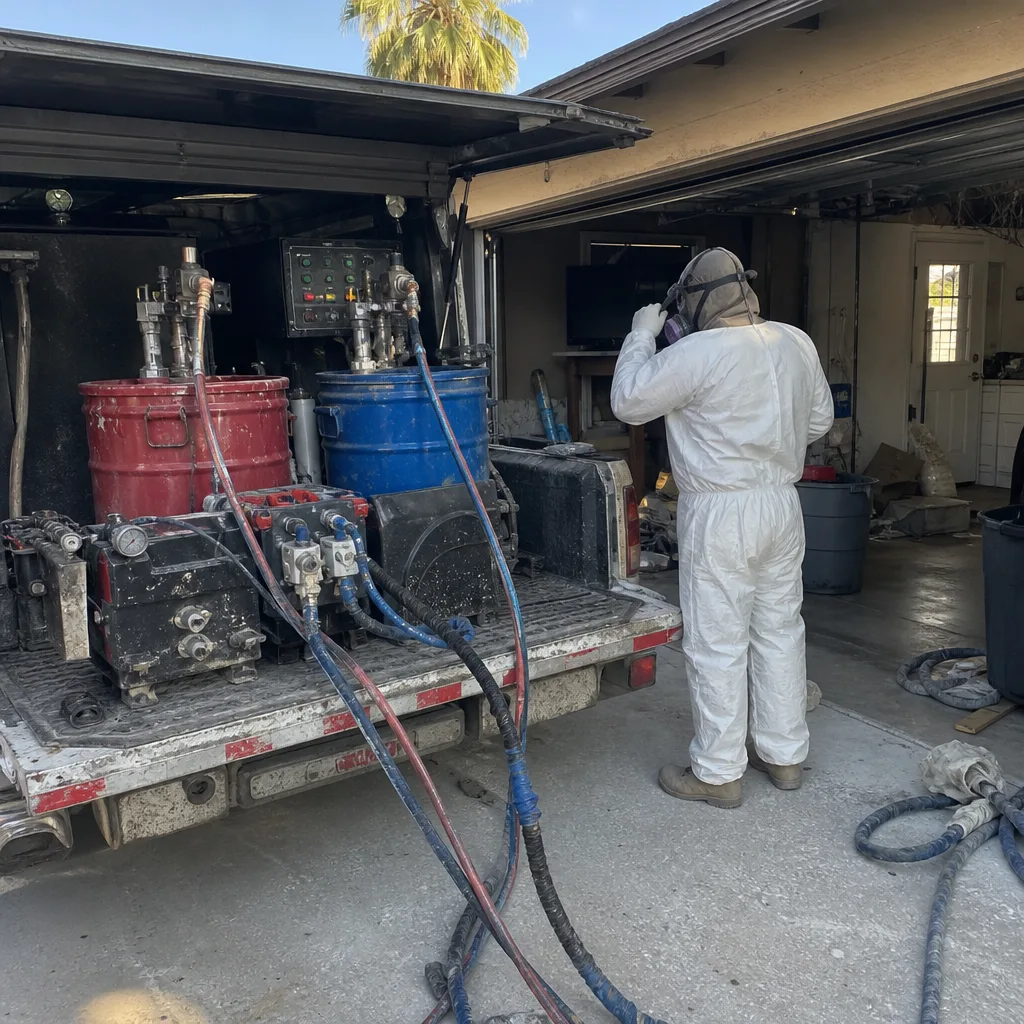
Why Thermal Insulation Co Is Corona’s Preferred Spray Foam Insulation Company
We work in Corona enough to know its housing stock street by street. The tract homes off McKinley Street and the older ranch houses ringing the historic downtown circle share a frame-and-batt construction style, but they sit in different wind and heat conditions. A contractor who treats them the same leaves gaps. We don’t.
Our position as a dedicated insulation specialist means we’re not a general contractor dabbling in foam. We carry eight insulation brands and three installation methods because different homes in Corona call for different solutions. When we recommend closed-cell foam for a rim joist in the south hills or open-cell for a garage ceiling off Green River Road, that recommendation comes from building science and local conditions, not from whatever’s left on the truck.
Homeowners in 92882, 92883, 92877, and 92878 call us because we arrive with a plan, not a pitch. Our crews know that the Cajon Pass wind-driven dust finds every unsealed rim joist and that the valley-floor summer heat pushes attic temperatures past 140°F. That experience changes how we prep and spray. Whether you’re off Ontario Avenue or up near Eagle Glen, we can usually have a crew at your door for an estimate within a couple of days. Call (855) 382-3451 for a schedule that works.
Spray Foam Wall Insulation in Corona
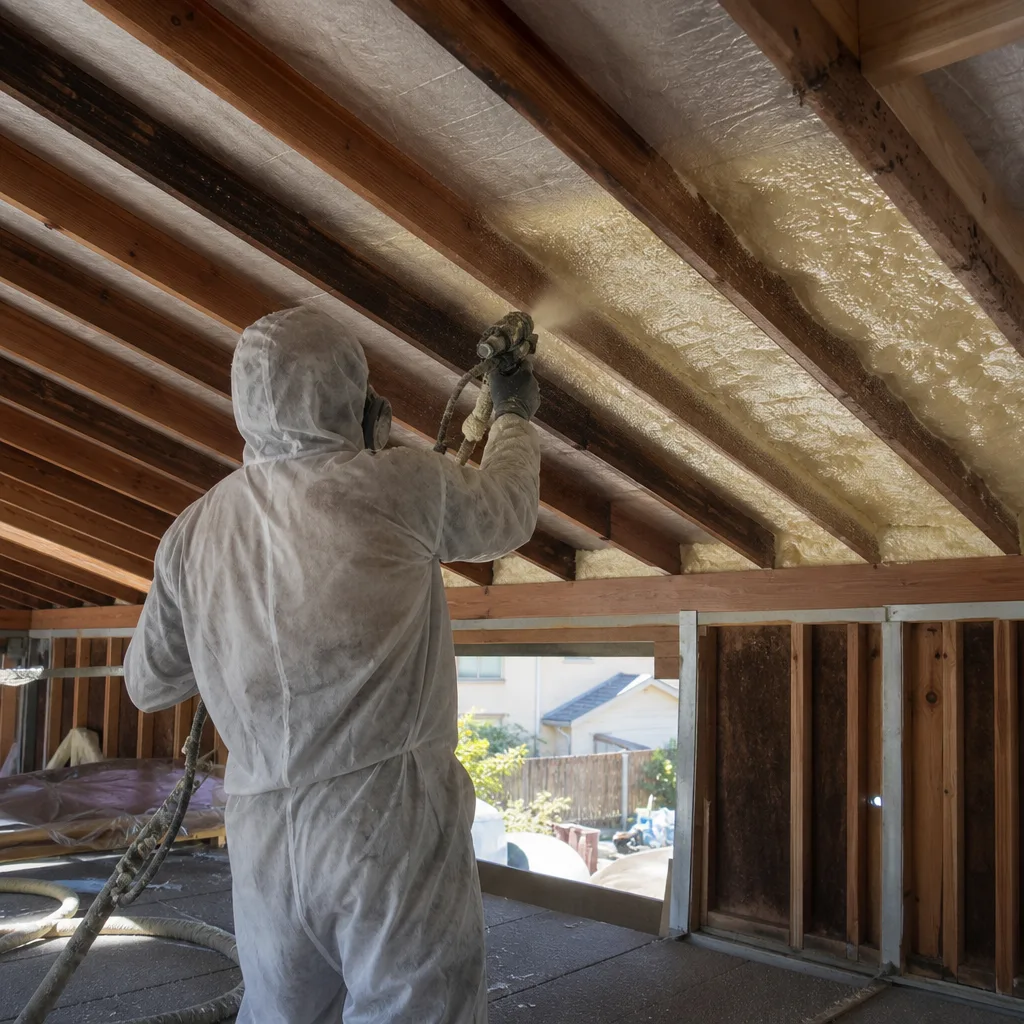
Spray Foam Wall Insulation in Corona matters more than most homeowners realize because drywall hides what’s happening inside the wall cavity. In the tract homes built between the 1980s and 2000s across Corona, we regularly open up walls and find fiberglass batts that have slumped, settled, or been shoved aside by electrical work and plumbing retrofits. That leaves voids where valley-floor heat pours in during the summer and where Santa Ana winds push dusty air straight through the assembly.
We spray the cavities full with either open-cell Icynene or closed-cell Demilec, depending on the wall’s exposure and moisture profile. Closed-cell adds structural shear strength and a vapor barrier, which matters on the hotter, drier valley side. Open-cell behaves more like a dense air seal at a lower material cost, often the right call for the foothill neighborhoods where backing walls face the pass winds. A full wall retrofit in Corona typically runs $5,800 to $14,200 depending on the square footage and whether we’re working in a single-story ranch near downtown or a two-story build in the south hills.
Open-Cell Wall Cavities
Open-cell foam expands to fill awkward framing and old fiberglass gaps, creating an air seal that stops conditioned air from leaking into the attic. For Corona’s milder winters and dry overall climate, open-cell often delivers the thermal break a wall needs without the extra vapor-control cost a humid coastal home would demand. We pair it with air-sealing prep so the foam actually bonds to clean framing, not dust from a decade of Santa Ana winds.
Closed-Cell Wall Cavities
Closed-cell foam brings about double the R-value per inch and acts as a built-in vapor retarder. That matters most on the valley floor near the 91 and 15 corridors, where summer highs consistently exceed 100°F and afternoon sun beats on west-facing walls. For foothill homes concerned about ember intrusion and fire resistance, closed-cell’s density also slows thermal transfer through framing better than open-cell.
Rim Joist Spray Foam in Corona
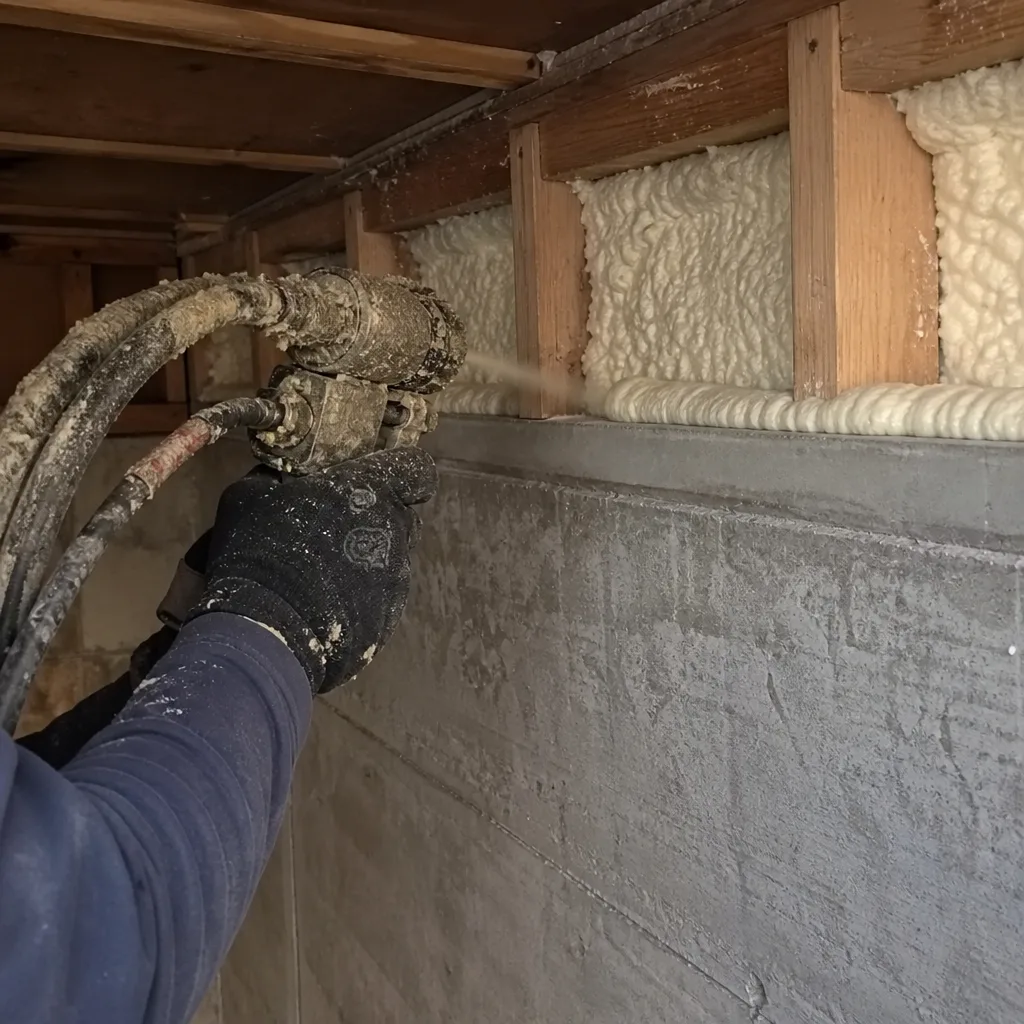
Rim Joist Spray Foam in Corona is one of the most overlooked upgrades in 1980s and 1990s tract homes, and it’s one of the highest-return air-sealing moves we make. The rim joist is the band of wood sitting atop the foundation wall where floor framing meets the sill plate. In most Corona homes we inspect, this area was never insulated at all, or it holds a fiberglass batt that’s fallen away from the sheathing. That open band is an express lane for outside air.
We recently foamed the rim joists and wall cavities of a 1980s single-story ranch home near the historic downtown circle. The original fiberglass batts had settled and left gaping voids in the attic knee walls. Using Icynene spray foam, we sealed the rim joist and air-sealed the wall penetrations, cutting the attic heat gain that had been pushing valley-floor summer temperatures past 100°F into the living space. The homeowner reported a noticeably cooler second floor and reduced dust infiltration from the Santa Ana winds.
We should be clear: rim joist foam is not a job where you spray over whatever’s there. The framed band has to be clean and dry before the foam will adhere properly. That’s especially true in Corona, where pass-wind dust coats horizontal surfaces in crawlspaces and basementettes. A typical rim joist spray foam job in a Corona crawlspace or basement runs $900 to $2,600 depending on linear footage and access. If you’ve noticed dust gathering on basement shelving or a cold draft across the floor, this is often the fix.
Rim Joist Air Sealing
If there are gaps and cracks where plumbing, wiring, or ducting pass through the rim band, no amount of insulation will stop air movement. We seal the framing first, then foam the bay. This is how we stop the Cajon Pass wind from migrating straight up into the living floors.
Crawlspace Rim Joist Foam
Corona’s older ranch homes with raised foundations often have exposed rim joists that are easy to reach but rarely touched. We’ll cut away the old batt, brush the framing, and apply a two-part foam that locks into the band and the subfloor. The improvement in floor comfort in winter is immediate.
Trusted Brands We Service in Corona
We install Icynene and Demilec spray foam systems, both of which we carry because they have long track records and tested performance data. That brand flexibility matters in Corona because the valley floor, the Cajon Pass corridor, and the foothill neighborhoods each pull the performance dial in a different direction. We also work with materials from Owens Corning, Johns Manville, and Knauf when the conversation shifts to batt or hybrid applications, and GreenFiber when a homeowner wants a recycled-content cellulose option. Because we stock multiple lines, our Corona customers don’t wait on a single supplier’s lead time. Call (855) 382-3451 and we’ll tell you which foam makes sense for your specific walls, not for our inventory.
Common Spray Foam Insulation Problems We See in Corona Homes
- Wind-driven dust bypassing foam. In homes near the Cajon Pass corridor, we find unsealed rim joists and vent penetrations that let dry, dusty air slip around the foam edges. The foam itself is doing its job; the air sealing around it wasn’t done first.
- Foothill homes with the wrong foam spec. Houses near the Cleveland National Forest sometimes have standard open-cell foam where fire-resistant materials and ember-resistant venting should have been specified. This is a code and safety gap during fire season, not just a comfort issue.
- Adhesion failures over old batts. Downtown ranch homes from the 1980s often have settled or missing fiberglass. If a contractor sprays over that deteriorated substrate without cleaning and air-sealing prep, the foam won’t bond and voids remain. We see it on walls and rim joists alike.
- Two-story south-hills homes with hot upper floors. Many of these newer larger builds have decent wall insulation but an under-insulated rim band and garage ceiling. Heat rises from the garage, migrates through the band, and cooks the bedrooms above. Foam fixes the pathway, but it has to be applied in the right places.
Pricing for Spray Foam Insulation in Corona, CA
Spray foam pricing in the Corona area comes down to the material volume, the foam type, and the access. Open-cell wall cavity work typically runs $2.50 to $4.10 per board foot. Closed-cell, with its higher R-value per inch and vapor control, runs $4.60 to $6.80 per board foot. Rim joist jobs in a typical Corona crawlspace land between $900 and $2,600, while whole-wall retrofits usually sit between $5,800 and $14,200. Garage ceiling spray foam runs $1,800 to $4,500 depending on square footage and whether we’re also sealing the attic access. Roof deck applications, typically closed-cell for the south hills and foothill homes, run $5,500 to $12,800. Every estimate is free and includes a walkthrough of the specific areas we’d foam. We don’t quote over the phone without seeing the house, because Corona’s microclimates mean the right spec changes block to block. Call (855) 382-3451 and we’ll come out.
We Also Serve Cities Near Corona
Our crews cover Corona and the surrounding communities in Riverside County. Home Gardens, with its older tract-home stock, sits right at the edge of the valley-floor heat zone and shares many of the same rim joist and wall issues we see in Corona itself. We also handle insulation jobs in El Cerrito Corona, Eastvale, and Norco. If you’re in any of these areas and want a team that knows the local building conditions, call (855) 382-3451. We’re also the team behind our Spray Foam Insulation service across the region, and we’re proud to be the Spray Foam Insulation in Corona contractor homeowners call when they want it done right.
Serving Corona, CA — Our Local Coverage Area
We’re based in the Corona area and know this community well. Use the map below to see our service coverage — if you’re nearby, we can almost certainly help.
FAQs About Spray Foam Insulation in Corona
Yes. The valley floor deals with sustained summer heat and high attic temperatures past 140°F, which favors closed-cell foam for its higher R-value and structure. Foothill homes near the Cleveland National Forest also need fire-resistant materials and ember-resistant venting, and often benefit from closed-cell on the exterior-facing assemblies. The foam spec changes with the microclimate. Call (855) 382-3451 and we’ll tell you what your specific street needs.
Yes, and this is one of the most common jobs we do in the downtown circle area. We remove the settled batts, prep the framing, and spray open- or closed-cell foam into the wall cavities and rim joists. The result is a continuous air seal that settles fiberglass can’t provide. Pricing depends on how many walls are involved, but free estimates are part of what we do.
The Cajon Pass wind pushes dry, dusty air against homes in the north and east parts of Corona, and that air finds any gap at rim joists, sill plates, and vent penetrations. If the foam isn’t applied over properly sealed framing, the wind just goes around it. We spend extra time on air-sealing prep in pass-corridor homes for this reason. It’s not an upsell; it’s the difference between a foam job that works and one that doesn’t.
We install Icynene and Demilec spray foam systems, choosing between open-cell and closed-cell based on the home’s location, framing, and moisture conditions. We carry both brands because no single foam fits every Corona house. For batt and blown-in applications we also work with Owens Corning, Johns Manville, Knauf, and GreenFiber. That range means your recommendation comes from your home’s needs, not our inventory.
Yes, and in many south-hills two-story homes the rim joist is the missing link. Warm air rises from garages and lower floors, moves through the unsealed rim band, and heats the upper bedrooms. Foaming that band and the garage ceiling stops the pathway. Most south-hills rim joist jobs run $900 to $2,600, and the difference in upstairs comfort is noticeable within days. Call (855) 382-3451 for an exact quote on your home.
Written by Ruben Castellano, Owner at Thermal Insulation Co, serving Corona and the surrounding Riverside County communities.