
Spray Foam Insulation in Eastvale, CA: What It Costs and Why Your Home Needs the Right Type
Spray foam insulation in Eastvale costs between $2.50 and $6.50 per square foot installed, depending on whether you choose open-cell or closed-cell foam, the area being treated, and how much prep work the job needs. A garage ceiling spray foam job in Eastvale’s production-built tract homes typically runs $1,800 to $3,400, while a full attic spray foam upgrade usually lands in the $6,500 to $11,000 range. We service all of 92860, and our crew knows exactly what those builder-grade attics look like under the surface.
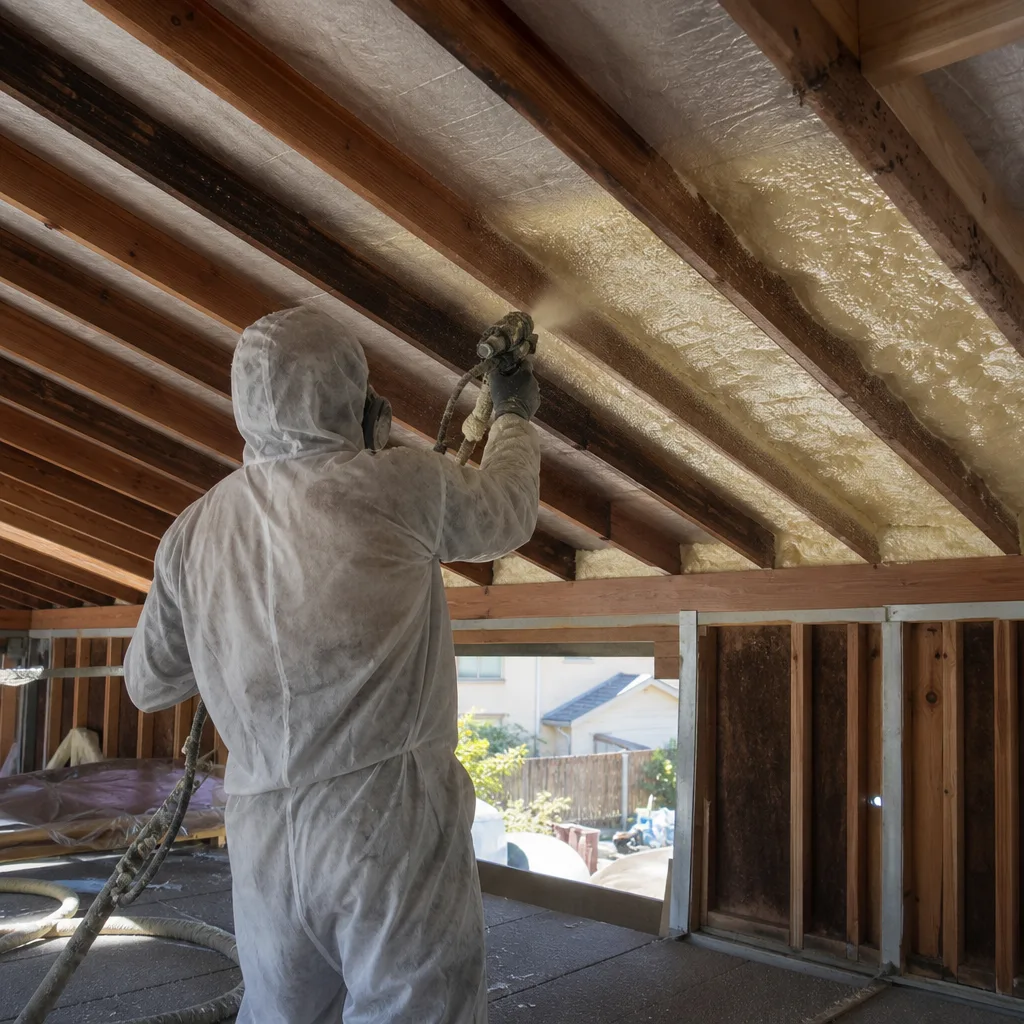
Most Eastvale homeowners call us because their upstairs rooms cook in the summer heat. The fix isn’t always obvious. In the newer homes that make up almost all of Eastvale’s housing stock, the original blown-in insulation has usually settled well below its stamped depth, and gaps around recessed lights and HVAC platforms let 130°F attic air pour straight into living space. Spray foam seals and insulates in one pass, which is why we recommend it for specific applications here rather than blanket whole-house re-insulation. The goal is correcting what the original build skimped on.
Fast, Reliable Spray Foam Insulation Across Eastvale
Eastvale was incorporated in 2010 and built out almost entirely on former dairy land between the 2000s and 2010s. That means the homes are newer, the floor plans are consistent, and the insulation problems are predictable. We’re in and out of Eastvale neighborhoods off Hamner Avenue and Schleisman Road on a regular basis, usually with same-week scheduling and same-day response for urgent calls. Ruben Castellano leads our team, and he’ll be the one making decisions on material selection and scope from the first estimate.
Eastvale’s flat, former agricultural ground sits directly under some of the strongest afternoon sun in Riverside County. From May through October, the west- and south-facing roof slopes absorb heat that no amount of air conditioning can fully offset if the attic isn’t properly sealed. That’s the problem we solve. Our Spray Foam Insulation team brings open-cell and closed-cell options, plus the blown-in and batt alternatives, so you get the material that actually fits the application. Not a default product. We match foam type to the specific heat-load problem in your home.
Call (855) 382-3451 for a free estimate. We’ll come out to Eastvale, walk the attic and garage, and give you a straight answer about what’s happening above your ceiling.
Why Thermal Insulation Co Is Eastvale’s Preferred Spray Foam Insulation Company
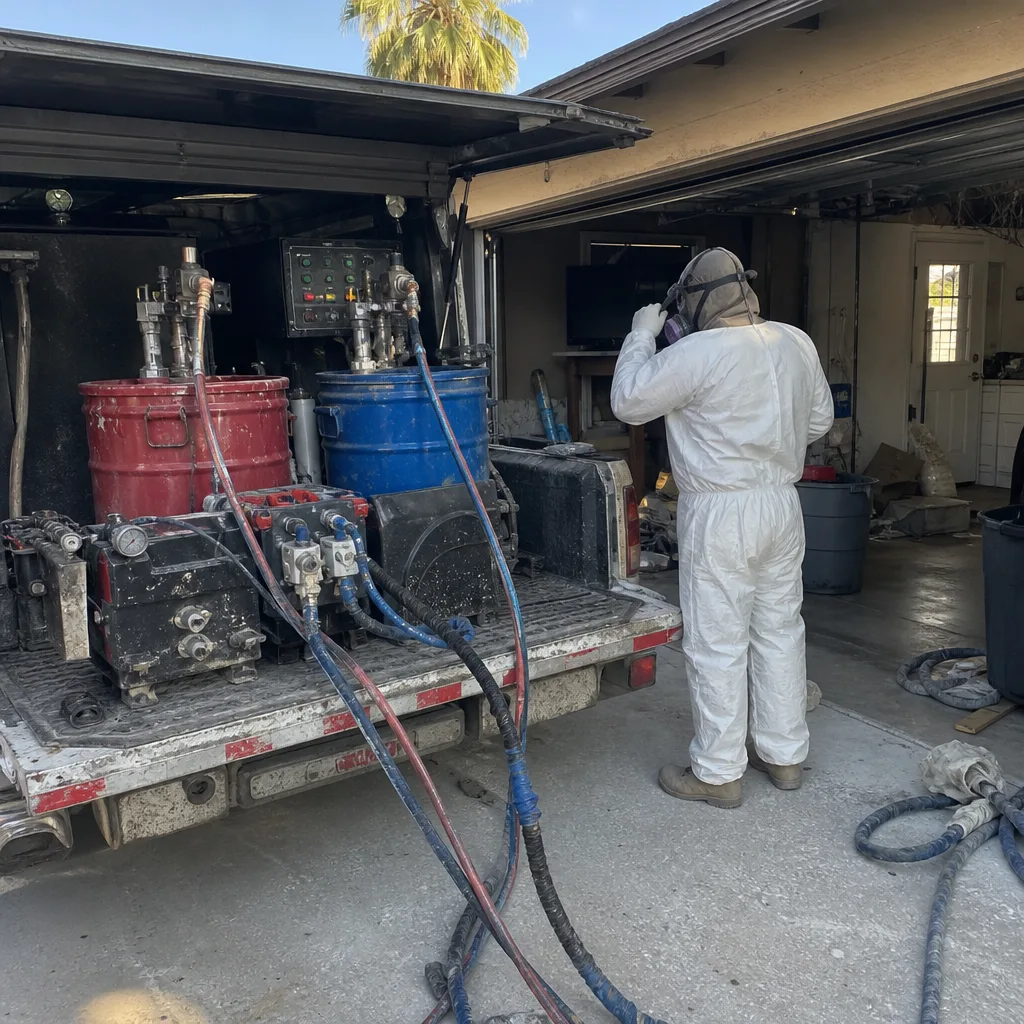
We’re a dedicated insulation contractor. That’s all we do. Thermal Insulation Co installs spray foam, blown-in, and batt insulation, but none of the other trades. Our Eastvale customers regularly tell us that’s the difference. When a general contractor sends a handyman with a spray rig, you don’t get the same depth of building-science knowledge behind the recommendation. You get whatever product they have on the truck. We carry eight brands across all three methods, including Icynene and Demilec for spray foam work in Eastvale, which means our recommendation isn’t driven by what we happen to stock. It’s driven by what your home’s R-value targets, moisture conditions, and space constraints actually require.
Much of our work in 92860 is warranty-period correction. Homeowners in Homes and newer sections of Eastvale call us because their upstairs bedrooms are 5 to 8 degrees warmer than downstairs, or their garage ceiling is radiating heat into the bonus room above it. We’ve done enough of these jobs to know what we’ll find before we open the attic hatch: builder-grade blown insulation that has settled 2 to 3 inches below spec, wide-open recessed can penetrations, and HVAC platform gaps that were never sealed at the original build. We fix all of it in one visit, usually with closed-cell foam on the garage ceiling and air-sealing throughout the attic plane.
Our response time to Eastvale is same-week on standard projects and same-day on tight cases, because we keep crews scheduled throughout the Inland Empire corridor. We’re not driving in from a remote service area. We’re operating out of Van Nuys with regular runs through Corona, Norco, and east into Eastvale.
Garage Spray Foam Insulation in Eastvale
Garage Spray Foam Insulation in Eastvale addresses the single most common hot-spot complaint in 92860’s production homes: the ceiling between an unconditioned garage and a living space directly above it. Builders rarely spec more than a thin layer of blown fiberglass over the garage ceiling, and after 10 to 15 years of settling, that layer often measures at R-11 when it should be R-30 or higher. Add unsealed recessed lights and the result is a room that hits 88°F by mid-afternoon even with the AC running.
We spray closed-cell foam directly onto the garage ceiling deck, sealing every penetration while adding R-value. The job usually takes one day for a standard three-car garage, and in Eastvale’s tract layouts we see a lot of those. Cost in Eastvale runs $1,800 to $3,400 depending on square footage, existing insulation removal, and access. Call (855) 382-3451 for an exact quote.
Correcting Builder-Grade Attic Settlement
The homes in Eastvale along Archibald Avenue and near Cedar Creek Park were built fast. Production builders met code minimums, but code minimums don’t hold up well under Eastvale’s summer attic temperatures. Blown fiberglass batts settle. They drift toward the eaves. The hottest roof slopes lose coverage first.
We see this pattern constantly. Spray foam top-ups bridge those gaps permanently. Closed-cell foam adheres to the deck and won’t settle, and when we apply it to the critical thermal plane, it puts R-value back where the builder left it short.
Air-Sealing Above the Garage
Insulation without air-sealing is a half-fix. In Eastvale garages, the recessed can lights are the biggest offenders. They were never sealed at the rough-in stage. Hot attic air flows around them down into the garage, and from there into the living space above.
Our spray foam process fills those penetrations with closed-cell foam, creating a continuous air and thermal barrier in one pass. For Eastvale homes with attached garages and bonus rooms above them, this is often the highest-impact single upgrade we perform.
Closed Cell Spray Foam Insulation in Eastvale
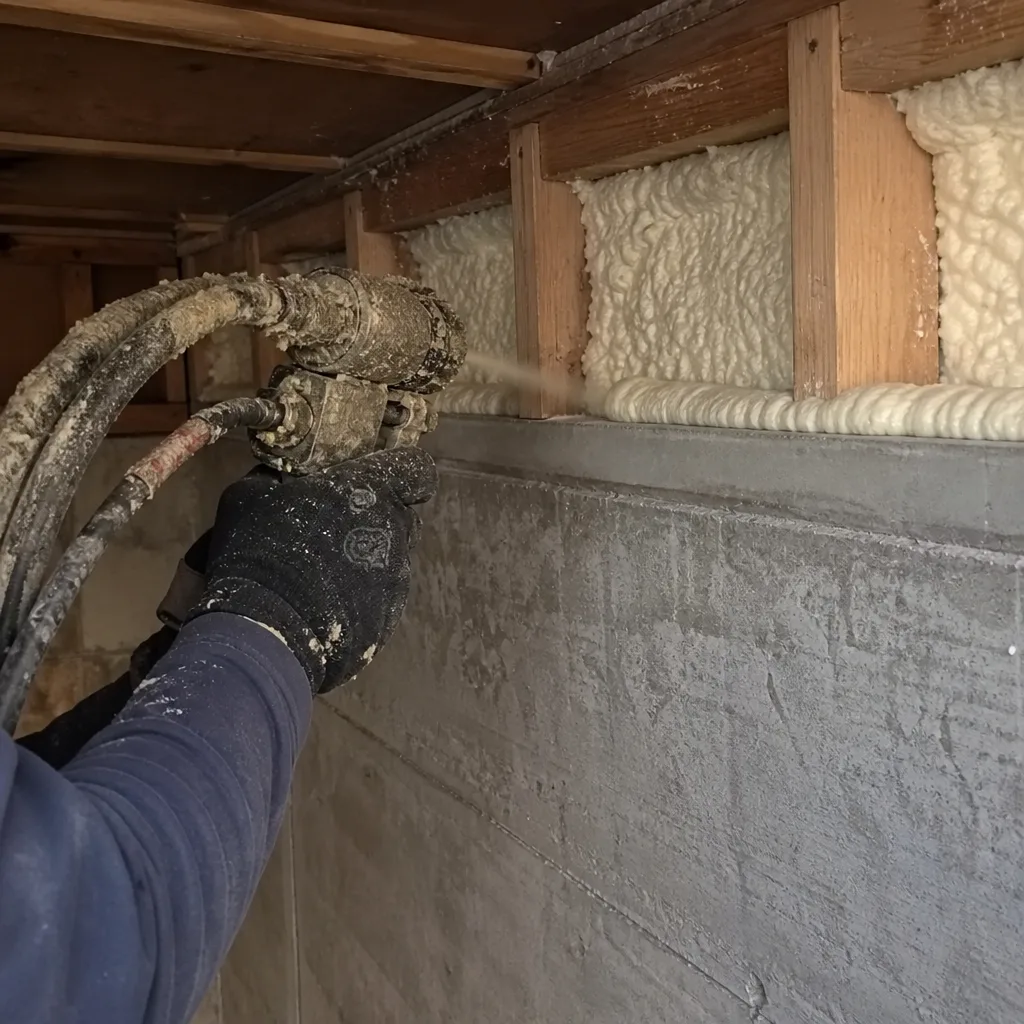
Closed Cell Spray Foam Insulation in Eastvale is the right choice when you need maximum R-value per inch and an air barrier in the same application. In Eastvale’s hot, dry climate, closed-cell foam’s dense structure also resists the radiant heat that drives attic temperatures above 140°F in July and August. We spec closed-cell for Eastvale garage ceilings, rim joists, and the hottest roof deck slopes, because it delivers R-6.5 to R-7 per inch and stops air movement that open-cell foam alone cannot.
Closed-cell spray foam in Eastvale runs $3.50 to $6.50 per square foot, with garage ceiling jobs landing between $1,800 and $3,400 and larger attic applications ranging $6,500 to $11,000. It’s the more expensive option per square foot, but it’s also the only foam that doubles as a vapor-barrier and structural reinforcement. For the specific problem we see in 92860’s builder-grade attics, that’s often what’s actually needed.
Garage Ceiling and Rim Joist Applications
Eastvale’s attached garages create a thermal canyon. The garage ceiling sits directly under living space, and the rim joist ring around the garage foundation pulls hot exterior air into the wall cavities. Closed-cell foam handles both. It seals the rim joist against the slab edge and stops the convective loop that feeds heat upward.
For the garages along Limonite Avenue and the newer sections off Archibald, we typically combine rim joist foaming with a full garage ceiling application. The two together address the primary heat paths that single-zone builders never mitigated.
Hot Roof Slopes and Radiant-Barrier Gaps
Builders in Eastvale’s 2000-to-2015 build-out sometimes installed radiant barrier, but the coverage is inconsistent. The hottest west- and south-facing slopes often got skipped entirely. Where radiant barrier was installed, it underperforms once dust settles on the foil surface or original installs left gaps at the ridge and eave edges.
Closed-cell foam sprayed directly to the underside of the roof deck creates a thermal break that doesn’t rely on foil reflectivity. On a July afternoon in Eastvale, that’s the difference between an attic that stays under 100°F and one that spikes past 130°F.
Trusted Brands We Service in Eastvale
For Eastvale homeowners, brand access matters less than brand-appropriate application, but we stock Icynene and Demilec because they produce the two strongest closed-cell and open-cell spray foam systems we’ve worked with. Icynene’s closed-cell foam delivers high R-value per inch and excellent adhesion to the engineered lumber used in Eastvale’s production framing. Demilec’s open-cell options suit walls and sound-control applications. We also carry Owens Corning, Johns Manville, Knauf, CertainTeed, Rockwool, and GreenFiber for the batt, blown-in, and mineral wool jobs where spray foam isn’t the right call. Eight brands, three methods, one specialty. It means our Eastvale customers get a recommendation based on their home’s actual performance gap, not on whatever single line a smaller contractor happens to carry.
Common Spray Foam Insulation Problems We See in Eastvale Homes
- Settled builder-grade blown insulation. After 10 to 15 years, the blown fiberglass in Eastvale attics settles 2 to 3 inches below spec, especially on west- and south-facing slopes. R-value gaps open up exactly where the summer sun hits hardest, which is why we recommend spray foam top-ups rather than simply adding more blown-in.
- Unsealed recessed cans and HVAC platform gaps. Eastvale’s production builders didn’t seal around recessed light housings or HVAC platform penetrations at the original build. On a 100°F day, those gaps pour hot attic air into living space. Foam sealing is the only permanent fix.
- Missing or ineffective radiant barrier. Original developer radiant-barrier installs often skipped the hottest roof pitches. Where installed, dust accumulation and edge gaps reduce the foil’s performance. Closed-cell foam creates a thermal break that doesn’t degrade.
- Garage ceiling hot spots over conditioned spaces. The garage ceiling is the most under-insulated plane in Eastvale’s tract homes. With living space directly above, a thin layer of settled blown-in lets attic heat radiate into bedrooms and bonus rooms. Closed-cell spray foam on the garage ceiling is our most common corrective job in 92860.
Pricing for Spray Foam Insulation in Eastvale, CA
Spray foam insulation pricing in Eastvale ranges from $2.50 to $6.50 per square foot installed. Open-cell runs lower, typically $2.50 to $4.00 per square foot, while closed-cell runs $3.50 to $6.50. A garage ceiling spray foam job in Eastvale typically costs between $1,800 and $3,400. A full attic spray foam upgrade runs $6,500 to $11,000 depending on square footage and whether we’re removing existing insulation or spraying over it. Rim joist foaming usually adds $1,200 to $2,200 for standard Eastvale foundations. Factors that move your price: access clearance, existing insulation depth, whether drywall needs cutting for rim joist access, and the foam type your specific application requires. Estimates are free. Call (855) 382-3451 and we’ll give you a firm number before any work starts.
We Also Serve Cities Near Eastvale
Thermal Insulation Co works throughout the Inland Empire corridor. If you’re in Eastvale or one of the neighboring communities, we’ve got crews servicing Norco, Home Gardens, Corona, and Jurupa Valley on the same routes. Same scheduling. Same material lineup and same approach to matching the fix to the house, not the other way around.
Serving Eastvale, CA — Our Local Coverage Area
We’re based in the Eastvale area and know this community well. Use the map below to see our service coverage — if you’re nearby, we can almost certainly help.
FAQs About Spray Foam Insulation in Eastvale
Adding spray foam to your garage ceiling does not void a builder’s structural warranty, since the foam does not alter framing, electrical, or plumbing. However, if your Eastvale home is still within its original warranty period, check your specific warranty language before installation. Most production builders in Eastvale’s 2000-to-2015 build-out covered structural elements for 10 years, and insulation was rarely included beyond the first year. We can help you document the work if a warranty claim ever comes up. Call (855) 382-3451 if you want us to review your specific case.
Closed-cell spray foam applied to the garage ceiling and the hottest roof slopes consistently drops living-space temperatures by 6 to 10°F during Eastvale’s summer heat spikes, because it seals the gaps that let hot attic air enter while adding R-value. In the Harada Park area, a homeowner called us because their upstairs bonus room hit 88°F by 3 p.m. daily. We sprayed closed-cell foam over the garage ceiling and sealed the can penetrations, and that room dropped 9°F on the next 102°F day. Attic temps don’t drop as dramatically as living-space temps, but the heat transfer into your home stops.
For garage ceilings and roof decks, yes, closed-cell foam can be sprayed directly over existing blown-in insulation once we remove the settled material from the critical areas. For attic floors, the better approach in Eastvale is usually air-sealing first, then spraying foam at the thermal plane. The settled blown-in in most 92860 attics is so degraded that leaving it in place does you no good. We’ll give you a straight read on site. Estimates are free at (855) 382-3451.
No, the garage door opener and any smart opener accessories stay in place during the spray. We mask and protect the opener, tracks, sensors, and any smart hub components before spraying. The foam goes onto the ceiling surface, not into the mechanicals. If the opener is overheating from garage heat, sealing the ceiling above it with closed-cell foam actually helps reduce that thermal load.
A standard three-car garage ceiling spray foam job in Eastvale takes one day from setup to cleanup. Most homeowners are back in their garage the same evening. Larger attic spray foam projects run two to three days, depending on size and whether existing insulation needs removal first. We schedule Eastvale jobs on a same-week basis in most cases. Call (855) 382-3451 to get on the calendar.
Written by Ruben Castellano, Owner at Thermal Insulation Co, serving Eastvale and the Inland Empire with spray foam, blown-in, and batt insulation since the company’s founding.