
Fast, Reliable Attic Insulation Across Highland
Attic insulation in Highland, CA typically costs $1,800 – $4,500 for a full replacement in an average 1,500 – 2,200 sq ft home, with top-ups running $900 – $1,800 and spot air sealing running $400 – $1,200. Most jobs we do in Highland are completed in one day. The real problem in this city isn’t winter cold. It’s the relentless summer heat radiating through under-insulated attics into living spaces below, pushing cooling systems past what they were designed for. We know Highland’s housing stock, its heat patterns, and what works here. Call (855) 382-3451 for a free estimate and we’ll tell you exactly what your attic needs, no guesswork.
Why Thermal Insulation Co Is Highland’s Preferred Attic Insulation Company
We’re a dedicated insulation contractor. That means we don’t do roofing, plumbing, or handyman work on the side. Attic insulation is what we do every day, and we carry the materials to do it right: Owens Corning and Johns Manville fiberglass, Rockwool mineral wool, and GreenFiber cellulose among them. Most single-trade competitors carry one or two product lines. We carry eight brands across three installation methods, which means the recommendation you get from us is driven by what your Highland home actually needs, not what we happen to have in the truck.
Ruben Castellano runs our crew, and he’s built the company around a simple principle: the right insulation for the right application. That’s why we tell Highland homeowners the truth, even when the truth is that a $1,200 top-up will serve them better than a $4,000 replacement. We work throughout the 92346 zip code, from the older tract neighborhoods near Baseline to the newer subdivisions east of the core, and we schedule around Highland’s heat, not against it.
Attic Mold Removal in Highland
Attic Mold Removal in Highland usually traces back to one of two problems: poor attic ventilation trapping moisture against the roof deck, or bathroom and kitchen exhaust fans venting into the attic instead of outside. Highland’s dry climate doesn’t eliminate the problem. It concentrates it. When daytime attic temperatures hit 140°F and nights drop 40 degrees, condensation cycles create exactly the kind of moisture mold needs, especially in older ranch homes with original venting.
What Removal Involves
We remove mold-contaminated insulation, treat the affected framing, and correct the ventilation or exhaust problem that caused it in the first place. Attic mold removal in Highland typically runs $1,200 – $3,000 depending on how far the contamination spread. Leaving it alone means the mold keeps feeding on wood and insulation, and the musty smell eventually works its way into the living space.
When Highland Homeowners Call
Most calls come in spring after winter rains reveal dark stains on ceilings, or during summer when climbing into a hot attic for storage reveals what’s been hiding up there. If you’ve noticed a persistent musty smell near hallway ceilings or dark spots around attic vents, don’t wait. The longer mold sits, the more insulation has to come out and the more expensive the fix gets.
Attic Insulation Removal in Highland
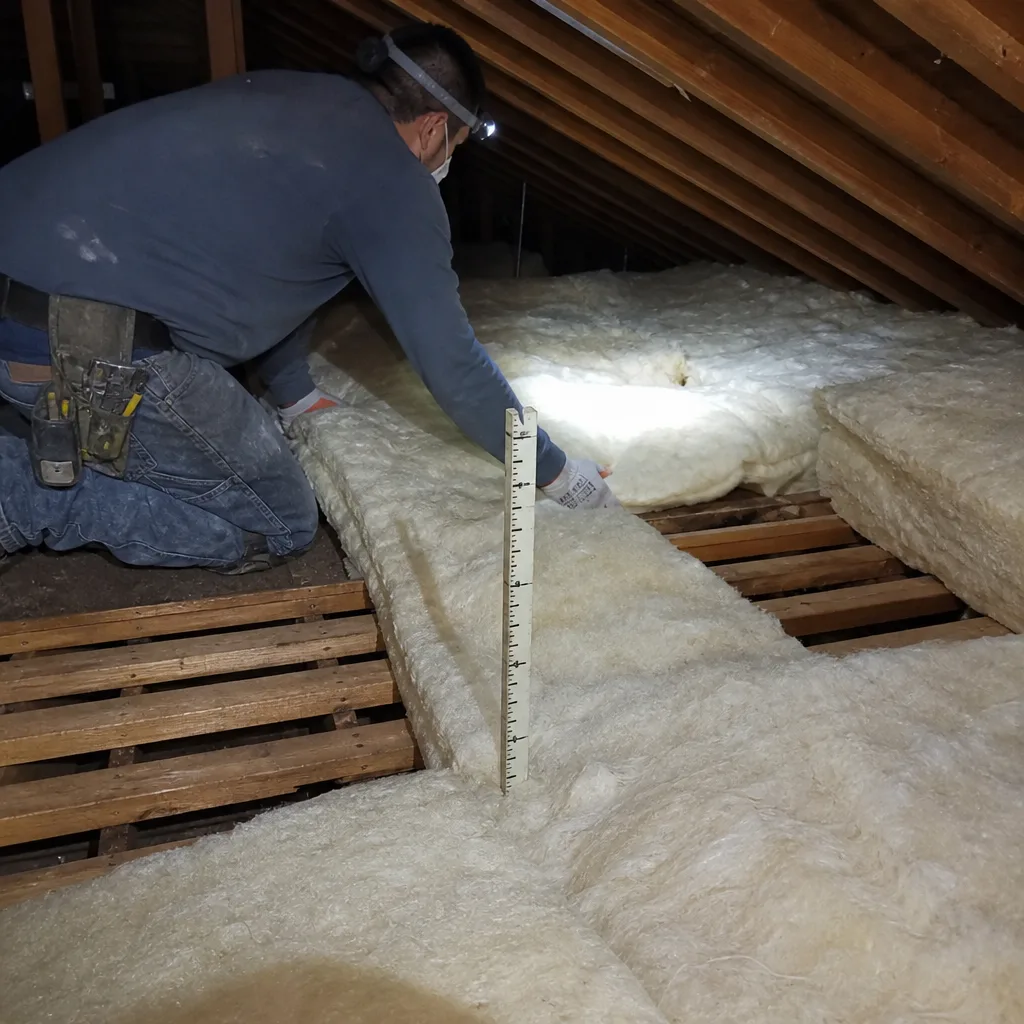
Attic Insulation Removal in Highland is most common in pre-1980s homes where the original fiberglass has settled, compacted, or been contaminated by decades of dust, rodent activity, or past roof leaks. Highland’s older housing stock means we see a lot of attics with R-19 or less that used to be R-30. Once insulation compresses to half its original depth, its effective R-value drops sharply, and radiant heat from Highland’s summer sun passes through almost unimpeded.
When Full Removal Makes Sense
Full removal costs $1,500 – $3,000 for a typical Highland attic, and it’s the right call when contamination is present, when insulation has been water-damaged, or when you’re upgrading to spray foam and need a clean deck. For attics with settled but otherwise clean fiberglass, a top-up is usually sufficient and costs less. We’ll tell you which applies to your home after we inspect it.
Removal Before Air Sealing
If your attic has gaps around plumbing vents, electrical penetrations, or a pull-down stair, removal gives us the access we need to seal those properly before new insulation goes in. In Highland’s wind-driven dust conditions, air sealing is half the job. Insulation alone without sealing is like wearing a jacket with the zipper open.
Trusted Brands We Service in Highland
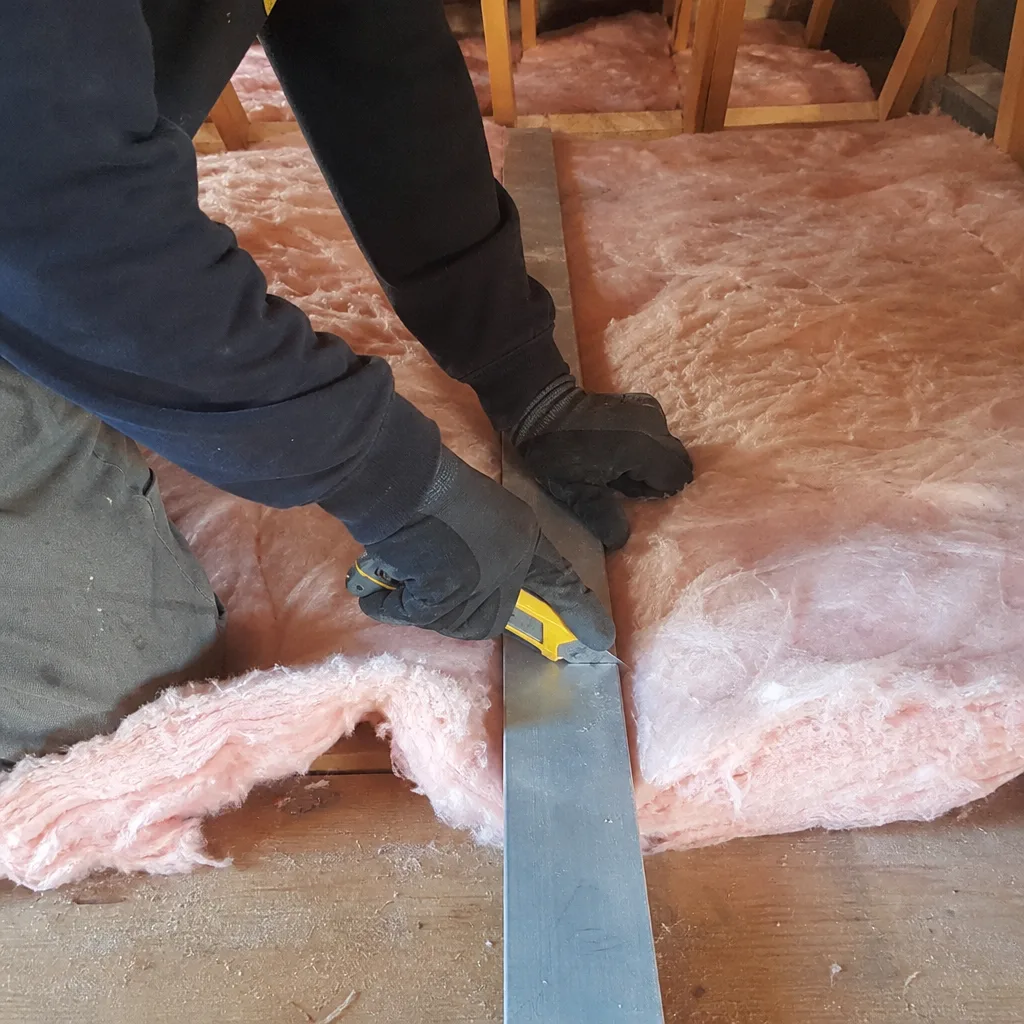
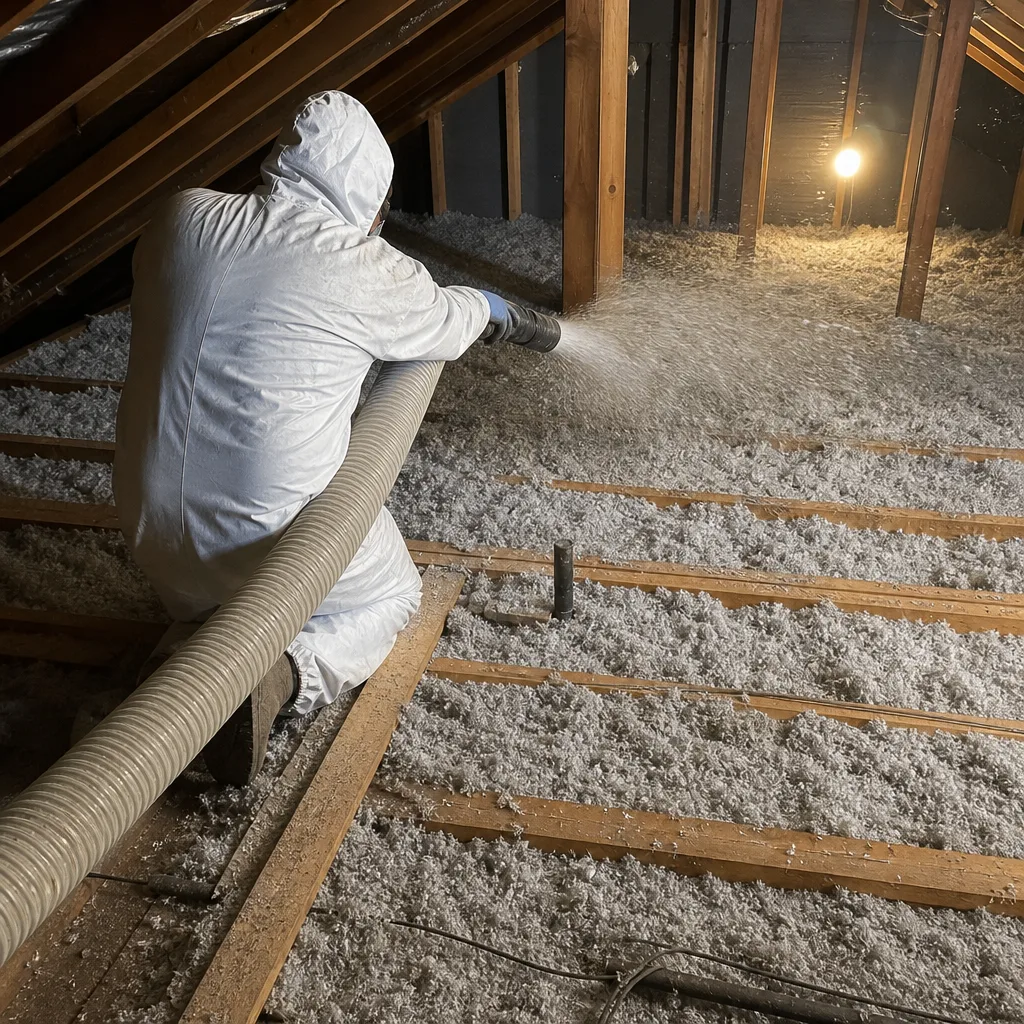
We install Owens Corning and Johns Manville fiberglass because both hold up well in high-heat attics and give Highland homeowners predictable, documentable R-values. We carry Rockwool mineral wool for the fire-resistance and moisture-resistance applications where standard fiberglass isn’t enough, especially in homes close to the foothills where ember exposure is a real concern during wildfire season. And we stock GreenFiber cellulose for homeowners who want a recycled-content option that also does an excellent job filling irregular cavities. We stock all of these products locally for fast turnaround on Highland jobs, so we don’t have to order materials and make you wait.
Common Attic Insulation Problems We See in Highland Homes
- Radiant heat gain through settled insulation: Original attic insulation in pre-1980s Highland homes settles and thins over time, leaving the ceiling cavity unprotected against 100°F+ summer days. We routinely find attics that once had R-30 now performing at R-15 or lower.
- Santa Ana dust infiltration around unsealed gaps: Highland sits in the path of wind-driven dust that finds every attic penetration. We regularly see attics where insulation near the eaves has been fouled by fine dust that filters through unsealed gaps around recessed lights, plumbing stacks, and especially around detached workshop framing.
- Wildfire smoke intrusion through penetrations: During red-flag warnings, smoke enters homes through the attic, not the windows. Unsealed attic penetrations become smoke channels, and we’ve traced smoky indoor air back to gaps around furnace flues and electrical chases more times than we can count.
- Detached workshop and garage door frame gaps: Highland’s acreage properties often include detached workshops with oversized doors that were never sealed against the elements. These structures usually share the same roofline airflow as the main attic, and gaps around their framing pull dust and smoke into the entire envelope.
Pricing for Attic Insulation in Highland, CA
Here’s what we tell Highland homeowners to budget for. A full attic insulation replacement in a 1,200 – 1,800 sq ft home runs $1,800 – $3,500. Attic insulation top-up over existing, settled insulation runs $900 – $1,800. Air sealing as a standalone service runs $400 – $1,200. Attic mold removal runs $1,200 – $3,000 depending on contamination extent. Attic insulation removal runs $1,500 – $3,000. What moves the number is attic square footage, access difficulty, contamination, and whether you need removal or can top up over existing material. Call (855) 382-3451 and we’ll give you an exact number after an inspection. Estimates are always free.
We Also Serve Cities Near Highland
Our Attic Insulation crew covers Highland and the surrounding foothill communities daily. We’re in San Bernardino, Muscoy, Redlands, and Loma Linda on a regular basis, and we schedule routes so we can give Highland homeowners priority response without making you wait for a crew to come up from the valley. If you’re in any of these nearby cities, same scheduling applies.
Serving Highland, CA — Our Local Coverage Area
We’re based in the Highland area and know this community well. Use the map below to see our service coverage — if you’re nearby, we can almost certainly help.
FAQs About Attic Insulation in Highland
Smoke season changes the priority from insulation thickness to air sealing. Smoke particles are small enough to travel through the tiniest attic penetrations, so we recommend sealing all ceiling plane gaps, around recessed lights, plumbing vents, wire chases, and the attic hatch before smoke season starts. Homes that are sealed first, then insulated, show noticeably less indoor smoke odor during red-flag warnings. Call (855) 382-3451 before the next Santa Ana event if you smelled smoke indoors last time.
Most pre-1980s Highland homes have original insulation that has settled, compressed, or been contaminated by dust, rodent droppings, or past moisture. Once fiberglass compresses to half its original depth, its R-value drops dramatically. Removal is necessary when contamination is present or when you need a clean surface for air sealing and new material. If your insulation is clean but settled, a top-up often works instead, and we’ll tell you which is right for your attic.
For most Highland homes, we recommend Owens Corning or Johns Manville fiberglass batts for their durability in high-heat attics and dependable R-values. Rockwool mineral wool is the better choice near the foothills where fire resistance matters. For blown-in applications, GreenFiber cellulose fills irregular cavities well. The right answer depends on your attic’s condition and your home’s proximity to open brush, and we’ll walk you through the decision before you commit.
No. Mold continues to feed on attic framing and insulation regardless of season, and the longer it goes untreated, the larger the removal job becomes. Highland’s fire season doesn’t change the mold’s growth rate. If you’ve seen stains or smelled mustiness, addressing it now means less material to remove and a lower final cost. Waiting until fall typically adds hundreds to the job, and sometimes more if it spreads into the roof deck.
Highland’s acreage properties often mean detached workshops, longer driveways, and larger attics spread across multiple structures. We plan these jobs so we arrive with enough material and the right equipment to finish in one trip. Detached workshops with oversized doors also need extra attention around framing gaps, which pull in dust and smoke that compromise the main house’s insulation performance. We inspect and seal these gaps as part of the attic work.
Why Fire Season Drives Insulation Calls in Highland
Highland sits at the base of the San Bernardino Mountains on the hot, dry east side of the Inland Empire. Summer attic temperatures here hit 140°F routinely, and the housing stock is mostly older single-story tract and ranch homes with original or under-insulated attics. But the real signal that separates Highland from nearby cities is this: homeowners call us specifically to air-seal attics and close envelope gaps before smoke season, not because of cold. It’s a fire-season-driven insulation repair pattern unique to the foothill communities below the San Bernardino Mountains, and it means our Highland work is as much about tightening the thermal envelope against smoke intrusion as it is about blocking radiant heat.
We recently air-sealed and topped up the attic of a 1960s ranch home near Baseline and Palm in Highland, using Owens Corning R-38 batts after sealing gaps around a detached workshop’s oversized door frame that was pulling in dust and smoke. Our tech also replaced a worn spring on the heavy-duty garage door that had become a common failure point during Santa Ana winds. The homeowner reported a noticeable drop in attic heat and fewer smoky drafts during the next red-flag warning.
If you’ve smelled smoke inside your Highland home during a red-flag warning, or if your upstairs rooms bake through summer afternoons, the problem is almost certainly in the attic. Call (855) 382-3451 for a free estimate. We’ll inspect, tell you what you actually need, and get it done in one trip.
Written by Ruben Castellano, Owner at Thermal Insulation Co, serving Highland and the Inland Empire.