Fast, Reliable Attic Insulation Across Redlands
Most Redlands homes lose more conditioned air through the attic than any other part of the building envelope. In this climate, that’s not a minor inefficiency. It’s a seven-month air-conditioning tax. Thermal Insulation Co serves the entire Redlands area, from the historic districts near downtown out to the newer subdivisions east of Wabash, with attic insulation installed to handle 100°F summers and Santa Ana wind conditions. We stock materials from eight manufacturers and install three methods: blown-in, batts, and spray foam. Call (855) 382-3451 for a free estimate. We’ll tell you which one actually makes sense for your attic, because in Redlands the wrong choice costs more than the right one ever will.
Why Thermal Insulation Co Is Redlands’s Preferred Attic Insulation Company
We’re an insulation contractor, not a generalist. That distinction matters in Redlands because the housing stock here demands it. A crew that splits time between roofing and drywall never develops the pattern recognition needed for a 1920s Craftsman attic with knob-and-tube wiring sitting next to a 2005 tract home with builder-grade fiberglass. We see both weekly.
Ruben Castellano leads our team, and he’s built the company around a simple principle: recommend the material and method that fits the attic, not the inventory we’re trying to move. That’s why we carry competing brands. Owens Corning and Johns Manville fiberglass. Demilec spray foam. GreenFiber recycled cellulose. When a Redlands homeowner asks why we recommend one over another, the answer comes down to R-value targets, moisture conditions, and venting. Not margin.
We respond to Redlands callouts same-day in most cases, and we quote precise pricing before starting any job. No vague ranges after the fact. When we say a blown-in job on a 1,200-square-foot Redlands ranch runs $1,800 to $2,600, that’s the number you’ll see on the invoice.
Attic Mold Removal in Redlands
Attic mold removal in Redlands is a recurring need we see most often in older homes with inadequate ventilation or a bathroom fan venting directly into the attic space. The dry climate fools people. They assume mold can’t grow here. But winter nights near freezing create condensation cycles, and a single improperly vented bath fan introduces enough moisture to feed mold growth in the framing and sheathing. Once it’s established, it spreads through the insulation itself.
Removing it properly means more than spraying bleach. We remove contaminated insulation, treat the affected framing, identify the moisture source, and correct it before new insulation goes in. In Redlands, a full mold remediation plus insulation replacement on a typical 1,000 to 1,500-square-foot attic runs $3,200 to $6,800 depending on how far the mold has traveled and whether the venting needs to be redesigned. Call (855) 382-3451 and we’ll inspect it. Inspection takes under an hour.
What You Can Check Before Calling Us
Look for dark staining on the underside of the roof sheathing, especially near the eaves and around any bath fan terminations. A musty smell that gets stronger in summer is another tell. If you see mold on the sheathing, it’s almost certainly in the insulation too, and removing just the visible layer won’t solve it.
Why Venting Fixes Usually Come First
In Redlands, attic mold is almost always a symptom of a ventilation failure, not a one-time leak. If we pull out moldy insulation but leave the same soffit and ridge vent configuration, the mold returns. Our crews add or upgrade baffles, verify airflow at the eave line, and correct bath fan ducting as part of every mold removal we do. Skipping that step guarantees a callback.
Attic Insulation Removal in Redlands
Attic insulation removal in Redlands is something we do more often than most homeowners expect, and it’s almost always the right first step in the older neighborhoods. Settled fiberglass batts from the 1970s look full but test at R-11 or worse. Vermiculite from the mid-century era needs testing before anyone touches it. And rodent activity in the attic turns insulation into a health hazard that can’t simply be covered over with fresh material.
Full removal on a Redlands home typically runs $1.50 to $3.00 per square foot of attic floor, so a 1,200-square-foot attic lands between $1,800 and $3,600. That price includes bagging, removal, and disposal. It does not include the new insulation, which is quoted separately based on the material we agree on. If you’re unsure whether removal is necessary, we’ll inspect and tell you straight, even if the answer is that your existing insulation just needs a top-up.
When Removal Is the Only Right Call
Rodent or pest contamination. Water damage from a past roof leak. Mold that’s penetrated the insulation fibers. In these cases, blowing new material over the old traps the problem and accelerates damage to the framing. Redlands homes near the orange groves and open foothills see more rodent pressure than people expect, and we find nests in attics all over the city, not just the rural edges.
Removal Before a Radiant Barrier Install
If you’re adding a radiant barrier to fight the Redlands summer heat, you want the attic clean first. Old insulation sits on the attic floor where it belongs, but removal lets us air-seal the ceiling plane properly, verify the baffle placement, and give the barrier a clean surface to reflect heat against. Trying to retrofit a barrier around settled, dusty batts leaves gaps that defeat the purpose.
Trusted Brands We Service in Redlands
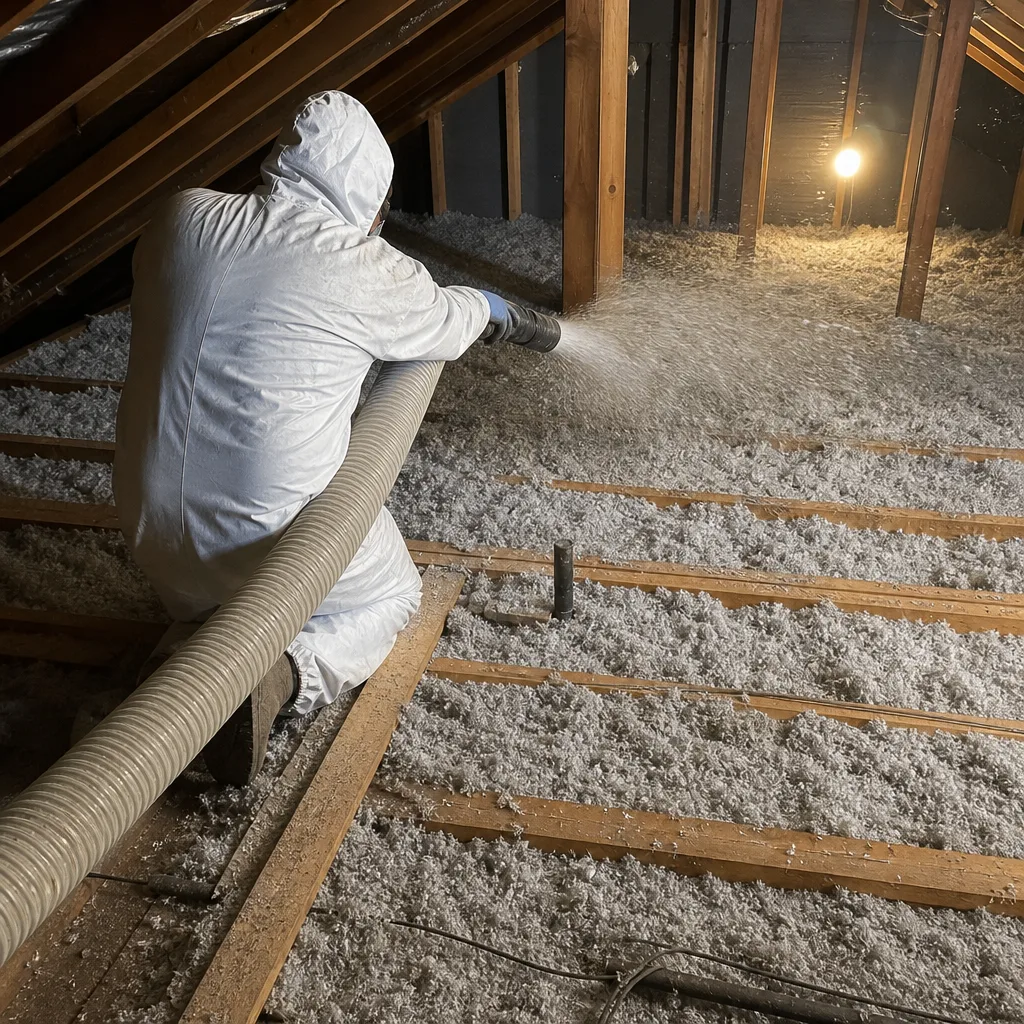
Thermal Insulation Co installs products from eight manufacturers, but on any given Redlands job we’re usually recommending from a short list. Owens Corning fiberglass goes into most attic top-up and full replacement jobs because it holds its loft well and hits R-38 to R-60 targets at a reasonable cost. Demilec spray foam comes out when an attic needs air sealing and insulation in one pass, especially in older Redlands homes where the ceiling plane leaks badly. GreenFiber cellulose shows up for homeowners who want the recycled-content option, and it performs well in the dry Inland Empire climate. Because we stock across brands, we’re not pushing one product line. We match the material to the attic. Call (855) 382-3451 and we’ll explain what fits your home and why.
Common Attic Insulation Problems We See in Redlands Homes
- Blown-in insulation without a radiant barrier. In the older bungalows near downtown Redlands, crews blew cellulose or fiberglass into attics with minimal venting and no radiant barrier. The result: insulation that slows conductive heat but does nothing against the radiant heat hammering the roof deck, and upstairs rooms that still hit 90°F in July. Adding a radiant barrier changes that.
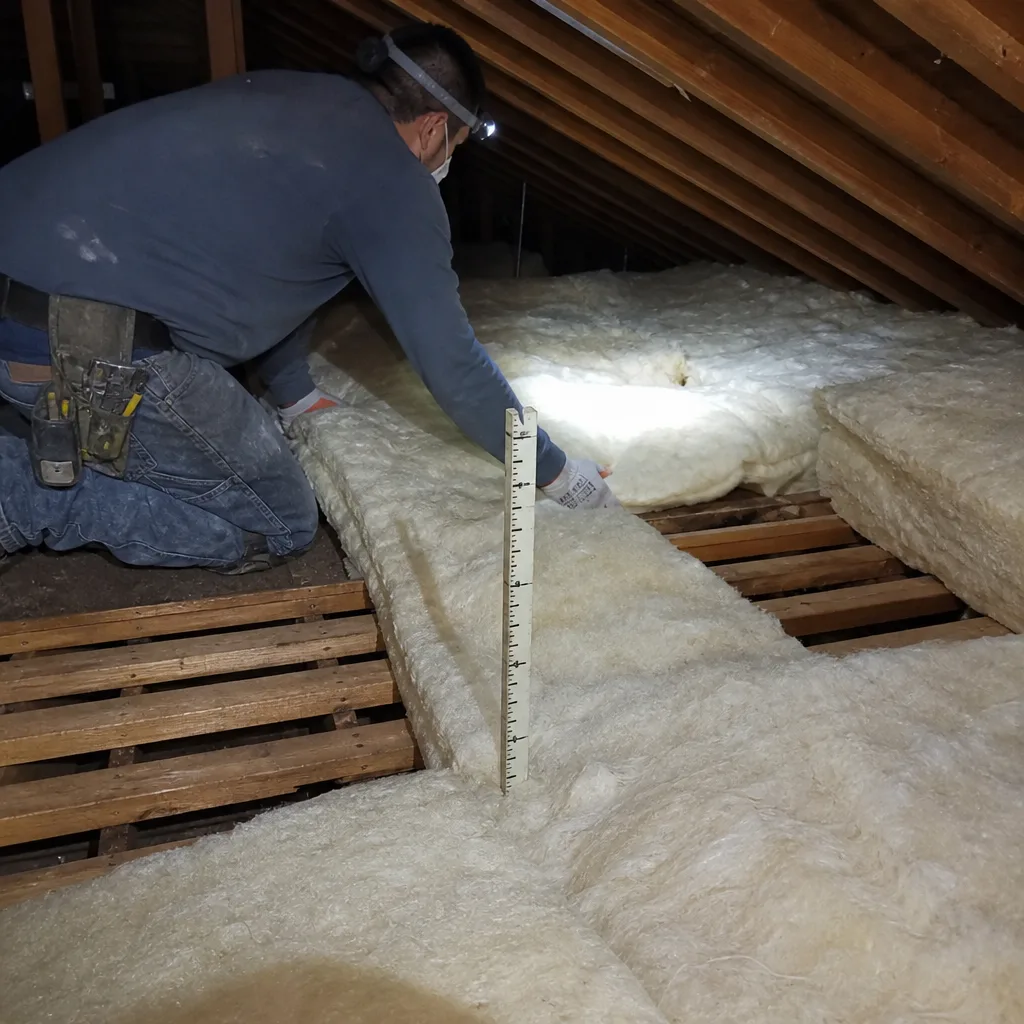
- Settled or thin fiberglass in mid-century ranch homes. Homes built in Redlands between 1950 and 1980 often have 4 to 6 inches of settled fiberglass, which tests far below the R-38 to R-60 that modern code and the Inland Empire climate actually require. The batts look full until you measure them. Then the math catches up with your SCE bill.
- Attic mold from unvented bath fans. This one surprises Redlands homeowners because the climate is dry. But a bath fan venting moist air directly into a sealed attic will grow mold on the sheathing within a few winters. We see it constantly in homes built before venting codes caught up.
- Insulation degradation from Santa Ana wind and dust. The dry Santa Ana winds that sweep through the Redlands area each fall push dust and fine particulate through any gap in the attic venting. Over time, that dust settles into fiberglass batts and reduces their effective R-value. Properly sealed and screened vents stop most of it before it starts.
Pricing for Attic Insulation in Redlands, CA
A typical blown-in fiberglass attic insulation job in Redlands runs $1,800 to $2,600 for a 1,200-square-foot attic, including the material and labor to reach R-38. Full removal plus new insulation lands between $2,800 and $5,200 depending on the access, the depth of what’s coming out, and whether we’re air-sealing at the same time. Spray foam runs higher, typically $3.50 to $5.50 per square foot for open-cell and $5.00 to $7.50 for closed-cell, because it’s a different animal entirely. Redlands homes with vaulted ceilings or limited attic access cost more because the work is slower and the access is tighter. We give free estimates, we quote fixed numbers, and the price we quote is the price you pay. Phone is (855) 382-3451.
We Also Serve Cities Near Redlands
Our crews cover the whole Inland Empire corridor around Redlands, including Mentone, Loma Linda, Highland, and Colton. If you’re in one of those communities and need Attic Insulation, you’ll get the same same-day response and brand-agnostic material recommendation. Redlands is where we’ve done much of our historic-home work, and we know the surrounding areas as well as we know the downtown streets.
Serving Redlands, CA — Our Local Coverage Area
We’re based in the Redlands area and know this community well. Use the map below to see our service coverage — if you’re nearby, we can almost certainly help.
FAQs About Attic Insulation in Redlands
No, not always. If the existing insulation is dry, uncontaminated, and not heavily settled, we can often blow new material directly over it to bring the total R-value up. But in Redlands homes with rodent activity, water staining, or mold, removal is the right call before new insulation goes in. We’ll inspect your attic and tell you which path fits your situation, and we’ll quote both so you can compare. Call (855) 382-3451 and we’ll schedule the inspection.
A radiant barrier reflects heat away from the attic floor instead of letting the roof deck radiate it down into your living space. In Redlands, where summer attic temperatures routinely exceed 140°F, that barrier can cut the heat load falling on your insulation by a meaningful margin. It works best when paired with proper venting, which is why we usually recommend both together in older Redlands homes. The barrier handles the radiant heat, the insulation handles the conductive heat, and the venting keeps the whole attic from becoming an oven.
For most Redlands homes, we recommend R-38 minimum in the attic, moving to R-49 or R-60 in homes with high cooling loads or electrically heated interiors. The California building code calls for R-38 in many attic applications, but the Inland Empire’s sustained 100°F summer days argue for going higher when the home’s ceiling plane will accept it. In the older Craftsman bungalows, we often have to work within the constraints of shallow rafter bays, which is where spray foam earns its cost because it packs more R-value per inch.
Yes. The attic is one of the few places where an energy upgrade doesn’t touch the visible character of a historic Redlands home. We work from the attic access, not through the finished walls or ceilings, so the original plaster, trim, and built-ins stay untouched. The biggest challenge in older bungalows is access and knob-and-tube wiring clearance, which we handle by coordinating with a licensed electrician when needed and keeping insulation away from live wiring runs. The character stays. The upstairs stops roasting.
Dark staining on the underside of the roof sheathing, a musty smell that gets stronger when the attic heats up, or visible mold on the insulation itself all indicate you need attic mold removal. In Redlands, we also see mold triggered by bath fans venting into the attic, so if your bathroom fan doesn’t terminate outside, that’s a red flag. Mold in the insulation calls for removal and replacement, not treatment. Call (855) 382-3451 and we’ll inspect it, identify the moisture source, and give you a fixed quote for the full fix.
One Trip, Done Right: The Redlands Reality
There’s a pattern in Redlands we don’t see as often in neighboring cities. In the downtown historic district, south toward Brookside, and in the neighborhoods off Cajon Street, the original Craftsman bungalows and Spanish Colonial Revivals predate modern insulation entirely. Many of them have nothing in the attic but a thin layer of dust and the original roof boards. The homeowners who call us from those streets aren’t calling for a quick top-up. They’re calling because a bedroom hit 95°F last July, or the air conditioner ran non-stop from June through September, and nothing the previous contractor did made a difference.
We recently upgraded attic insulation on a 1920s Craftsman bungalow near downtown Redlands. The attic had minimal fiberglass batts and no radiant barrier, and the upstairs rooms exceeded 90°F every summer afternoon. We removed the old insulation, air-sealed the ceiling plane, installed a radiant barrier against the rafters, added proper soffit and ridge venting, and blew in Owens Corning fiberglass to R-38. The homeowner reported a 15°F drop in upstairs temperature and a cooling bill that finally stopped climbing. That’s what the right method, matched to the right house, does in this climate.
The east-side tract homes in 92374 and the newer subdivisions out toward Mentone don’t usually need the full removal-and-barrier treatment. Their attics have builder-grade insulation that’s just a little thin, not a hundred years behind. A top-up to R-49 solves it in a morning. The point is that one answer doesn’t fit every Redlands attic. If someone tells you it does, they’re selling you their inventory, not a solution. Call (855) 382-3451 and we’ll tell you which path your house actually needs.
Written by Ruben Castellano, Owner at Thermal Insulation Co, serving Redlands and the Inland Empire.