Last updated October 30, 2026
Seasonal Insulation Care for Van Nuys: Year-Round Homeowner’s Guide
Most Van Nuys homeowners think about insulation once: when a room gets uncomfortably hot in August, or when the January gas bill arrives and something feels off. The reality is that your home’s thermal envelope faces two distinct stress events every year, and the best time to address problems is almost never when you notice them. In Van Nuys, attic temperatures above 140°F work on your insulation all summer, winter nights pull heat out through your ceiling plane, and the two mild windows between those extremes are when inspection and correction actually make sense. This guide walks you through what to watch for in each season, why the timing matters, and how to think about insulation as a system rather than a product you buy once and forget.
Quick Answer
Van Nuys doesn’t have four seasons in the traditional sense – it has two thermal stress events (summer heat loading and winter radiation loss) separated by two mild transition windows. The best time for attic insulation inspection and installation is October through November, when weather is mild, contractors have availability, and your home has just spent a summer revealing its weak points. For a step-by-step approach, see our Attic Insulation Maintenance Checklist for Van Nuys Homeowners. The single most important seasonal habit is a post-heat-wave attic check in September, followed by a Santa Ana wind-triggered inspection whenever wind advisories hit the San Fernando Valley.
Table of Contents
- Summer (June – September): Heat Loading and What It Does to Your Insulation
- Fall (October – November): The Optimal Installation Window Most Homeowners Miss
- Winter (December – February): Radiation Loss and Why Mild Winters Still Spike Bills
- Spring (March – May): Pest, Moisture, and Ventilation Checks Before the Heat Returns
- Santa Ana Wind Events: A Recurring Inspection Trigger
- How Different Insulation Materials Respond to Van Nuys Seasons
- A Seasonal Inspection Routine That Actually Works
- Common Mistakes to Avoid
- When to Call a Professional
- Frequently Asked Questions
- The Bottom Line
Summer (June – September): Heat Loading and What It Does to Your Insulation
Van Nuys summers routinely push attic temperatures past 140°F, and sometimes higher in homes with dark roofing materials and limited ventilation. That sustained heat does not just make your upstairs uncomfortable. It physically works on your insulation over time, and the effect differs significantly depending on what’s up there.
Fiberglass batts handle high heat reasonably well from a thermal standpoint, but sustained attic temperatures above 130°F accelerate a different problem: any moisture trapped in the material expands and contracts repeatedly, causing the batts to slump or pull away from framing members. We see this in older Van Nuys homes with original insulation, especially in neighborhoods like Valley Glen and Lake Balboa where roof pitches tend to be lower and radiant heat transfer is more intense. When a batt loses contact with the drywall below it, even by a quarter inch, its effective R-value drops noticeably because air begins to circulate through the gap.
Spray foam behaves differently under the same conditions. Closed-cell foam, like Icynene and Demilec products we install, maintains its structural integrity well above 140°F. Open-cell foam also holds up, but it does not provide the same vapor barrier performance, which matters when summer humidity spikes during monsoon season and warm, moist air tries to move into your attic assembly. The key point: neither material fails catastrophically in heat, but heat accelerates the slow decline of older fiberglass in ways that are easy to miss until a room becomes unbearable. If you’re noticing warning signs, our Attic Insulation Troubleshooting: Common Problems and How to Fix Them can help you diagnose what’s happening.
What to Look For After a Heat Wave
After any stretch of consecutive days above 95°F in Van Nuys, a quick attic check is worth fifteen minutes of your time. Here’s what to look for:
- Batts that have shifted or slumped. Heat cycling and gravity combine to pull insulation away from vertical surfaces and edges. Check the perimeter of the attic floor, especially along exterior walls.
- Dark spots or staining. This indicates moisture movement and possibly condensation, which can reduce R-value and invite mold. In Van Nuys, this often appears near bathroom exhaust fans that vent into the attic rather than through the roof.
- Compressed areas where insulation was walked on. Every time a cable installer or HVAC tech visits, some compression happens. It adds up over years.
- Rodent or pest activity. Rat droppings and nesting material are common in Valley attics, and heat drives animals seeking cooler nesting spots into shaded areas of your insulation.
If you’re not comfortable climbing into a 140°F attic – and honestly, you shouldn’t be during summer daytime hours – schedule the check for early morning or wait until the late-September cooling trend. The attic insulation in Van Nuys that we install is designed for these conditions, but even quality materials benefit from an annual review.
Fall (October – November): The Optimal Installation Window Most Homeowners Miss
October is the best month for attic insulation work in Van Nuys, and almost nobody schedules it then. Why? Because the weather is comfortable, the AC has stopped running constantly, and insulation is the furthest thing from anyone’s mind. That’s precisely why it’s the right time.
Three factors make fall the ideal installation window. First, mild temperatures mean spray foam cures more predictably. Foam reacts to ambient temperature and humidity during application, and the 70°F to 80°F days we get in October and November produce the most consistent expansion and adhesion. Second, contractor availability is better. Most homeowners call for insulation help during extreme weather, which means summer and winter demand spikes. Scheduling in fall means shorter wait times and more attention to detail. Third, materials perform better when installed in conditions that match their design specifications. Blown-in fiberglass and cellulose settle differently depending on humidity, and fall’s lower ambient moisture allows for more accurate density.
Fall is also when the summer’s damage becomes visible. Your home has just endured three months of continuous heat loading. If insulation has slumped, compressed, or been compromised by pests, that’s now apparent. Fixing it in October means your home is ready before winter heating demands begin.
A Fall Inspection and Improvement Checklist
- Measure current attic insulation depth. Van Nuys homes built before the 1990s often have R-19 or less in the attic. Current recommendations for our climate zone call for R-38 to R-60 depending on the specific application. Even adding a few inches of blown-in material can make a measurable difference.
- Check air sealing around penetrations. Look for gaps around recessed lights, plumbing vents, and electrical boxes. Air leaks move more heat than most homeowners realize, and air sealing should always accompany insulation work – not be skipped or done separately later.
- Verify ventilation. Attic ventilation matters year-round, but fall is when poor ventilation shows up as lingering heat or unusual humidity. Soffit vents, ridge vents, and gable vents all need to be clear.
- Schedule your upgrade if needed. If your insulation is thin, damaged, or outdated, October is the month to call. The blown-in insulation options we install in Van Nuys can be completed in a single day during fall without disrupting your comfort.
We carry Owens Corning and Johns Manville fiberglass products because they’ve proven their consistency across thousands of applications in the San Fernando Valley. For help weighing your options, read our Choosing the Right Insulation Brand: A Buyer’s Guide for Van Nuys. But the brand matters less than the method and the fit for your specific attic. That’s the conversation worth having in October, when you can make decisions without an emergency pushing you.
Winter (December – February): Radiation Loss and Why Mild Winters Still Spike Bills
Van Nuys winters are mild by national standards, but Southern California homes lose heat in a way that surprises many homeowners. The primary mechanism isn’t conduction through walls – it’s radiation from the ceiling plane upward into the attic. On a 45°F night, your interior ceiling surface radiates heat directly into the attic space. The warmer the ceiling, the more radiation occurs, and the less effective your insulation, the more of that heat escapes.
This is why utility bills spike even when winter temperatures never approach freezing. Your heating system works to maintain 70°F inside, heat radiates upward continuously, and under-insulated attics allow that energy to escape. Conduction through uninsulated wall cavities is part of the total loss, but ceiling radiation is the dominant factor in single-story Van Nuys ranch homes and in the upstairs rooms of two-story properties in neighborhoods like Sherman Oaks adjacent to Van Nuys.
What should you watch for in winter? A cold ceiling in a specific room is a direct indicator of insulation failure or gaps. Rooms that never seem to warm up fully, even with the heater running, often sit under attic spaces with thin or displaced insulation. Keep in mind that comfort issues from winter heat loss are sometimes misdiagnosed as HVAC problems. Before replacing a furnace that isn’t the actual problem, check what’s above the ceiling.
Winter Maintenance Tasks
- Monitor your heating bills against December and January norms. A 15-20% jump without a change in usage patterns usually signals a thermal envelope issue.
- Note cold spots on ceilings and walls. Thermal imaging and even a basic infrared thermometer can reveal where insulation is missing or compressed.
- Check for condensation on windows and in corners. Winter condensation in Van Nuys often indicates that warm interior air is meeting cold surfaces, which also happens when insulation gaps exist.
- Listen for rodent activity. Rats and mice move into attics during cooler, wetter months. Their nesting habits displace insulation and reduce its effectiveness.
Spring (March – May): Pest, Moisture, and Ventilation Checks Before the Heat Returns
Van Nuys gets the bulk of its annual rainfall between January and March. That moisture, combined with warming spring temperatures, creates the conditions where insulation problems reveal themselves. Spring is when you catch what winter weather did before summer heat amplifies it.
Rain events expose gaps in vapor management and attic ventilation. If water is getting into your attic – from a minor roof leak, improperly vented bathroom fans, or inadequate eave protection – spring humidity makes that moisture interact with your insulation. Fiberglass batts and cellulose absorb or hold moisture, which reduces R-value immediately and invites mold growth over subsequent weeks. Rockwool products resist moisture better than standard fiberglass, which is one reason we stock them for specific applications in Van Nuys attics where humidity exposure is a known concern.
Spring is also when pest pressure increases. Rodents that sheltered in your attic during winter become active and begin nesting for spring litters. They tunnel through loose-fill insulation, shred batts for nesting material, and leave droppings that introduce additional moisture and odor. A spring pest inspection of your attic, paired with an insulation condition review, catches these issues before a full summer of 100°F days bakes the damage into something worse.
Spring Checklist
- After the last significant rain, check the attic for moisture. Look at the underside of the roof sheathing, around vents, and along exterior wall top plates.
- Inspect for pest entry points. Seal gaps around roof penetrations, fascia boards, and utility entries. Insulation can’t do its job if animals are living in it.
- Verify bathroom and kitchen exhaust fans vent to the outside, not into the attic. This is a persistent issue in older Van Nuys homes and a direct cause of moisture-damaged insulation.
- Assess whether attic ventilation is sufficient before temps climb. If your attic was stifling last summer, spring is the time to address it, not July.
GreenFiber cellulose is worth considering in spring if you’re planning an upgrade and sustainability matters to you. It’s recycled-content material with good thermal performance, and our customers who care about that appreciate having the option rather than being pushed into a single product line.
Santa Ana Wind Events: A Recurring Inspection Trigger
Santa Ana winds typically hit Van Nuys between October and March, and they create an inspection trigger most homeowners ignore. These dry, gusty winds do two things to your home’s thermal envelope. First, they create pressure differentials that force air through gaps and cracks in your building shell. Second, they carry fine dust and debris that get deposited in attic spaces, around vents, and into insulation surfaces.
After a significant Santa Ana event – sustained winds above 25 mph with gusts over 50 – walk around your home and look for signs of air movement through the building envelope. Curtains moving near closed windows, dust accumulation in specific corners, and whistling around doors are all indicators. In the attic, wind-driven dust on insulation surfaces marks air paths. Those same paths are heat loss paths in winter and heat gain paths in summer.
Santa Anas also dry out roofing materials and can dislodge shingles or tiles, leading to subtle leaks that don’t show up until the next rain. Since wind events precede most Van Nuys rain patterns, a post-wind check positions you to catch roof issues before they become insulation problems.
What to Check After a Santa Ana Event
- Attic dust patterns. Areas where dust is concentrated often indicate where air is entering from outside.
- Roof condition. Look for lifted or missing shingles, displaced tiles, or debris accumulation at roof-to-wall transitions.
- Insulation displacement. Strong wind can shift loose-fill material near vents and eaves.
- Air leaks around attic hatches and pull-down stairs. These are common weak points that wind testing makes obvious.
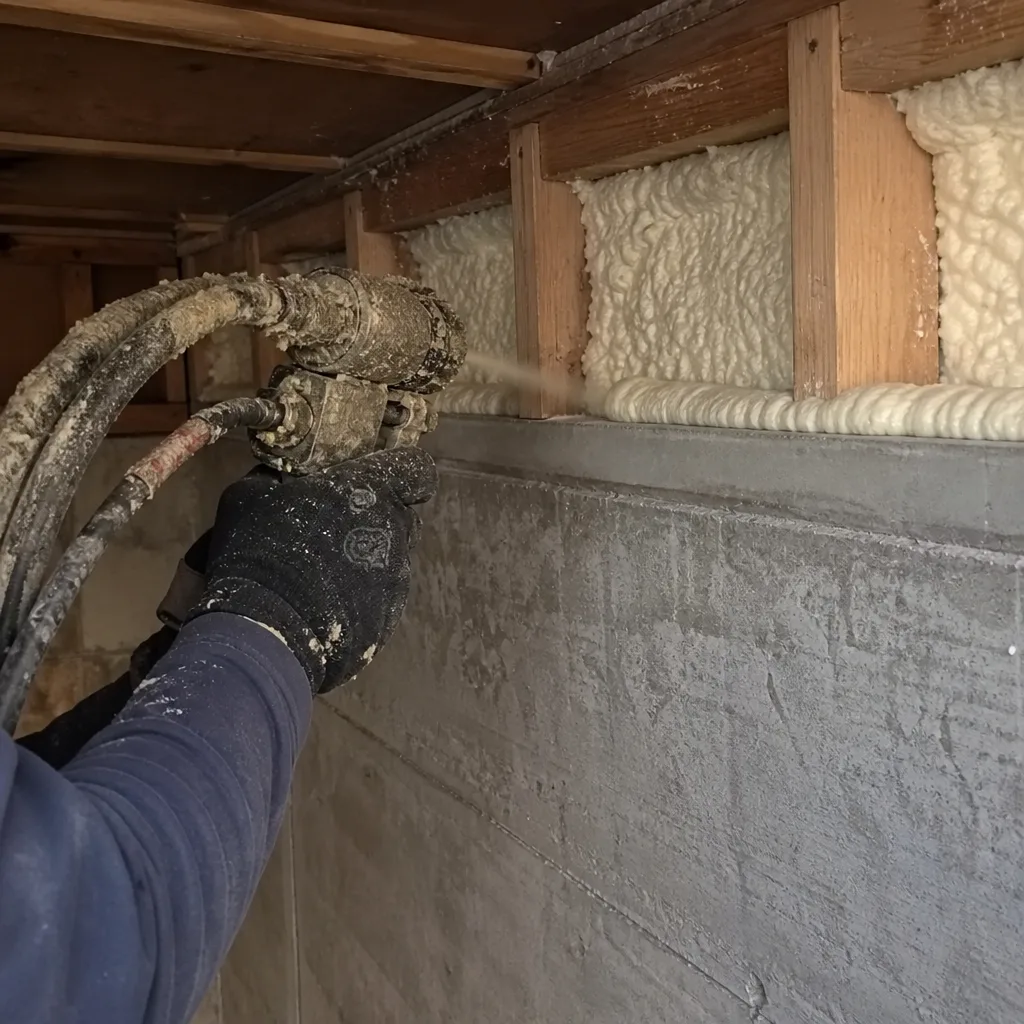
If you’re already considering an insulation upgrade, the spray foam insulation options we offer in Van Nuys include air sealing as part of the application, which addresses the air leakage that Santa Ana winds expose. That’s a meaningful difference between spray foam and traditional batt or loose-fill installation, and it’s part of why the right method for your home isn’t always the one you initially think of.
How Different Insulation Materials Respond to Van Nuys Seasons
Van Nuys has a Mediterranean climate with hot, dry summers and mild, occasionally wet winters. The materials that perform best here aren’t necessarily the same ones that dominate colder or more humid regions. Here’s how the major insulation types respond to our specific seasonal cycles.
Fiberglass Batts
Fiberglass is affordable and widely available. It handles heat without degrading, but it’s susceptible to moisture and air movement. In Van Nuys attics, fiberglass batts need to be installed carefully around framing and penetrations, because air circulation through gaps is the primary enemy. Owens Corning and Johns Manville products we install are consistent in quality, but the installation quality determines performance regardless of brand.
Blown-In Fiberglass and Cellulose
Loose-fill materials excel at covering irregular attic spaces, which is valuable in older Van Nuys homes with non-standard framing. Blown-in insulation fills gaps effectively, but it settles over time, particularly in areas with vibration from HVAC equipment or wind exposure. Blown-in material also needs periodic top-offs to maintain consistent depth and R-value. GreenFiber cellulose is a solid option here for homeowners who want the recycled content angle without sacrificing performance.
Spray Foam
Closed-cell spray foam provides both insulation and air sealing in one application. It’s especially well-suited to Van Nuys attics because it resists moisture, blocks air movement, and maintains its R-value without settling. Open-cell foam provides good thermal performance at a lower cost but lacks the vapor barrier properties of closed-cell. Demilec and Icynene systems cover both categories, and the choice between them depends on your attic configuration, roof type, and whether you’re conditioning the attic space or leaving it vented.
Mineral Wool
Rockwool products resist fire and moisture better than standard fiberglass, which matters in specific Van Nuys applications. If your attic has a history of humidity issues, or if you’re within a high fire hazard severity zone, mineral wool is worth considering. It’s not the default choice for every home, but it’s a tool we use when the conditions call for it.
The point of carrying multiple brands and methods isn’t to make decisions complicated. It’s to make the right decision possible. Most Van Nuys homes benefit from one specific approach more than others, and figuring out which one is part of the service. The Thermal Insulation Co home team works through this selection with you rather than arriving with a predetermined answer.
A Seasonal Inspection Routine That Actually Works
Building a seasonal routine around Van Nuys’s actual weather patterns makes insulation care manageable rather than overwhelming. Here’s a practical schedule that catches problems early and positions you to fix them at the right time.
- Late September / Early October: Post-summer attic inspection. Check for slumped batts, moisture staining, pest activity, and general insulation condition. This is also the best time to schedule any needed installation work while temperatures are mild.
- October through November: Complete any planned insulation upgrades. Whether it’s adding blown-in material, upgrading to spray foam, or replacing damaged batts, this window offers ideal installation conditions and contractor availability.
- December through February: Monitor heating bills and indoor comfort. Note cold ceilings and cold rooms. If you see unexplained bill increases, investigate the attic before assuming HVAC failure.
- After each significant Santa Ana event: Quick exterior check for roof damage and a mental note of any new drafts or dust entry points.
- March through April: Post-rain moisture inspection. Look for leaks, condensation, and ventilation issues. Address pest concerns before summer heat drives animals into cooler attic zones.
The rhythm here matches how Van Nuys actually behaves: heat stress, recovery, wind stress, rain stress, recovery. Homes that get seasonal attention hold their insulation performance longer and need emergency repairs less often.
Common Mistakes to Avoid
- Only thinking about insulation in July and January. By the time discomfort or bill shock hits, you’re paying emergency premiums and competing for contractor schedules. The fall window exists precisely to avoid this.
- Assuming insulation never needs attention. Fiberglass settles, foam can be damaged by roof leaks, and rodents don’t care about your R-value. Insulation requires periodic inspection, just like every other system in a Van Nuys home.
- Ignoring air sealing as part of insulation work. Insulation slows heat transfer, but air leakage moves heat directly. In a windy Valley climate, air sealing is not optional – it’s integral. This is a core difference between batt installation done right and spray foam applied as an integrated system.
- Adding insulation over moisture problems. If there’s a leak or ventilation issue, adding more insulation on top doesn’t solve it and often makes it worse. Moisture trapped under new insulation accelerates deterioration.
- Assuming more R-value always means more comfort. R-value matters, but installation quality and air sealing often matter more in Van Nuys attics with complex framing and multiple penetrations.
- Waiting until roof problems become visible inside the living space. By the time you see a water stain on your ceiling, the insulation above it has been compromised for weeks or months. Attic-level checks catch problems earlier.
- Treating attic insulation as a DIY one-and-done project. Attics in Van Nuys get dangerously hot, contain exposed wiring and framing hazards, and require proper protective equipment. The materials are straightforward, but the working conditions aren’t.
When to Call a Professional
Some insulation tasks are worth doing yourself – a visual attic inspection with proper safety precautions, noting cold spots in winter, tracking energy bills. But installation, remediation, and anything involving damaged or contaminated materials call for professional attention. If you find substantial moisture damage, significant pest infestation, or insulation that’s been displaced across large areas, get an assessment before making a decision. Spray foam installation should always be handled by trained installers, since the application process involves chemical reactions that require proper equipment and ventilation. If you’re in the Valley and want a straightforward evaluation of your attic’s current condition, Thermal Insulation Co offers free estimates in Van Nuys. Explore more guides & resources to stay informed about your home’s insulation needs. Call (855) 382-3451 and we’ll help you figure out what your home actually needs.
Frequently Asked Questions
Once per year, ideally in late September or early October after summer heat stress has revealed any issues. After a significant Santa Ana wind event or unusually heavy rain, a quick additional check is worth doing.
Fall, specifically October and November, offers the best combination of moderate temperatures for material performance, contractor availability, and timing relative to seasonal stress cycles. Spring is a reasonable second choice.
Costs range widely based on material, method, attic size, and existing conditions. Blown-in fiberglass or cellulose typically costs less than spray foam, but a proper comparison requires an attic evaluation. Call (855) 382-3451 for an exact quote – estimates are free.
Yes. The cooling season is the dominant energy consumer in Van Nuys, and an under-insulated attic makes your AC work significantly harder during July, August, and September. Mild winters don’t eliminate the problem – they just shift it to the other side of the calendar.
It depends on your attic configuration, existing insulation, roof type, and whether you’re dealing with moisture or air sealing concerns. Spray foam provides integrated air sealing and high R-value per inch, while blown-in materials cover irregular spaces cost-effectively. The right answer comes from looking at your specific attic, not from a generic recommendation.
Yes, in two ways. Wind pressure forces air through gaps in your building envelope, which reduces effective insulation performance. And wind events can cause roof damage that leads to moisture intrusion. Post-wind checks are a worthwhile habit for any Van Nuys homeowner.
It depends on the extent and type of damage. Small areas of compression or displacement can sometimes be corrected. Moisture-damaged, heavily rodent-compromised, or substantially settled insulation generally needs replacement. A professional assessment will tell you which category you’re in and why.
The Bottom Line
Van Nuys homes face two seasonal stress events – summer attic heat above 140°F and winter ceiling radiation loss – connected by mild windows that are ideal for inspection and installation. The homeowners who get the most from their insulation are the ones who check attics in late September, schedule work in October, monitor bills through winter, and check for moisture after spring rains. Materials matter, but seasonal attention matters more, because even the best insulation degrades when problems go unaddressed. Whether you’re dealing with a specific comfort issue or simply want to stay ahead of the seasonal cycle, a professional evaluation gives you the information to make the right call for your home.
Written by the team at Thermal Insulation Co, serving Van Nuys since 2012.