
Fast, Reliable Spray Foam Insulation Across Indian Wells
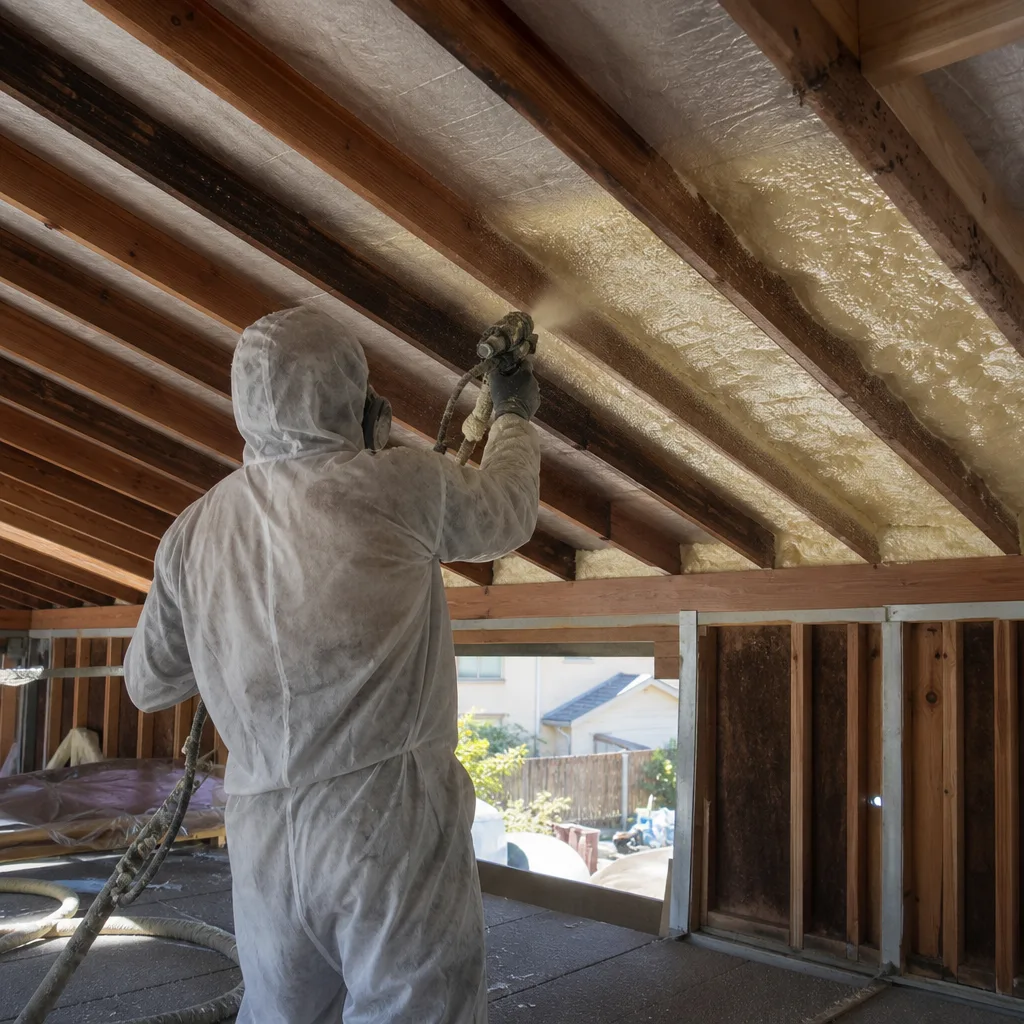
Spray foam insulation in Indian Wells typically runs $2.80 to $6.50 per board foot installed, depending on whether you need open-cell or closed-cell foam, and most jobs here are driven by one thing: beating back the Coachella Valley heat. Homes in Indian Wells bake under summer sun that routinely pushes attic temperatures past 160°F, especially in the gated golf communities where seasonal owners leave properties empty for months. We know those homes. We know the Cook Street corridor, the country-club enclaves off Highway 111, and the mid-century builds with shallow attic cavities that standard batt insulation was never designed to handle. Call us at (855) 382-3451 for a straight answer about what your house actually needs.
Why Thermal Insulation Co Is Indian Wells’s Preferred Spray Foam Insulation Company
We’re an insulation contractor first and only. That matters in Indian Wells, where a spray foam job has to be right the first time because the owner may not be back for six months. Ruben Castellano built this company around that reality: the home sits empty, the attic cooks, and the foam has to hold up without anyone adjusting the thermostat or opening a window. We don’t do roofing on the side or pick up spray foam work between bathroom remodels. Insulation is the entire trade.
Our crews work in Indian Wells regularly. We’re familiar with the HOA requirements in the gated communities, the permitting expectations for work on golf-course-facing lots, and the specific problem of low-slope roofs over irregular attic spaces that make stucco-and-glass 1970s custom homes so hard to keep cool. Homeowners here don’t need a lecture about R-value. They need someone who can look at a west-facing wall of glass overlooking the 12th fairway and explain exactly where the thermal bridge is and what closed-cell foam will do about it.
Spray Foam Wall Insulation in Indian Wells
Spray foam wall insulation in Indian Wells is the highest-impact retrofit for the mid-century and 1980s homes that dominate the golf-course communities. These houses were built with large glazed openings facing south and west, and the original wall cavities were either under-insulated or left empty entirely. Closed-cell foam applied to those cavities does two things at once: it adds R-value and it air-seals, which matters more than people expect when daytime highs clear 110°F and the stucco exterior is holding heat well into the evening.
Wall insulation work in Indian Wells typically runs $3.50 to $6.50 per board foot for closed-cell, and most wall cavity projects land between $4,500 and $12,000 depending on square footage and access. Open-cell foam runs less per board foot but delivers a lower R-value per inch, which is usually the wrong tradeoff when the goal is blocking desert heat gain rather than just dampening sound.
Closed-Cell for West-Facing Walls
Homes off Miles Avenue and along the fairways at Indian Wells Country Club almost always have a wall that takes direct afternoon sun. Closed-cell Icynene or Demilec foam at two inches gives you approximately R-13 plus an air barrier, and it doesn’t sag or shrink in high heat the way some low-density products will. That second point is not theoretical. We’ve torn out low-density foam in Indian Wells that was applied years ago to high-solar walls and had shrunk back from the studs by a quarter inch, leaving a gap that let hot air pour through.
The Stucco Thermal Bridge Problem
Almost every Indian Wells home has stucco over wood framing, and stucco in the desert becomes a thermal mass that radiates heat inward after sunset. Foam in the wall cavity helps, but if the rim joist and the top plates aren’t sealed at the same time, you’ll still feel warm air moving through the wall assembly. We treat wall insulation as part of the envelope, not an isolated cavity fill, because a well-insulated wall with an unsealed top plate is like closing three windows and leaving the fourth wide open.
Rim Joist Spray Foam in Indian Wells
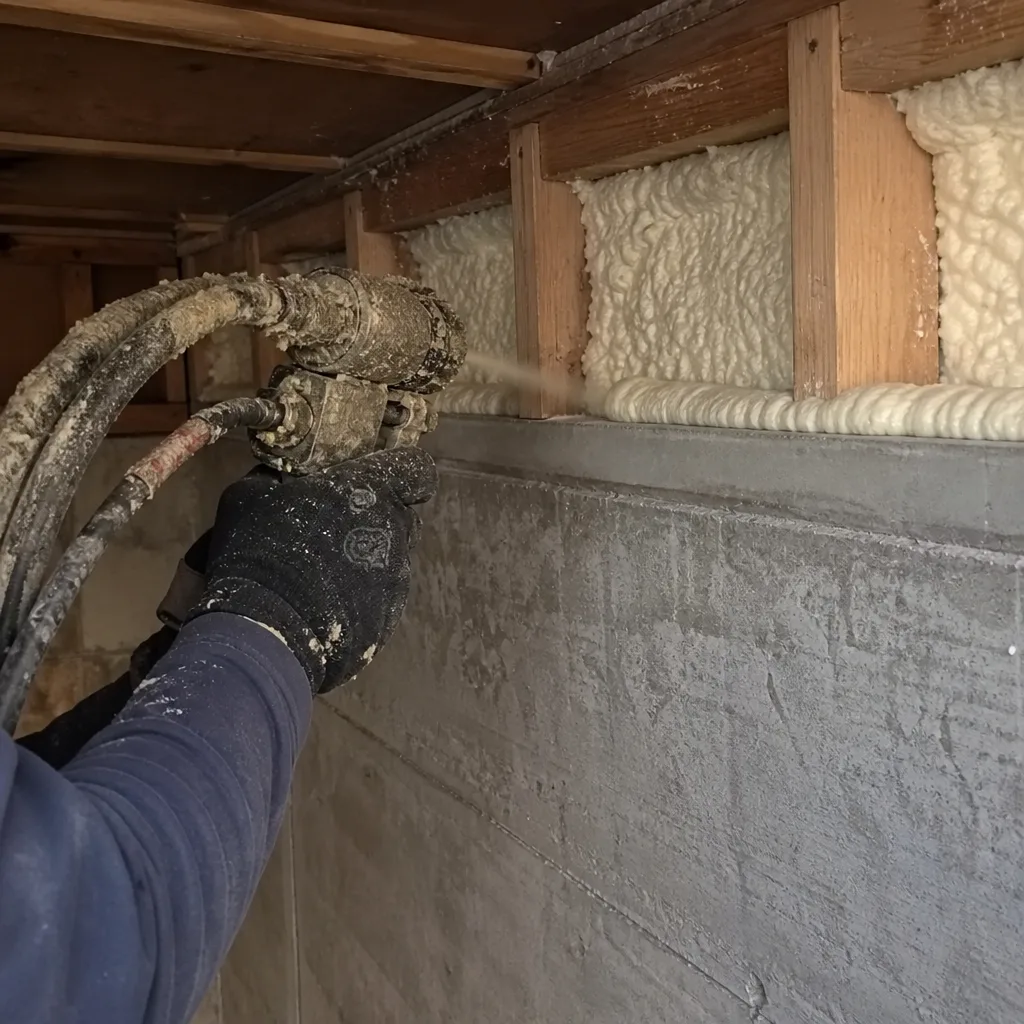
Rim joist spray foam in Indian Wells addresses the most overlooked air leak in the local housing stock: the band joist where the floor framing meets the foundation. In detached workshops and garage spaces built alongside the main residence, the rim joist is typically left completely unsealed, and that gap lets attic-temperature air filter into the wall cavities and work against whatever insulation the walls have. We see this constantly in the gated golf community off Cook Street, where detached workshops with oversized heavy doors sit on slabs and breathe hot air all summer.
Rim joist foam in Indian Wells generally runs $900 to $3,000 for a standard two-car garage rim or a typical detached workshop perimeter. Closed-cell foam is the right product here: it air-seals, it won’t absorb moisture from the occasional monsoon-season humidity spike, and it doesn’t settle. The work is fast, often done in a single trip, which matters when the homeowner has flown in for two weeks and wants the project finished before they leave again.
One-Trip Reliability for Seasonal Owners
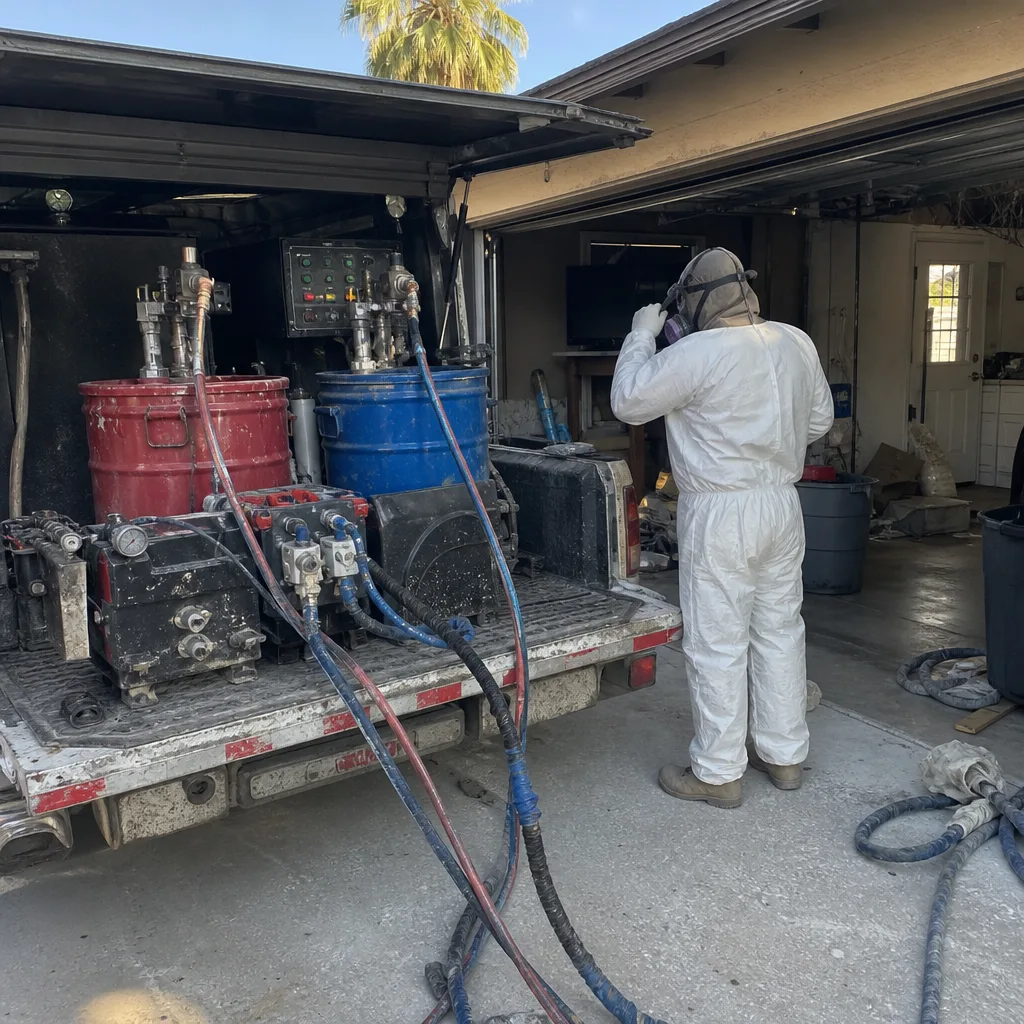
Most Indian Wells rim joist jobs happen in a single day. That’s by design. Our crews arrive with the right foam, the right rig, and a plan that accounts for HOA access rules and whatever the home’s unoccupied state requires. We don’t want a snowbird homeowner waiting around for a second visit.
What an Unsealed Rim Joist Actually Costs You
In a desert climate, an unsealed rim joist doesn’t just leak cooled air in August. It draws in dust from the dry landscaping, and it gives the hot attic a direct path into the wall. We’ve measured wall cavities in Indian Wells detached workshops at 15 to 20 degrees warmer than the living space simply because the rim was open. Sealing that junction with closed-cell foam is one of the cheapest envelope fixes per square foot, and it’s the first thing we check when a homeowner says one room never cools down.
Trusted Brands We Service in Indian Wells
We carry and install spray foam from Icynene and Demilec, the two foam manufacturers we trust for the heat conditions specific to Indian Wells. Both brands offer closed-cell products that hold their shape in attic cavities that hit 160°F. For homeowners who prefer a recycled-content option on the fiber side of things, we also work with GreenFiber cellulose and Owens Corning products for blown-in applications where foam isn’t the right call. We stock enough material for same-week starts on most Indian Wells jobs, and we don’t ask you to accept whatever brand happens to be sitting in our warehouse. The house tells us what it needs. Then we pick the product.
Common Spray Foam Insulation Problems We See in Indian Wells Homes
- Off-gassing or shrinkage in high-solar walls. Low-density foam applied years ago to west-facing walls in Indian Wells has often pulled back from the studs, leaving gaps that defeat the entire purpose. Older foam formulas weren’t spec’d for sustained surface temperatures this high.
- Unsealed rim joists in detached workshops. The separate garage or workshop slab building is almost never air-sealed at the band joist, so the attic air and the wall cavity become one thermal zone. The spray foam in the walls can’t do its job.
- Foam applied without addressing the roof deck. Homes with low-slope or flat roofs over irregular attic cavities often get wall foam and attic floor insulation while the roof deck itself keeps radiating heat downward. In Indian Wells, the roof deck is the primary heat source, and skipping it wastes money.
- Seasonal vacancy compounding every leak. A home that sits empty from May through October isn’t running its HVAC, so there’s no air movement to mask a bad seal. Whatever gap exists shows up as hot rooms, drywall nail pops, and degraded ductwork by the time the owner returns.
Pricing for Spray Foam Insulation in Indian Wells, CA
Closed-cell spray foam in Indian Wells runs $3.50 to $6.50 per board foot installed. Open-cell runs $1.50 to $3.00 per board foot, though we rarely recommend it as the primary product for Indian Wells attics and walls because of the lower R-value per inch. A typical wall cavity retrofit on a 2,500-square-foot golf-course home lands between $6,000 and $14,000. A detached workshop rim joist and wall package usually runs $2,500 to $7,000. Roof deck work depends heavily on attic access, but most Indian Wells projects fall between $4,000 and $11,000. Call us at (855) 382-3451 for a free estimate on your specific address. We’ll give you a number, not a pitch.
We Also Serve Cities Near Indian Wells
Our Spray Foam Insulation crew works throughout the Coachella Valley. If you’re in Indian Wells or just outside city limits, we also cover Palm Desert, La Quinta, Bermuda Dunes, and Rancho Mirage. Same team, same pricing, same one-trip approach. Call us and we’ll schedule for your city.
Serving Indian Wells, CA — Our Local Coverage Area
We’re based in the Indian Wells area and know this community well. Use the map below to see our service coverage — if you’re nearby, we can almost certainly help.
FAQs About Spray Foam Insulation in Indian Wells
Closed-cell spray foam holds its R-value and air-sealing properties at attic temperatures above 160°F, which is exactly what Indian Wells attics reach when homes sit empty through summer. We use Icynene and Demilec closed-cell products in Indian Wells for this reason. If your home will be unoccupied, call (855) 382-3451 to discuss the specific cavity and roof-deck conditions before you leave for the season.
Yes. Spray foam is the one insulation method that conforms to irregular framing, low-slope transitions, and shallow cavities without leaving voids. That’s why Ruben Castellano’s crews use it for the awkward spaces that batt insulation can’t fill. In Indian Wells, those irregular attic shapes are the norm rather than the exception, especially in the 1960s and 1970s custom builds.
Closed-cell foam on the surrounding wall and rim joist cavities, paired with upgraded weatherstripping on the door itself, is the standard approach for detached workshops in Indian Wells. The door is a thermal hole no matter what, but sealing the wall and rim around it keeps the heat from migrating into the rest of the structure. Call us for a look at your specific workshop layout.
Closed-cell foam slows heat transfer in both directions, so it reduces the amount of heat that penetrates during the day and the rate at which cooled air escapes after dark. In Indian Wells, where a 35-degree swing between afternoon and pre-dawn is common in May and October, that dual-direction resistance keeps indoor temperatures more stable without constant HVAC cycling.
The rim joist in a detached workshop is the primary air leak between the hot attic and the wall cavities, and in Indian Wells those workshop attics bake unattended for months. Closed-cell foam seals the junction and stops hot air from infiltrating the walls. We treat this as a first-priority fix because it’s inexpensive relative to the comfort and energy cost it addresses.
Contact Thermal Insulation Co for Indian Wells Spray Foam
Need a real number for your Indian Wells home? Call (855) 382-3451 and we’ll schedule a site visit, inspect the attic, walls, and rim joists, and give you a straight recommendation based on the house, not a stock answer. We serve Indian Wells ZIP 92210 and the surrounding Coachella Valley communities. Estimates are free.
Written by Ruben Castellano, Owner at Thermal Insulation Co, serving Indian Wells and the Coachella Valley.