
Fast, Reliable Spray Foam Insulation Across Palm Desert
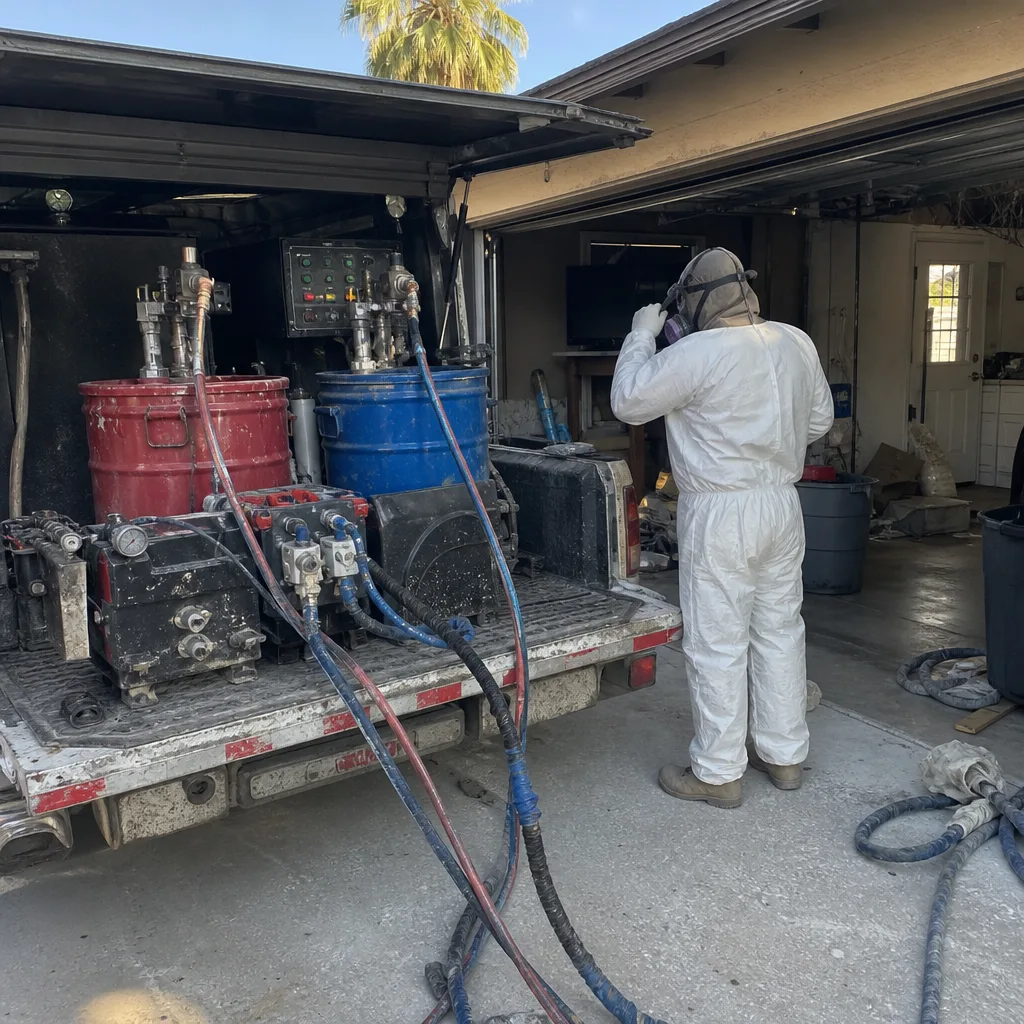
Spray foam insulation in Palm Desert typically costs $2.50 to $6.50 per board foot installed, with a full attic lid running $3,800 to $9,500 depending on foam type and square footage. Most Palm Desert jobs are quoted and scheduled within 48 hours, and our crews work throughout 92211, 92255, 92260, and 92261. We’re Thermal Insulation Co, a dedicated insulation contractor led by Ruben Castellano, and we’ve spent enough time in Coachella Valley attics to know exactly what a 150-degree roof deck does to the wrong foam spec. Call (855) 382-3451 for a free estimate from someone who actually works in this heat.
Why Thermal Insulation Co Is Palm Desert’s Preferred Spray Foam Insulation Company
Palm Desert homeowners don’t need a generalist contractor who reads foam specs off a data sheet. They need someone who knows why a tile roof over a low-slope attic behaves differently than a shingle roof in Redlands, and what that means for closed-cell versus open-cell placement. Our Spray Foam Insulation team carries two of the most respected foam lines in the industry, Icynene and Demilec, and we’re authorized to install across an eight-brand material portfolio spanning fiberglass, mineral wool, cellulose, and both foam chemistries. That range matters here: insulation is our sole trade, not a side service, and the right material for a 1970s stucco-on-block rancher off Monterey Avenue is not automatically the right material for a 2010s gated-community home in south Palm Desert.
Ruben Castellano runs every Palm Desert job with one rule: the home dictates the spec, not the inventory. We quote the method that fits the application, whether that’s open-cell on an interior wall cavity, closed-cell under a roof deck, or a hybrid approach pairing foam with blown-in coverage. Palm Desert customers get the same crew, the same standards, and the same direct line to the owner when questions come up.
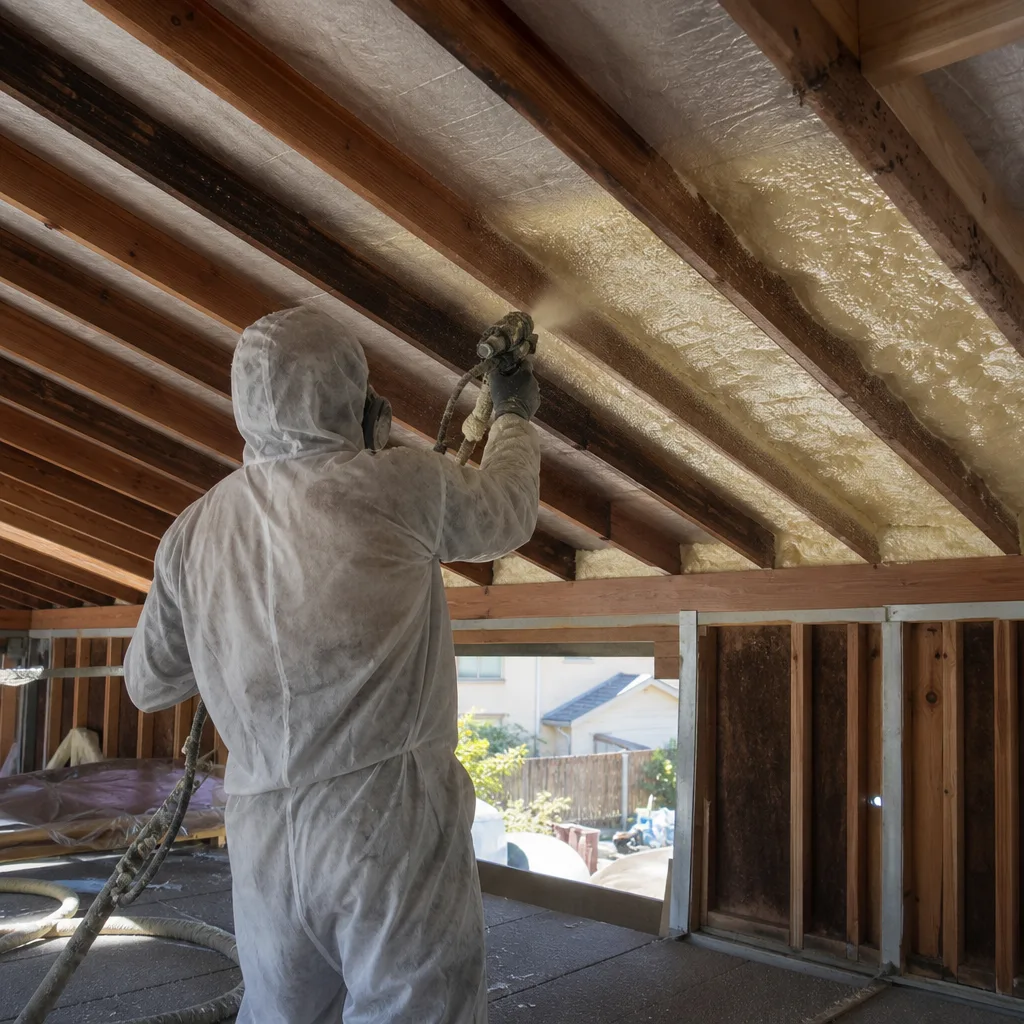
Spray Foam Attic Insulation in Palm Desert
Spray foam attic insulation in Palm Desert is a different animal than anywhere east of the mountains. Attics here routinely hit 150°F or more from April through October, and the roof deck is the hottest surface in the entire assembly. Closed-cell foam applied directly against the underside of a sun-baked tile or flat roof deck without a vent path or thermal barrier can trap that radiant heat, degrade the foam, and in some cases cause blistering or off-gassing that the homeowner never catches because the house sits empty from May to November. That’s why our Palm Desert attic specs always start with venting and heat-blocking strategy before we ever talk R-value.
A typical attic lid in Palm Desert runs $3,800 to $9,500 depending on square footage, foam thickness, and whether we’re pairing the spray foam with radiant-barrier-backed blown coverage. We do that pairing often. The foam seals air leaks and locks down thermal boundary; the blown layer adds cost-effective R-value for the extreme heat cycling.
Sealing Top Plates and Duct Boots
The top plates, the horizontal framing where walls meet attic floor, are the single biggest air-leak source in older Palm Desert homes. Settled 1970s-era fiberglass leaves them bare, and superheated attic air pushes straight into the living space. We air-seal top plates with closed-cell foam before adding insulation.
Duct runs in a hot attic are the other silent problem. Duct boots leak cooled air into a 150°F space all summer long. Sealing boots with closed-cell foam keeps the air you paid to cool inside the system, not baking in the attic.
Radiant Barrier Backing on Tile Roofs
Most Palm Desert roofs are tile or low-slope, and both hold heat differently than pitched shingle roofs. We recommend radiant-barrier-backed assemblies when the deck clearance allows. The barrier reflects radiant gain back out of the attic before the foam has to fight it. In a cooling-dominated climate like Palm Desert’s, that is often more valuable than another inch of foam.
Spray Foam Wall Insulation in Palm Desert
Spray foam wall insulation in Palm Desert has to solve for stucco. Most homes here are stucco-on-block or stucco-on-wood from the 1970s through the early 2000s, and west-facing walls soak up direct afternoon sun from about 2 p.m. until sunset. Foam applied to the wrong side of a wall assembly traps radiant heat inside the structure instead of blocking it. We see this on uninsulated exterior walls where a previous contractor filled the cavity from the interior side without addressing the sun-baked stucco exterior. The wall still radiates heat into the room, now with nowhere for it to go.
Wall foam in Palm Desert costs $2.50 to $4.50 per square foot of wall area for open-cell, and $4.00 to $6.50 for closed-cell. The right choice depends on the wall assembly, the exposure, and whether there’s a vapor drive concern. Ruben Castellano walks every estimate himself, and he will tell you honestly whether wall foam is worth it on your particular house or whether blown-in or mineral wool makes more sense.
West-Facing Wall Treatments
West walls in Palm Desert take the worst of the summer sun. Open-cell foam can work here when there’s an exterior stucco finish and adequate cavity depth, but we often recommend a closed-cell barrier for west exposures. It blocks both air and radiant transfer better in a high-heat wall assembly.
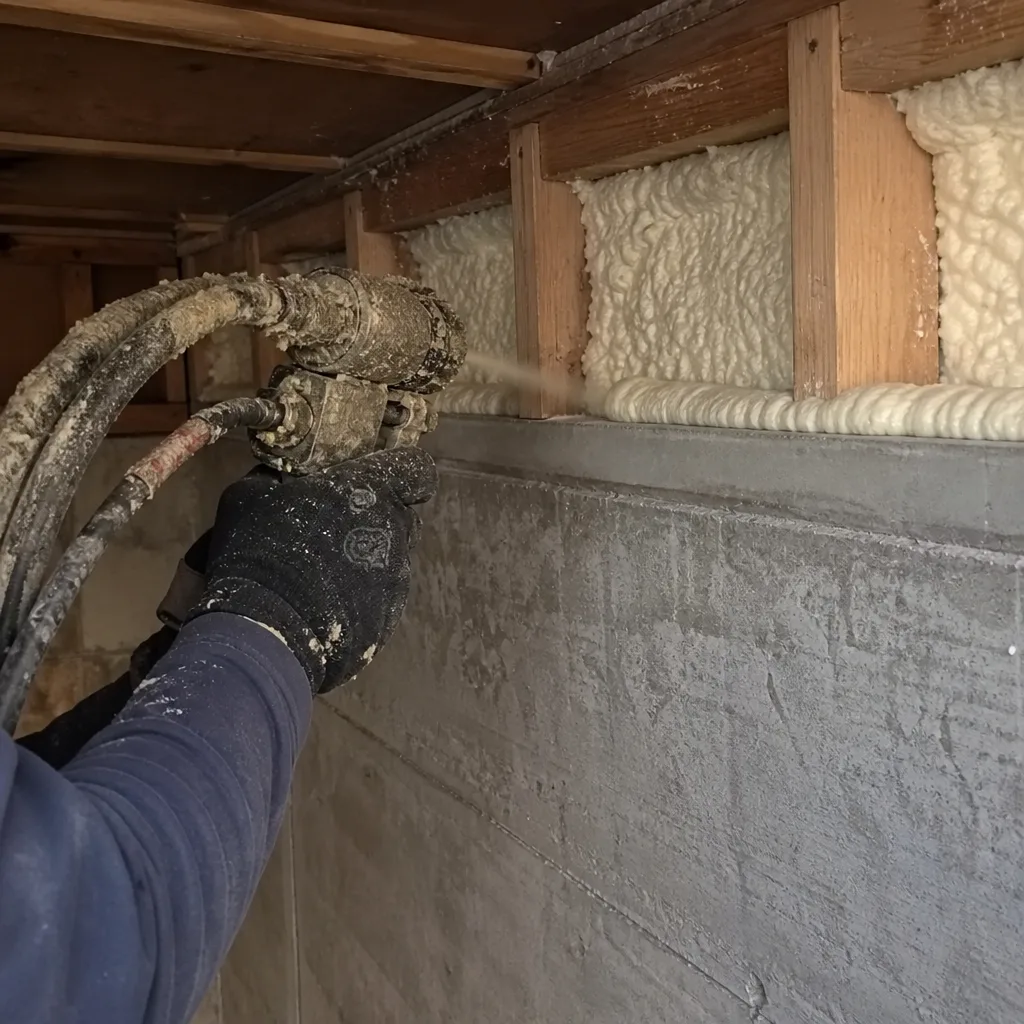
Garage and Adjoining Wall Cavities
Uninsulated garages are everywhere in Palm Desert, and they bake. Garage ceilings and the wall shared with living space are two of the highest-impact foam spots in a desert contemporary home. Sealing those cavities cuts the heat load on adjacent rooms and stops your attached garage from acting as a giant radiant panel against the house.
Trusted Brands We Service in Palm Desert
We carry Icynene and Demilec because both have documented performance in the kind of heat cycling Palm Desert attics go through every summer. That’s not brand loyalty for its own sake; it’s knowing which foam chemistries hold up when the deck temperature swings 80 degrees between 3 p.m. and 3 a.m. We also stock Owens Corning and Johns Manville products for the fiberglass and blown-in components of hybrid assemblies, plus GreenFiber cellulose for homeowners who want a recycled-content option in walls or attic top-ups. Palm Desert customers have access to every material we install on any given week.
Common Spray Foam Insulation Problems We See in Palm Desert Homes
- Foam sprayed against a hot tile roof deck without venting. The deck can hit 150°F or more in August, and closed-cell foam without a vent path degrades, blisters, or off-gasses. We always pair deck-applied foam with a venting strategy.
- Vacant-summer discovery. Seasonal and short-term rental owners often don’t catch spray foam problems until they return in October or November. A bad foam job sits unnoticed for months while the AC short-cycles and the electric bill climbs. Our specs are built for homes that spend half the year unoccupied.
- West-facing stucco walls with foam on the wrong side. Stucco-on-block construction with uninsulated cavities traps radiant heat when foam is applied to the interior side without addressing the sun-baked exterior. We spec the assembly, not just the cavity.
- Uninsulated garages that turn into ovens. Attached garages in 1970s through 1990s Palm Desert homes were rarely insulated at build. Foaming the garage ceiling and the shared wall cuts heat transfer into living space by a measurable margin.
Pricing for Spray Foam Insulation in Palm Desert, CA
Here is what spray foam actually costs in Palm Desert, based on the jobs we quote every week. Open-cell foam runs $2.50 to $4.50 per square foot of wall area and $2.50 to $4.00 per board foot for attic applications. Closed-cell runs $4.00 to $6.50 per square foot of wall and $1.00 to $2.00 extra per board foot in attics where we’re sealing deck and top plates. A full attic lid in a typical 1,800 to 2,400 square foot Palm Desert home lands between $3,800 and $9,500. Rim joist sealing runs $900 to $2,400. Garage ceiling foam runs $1,200 to $3,800. Palm Desert pricing is affected by the same heat that makes foam necessary: we schedule attic work early mornings in summer because no crew should be in a 150°F attic at 2 p.m., and that can shift scheduling slightly. Free estimates, always, and Ruben Castellano gives you a written line-item quote before any work starts.
We Also Serve Cities Near Palm Desert
Our crews run the full Coachella Valley. We serve Indian Wells, Rancho Mirage, La Quinta, and Thousand Palms with the same crews and material access as Spray Foam Insulation in Palm Desert. If you’re in one of the surrounding cities and have been told foam can’t work on your roof assembly, call us and get a second read.
Serving Palm Desert, CA — Our Local Coverage Area
We’re based in the Palm Desert area and know this community well. Use the map below to see our service coverage — if you’re nearby, we can almost certainly help.
FAQs About Spray Foam Insulation in Palm Desert
It can, but only with the right venting and thermal barrier plan. Closed-cell foam applied directly against a sun-baked tile or low-slope roof deck without a vent path traps radiant heat, degrades, and can blister or off-gas. We spec venting first, then foam, then often a radiant-barrier-backed blown layer on top. Call (855) 382-3451 for an attic assessment that accounts for your actual roof temperature, not a generic attic spec.
Yes, and the effect is most noticeable in second homes that sit empty through the summer heat. Air-sealing top plates and duct boots stops superheated attic air from pushing into the living space, and a proper radiant barrier cuts the heat load the AC fights every afternoon. A homeowner in the gated tracts off Country Club Drive came back after her first summer with sealed top plates and radiant-barrier coverage and said the AC no longer ran nonstop from noon to dusk. That’s the outcome we design for.
Closed-cell for roof decks, top plates, duct boots, and west-facing walls where radiant gain is the enemy. Open-cell for interior wall cavities, sound control, and non-conditioned spaces where moisture transfer is not a concern. In a cooling-dominated climate like Palm Desert, closed-cell’s higher R-value per inch and air-barrier performance usually wins in attic and exterior-wall applications. Ruben Castellano can walk your specific assembly and give you a straight answer.
Because a huge share of Palm Desert homes are seasonal or short-term rentals that sit vacant from May through November. No one is home to hear the AC short-cycle, smell the off-gassing, or feel the west wall radiating heat. A bad foam job surfaces as a nasty surprise when the owner returns in season. Our specs are built on the assumption that the house will be unoccupied through the worst heat of the year, and we inspect accordingly.
Foam works well on stucco construction when applied to the correct side of the wall assembly. On uninsulated west-facing stucco walls, closed-cell foam blocks radiant transfer if the cavity is accessible and the exterior stucco is sound. For garages, foaming the ceiling and the shared wall with the living space cuts the heat load from a space that routinely hits 110°F or hotter by mid-afternoon. We’ll tell you honestly if your specific wall or garage is a good candidate or if blown-in or mineral wool makes more sense.
If you own a home in Palm Desert and you’re tired of an AC that runs from noon to dusk, call Ruben Castellano and the Thermal Insulation Co team at (855) 382-3451. Free estimates, written quotes, and a straight answer on whether spray foam is the right fix for your roof, your walls, or your garage. We serve all of Palm Desert including 92211, 92255, 92260, and 92261, and we schedule within 48 hours of your call.
Written by Ruben Castellano, Owner at Thermal Insulation Co, serving Palm Desert and the Coachella Valley.