
Knauf Attic Insulation in Van Nuys: A Homeowner’s Guide
Knauf attic insulation in Van Nuys refers to a family of fiberglass products, both blown-in loose fill and pre-cut batts, that perform differently depending on which formulation you install. Most homeowners asking for Knauf by name are actually thinking of one product, when the brand makes several with distinct density, R-value, and moisture profiles. If you’d rather skip the research and get a straight answer on what your attic actually needs, call (855) 382-3451 and we’ll walk you through it.
Here’s the thing most websites won’t tell you: brand alone doesn’t determine how well your attic insulates. A Knauf batt compressed into a shallow rafter bay performs worse than the same brand’s blown-in fiberglass at proper depth. The material matters, but so does the method, the depth, and what happens before any insulation goes in. In Van Nuys, where attic temperatures routinely hit 140 degrees in August and the AC runs for six months a year, those variables add up on your electric bill.
What Most Homeowners Get Wrong About Knauf
The opening hook bears repeating: when a Van Nuys homeowner asks us for Knauf attic insulation, they’re almost always picturing the pink batts they saw at a home center. That’s one product. Knauf also makes blown-in fiberglass under names like JetStream and EcoSeal, plus a newer EarthSafe line. Each behaves differently in an attic.
So the first question isn’t “is Knauf good?” It’s “which Knauf product fits this attic?” A 1950s Van Nuys tract home with original tongue-and-groove roof decking and no air sealing has different needs than a 2010 townhouse with a tight envelope. We carry Knauf specifically because the line is broad enough to match either one.
And honestly, we carry competing brands next to it on purpose. CertainTeed makes an excellent blown fiberglass with slightly different settling characteristics. Rockwool batts outperform fiberglass in fire resistance and moisture situations. If a homeowner only ever hears one brand name, they’re making a decision without knowing what the alternatives actually do. That’s not a comparison, it’s a guess.
Knauf Blown Fiberglass Products: EcoSeal vs. JetStream vs. EarthSafe
Here’s the technical breakdown most articles skip. Knauf produces three blown fiberglass formulations that contractors install in attics, and they are not interchangeable.
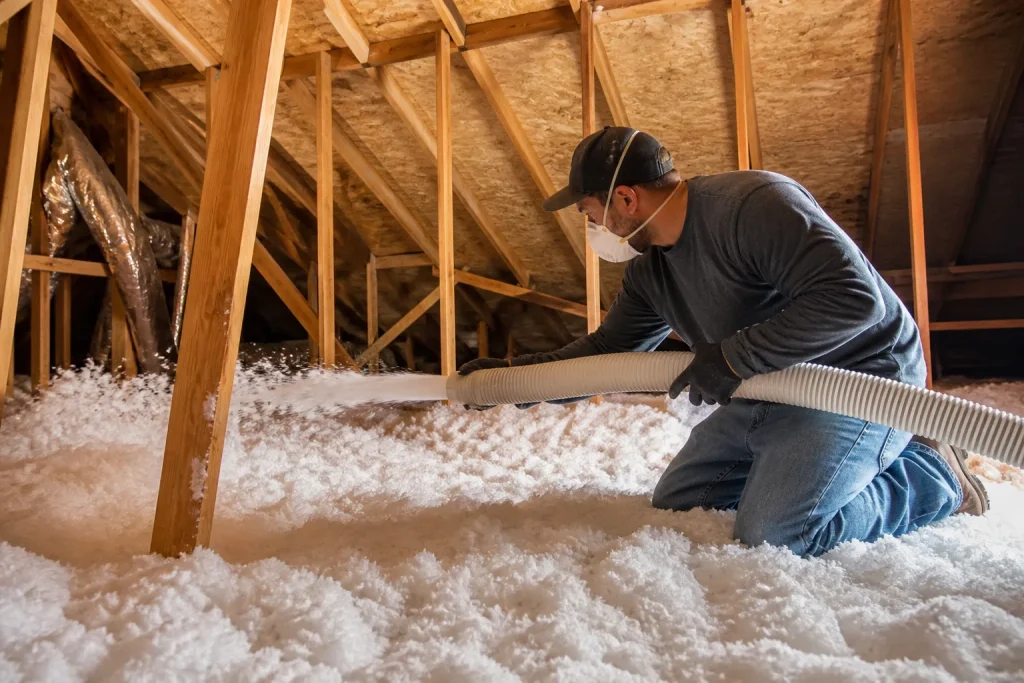
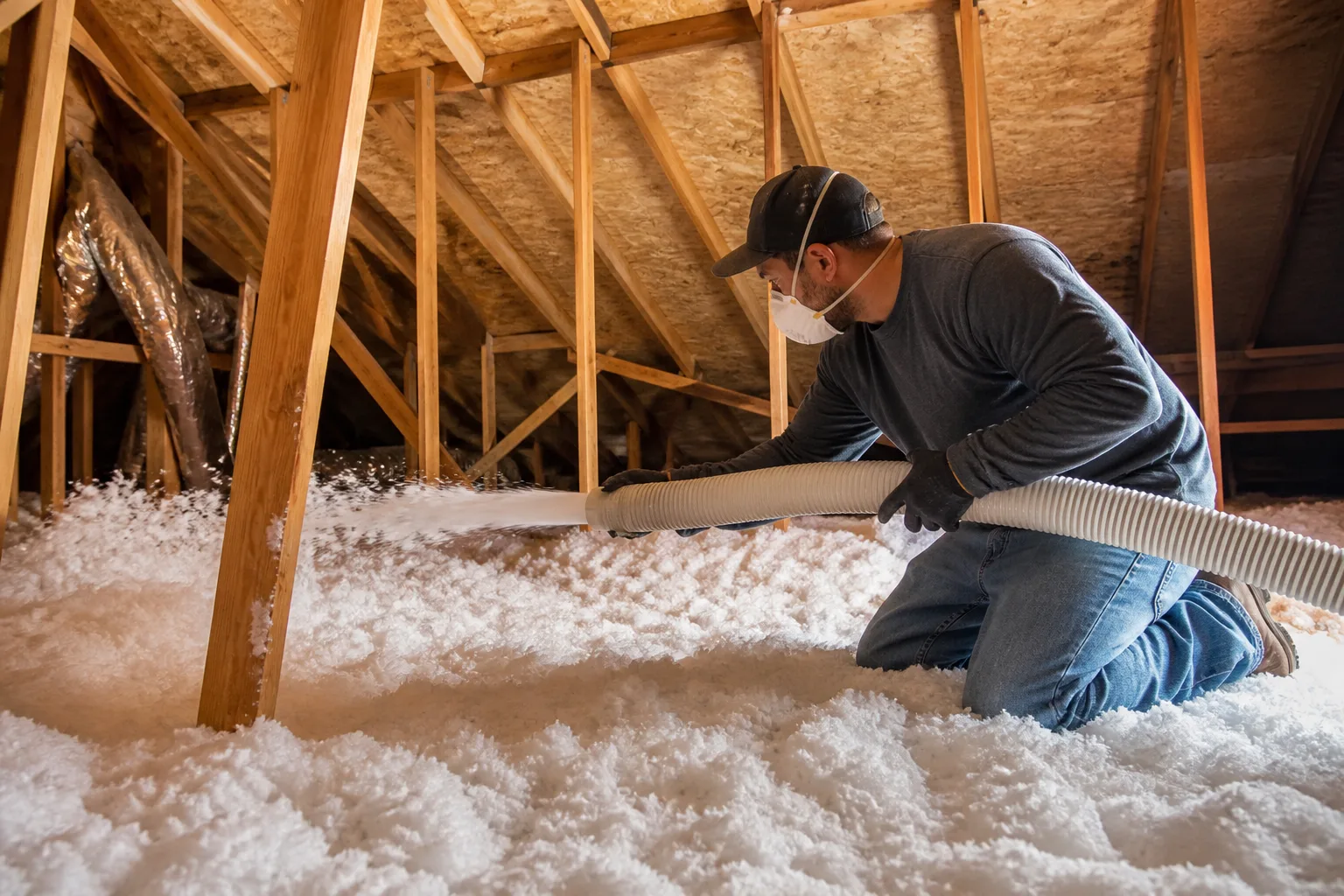
- Knauf JetStream is the workhorse. It’s a standard blown fiberglass with good R-value retention and predictable coverage. In a Van Nuys attic with standard 2×6 ceiling joists, we’d typically blow it to R-38, which takes about 14 to 16 inches of material. It settles slightly in the first year, so we account for that with initial over-depth.
- Knauf EcoSeal is positioned for tighter air performance. The fiber geometry creates a denser, more uniform blanket when installed correctly. In attics with recessed can lights and ceiling penetrations, EcoSeal tends to hold its shape around those gaps better than some competitors.
- Knauf EarthSafe is the newer line with a focus on lower embodied energy in manufacturing and higher recycled glass content. Performance-wise, it’s in the same range as JetStream for most residential applications, though the install characteristics differ slightly, and we’ve noticed it requires a steadier air flow setting on the blower.
The practical takeaway for a Van Nuys homeowner: any of these three can work well if the installation is done right. The bigger variable is what condition the attic is in before the hopper starts running.
How Fiber Geometry Affects Settled R-Value in Van Nuys
San Fernando Valley temperature swings create a real performance variable that most insulation guides ignore: settlement followed by heat-driven fiber relaxation. Here’s what happens. Blown fiberglass goes in fluffy. Over the first 12 to 18 months, it settles as fibers nest together, typically 2 to 4 percent for Knauf products. Then the real test begins.
Van Nuys attics bake. Repeated cycles of 140-degree days and 50-degree nights cause fibers to expand and contract microscopically. In a poorly installed job, this can lead to uneven depth across the attic floor: thick in the middle of bays, thin near eave vents where airflow pushes material around. Knauf’s newer formulations use a slightly longer, more varied fiber length, which resists this thermal cycling better than the fiberglass from twenty years ago. That’s not marketing language; we can physically see the difference when we open up attics that were blown a decade apart.
This is why we tell homeowners to check depth with a measuring tape, not just eyeball it. R-value depends on inches, and inches change over time. In Lake Balboa and the older pocket of Van Nuys near Hazeltine, we still find attics from the 1990s that started at R-30 and measure R-19 today. Those homeowners paid for insulation that quietly disappeared.
Knauf Blown Fiberglass vs. Cellulose in a Van Nuys Attic
This comparison comes up constantly, and the honest answer depends on the attic.
Where Knauf fiberglass wins in Van Nuys: moisture. Fiberglass doesn’t absorb water. If your attic has any history of condensation, a leaky roof vent, or high humidity from a bathroom fan that terminates in the attic instead of outside (we see this all the time), fiberglass holds its R-value while cellulose mats down and loses performance. Fiberglass also settles less over time, all else equal.
Where cellulose has the edge: density and air resistance. Cellulose packs tighter and slows air movement through the insulation blanket itself. In drafty attics with poor sealing, cellulose can outperform fiberglass because it limits convective loops. Cellulose also costs less per installed R-value in some Van Nuys supply markets, though that gap narrows when you account for the settling allowance.
The real answer nobody wants to hear: if the attic leaks air badly enough that cellulose’s density advantage matters, the correct fix is air sealing first, then either material performs well. Insulation slows heat transfer. It doesn’t stop air movement. A windy day in Van Nuys will push air through an unsealed attic floor no matter what’s sitting on top of it.
What GREENGUARD Gold Actually Means for Your Indoor Air
Knauf promotes GREENGUARD Gold certification on several of its products, and most homeowners file that under “sounds good” without knowing what it tests. It certifies low chemical emissions from the insulation itself, specifically volatile organic compounds and formaldehyde, measured against thresholds designed for sensitive environments like schools and hospitals.
Why that matters in Van Nuys specifically: many of the homes here were built when attic-to-living-space separation was an afterthought. Ceiling penetrations around light fixtures, loose attic hatches, and that gap where the chimney chase meets the drywall all create a passive air path from the attic into the house. If your insulation off-gasses, you breathe it. That’s the stack effect: hot attic air rises and exits, pulling replacement air from the living space, which pulls attic air back down in other spots. A low-emission product reduces one variable in that equation.
We’ve had customers with chemical sensitivities ask specifically about insulation off-gassing, and for those attics we lean toward low-VOC products like Knauf’s certified lines or a GreenFiber cellulose option. The point isn’t that one is universally better. It’s that the certification answers a real question for a subset of homes.
Why Brand Alone Doesn’t Determine the Outcome
Here’s the sentence that separates a good insulation job from a disappointing one: the same bag of Knauf fiberglass can produce R-20 or R-38 depending on installation. Coverage rate matters. Blow it too fast and you get voids, thin spots, and uneven depth. Fail to seal the attic floor first and you lose performance to air movement regardless of R-value. Fill the eave vents with material and you create a moisture problem that no insulation brand can fix.
We approach a Van Nuys attic in a specific order. First, inspect for air leaks, recessed light housings, duct runs, and any signs of moisture or pest activity. Second, seal what needs sealing: top plates, chase ways, plumbing vents, the attic hatch. Third, install vent baffles where needed. Fourth, blow insulation to depth using a calibrated machine and a hose operator who checks depth with a gauge as they go.
Knauf makes good products. It’s one of the eight brands we install because it hits a useful point on the cost-to-performance curve. But Knauf doesn’t install itself. In our experience, the contractor’s process matters more than the bag label. That’s the uncomfortable truth of the insulation trade, and it’s why any homeowner should ask their installer about air sealing before they ask about R-value.
When to Call a Pro
Blowing fiberglass into a Van Nuys attic is not a one-person weekend job, and it’s not just about speed. The equipment rental machines at home centers run at lower air pressure than professional units, which changes how the fiber separates and lands. An amateur blow job typically leaves inconsistent density that leads to premature settling. You pay less up front, then pay more every month on the utility bill.
Safety is a factor too. Attics in Van Nuys during the warm season are genuinely dangerous. Surfaces exceed 140 degrees, and heat exhaustion sets in quickly. If you’re walking on joists, one misstep means a foot through the drywall and a fall. And you’re working with insulation that irritates skin and lungs without proper protective gear. None of this is worth the savings on a professional install.
If you want a second set of eyes before deciding, that’s exactly what our estimates are for. A thermal camera scan and a look at your existing insulation depth tells us 90 percent of what we need to know.
Related Services in Van Nuys
If your attic has moisture issues or oversized duct runs in unconditioned space, see our Spray Foam Insulation in Van Nuys page. For homes where existing fiberglass is compressed or full of dust and rodent droppings, Blown In Insulation in Van Nuys covers removal and replacement. And our Attic Insulation in Van Nuys service page walks through the full inspection-to-install process. You can also read more about what we do across the board at the Thermal Insulation Co home page.
What happens when you call
- 1
A real person answersNo phone trees — you reach a local pro.
- 2
You get an upfront price rangeHonest numbers before anyone is dispatched.
- 3
A background-checked tech heads outLicensed & insured, dispatched right away.
- 4
You approve before work beginsNothing starts until you say go.
The Bottom Line
Knauf makes solid fiberglass insulation, but the word “Knauf” on the bag tells you less than the depth, density, and air sealing behind it. Homeowners in Van Nuys get the best result when they select a specific product for a specific attic, rather than insisting on a brand name they heard once. If your attic is under-insulated, start by measuring what’s up there. If it’s under eight inches, you’re likely below R-30 and losing cooling dollars all summer.
If you’re in Van Nuys and need help, Thermal Insulation Co offers free estimates. We’ll tell you what’s in your attic, what condition it’s in, and which method and product actually make sense. Call (855) 382-3451.
Frequently Asked Questions
Knauf fiberglass performs comparably to similar products from CertainTeed and Johns Manville when installed at the same depth and density. The difference comes down to specific product formulations: Knauf’s blown fiberglass tends to settle slightly less over time in our experience, but the installation quality matters far more than the brand label. Call (855) 382-3451 for a straight comparison based on your attic, not a sales pitch.
Blown fiberglass for a typical Van Nuys attic generally runs between $1.10 and $2.25 per square foot installed, depending on depth, access difficulty, and whether air sealing is included. Batts usually cost slightly more per square foot for the same R-value. These are working ranges, not quotes. For an exact price on your home, call (855) 382-3451 and we’ll measure your attic free of charge.
Current California energy code points to R-38 as the practical minimum for attics in the San Fernando Valley climate zone, which means about 14 to 16 inches of blown fiberglass depending on the product. Older homes in Van Nuys often sit at R-11 or less. Upgrading to R-38 is the single highest-impact insulation improvement most homeowners can make here, because the attic is where the house loses and gains the most heat.
All blown insulation settles some, usually 2 to 4 percent for modern Knauf fiberglass in the first year, which a good contractor accounts for by blowing to a higher initial depth. After that initial settle, the bigger risk in Van Nuys is thermal cycling slowly degrading older, shorter-fiber products. Newer Knauf formulations use longer fibers that resist this better than fiberglass from the 1990s. If your attic is over 15 years old, it’s worth measuring what’s actually up there. Call (855) 382-3451 and we’ll check it during a free estimate.
Written by the team at Thermal Insulation Co, serving Van Nuys since 2012.
Need Insulation Help?
Call Thermal Insulation Co — licensed & insured, here with fast after-hours help in La Crescenta-Montrose.
(855) 382-3451