
Fast, Reliable Attic Insulation Across Huntington Park
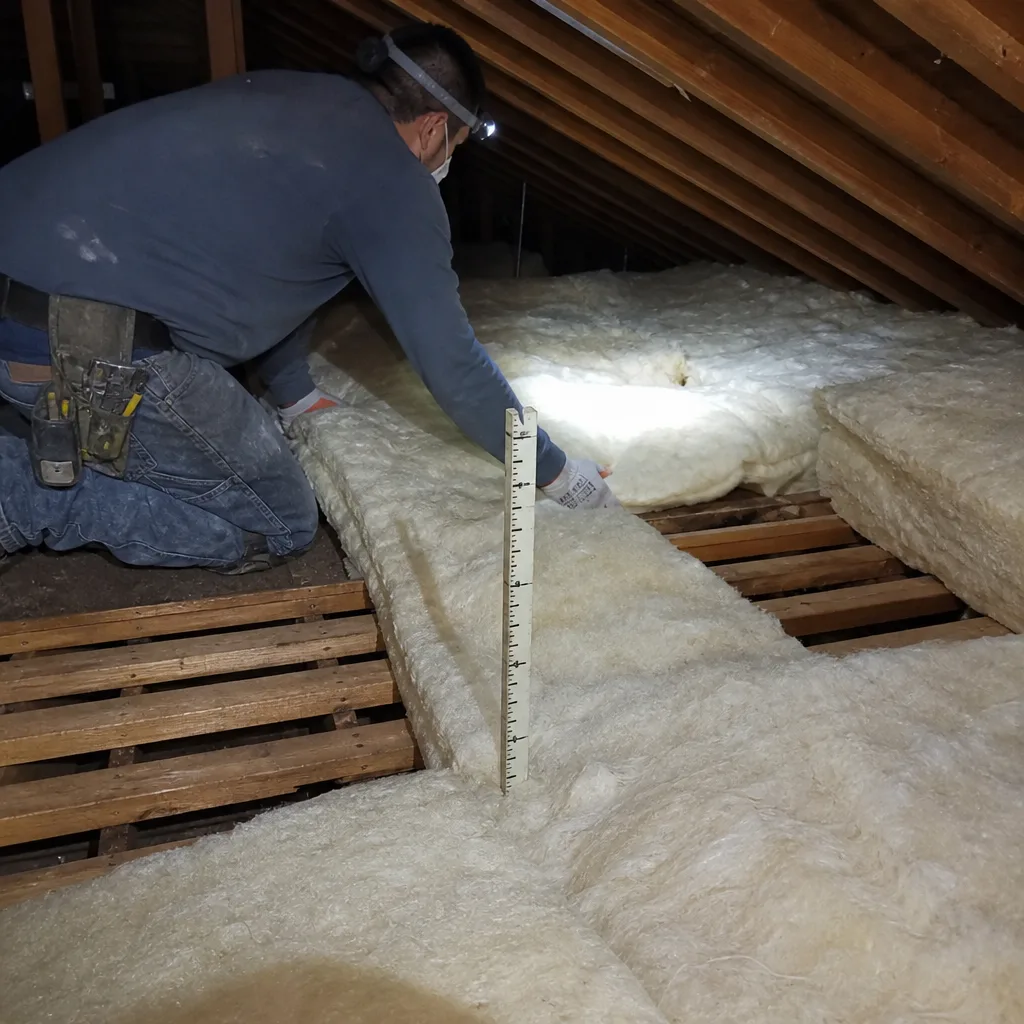
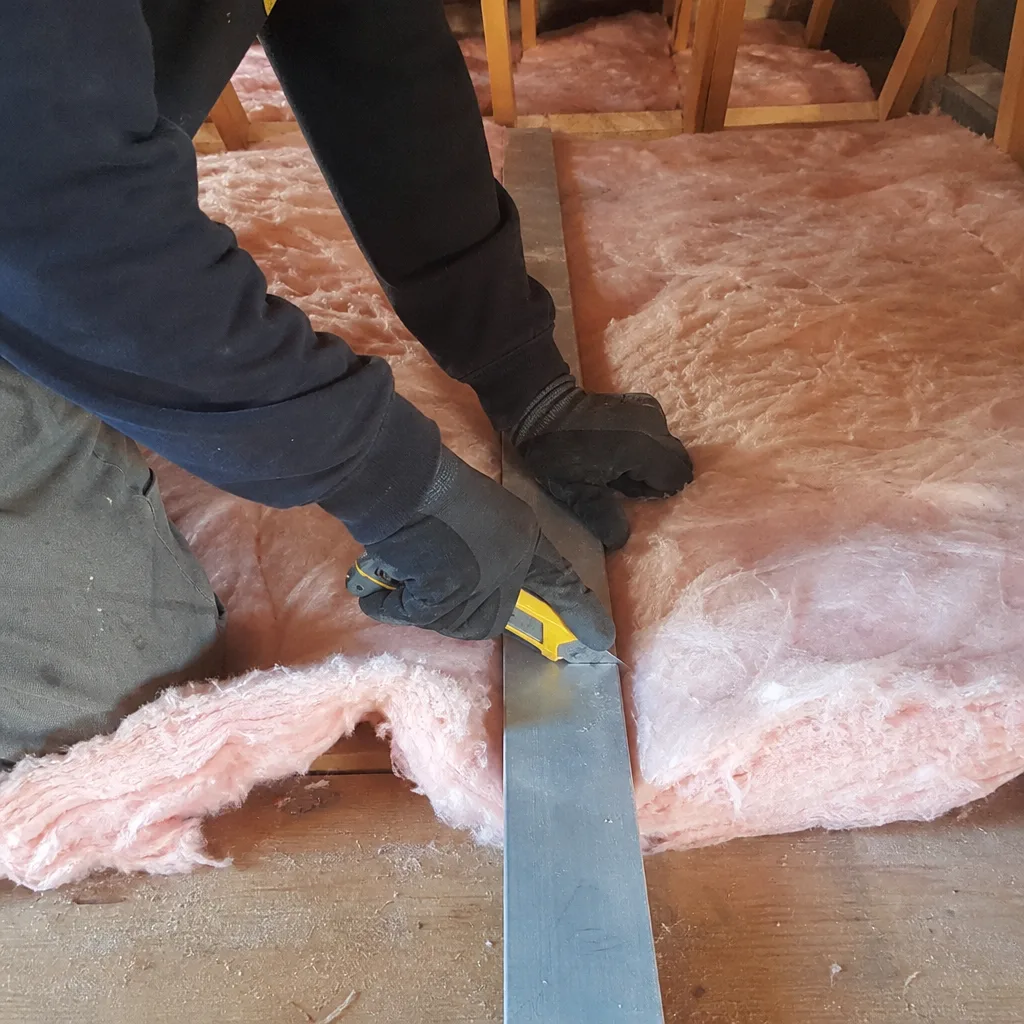
Attic insulation in Huntington Park is rarely a simple blow-in job. Most homes here were built between the 1920s and 1960s with plank sheathing, shallow roof pitches, and attic cavities so tight you sometimes have to belly-crawl between ceiling joists. We know this because we’ve been in those attics, and we understand what the compact lots, alley access, and paved-in heat of Huntington Park mean for how your insulation should be installed. If you live in the 90255 and your upstairs rooms bake in summer or street noise bleeds through your ceiling, call Thermal Insulation Co at (855) 382-3451. We’ll tell you honestly whether blown-in, batts, or a radiant barrier makes sense for your specific house, and we can typically reach most Huntington Park blocks within an hour for an assessment.
Why Thermal Insulation Co Is Huntington Park’s Preferred Attic Insulation Company
Most insulation contractors treat Huntington Park like any other LA Basin city. That’s a mistake. Our crews have worked enough 90255 attics to know that a 1940s stucco bungalow off Pacific Boulevard presents different challenges than a 2000s tract home in the Valley. We carry eight product lines across three installation methods, so when we inspect your attic we’re matching material to your actual conditions, not pushing whatever happens to be on the truck. Ruben Castellano, who leads our insulation work, has walked dozens of Huntington Park attics and can explain why your neighbor’s open-truss blow-in quote may not translate to your low-clearance, plank-sheathed roof.
Huntington Park homeowners tell us the same three things on repeat: upstairs rooms that never cool off, paper-thin ceilings that let every muffler and truck downshift come through, and energy bills that stay high no matter what they do. The root cause is almost always the same: little or no attic insulation, and zero air sealing between the living space and the attic. Because we dedicate our entire practice to insulation, we don’t patch this. We fix the thermal boundary the right way and then verify it with a visual inspection you can crawl up and see yourself.
Response time to Huntington Park matters because the heat doesn’t wait. When a homeowner off Gage Avenue calls about a second story that hit 90 degrees by noon, they want someone who can get there this week, not next month. Our scheduling block for Huntington Park jobs is built around that. Call (855) 382-3451 and we’ll give you a straight answer on when we can be there.
Attic Ventilation in Huntington Park
Attic Ventilation in Huntington Park isn’t optional extra credit; it’s often the difference between an insulation job that works and one that underperforms. Your attic already runs hot here. The city is compact, heavily paved, and surrounded by streets that absorb and reradiate heat all afternoon. Without proper airflow from soffit to ridge, superheated air gets trapped under your roof deck and pushes down into the living space, essentially defeating your insulation from above.
In a tight Huntington Park attic, ventilation also protects against moisture. When warm humid air from the house leaks into a cool shallow cavity, it condenses on the underside of the roof deck, and on older plank sheathing that can eventually lead to rot or mold. A correctly vented attic stays drier, which means whatever insulation you put in keeps performing for longer.
Most Huntington Park ventilation jobs run between $350 and $900, depending on how many vents the roof actually needs and whether we’re adding baffles to keep a low-clearance eave path open. On a typical 900 to 1,200 square foot bungalow, that usually means one or two turtle vents, a ridge or gable vent, and soffit baffles. On converted homes where a previous owner enclosed a porch or added a bedroom, we often find the original vent path was sealed over entirely and has to be restored before new insulation goes in.
Low-Clearance Eave Work
Huntington Park bungalows rarely have the generous eave overhangs you see in newer construction. When the roof pitch is shallow and the exterior walls sit close to the soffit line, the air path from outside into the attic can be thin and easily blocked. We install slim-profile baffles made exactly for this condition, one per bay, so blown-in insulation can’t drift over the top plate and choke off the airflow.
Venting Before Blow-In
We ventilate before we insulate on nearly every Huntington Park job. If the roof cavity can’t breathe, adding more material just traps more heat. This sequence also lets us air-seal while we’re in the attic anyway, before any new insulation hides the top plates and can-light penetrations.
Radiant Barrier in Huntington Park
Radiant Barrier is one of the most underused upgrades for Huntington Park homes, and it’s uniquely suited to this city’s dense, sun-soaked blocks. A radiant barrier is a reflective foil layer installed under the roof deck that bounces radiant heat back out of the attic instead of letting it soak into the framing and ceiling below. It works especially well in the LA Basin’s dry, sunny climate, where attic temperatures in Huntington Park regularly climb past 130 degrees on summer afternoons.
For homes that already have some insulation but still feel hot on top-floor rooms, a radiant barrier is often the highest-leverage improvement you can make without tearing anything out. It’s not a replacement for insulation; it works alongside it. The foil reflects heat before it can reach your existing batt or blown-in material, so the whole attic stays noticeably cooler.
Radiant barrier installation in Huntington Park typically runs $1.10 to $1.75 per square foot of roof deck. On a compact 1,000 square foot bungalow, figure roughly $1,100 to $1,700 for a full attic. It’s faster than a full insulation replacement and most jobs are done in a day.
Radiant Barrier With Insulation Top-Up
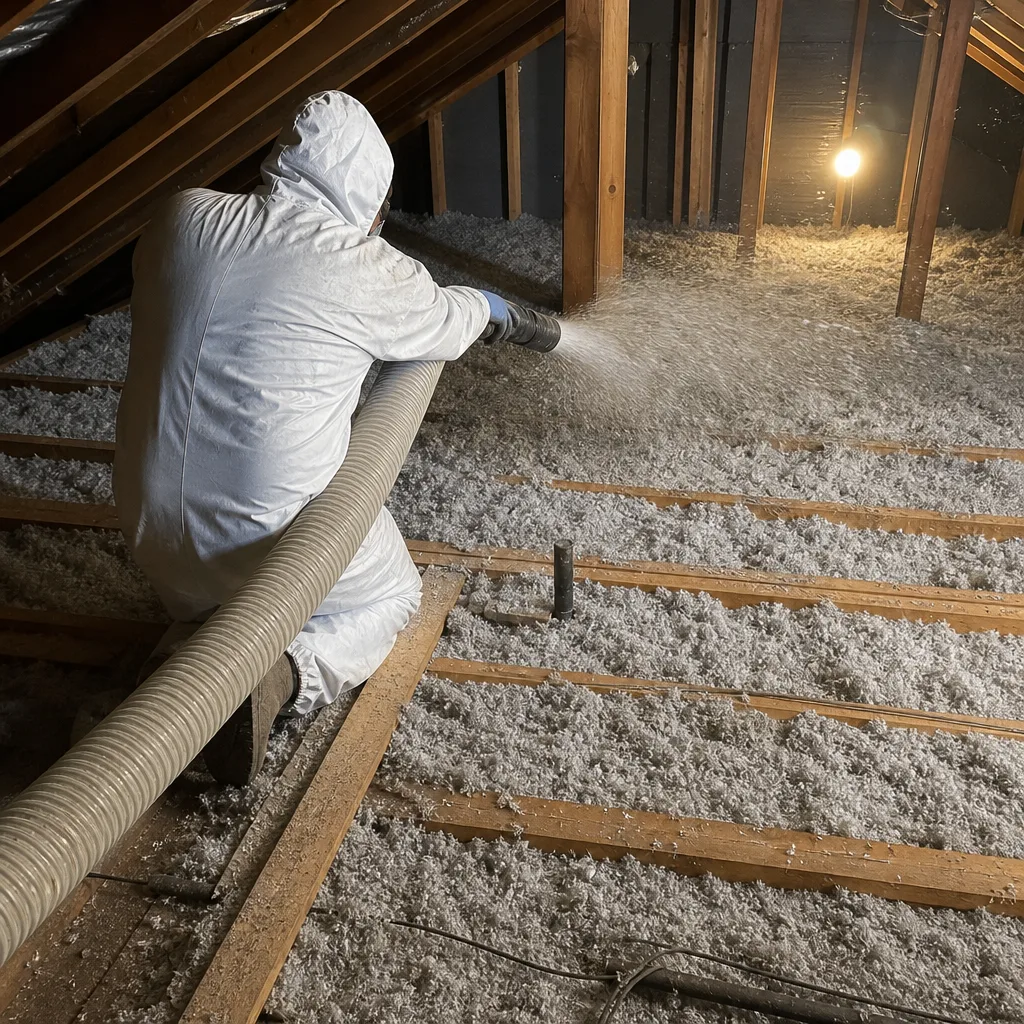
We often pair a radiant barrier with an insulation top-up in Huntington Park attics that already carry a thin layer of old fiberglass. The top-up brings the R-value up to current building code guidance for our climate zone, and the radiant barrier handles the heat-gain component that insulation alone can’t stop.
Plank Sheathing Applications
On older Huntington Park roofs with solid plank sheathing rather than plywood, a radiant barrier goes in differently. The foil has to be draped and stapled over the underside of the planks, and seams have to be positioned so condensation doesn’t get trapped against the wood. It’s a fussier install, but we’ve done enough of these to know exactly where the staples land and how to leave the small air gaps the product needs to work.
Trusted Brands We Service in Huntington Park
We stock and install products from Attic Insulation-grade manufacturers including Owens Corning, GreenFiber, and Demilec, and we keep those materials available for quick delivery to Huntington Park jobs so a tight lead time doesn’t stall your project. We carry Owens Corning fiberglass because its batt density holds up in shallow, uneven older cavities. We carry GreenFiber blown-in cellulose because it can be packed around plank-sheathed rafters and irregular bays without leaving gaps the way batts can. And we use Demilec spray foam where the job calls for air-sealing plus insulation in one step, especially on converted garages or enclosed porches where the ceiling assembly isn’t standard. We’re insulation specialists, not general contractors dabbling in one product line.
Common Attic Insulation Problems We See in Huntington Park Homes
- Compressed insulation in shallow cavities. A previous owner or handyman stuffs R-19 batts into a 4-inch-deep joist bay, thinking more is better. Compression kills R-value. That 1920s bungalow roof built for mild coastal weather was never framed for modern insulation depth, so the fix has to match the cavity, not the marketing.
- Zero air sealing on framed-out additions. Huntington Park has a lot of converted porches and bump-out bedrooms. The original roof-to-wall transition and can-light penetrations were never sealed, so hot air and street noise pour through the gaps no matter how much insulation sits nearby.
- Thermal-only thinking near rail and industrial corridors. On blocks close to the train tracks and warehouse strips along the city’s edges, standard fiberglass batts will cut heat gain but won’t stop the low-frequency rumble from trucks and freight trains. These attics need dense, sound-deadening fill paired with air sealing to actually quiet the ceiling.
- Blocked or missing ventilation. Tucked-in lots and shallow eaves mean soffit intake paths are often painted over, caulked shut, or simply never existed. The attic bakes, the insulation underperforms, and the upstairs stays hot long after sunset.
Pricing for Attic Insulation in Huntington Park, CA
Attic insulation in Huntington Park is priced by the square foot of attic floor, the material we’re installing, and the access difficulty of your particular roof. A straightforward blown-in cellulose job to bring a small-to-mid bungalow up to R-38 typically runs $1,600 to $2,900 including air sealing. Batt insulation on a shallow attic with tight clearances runs $2,100 to $3,400 because it’s slower, more physical work. An insulation top-up over existing material usually lands between $900 and $1,800 depending on final depth. Radiant barrier is priced separately at $1.10 to $1.75 per square foot. You’ll get a written estimate before we start, and it won’t change unless we both agree to a change. Call (855) 382-3451 for a free assessment; we’ll tell you honestly what your attic needs and what it doesn’t.
We Also Serve Cities Near Huntington Park
Thermal Insulation Co serves Huntington Park and the surrounding Southeast LA communities, including Walnut Park, Bell, Cudahy, and Maywood. If you live in one of these neighboring cities and have a shallow attic, a noisy ceiling, or upstairs rooms that never cool off, we’ll bring the same brand-matched, method-matched approach to your house. Call and mention your street when you do; it helps us route the right crew your way.
Serving Huntington Park, CA — Our Local Coverage Area
We’re based in the Huntington Park area and know this community well. Use the map below to see our service coverage — if you’re nearby, we can almost certainly help.
FAQs About Attic Insulation in Huntington Park
Yes, low-clearance attic work is our bread and butter in Huntington Park, where most 1920s through 1960s roofs give us 18 to 30 inches at the ridge and far less at the eaves. The work is physical and slower than an open-truss blow-in, but we use GreenFiber blown-in cellulose and slim dense batts specifically because they pack well into shallow, irregular bays that standard R-30 batts can’t fit. The result is a consistent thermal layer without compression, and we can usually finish a small bungalow attic in a single day. Call (855) 382-3451 and we’ll tell you what’s actually achievable in your roof.
Yes, and it’s one of the most common reasons Huntington Park residents call us. Insulation alone, especially standard fiberglass batts, will not stop low-frequency traffic and rail noise. What works is a dense air-sealed layer of blown-in cellulose or spray foam paired with attention to ceiling penetrations, because sound travels through even the smallest air gaps. On a narrow-lot bungalow off a residential block in the 90255 core, we air-sealed the top plates and blew GreenFiber to full depth, added an Owens Corning radiant barrier under the roof deck, and the homeowner reported noticeably less truck noise bleeding through the ceiling along with a cooler afternoon. If you live near the industrial edges of Huntington Park, tell us when you call. We’ll spec the job for sound as well as heat.
Most don’t, or they have a thin, degraded remnant from decades ago. These houses were built for mild coastal weather and cheap energy, so insulation wasn’t a priority in the 1930s through the 1950s. What we usually find on first inspection is either bare plank sheathing with nothing between the ceiling joists, or a one-to-two-inch layer of dusty, compressed fiberglass that hasn’t been effective in years. The good news is that starting from near zero means your improvement is immediate and noticeable. We’ll show you exactly what’s up there before we quote anything.
A radiant barrier is a smart add-on if you already have some insulation above your ceiling but the upstairs still gets hot every summer afternoon. The foil layer reflects radiant heat before it can soak through your existing insulation, and in Huntington Park’s sunny, paved-over setting, that can lower peak attic temperatures by 20 to 30 degrees on the worst days. We install radiant barrier as a standalone project or alongside a top-up, and the per-square-foot pricing is the same either way. It’s a one-day job on most single-story Huntington Park roofs.
It mostly affects how we stage materials and schedule the truck, not whether we can do the work. Many Huntington Park homes have narrow driveways, alley access, or street parking tighter than what a big insulation rig likes. We plan for this by sending materials in smaller loads and carrying them through side yards or alley gates rather than blocking the street. We never charge you extra for a tight driveway, and we’ll map the access point with you before the crew arrives. If parking is especially brutal on your block, calling a day or two ahead with the cross street helps us plan better.
Contact Thermal Insulation Co for Huntington Park Attic Insulation
If your Huntington Park attic is shallow, hot, noisy, or you’re not sure what’s actually up there, start with a phone call. We’ll walk you through what we’d look at, give you honest ranges for what the work costs, and schedule an assessment before you’re committed to anything. Ruben Castellano and our team know these 90255 roofs specifically, the tight cavities, the plank sheathing, the rail-corridor blocks, and we’ll match the right material to your house rather than selling you a one-size-fits-all product. Call (855) 382-3451 today for a free estimate on attic insulation in Huntington Park.
Written by Ruben Castellano, Owner at Thermal Insulation Co, serving Huntington Park and surrounding Southeast LA cities.