
Fast, Reliable Attic Insulation Across Bermuda Dunes
Attic insulation in Bermuda Dunes has to solve one problem above all: a low-pitch roof baking under 110°F-plus sun for six months a year. That’s why most homes here need a different approach than what works in coastal California. We start with attic air-sealing and radiant-heat control, then build the insulation layer to match. If your upstairs rooms get punishingly hot by 3 p.m. and your AC never shuts off, call (855) 382-3451. We work throughout the 92203 ZIP code and know exactly what these attics do in July.
Why Thermal Insulation Co Is Bermuda Dunes’s Preferred Attic Insulation Company
We’re an insulation contractor. That’s all we do. Not a general handyman who’ll quote you batts on Tuesday and a bathroom remodel on Wednesday. Ruben Castellano leads our crews, and the work we do in Bermuda Dunes reflects the same focus: show up with the right material, the right method, and a clear explanation of why we chose them.
Bermuda Dunes homeowners call us because we stock multiple material types and know when each one makes sense. Fiberglass has its place. So does mineral wool, spray foam, and blown-in cellulose. In this desert climate, the answer is usually cellulose or a hybrid approach with radiant barrier above it, but we’ll show you why before we touch anything.
We get to Bermuda Dunes quickly, typically same-week for insulation removal or top-up jobs. Our team knows the country-club-adjacent streets, the acreage lots off Adams, and the mid-century desert builds throughout the community. When a 1980s attic needs a full removal, we bring the vacuum equipment on the first trip and don’t make you schedule a second visit for what should have been one day of work.
Attic Mold Removal in Bermuda Dunes
Attic mold removal in Bermuda Dunes is a job we handle as part of a broader insulation replacement, because mold here rarely exists without a ventilation or air-sealing problem behind it. In low-pitch attics that hit 150°F by mid-afternoon, any moisture trapped around recessed cans, duct chases, or poorly vented gable ends creates the conditions mold needs. We remove contaminated insulation, treat the affected framing, fix the airflow issue, and then re-insulate so the mold doesn’t return in six months.
Homeowners in Bermuda Dunes typically need mold removal when they notice dark staining on ceiling drywall, a musty smell that gets stronger in summer, or visible growth on attic sheathing during an inspection. Because so many homes here have vented attics with minimal gable or eyebrow vents, condensation forms in places homeowners never see until the problem is advanced.
What Removal Involves
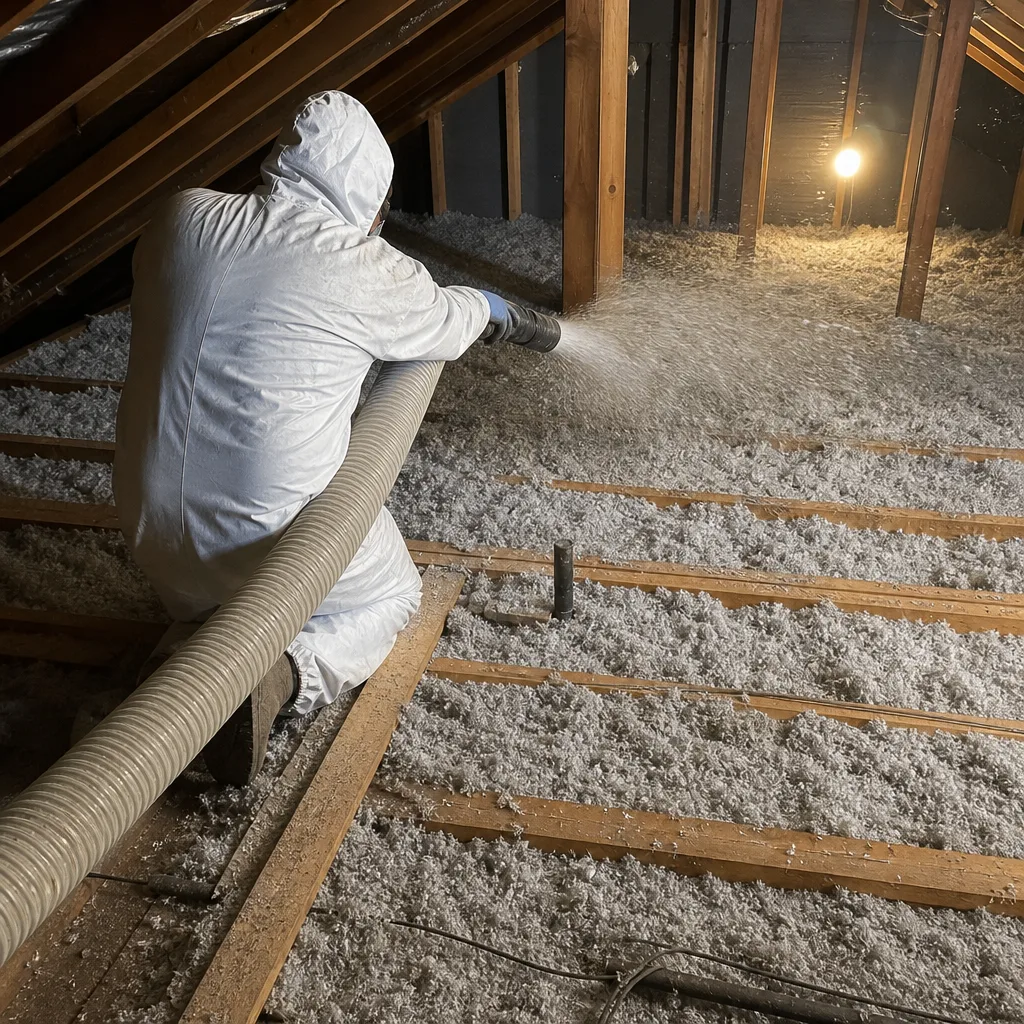
The process starts with containing the attic space and vacuuming out contaminated insulation. We then treat the sheathing and framing, and often recommend adding powered ventilation or a radiant barrier before rebuilding the insulation layer. This isn’t a surface wipe-down. It’s a fix for the heat and moisture dynamics that caused the mold.
What It Costs Here
Attic mold removal combined with new insulation in Bermuda Dunes usually falls between $2,800 and $6,500 depending on attic size and how far the mold has spread. That includes removal, treatment, and new blown-in cellulose or fiberglass to current R-value standards. Call (855) 382-3451 for a site assessment – we’ll tell you exactly what we’re seeing and what it’ll take to fix it.
Attic Insulation Removal in Bermuda Dunes
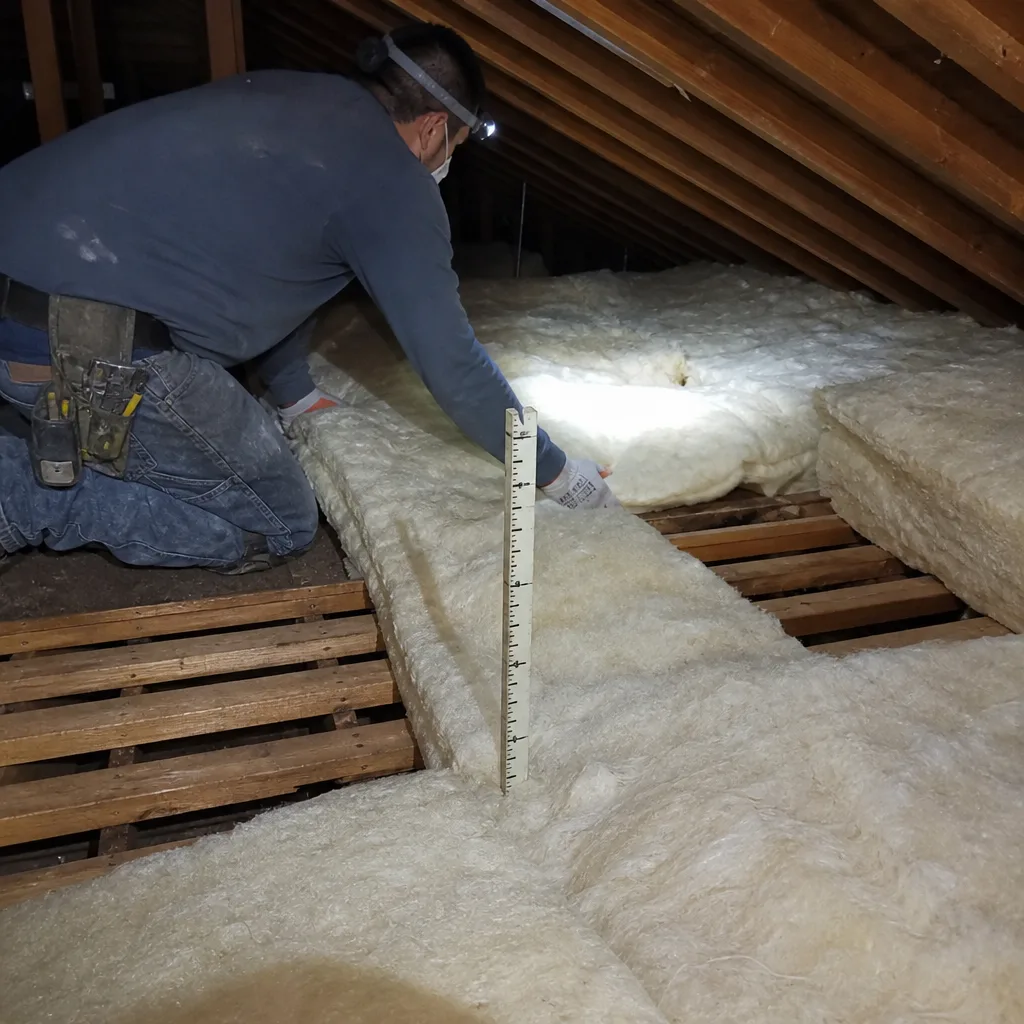
Attic insulation removal in Bermuda Dunes is often the first thing we recommend for homes built from the 1970s through the 1990s, because the original fiberglass batts are rarely worth keeping. After three or four decades of 110°F-plus heat cycling above the Coachella Valley floor, those batts compress, shift, and leave bare patches that let radiant heat pour through the ceiling. Removal is straightforward: we vacuum out the old material, inspect the decking and wiring, fix any issues, and start fresh with a material that actually fits the climate.
You need removal if your insulation is visibly compressed, dust-covered, pest-damaged, or if you’ve had roof leaks. You also need it before air-sealing is possible. You cannot properly seal recessed cans, duct chases, and top plates when old insulation is in the way.
One Trip, Done Right
For acreage properties and larger homes in the 92203 area, we bring a full crew and industrial vacuum equipment so removal and re-insulation happen the same day whenever possible. That matters in Bermuda Dunes, where long service drives and oversized garages mean homeowners don’t want a contractor coming back three times.
Removal Costs
Standalone attic insulation removal in Bermuda Dunes typically runs $1,200 to $2,500 for a standard single-story home. If you’re combining removal with new insulation, the full job generally lands between $3,500 and $7,000 depending on square footage and the material you choose. We give you a written quote before work starts, and estimates are free.
Trusted Brands We Service in Bermuda Dunes
We install Attic Insulation using material from the brands that hold up best in desert heat. Owens Corning makes the radiant barrier we pair with blown-in cellulose on low-pitch roofs. GreenFiber cellulose is a frequent recommendation here because it settles into an airtight layer that blocks the superheated air that radiates through fiberglass gaps. For homeowners who want a fire-resistant mineral wool option, we carry Rockwool as well. We keep materials stocked locally and schedule Bermuda Dunes jobs fast, which matters when a midsummer heat wave hits and your second floor becomes a sauna.
Common Attic Insulation Problems We See in Bermuda Dunes Homes
- Degraded fiberglass batts. The original R-19 or R-30 batts in 1970s-to-1990s homes here have been cooked for decades. They compress, shift, and leave gaps that let radiant heat through the ceiling.
- Restricted attic ventilation. Low-pitch and flat roofs often have only small gable or eyebrow vents. Without ridge vents, superheated air pools at 150°F and pushes heat into the living space below.
- Leaky duct chases and recessed cans. Desert wind blows dust into attics, and loose-fill settles around penetrations. Cooled air leaks into a 150°F attic through gaps nobody sealed when the house was built.
- Bonus rooms that are unusable in summer. Many Bermuda Dunes homes have converted attic or upstairs bonus spaces that were never insulated for desert conditions. These rooms bake by early afternoon because the insulation above them is inadequate or missing entirely.
Pricing for Attic Insulation in Bermuda Dunes, CA
A full attic insulation replacement in Bermuda Dunes, including removal of old material, air-sealing, and new blown-in cellulose to R-49, typically costs $3,500 to $7,000 for a standard single-story desert home. A top-up job where we add 6-8 inches of blown-in fiberglass or cellulose over existing material runs $1,800 to $3,200. Adding a radiant barrier under a low-pitch roof deck ranges from $900 to $2,200 depending on attic floor area. What moves the number: attic square footage, access difficulty, how much old material has to be removed, and whether we’re sealing duct chases and recessed cans. Call (855) 382-3451 for a free estimate and a straight answer on what your attic actually needs.
We Also Serve Cities Near Bermuda Dunes
Thermal Insulation Co serves the full Bermuda Dunes area and nearby Coachella Valley communities. We work in Indian Wells, Indio, La Quinta, and Palm Desert, where the same low-pitch roof and radiant heat dynamics apply. The valley presents one consistent attic problem: relentless sun. Our recommendations don’t change from city to city, only the driveway we pull into.
Serving Bermuda Dunes, CA — Our Local Coverage Area
We’re based in the Bermuda Dunes area and know this community well. Use the map below to see our service coverage — if you’re nearby, we can almost certainly help.
FAQs About Attic Insulation in Bermuda Dunes
Blown-in cellulose handles radiant heat better than fiberglass batts because it settles into a dense, airtight layer that stops hot air from moving through gaps in the insulation. Fiberglass batts, especially old ones in 1980s Bermuda Dunes homes, compress and shift under years of heat cycling, leaving bare spots that bake the ceiling below. Cellulose also packs tightly around recessed cans and duct chases, which are the biggest leak points in Coachella Valley attics. For most homes here, we recommend GreenFiber cellulose to R-49. Call (855) 382-3451 and we’ll take a look at your attic before recommending anything.
Yes. We schedule a full crew and bring industrial vacuum equipment so removal, mold treatment, and re-insulation happen the same day whenever possible. That matters for acreage properties in Bermuda Dunes where homeowners don’t want multiple service visits. We’ll confirm the scope during the free estimate. Call (855) 382-3451 to schedule.
A low-pitch or flat roof means limited attic space and restricted airflow. Without steep pitch and ridge vents, superheated air has nowhere to go. That’s why we treat powered attic ventilation and radiant barriers as mandatory first steps in Bermuda Dunes before new insulation goes in. The insulation works far better when the attic isn’t holding 150°F air above it.
The clearest signs are upstairs rooms that won’t cool below 80°F on summer afternoons, AC systems that run constantly, and high energy bills from May through October. You may also see warm ceilings, dusty air, or find old fiberglass batts that are compressed and darkened. If your home was built in the 1970s, 80s, or 90s and still has its original insulation, it’s almost certainly underperforming in this climate. Call (855) 382-3451 for a free inspection.
We do. Our crews routinely work on larger lots and rural properties in the 92203 area, and we arrive equipped to handle the access requirements they come with. Long service drives aren’t an obstacle. We’ll do the removal and re-insulation in one visit whenever the scope allows. Call (855) 382-3451 and tell us what you’re working with.
Low-Pitch Roofs and Radiant Heat: Why Bermuda Dunes Needs a Different Approach
Bermuda Dunes’ low-pitch and flat roofs mean attic ventilation is often restricted to small gable or eyebrow vents, so radiant-heat buildup at 110°F-plus is worse than in neighboring cities with steeper pitched roofs and standard ridge vents. This makes powered attic ventilation and radiant barriers a mandatory first step here, not an optional add-on.
Most homes in Bermuda Dunes sit on single-story footprints from the 1970s through the 1990s, with stucco exteriors, unshaded desert yards, and asphalt-shingle roofs that absorb heat all day. The attics above them act like ovens. When we re-insulated a home in Bermuda Dunes Country Club recently, the homeowner’s 1980s fiberglass batts had degraded and shifted from years of 110°F-plus heat cycling. Our crew pulled the old batts, air-sealed around recessed cans and the duct chase, then blew in GreenFiber cellulose to R-49 and added an Owens Corning radiant barrier under the low-pitch roof deck. The homeowner noticed the upstairs bonus room, previously unusable in summer, held 78°F on a 112°F afternoon.
That’s the difference between just adding insulation and fixing the attic as a system. In this community, the order of operations matters. Ventilation and radiant heat control come first. Then air-sealing. Then insulation. Skip the first two and you’ve spent money on material that can’t do its job.
What We Actually Do When We Show Up in Bermuda Dunes
Every Bermuda Dunes job starts with an attic inspection. We look at the current insulation depth, the venting situation, the condition of duct chases and recessed fixtures, and whether there’s any mold or moisture staining. Then we give you a recommendation based on what we saw, not on what we happen to have in the truck.
We carry three installation methods under one roof: attic batts and blankets, blown-in loose-fill, and spray foam in both open-cell and closed-cell. That’s a range most competitors in this area can’t match. We can blow GreenFiber cellulose to R-49 in a vented attic one day and install closed-cell Demilec spray foam under a low-pitch deck the next. The material choice follows the home’s actual conditions – R-value targets, moisture risk, access constraints – not brand loyalty or leftover inventory. Ruben Castellano built the company around that principle, and it’s how we approach every Bermuda Dunes attic.
For the desert, the most common solution is blown-in cellulose plus a radiant barrier. For attics with severe venting limitations, we may recommend closed-cell foam or a powered ventilation upgrade first. We’ll explain the trade-offs in plain language and give you a written scope of work before anything begins.
How We Handle Desert Dust and Air-Sealing in Bermuda Dunes
Desert wind-swept dust is a constant here. It gets into attics through gable vents, soffit gaps, and around any penetration in the ceiling plane. That dust settles into loose-fill insulation, clogging the air pockets, and it works its way into duct chases and around recessed cans, creating gaps that leak cooled air into a 150°F attic.
So before we install new insulation in a Bermuda Dunes home, we seal. Top plates, wire penetrations, duct chases, recessed light fixtures, plumbing stacks. In these attics, air-sealing is not a premium upgrade. It’s the baseline. Without it, new insulation underperforms no matter what R-value we install. This is one reason we tend toward blown-in cellulose here: it’s denser by nature and fills those cracks far better than fiberglass batts ever will.
Schedule a Bermuda Dunes Attic Insulation Assessment
If your attic hasn’t been looked at in years, there’s a good chance it’s costing you money every month from May through October. We’ll assess the current insulation, check for mold, evaluate venting, and tell you exactly what needs to happen, in what order, and what it will cost. No pressure. No lecture. Just a straight answer from a contractor who knows Bermuda Dunes attics. Call (855) 382-3451 today for a free estimate and we’ll get you on the schedule.
Written by Ruben Castellano, Owner at Thermal Insulation Co, serving Bermuda Dunes and the surrounding Coachella Valley.