
Fast, Reliable Attic Insulation Across Palm Desert
Attic insulation in Palm Desert is the single highest-impact upgrade you can make to a home that fights 110°F-plus heat for five months a year. Most Palm Desert attics we inspect sit at 140 – 150°F by early afternoon, baking the insulation below until it degrades, settles, and stops doing its job. If your AC runs all afternoon and the house still feels warm by 4 p.m., the problem is rarely your HVAC unit. It’s the thermal envelope above it. We’re Thermal Insulation Co, and we fix that envelope from the top down. Call us at (855) 382-3451 for a free estimate on attic insulation, attic top-ups, radiant barriers, and ventilation work across Palm Desert.
Why Thermal Insulation Co Is Palm Desert’s Preferred Attic Insulation Company
We’re a dedicated insulation contractor. That’s the whole scope of our trade. Not HVAC, not roofing, not general remodeling. Ruben Castellano leads our crews, and every job we run in Palm Desert is evaluated through one lens: what does this specific attic need to survive 150°F summers and perform for the next 20 years. Homeowners in Palm Desert tend to ask the same three questions: which material, which method, and how soon. We answer those questions with field data and building science, not sales scripts.
Palm Desert is a market where the wrong insulation recommendation has real consequences. A dense-pack wall application doesn’t address what a low-slope tile roof is doing to the attic cavity. Batt insulation installed without radiant barrier on a west-facing roof is half a fix. We see this routinely: homes where an insulation was installed competently but incorrectly for the climate. That’s exactly where our eight-brand material portfolio and three installation methods matter. We carry Owens Corning, Johns Manville, Knauf, GreenFiber, Rockwool, CertainTeed, Icynene, and Demilec. Most single-trade insulation contractors in the Coachella Valley carry one or two product lines. We carry competing brands so the recommendation is driven by your attic, not by what’s on our truck. That range of materials means we never have to force a square peg into a round hole, which matters a lot on Palm Desert’s mix of 1970s-era stucco-on-block homes, 1990s desert contemporaries, and newer gated-community builds.
Our technicians know the ZIP codes here: 92211, 92255, 92260, 92261. We know the difference between a Rancho Mirage-adjacent home and one out by 1000 Palms in terms of microclimate, sun exposure, and what the attic actually does in July. And when a home has been vacant through a Palm Desert summer, the systems haven’t been observed under load. We know how to diagnose that blind spot quickly.
Insulation Contractors in Palm Desert
Insulation Contractors in Palm Desert do their real work in a 150-degree attic, not in a brochure. The job here is about heat rejection, not heat retention. A Palm Desert attic insulation contractor evaluates what’s above the ceiling: the condition of existing batts or loose-fill, the roof assembly, the venting, the presence or absence of radiant barrier, and how the ductwork runs through the cavity. Get that wrong and you’ve spent thousands to trap heat inside a thermal envelope that needed to shed it. This is why we approach every Palm Desert attic as a system: insulation plus ventilation plus radiant control, not just a layer of fiberglass between the joists.
Attic Assessment and Thermal Scanning
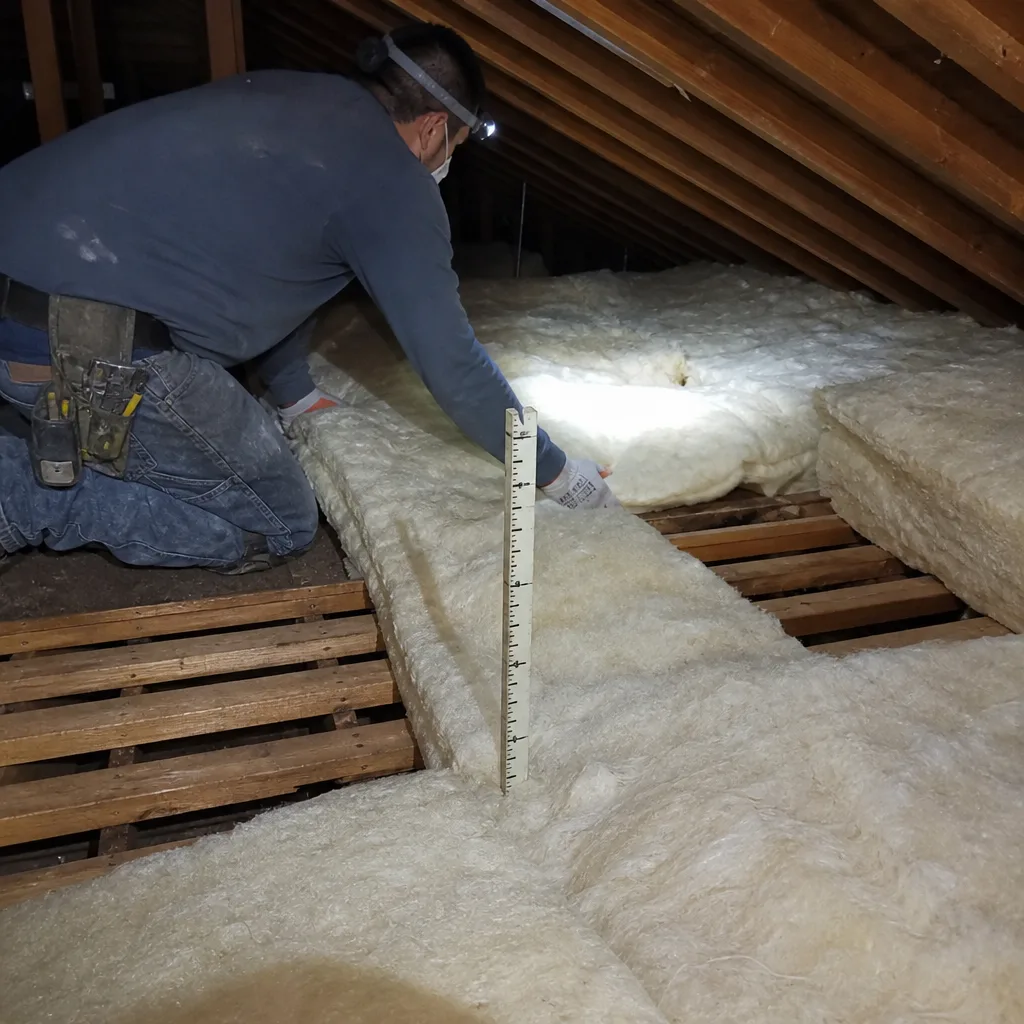
Before we quote anything, we get into the attic and look. We check insulation depth, settling, compression, and coverage over top plates. We look at air sealing around penetrations, and we check whether soffit and eave vents are actually clear. Most Palm Desert attics built before 2000 have settled fiberglass batts that are doing 40 – 60% of their rated R-value. In 92260 and 92261 especially, we see original 1970s-era insulation that has baked under tile roofs for four decades. It’s degraded to the point that top-up alone won’t fix it. Removal and replacement is the honest call.
Radiant Barrier and Insulation Retrofit for Low-Slope Roofs
Low-slope tile and flat roofs are the dominant roof assemblies across Palm Desert. These roofs trap heat differently than steep, vented attics in coastal cities. The roof deck itself radiates heat downward into the attic, and without a radiant barrier, that heat conducts straight into the insulation below it. A radiant barrier installed on the underside of the roof deck reflects a significant share of that radiant gain before it reaches the insulation. This isn’t theoretical. We specify this combination on most Palm Desert retrofits because the attic temperatures we measure here make it the difference between an insulation that performs and one that just occupies the cavity.
Attic Ventilation in Palm Desert
Attic Ventilation in Palm Desert is the load-bearing wall of the whole thermal strategy. In a climate where the sun hits the roof deck for 4,000-plus hours a year, ventilation moves heat out of the attic cavity so the insulation isn’t fighting a losing battle. A properly vented Palm Desert attic will run 20 – 30 degrees cooler than an unvented one. That difference is the margin between an AC that cycles and one that runs continuously from noon to sunset. Most of the Palm Desert homes we work on have inadequate or blocked ventilation. Soffit vents painted over, ridge vents improperly cut, or no intake at all. Without that exchange, any insulation upgrade underperforms.
Baffles and Intake Restoration
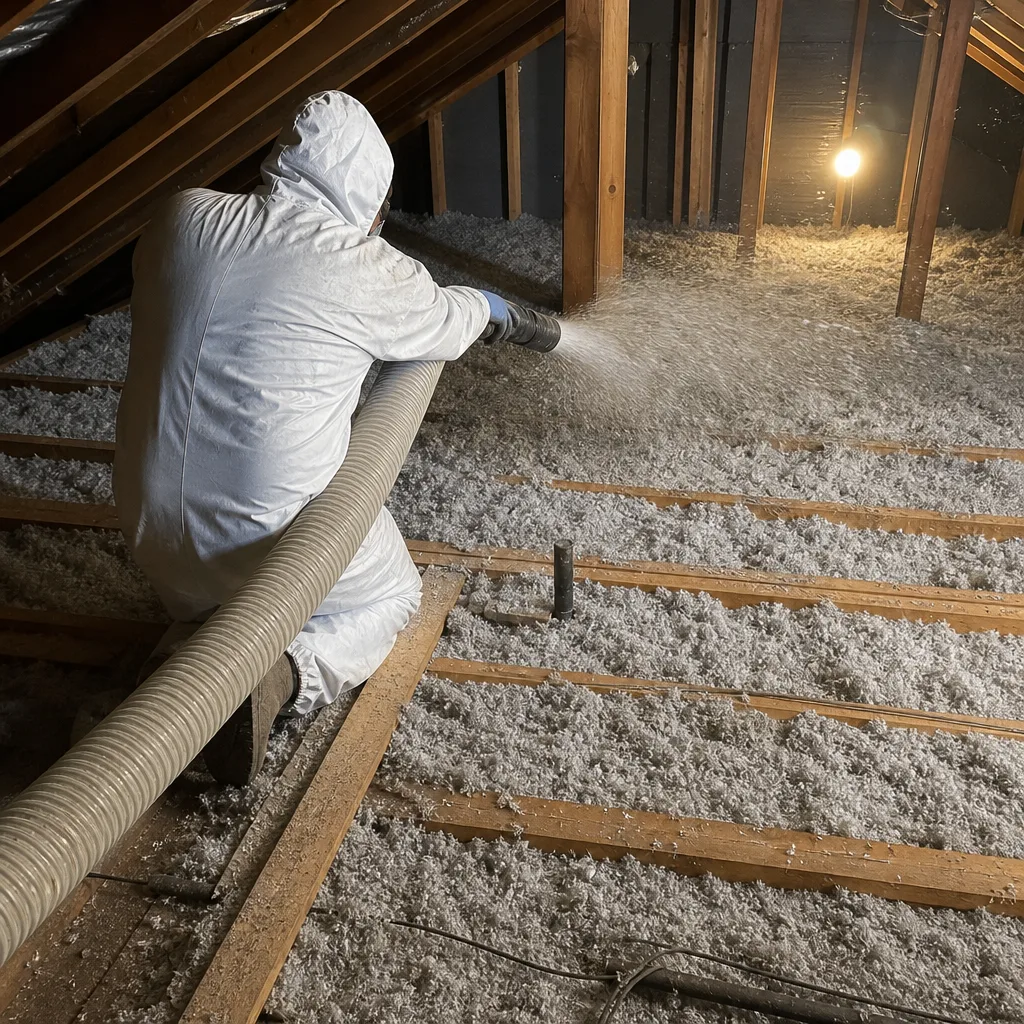
Attic baffles are the unglamorous part of the system, but they’re the reason a vented attic actually moves air. In Palm Desert homes where blown-in insulation was added without baffles, the insulation blocks the soffit vents. The roof can’t draw air, so the attic becomes a sealed oven. We install baffles at every eave bay before blowing in new insulation on retrofit jobs. On older homes in 92211 and 92255, we regularly find half the soffit vents blocked by old insulation or debris. Restoring that intake path is non-negotiable if the insulation is going to perform in a Palm Desert summer.
Ridge, Eave, and Turbine Vent Balancing
The exhaust side matters equally. Palm Desert’s low-slope roofs often have inadequate ridge venting, so heat pools at the top of the attic with nowhere to go. We evaluate the roof’s venting layout and balance intake with exhaust. On some desert contemporary homes, we recommend powered or turbine exhaust if passive venting can’t move enough air. The goal in this climate is simple: keep the attic under 130 degrees during the afternoon peak, so the insulation underneath stays within its designed operating range and the ductwork running through the cavity isn’t shedding its cool air into a furnace.
Trusted Brands We Service in Palm Desert
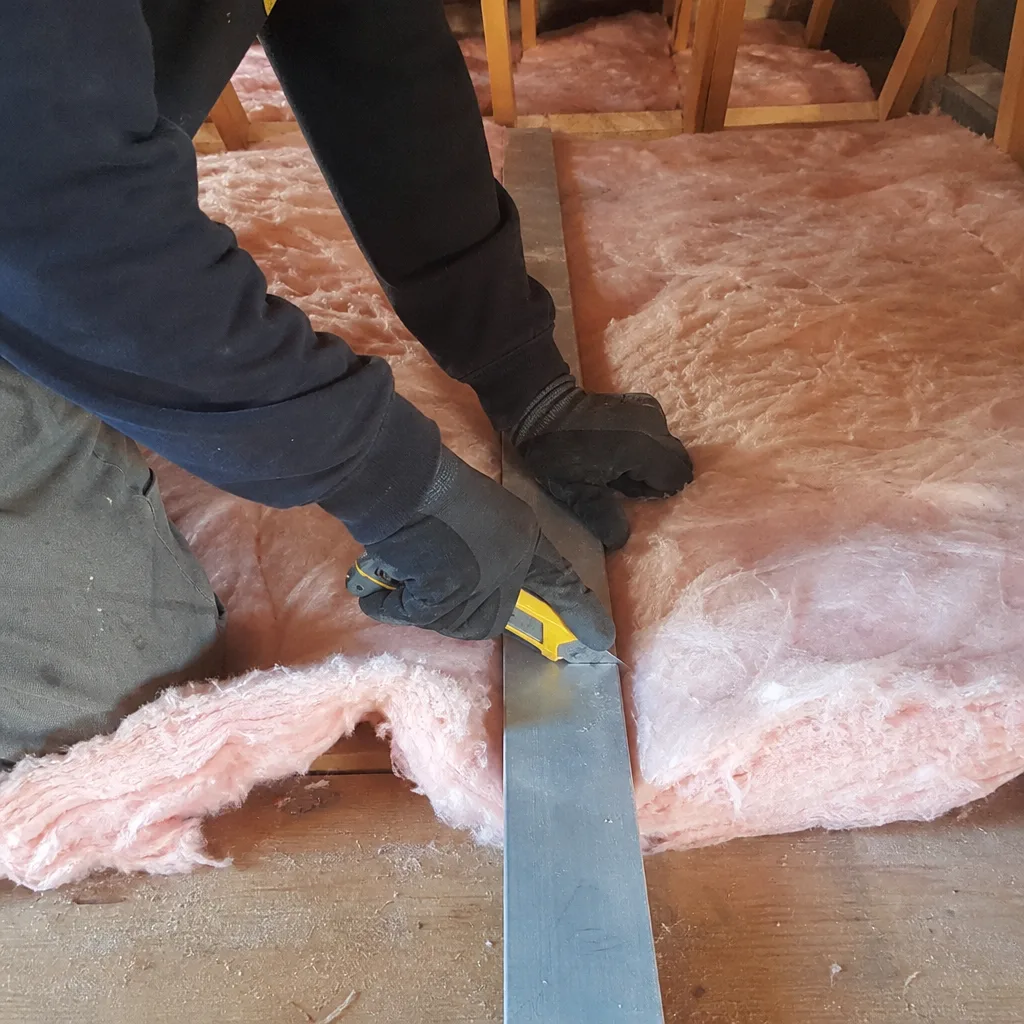
We carry GreenFiber because its recycled-content cellulose is an excellent fit for Palm Desert’s blown-in attic retrofits: it fills irregular cavities, resists air movement, and performs well under steep heat cycling. We carry Owens Corning and Johns Manville because their fiberglass batts and blown-in products are proven in high-heat climates and our crews are trained on their installation specifications. For homes where moisture resistance and fire performance matter, we specify Rockwool. For homes where air-sealing and maximum R-value per inch are the priority, we specify Icynene open-cell or Demilec closed-cell spray foam. Our parts and material availability for Palm Desert jobs is consistent, and our crews are factory-trained on installation methods for each brand. That’s what lets us match the material to the home rather than the home to a default product.
Common Attic Insulation Problems We See in Palm Desert Homes
- Settled 1970s-era fiberglass batts. Homes built in the 92260 and 92261 ZIPs often have original insulation that has compressed under decades of 150°F attic heat. R-value drops sharply, and the top plates end up bare, creating continuous thermal bridges at every wall line.
- Seasonal vacancy masking failure. A significant share of Palm Desert homes sit empty or lightly used through the worst summer months. Attic insulation degrades invisibly. The homeowner returns in October, runs the AC, and finds it struggling with no obvious cause. By then, a top-up has become a full replacement.
- Low-slope tile roofs overheating the attic cavity. Palm Desert’s signature roof type radiates heat directly into the attic. Without a radiant barrier, the insulation below is fighting radiant gain no amount of R-value can fully offset. Ventilation and reflective surfaces matter as much as the insulation itself.
- Uninsulated ducts and unsealed attic floors. Most 1980s and 1990s desert contemporary homes here run ductwork through the attic. When the attic runs 140-plus degrees and the ducts lack insulation or have failed seals, the AC loses meaningful capacity before air reaches the rooms. This is an insulation problem, not an HVAC problem, and it’s one we correct as part of our attic work.
Pricing for Attic Insulation in Palm Desert, CA
A blown-in attic insulation top-up in Palm Desert typically runs $1,400 – $2,600 for a standard 1,500 – 2,200-square-foot single-story home, depending on existing depth and target R-value. Full removal and replacement of degraded insulation runs $2,800 – $5,200. Attic baffle and ventilation restoration work adds $600 – $1,600 on most retrofits. Radiant barrier installation on an existing low-slope attic runs $1,200 – $2,800 depending on roof area and access. Attic air sealing runs $800 – $1,800. For a combined insulation-plus-radiant-barrier job on a typical Palm Desert home, expect $4,000 – $7,800. The biggest cost driver is whether the existing material can be topped up or must be removed. In Palm Desert, where so many attics hold 40-year-old degraded batts, removal is the honest recommendation more often than in newer housing markets. Call (855) 382-3451 for an exact quote on your attic. Estimates are free.
We Also Serve Cities Near Palm Desert
Our crews handle attic insulation work throughout the mid-Coachella Valley. We serve Palm Desert and the surrounding communities of Palm Desert neighbors like Indian Wells, Rancho Mirage, La Quinta, and Thousand Palms. If you own a seasonal home in any of these areas and the attic hasn’t been inspected in years, we’ll get up there and tell you what’s actually happening.
Serving Palm Desert, CA — Our Local Coverage Area
We’re based in the Palm Desert area and know this community well. Use the map below to see our service coverage — if you’re nearby, we can almost certainly help.
FAQs About Attic Insulation in Palm Desert
Palm Desert’s summer attic temperatures run higher and hold longer than in cooler microclimates, and that sustained heat cycles the material constantly. Fiberglass batts lose loft, cellulose settles, and spray foam’s thermal performance degrades under repeated extreme cycling. The failure is accelerated by low-slope roofs that radiate heat directly into the cavity, plus the seasonal-vacancy pattern that means problems go unnoticed through the worst heat. Homes in Indian Wells or Rancho Mirage with more consistent occupancy tend to catch degradation earlier. Call (855) 382-3451 and we’ll inspect your attic before the next heat cycle does more damage.
You typically wouldn’t until the cooling bill arrives or the house won’t hold temperature on the first hot weekend back. That’s the blind spot we deal with most in Palm Desert. The AC runs while you’re gone, and the system limps along until the outside heat peaks. When you return in fall, the failure is masked by cooler weather. The only reliable way to catch this is an attic inspection, which we do for free with any estimate. We check depth, compression, and top plate coverage, and we measure attic temperature during the inspection. If you haven’t been up there in years and the home has original insulation, assume it’s degraded until proven otherwise.
Yes. Radiant barriers work best exactly where Palm Desert’s heat problem is worst: a hot roof deck radiating downward into the attic. On a low-slope tile roof at 3 p.m. in August, the underside of the roof deck can exceed 150 degrees. That surface radiates heat like a broiler. A radiant barrier installed on the underside of the deck or on the attic floor reflects most of that radiant gain before it reaches the insulation. It’s not a replacement for insulation; it’s a multiplier on the insulation’s effectiveness. In Palm Desert, we specify it on nearly every retrofit where the attic is vented.
Solid masonry walls are a different challenge than wood-framed cavities, but our work on older stucco-on-block homes focuses on the attic, which is where the greatest heat gain and loss happens anyway. We’re not cutting into block walls or disturbing the stucco. The job is attic access: removing and replacing the insulation above the ceiling, restoring ventilation, and adding radiant barrier as needed. On homes where the exterior walls do have a framed cavity, we can evaluate them separately, but most Palm Desert retrofits get 80% of their energy correction from the attic and the ductwork running through it.
We install GreenFiber cellulose, Owens Corning and Johns Manville fiberglass, Rockwool mineral wool, CertainTeed fiberglass and blow-in, and Icynene and Demilec spray foam. The brand isn’t the starting point. The attic’s condition, roof assembly, and your objective are. For a blown-in top-up on a 1970s home in 92260, we often recommend GreenFiber for its fill density and air-blocking performance. For new construction or clean batt replacement, Owens Corning or certainteed. For homes with moisture or fire concerns, Rockwool. For air sealing and maximum R-value in a low-clearance attic, Icynene or Demilec. We stock all of them, so the recommendation is based on your home, not our inventory. Call (855) 382-3451 to talk through what your attic actually needs.
Get Your Palm Desert Attic Inspected Before the Heat Does More Damage
Every Palm Desert attic has a story. The ones we inspect on Country Club Drive with six inches of settled 1970s fiberglass and a 150-degree summer cavity tell the same story: no one looked, so no one knew. Ruben Castellano and our crews have spent years working in these attics. We know what degradation looks like, what it costs to correct, and what it costs to ignore. We know which neighborhoods run hottest, which roof types trap the most heat, and which homes need radiant barrier more than new insulation. If you own a home in Palm Desert and you can’t remember the last time someone actually got up into the attic, call us at (855) 382-3451. We’ll inspect it, tell you what’s there, what it’s doing, and what it needs. Free estimate. Real answers. No pressure.
Written by the team at Thermal Insulation Co, led by Ruben Castellano, serving Palm Desert and the Coachella Valley with attic insulation, blown-in insulation, and spray foam expertise.