
Fast, Reliable Spray Foam Insulation Across Phelan
Spray foam insulation in Phelan typically runs $2.50 to $6.50 per square foot installed, with full attic air-seal-and-foam jobs on the area’s ranch and manufactured homes landing between $4,500 and $14,000 depending on square footage and whether you choose open-cell or closed-cell. Most jobs we complete in one trip, even the oversized detached workshops common on multi-acre parcels off Phelan Road and along the 92329 and 92371 corridors. We know this high desert, and we know what the wind does to an under-insulated attic out here. Call (855) 382-3451 and we’ll give you a straight answer about your building.
Why Thermal Insulation Co Is Phelan’s Preferred Spray Foam Insulation Company
We’re a dedicated insulation contractor, not a generalist who picked up a foam rig last year. Phelan homeowners call us because we walk into an attic and immediately read the building: the dust on the fiberglass, the gaps at the top plates, the way the gable vents have been channeling fine sand onto everything below them for two decades. That’s what tells us whether open-cell or closed-cell foam makes sense in your specific structure.
Our Spray Foam Insulation team covers all of the Tri-Community, from the flats off Phelan Road out to the foothill edges near Wrightwood and down toward Oak Hills. Response time to most Phelan properties is under 48 hours for estimates, and we schedule installations on a timeline that respects the fact that you may be running a shop, horses, or a well pump out there. Ruben Castellano runs every job with the same rule: one crew, fully stocked, one trip. No half-applied foam left to bake in the sun while someone drives back to the yard for more material.
Spray Foam Insulation Contractors in Phelan
Spray Foam Insulation Contractors in Phelan deal with a set of building conditions you just don’t see down in the Victor Valley. The wind here doesn’t just pull heat out of a structure in winter; it actively degrades insulation. Fine dust and sand push through soffit vents, gable vents, and every imperfect seam in the envelope, settling onto fiberglass and compressing it flat over time. Most Phelan attics we inspect have already lost a meaningful share of their original R-value before we ever lift a spray gun.
The one-trip difference matters here
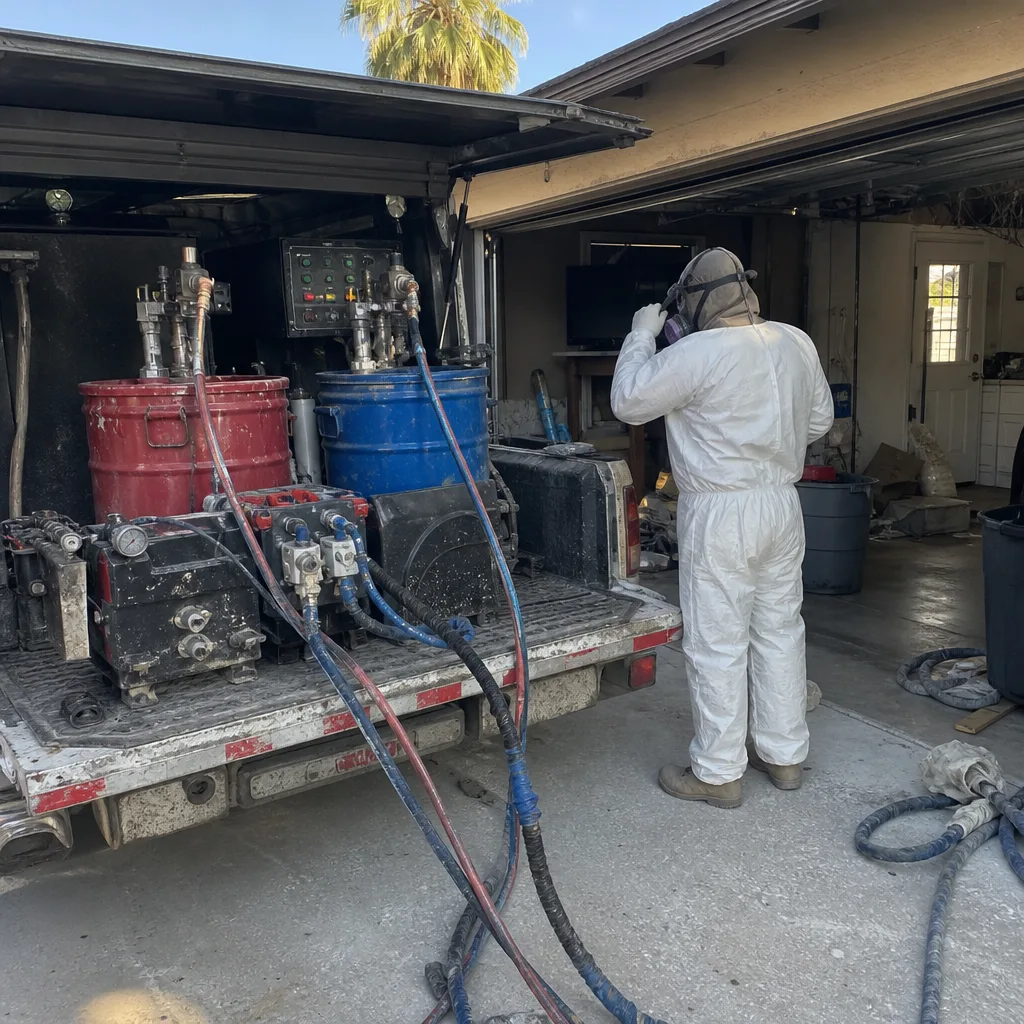
When a crew shows up at a 2,800-square-foot manufactured home on five acres and realizes halfway through that they didn’t bring enough material, everyone loses. You wait. The project stalls. We stock for the building we’re foaming, not for the truck. That includes oversized detached workshops, which need a real material calculation and the right foam density for big exposed wall planes and metal roof decks.
Open-cell versus closed-cell on the high desert
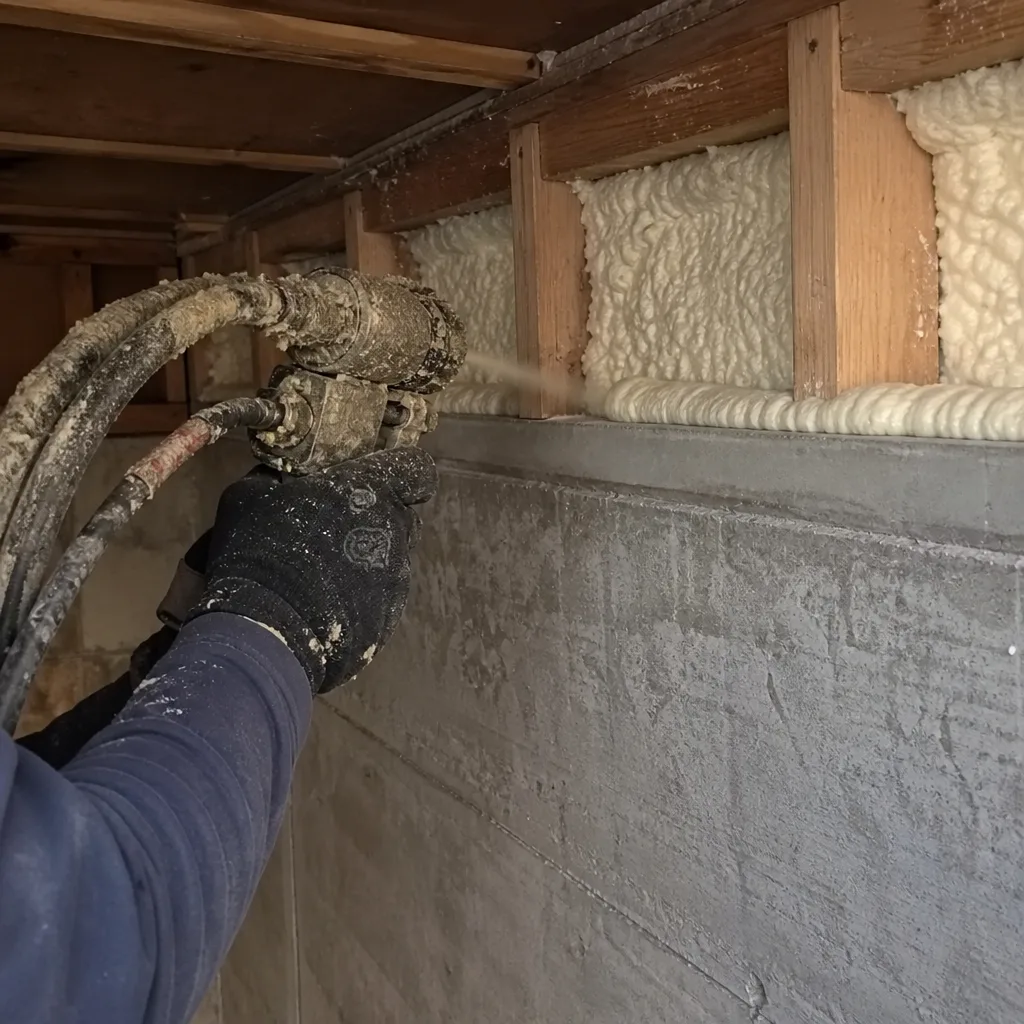
Open-cell is often the right call for interior attic applications here because it expands aggressively, fills irregular rafter bays, and carries an air-sealing benefit that matters on windy days. Closed-cell gets specified more on metal buildings, rim joists, and anywhere moisture or structural rigidity matters. The cost spread is real: closed-cell runs roughly double open-cell per board foot, so we don’t recommend it reflexively. We recommend the material that answers what your building actually faces.
Spray Foam Attic Insulation in Phelan
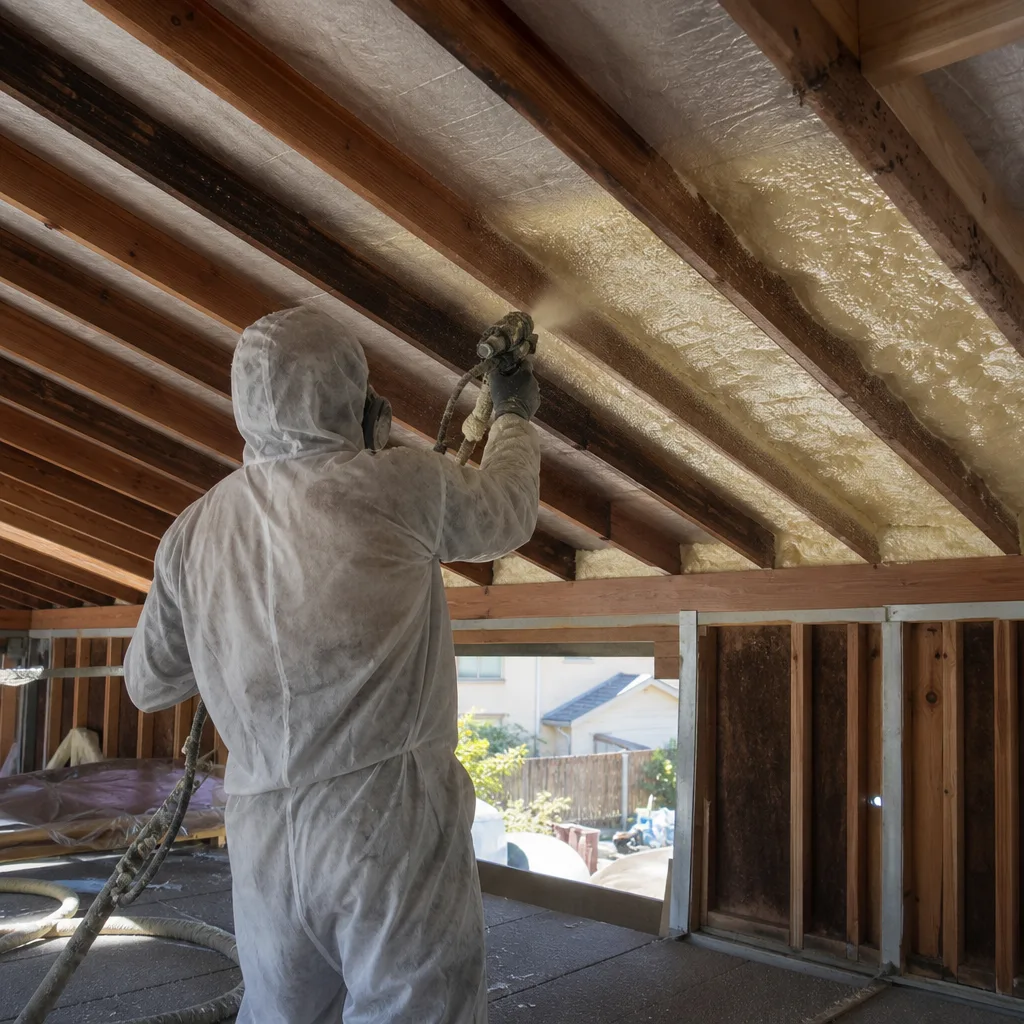
Spray Foam Attic Insulation in Phelan is typically the highest-leverage energy improvement a homeowner out here can make, because the attic is exactly where the wind and dust hit hardest. The work involves air-sealing top plates, blocking vent-path dust intrusion, and spraying foam across the attic floor or roofline depending on whether the attic is vented or unvented. Most ranch-style homes built in the 1970s through 1990s out here are vented attics with thin or settled insulation, and many need the full air-seal-then-spray sequence, not just more material dumped on top of a problem.
Wind-scour is the variable most contractors skip
Because Phelan’s wind scours fine sand and dust through attic and crawlspace vents, spray foam here often goes in as a combined air-seal-and-insulation layer that closes those vent-path gaps. That step matters far less in sheltered, tree-covered neighborhoods down in the Victor Valley. Out here, it’s the difference between an attic that holds its R-value for 20 years and one that’s sand-packed again in five.
Dust adhesion failures we see on older builds
The big day-night swing, 100°F afternoons to below-freezing nights, stresses foam that wasn’t applied to a properly prepped substrate. Foaming over dirty or damp sheathing without air-sealing first leads to adhesion failure, and then you’re back to square one with a cured foam skin that has to be cut out. We prep. We clean. We check moisture. Then we spray.
Trusted Brands We Service in Phelan
We’re authorized to install products from eight manufacturers, including Owens Corning, Rockwool, and Johns Manville, but for spray foam specifically we run Icynene and Demilec systems. We carry Icynene because its open-cell foam expands well in the irregular framing you find in older Phelan ranch homes, and Demilec because its closed-cell line handles the metal and rim-joist applications common to the detached shops and equipment buildings out here. Brand selection is never about what’s sitting in the warehouse. It’s about what the building is asking for. And because we’re a dedicated insulation contractor, not a roofer or HVAC company crossing over into foam, our crews know how each system behaves in this specific climate.
Common Spray Foam Insulation Problems We See in Phelan Homes
- Sand-packed fiberglass that never gets removed. Fine dust driven through soffit and gable vents settles on existing insulation and compresses it flat, which means the attic has already lost real R-value before any spray foam goes in. We remove or remediate that layer first; spraying foam over dead insulation is wasted money.
- Dead air-sealing steps on wind-exposed attics. Top plates, wire penetrations, and can light housings leak air constantly under wind pressure. If those aren’t sealed before the foam goes down, you’ve insulated a leaky bucket. We seal first, every time.
- Half-applied open-cell on oversized outbuildings. Open-cell foam does not tolerate being left exposed to wind and direct sun for days. If a crew underestimates material for a big detached workshop and has to leave the job open, the foam cures poorly and often needs remediation. One trip is not a convenience out here; it’s a material requirement.
- Manufactured home attics with zero existing air barrier. Many older manufactured homes on multi-acre parcels near Phelan Road have thin roof assemblies and no real air barrier. The fix is usually a careful open-cell application at the roofline paired with ventilation correction, not just attic floor coverage. Each of these buildings changes the plan.
Pricing for Spray Foam Insulation in Phelan, CA
A typical attic air-seal-and-foam job on a 1,800 to 2,400-square-foot Phelan ranch home runs between $5,500 and $12,500, with open-cell at the lower end and closed-cell at the higher. Detached workshops and oversized garages land between $4,000 and $18,000 depending on surface area, wall height, and whether we’re foaming the walls, the roof deck, or both. Rim joist spray foam on an existing home in 92329 or 92371 typically runs $900 to $2,800. What moves your number: square footage, foam type, substrate condition, and how much air-sealing the building needs. We don’t quote without seeing the structure, and our estimates are free. Call (855) 382-3451 and we’ll come out and give you the real number for your building.
We Also Serve Cities Near Phelan
If your property sits up in Piñon Hills, on the mountain side toward Wrightwood, or down toward Oak Hills and Hesperia, we cover that ground too. The same crew and the same material calculation discipline apply across the high desert and surrounding foothills. For more detail on our work throughout the area, see our Phelan coverage page, which outlines what we do across the Tri-Community and nearby Victor Valley edges.
Serving Phelan, CA — Our Local Coverage Area
We’re based in the Phelan area and know this community well. Use the map below to see our service coverage — if you’re nearby, we can almost certainly help.
FAQs About Spray Foam Insulation in Phelan
Spray foam makes more sense because it creates an air barrier at the same time it insulates, and on Phelan’s flats the air barrier is the actual problem. Fiberglass filters air but doesn’t stop it; the wind pushes dust straight through it, compressing the material and erasing R-value over time. Open-cell foam closes those vent-path gaps and holds its performance. Call (855) 382-3451 for an attic assessment and a straight recommendation on whether foam is right for your building.
Yes. We foam detached workshops, oversized garages, equipment buildings, and barns throughout both Phelan zip codes. The key is material calculation done against the actual wall and roof square footage before we load the truck. Closed-cell Demilec is common on metal buildings; open-cell Icynene works on framed walls where indoor air quality and noise reduction are also drivers. We’ll spec the right foam for the building, not the other way around.
Yes. Spray foam is one of the only insulation systems that works in both directions at once: it slows radiant heat gain from the roof deck during summer afternoons and reduces heat loss during winter nights. The same air-sealing that keeps dust out in spring also keeps conditioned air in year-round. For Phelan’s 40-to-50-degree daily temperature swings, that dual performance matters more than any single R-value number.
Yes, with the caveat that we need to correct ventilation in the same visit. Many manufactured homes near Phelan Road and the 92371 flats have thin roof assemblies and no air barrier, so the right move is usually open-cell spray foam at the roofline paired with intake and exhaust correction. We inspect the roof assembly before quoting; every manufactured home is a little different under there. Estimates are free, and we do not spray without seeing what the roof cavity actually looks like.
You don’t need to clear all of it. We need clear access to the work area, which means personal items, holiday bins, and anything stored directly on the attic floor should be pulled back from the areas we’re spraying. Our crew will handle moving insulation material and any remediation on the immediate work surface. Stored items just create overspray, and overspray on your belongings isn’t something either of us wants. Call (855) 382-3451 and we’ll walk you through exactly what prep your specific attic needs.
Written by Ruben Castellano, Owner at Thermal Insulation Co, serving Phelan and the surrounding high desert.