
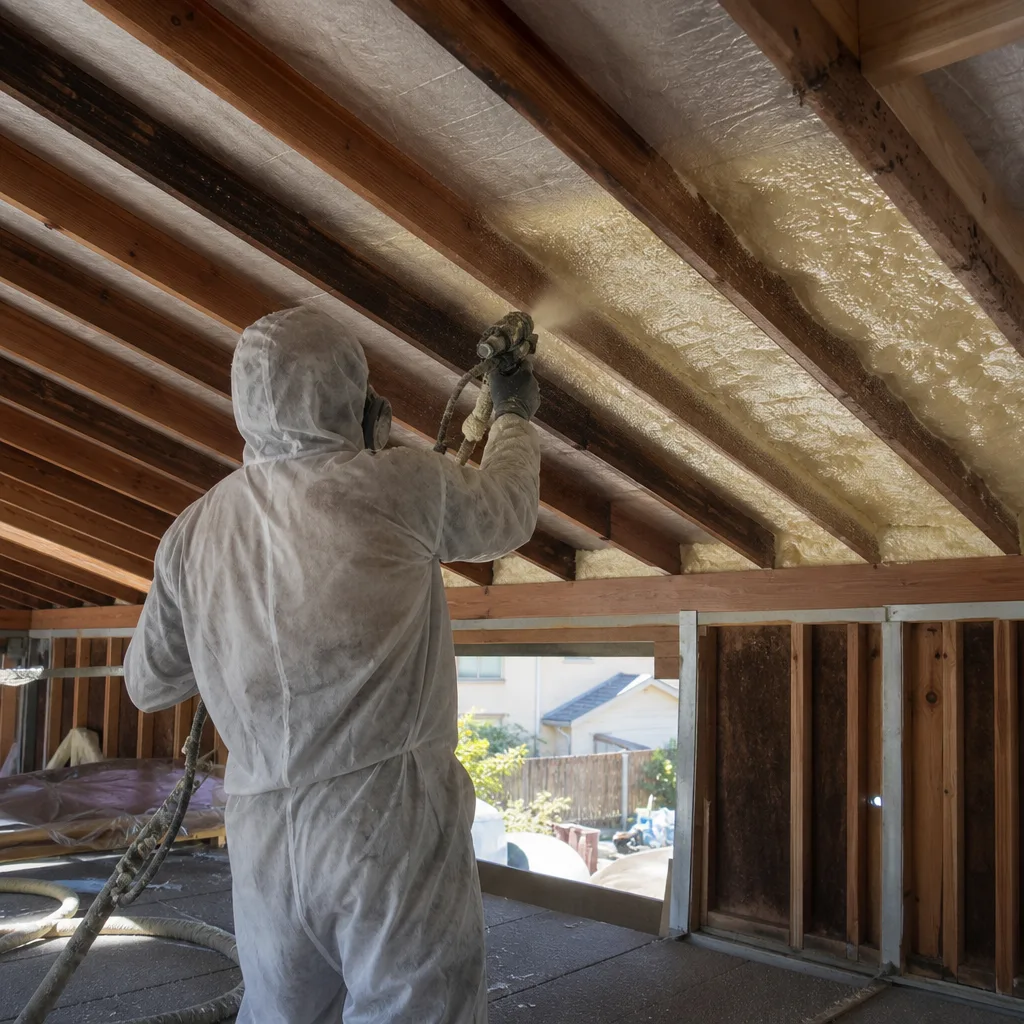
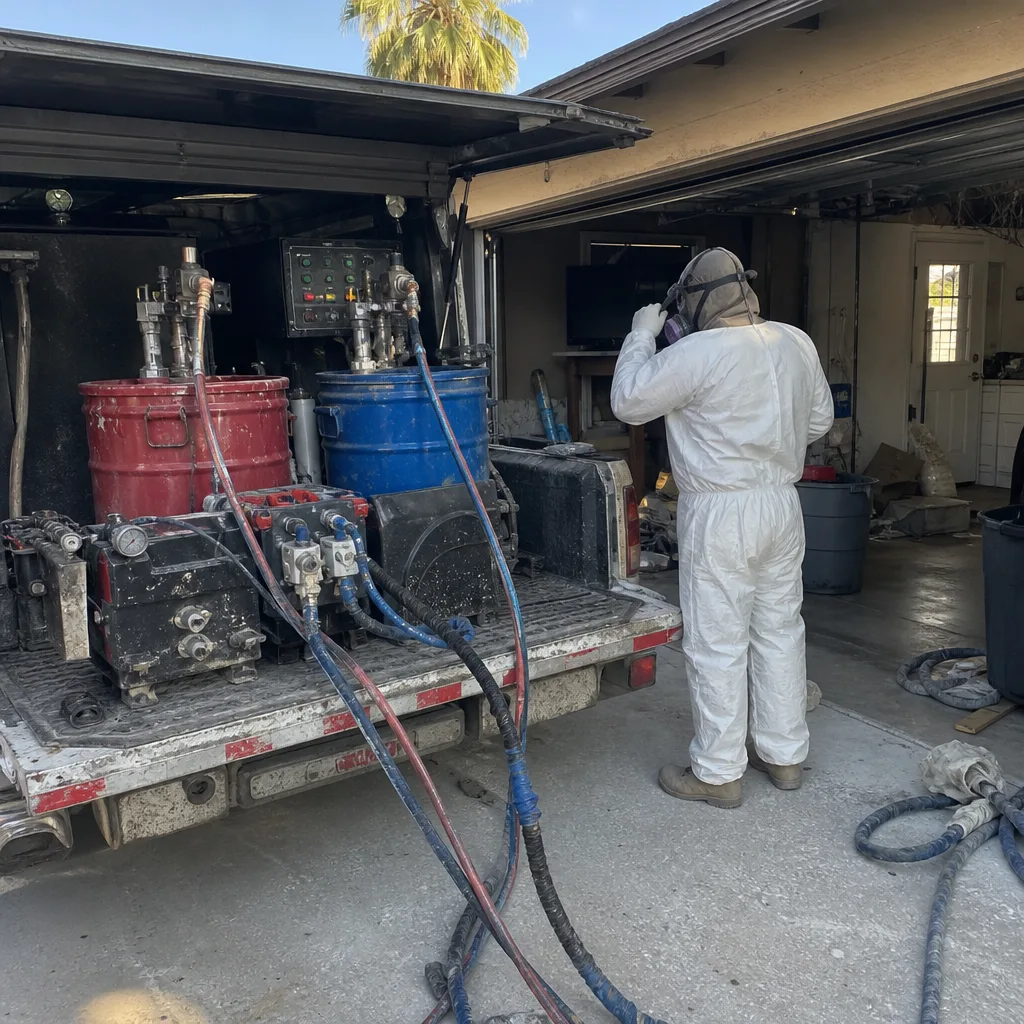
Fast, Reliable Spray Foam Insulation Across Manhattan Beach
Spray foam insulation in Manhattan Beach is a moisture-management problem first, not a heat-retention one. The marine layer, salt air, and high coastal humidity mean the wrong foam, applied the wrong way, fails within a year or two. We fix that. Our crews work in Manhattan Beach weekly, from the sand-section streets west of Sepulveda to the Hill Section and the Tree Section, and we know exactly how these bungalows and rebuilds behave.
Call (855) 382-3451 for a free estimate, and Ruben Castellano or one of our team will walk you through what your walls actually need.
Why Thermal Insulation Co Is Manhattan Beach’s Preferred Spray Foam Insulation Company
We’re a dedicated insulation contractor, not a generalist. That distinction matters in Manhattan Beach because the failure patterns here are specific to coastal construction, and only a specialist sees enough of them to learn what works. Our Spray Foam Insulation team works across the South Bay, and Manhattan Beach calls are routine for us, not an out-of-area exception.
Ruben Castellano leads our crews, and his experience with coastal insulation failures means we arrive knowing what to look for behind your drywall before we cut into it. Manhattan Beach homeowners tell us the same thing: previous contractors quoted fiberglass or open-cell foam without accounting for salt-air wicking or the marine layer. We carry multiple foam systems from Icynene and Demilec because a 1960s sand-section bungalow needs a different assembly than a 2000s rebuild on The Strand. The right material exists for each situation. The trick is knowing which one.
We stock local material for Manhattan Beach jobs, which means faster turnaround and no waiting on parts from Orange County. When you call, we can usually be on-site within two to three business days for assessment.
Open Cell Spray Foam in Manhattan Beach
Open cell spray foam is what most Manhattan Beach homeowners first ask about, because it’s the lower-cost foam option and works well in the right location. In a 90266 or 90267 home, open cell foam makes sense in interior applications, attic knee walls, or soundproofing between floors where moisture isn’t the primary concern. It expands aggressively, fills odd cavities in older framing, and air-seals well. The catch in Manhattan Beach is that open cell foam is vapor-permeable, which means marine-layer moisture can pass through it and reach your framing. For exterior walls in the sand section, that permeability becomes a liability within a single humid winter.
Where Open Cell Foam Belongs
We recommend open cell for interior partition walls, attic floors when the attic is part of the conditioned space, and rim joists in homes that sit above a dry crawl space. It also does a good job of reducing sound transmission between floors of a tall beach rebuild. The performance goal is air sealing, not vapor blocking.
Where Open Cell Foam Causes Trouble
Exterior walls in Manhattan Beach’s fog belt are the wrong place for open cell foam. The same vapor permeability that makes it forgiving in dry climates lets salt-laden humidity condense on your studs and sheathing. Within a season or two, R-value drops and you’ll smell the problem before you see it. That’s a failure we’re called to fix after other contractors installed open cell in the wrong assembly.
Spray Foam Insulation Contractors in Manhattan Beach
Spray foam insulation contractors in Manhattan Beach aren’t all the same, and the difference shows up in the details of coastal application. We install both open-cell and closed-cell spray foam, and the decision about which one goes in your walls depends on the home’s age, foundation type, proximity to the ocean, and existing vapor profile. A 1950s raised-foundation bungalow three blocks from The Strand needs a different approach than a 2010s slab-on-grade rebuild east of Sepulveda.
Closed-Cell Spray Foam for Coastal Walls
Closed-cell spray foam is the workhorse for exterior walls in Manhattan Beach because it’s a vapor barrier as well as an insulator. It seals the cavity against damp marine air, adds structural rigidity to older 2×4 framing, and doesn’t wick moisture the way fiberglass batts do. In sand-section homes, where exterior wall cavities wick salt-laden moisture year-round, closed-cell is often the only material that survives more than a season or two.
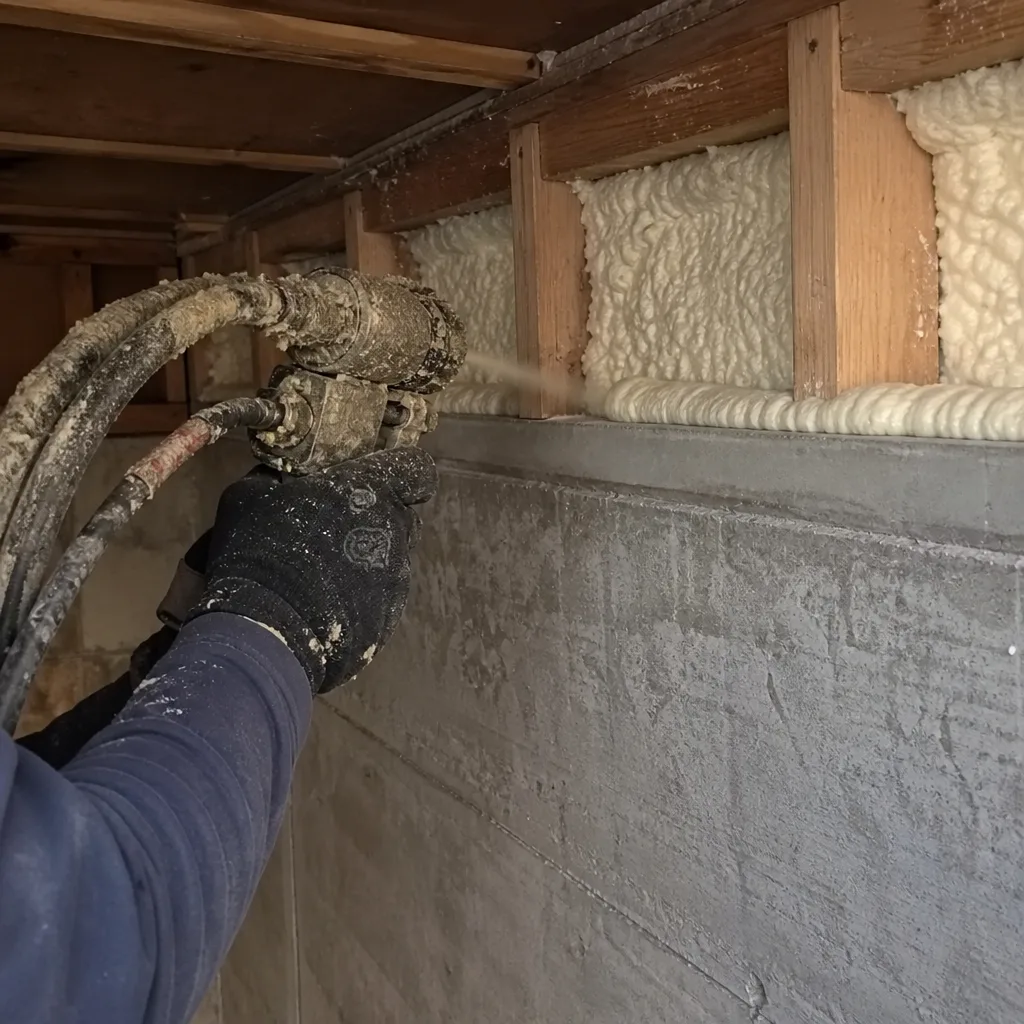
Rim Joist and Garage Ceiling Work
Raised homes in Manhattan Beach lose a surprising amount of conditioned air through rim joists, and open-cell foam in that location makes sense when the crawl space stays dry. Garage ceiling spray foam matters when the garage is below living space, common in the tall rebuilds on narrow lots. Air sealing the garage ceiling keeps vehicle exhaust and moisture from migrating upward into bedrooms.
Trusted Brands We Service in Manhattan Beach
We carry Icynene and Demilec spray foam systems because both manufacturers produce open-cell and closed-cell formulations suited to different moisture conditions. That matters in Manhattan Beach, where a single-brand installer may not have the right product for your wall assembly. We also work with Owens Corning, Johns Manville, Knauf, and GreenFiber for the homes where spray foam isn’t the best fit, or where a hybrid approach using foam plus batt or blown-in insulation gives better performance. Carrying eight brands means our recommendations come from your home’s needs, not our inventory.
Common Spray Foam Insulation Problems We See in Manhattan Beach Homes
- Salt-damp sheathing delamination. Closed-cell foam sprayed too thin over damp exterior sheathing can delaminate within a year as trapped moisture tries to escape. In Manhattan Beach’s sand section, this is the number one spray foam failure we’re called to repair.
- Open-cell foam saturation in exterior walls. Marine-layer condensation accumulates inside open-cell foam, dropping its R-value and leaving framing damp. By the time homeowners notice the musty smell, the foam usually needs removal and replacement with closed-cell.
- Missing vented drying paths in 2×4 bungalow walls. Older Manhattan Beach bungalows have narrow wall cavities that need a drying path on one side. Foam sprayed without one traps moisture behind drywall, and mold follows within months.
- Compressed original batts behind closed-cell retrofits. On 1960s homes near The Strand, original R-7 fiberglass batts are often already moldy and compressed. Spraying foam over them seals the problem in. We remove failed batts before applying foam.
Pricing for Spray Foam Insulation in Manhattan Beach, CA
Spray foam pricing in Manhattan Beach runs higher than inland cities because of the prep work coastal homes need. Closed-cell wall spray foam on a typical 1,200-square-foot bungalow runs roughly $8,500 to $14,000, depending on whether we’re removing failed batts first. Open-cell in an attic runs $3,500 to $6,500. Rim joist sealing on a raised foundation is typically $1,800 to $4,000, and garage ceiling foam is $2,500 to $5,000. The variables are mostly demo, sheathing condition, and access. Call (855) 382-3451 for an exact quote. Estimates are free, and you’ll get a straight answer about what your specific walls need.
On a 1960s beach bungalow near The Strand, our crew opened an exterior wall and found the original R-7 batts compressed to less than an inch, damp and moldy from salt-air wicking. We removed the failed batts, applied closed-cell spray foam to seal the cavity against marine air, and left a vented drying path so any future condensation can escape rather than soak the assembly. That job would have cost the homeowner less if the previous contractor had spec’d closed-cell on the first pass.
We Also Serve Cities Near Manhattan Beach
Beyond Manhattan Beach, we handle spray foam insulation work in Manhattan Beach‘s neighboring communities including Redondo Beach, Rolling Hills Estates, Palos Verdes Estates, and Torrance. Coastal humidity and salt air affect all of the South Bay, and our experience in Manhattan Beach’s sand section carries directly over to homes along the Esplanade in Redondo or the bluffs in Palos Verdes Estates.
Serving Manhattan Beach, CA — Our Local Coverage Area
We’re based in the Manhattan Beach area and know this community well. Use the map below to see our service coverage — if you’re nearby, we can almost certainly help.
FAQs About Spray Foam Insulation in Manhattan Beach
Salt-laden moisture from the ocean wicks into exterior wall cavities through stucco and old siding, then condenses on the back of the sheathing. Open-cell foam soaks that moisture up, and closed-cell foam applied too thin traps it against the sheathing. Inland homes don’t have this constant vapor drive, so both failures are rare there. The fix in Manhattan Beach is closed-cell foam at full thickness with a vented drying path on one side of the assembly. Call (855) 382-3451 and we’ll confirm what your walls need.
No, and any contractor who says otherwise is setting you up for mold. The original batts in Manhattan Beach sand-section bungalows are almost always damp, compressed, or moldy by now, because the wall assembly was never designed for coastal vapor drive. We remove them, inspect the sheathing, and then apply closed-cell foam directly to clean framing. Spraying over failed batts seals the moisture in and guarantees a re-do within two years.
Closed-cell is the best choice for exterior walls in a raised home near The Strand because it blocks vapor and adds rigidity to old 2×4 framing. For rim joists, open-cell can work when the crawl space stays dry. The exact answer depends on your home’s ventilation and sheathing condition, but in general, closed-cell on walls and a drying path on the exterior is the assembly that survives Manhattan Beach humidity.
We don’t install exposed metal fasteners or hangers that corrode in salt air. The foam itself, when applied correctly, seals the cavity against the marine environment. What we do pay attention to is sheathing condition and any existing flashing or lath that may already be corroded from decades of salt exposure. If the substrate is compromised, the foam bond fails. We inspect before we spray, which is what coastal work requires.
The marine layer raises ambient humidity enough to slow open-cell foam curing and increase the chance of poor adhesion on damp sheathing. Closed-cell foam cures more reliably in these conditions, but we schedule spray work around the fog when possible and check substrate moisture before starting. A contractor that doesn’t account for the marine layer is guessing. We measure, then spray.
Written by Ruben Castellano, Owner at Thermal Insulation Co, serving Manhattan Beach and the South Bay.