
Fast, Reliable Spray Foam Insulation Across Rolling Hills Estates
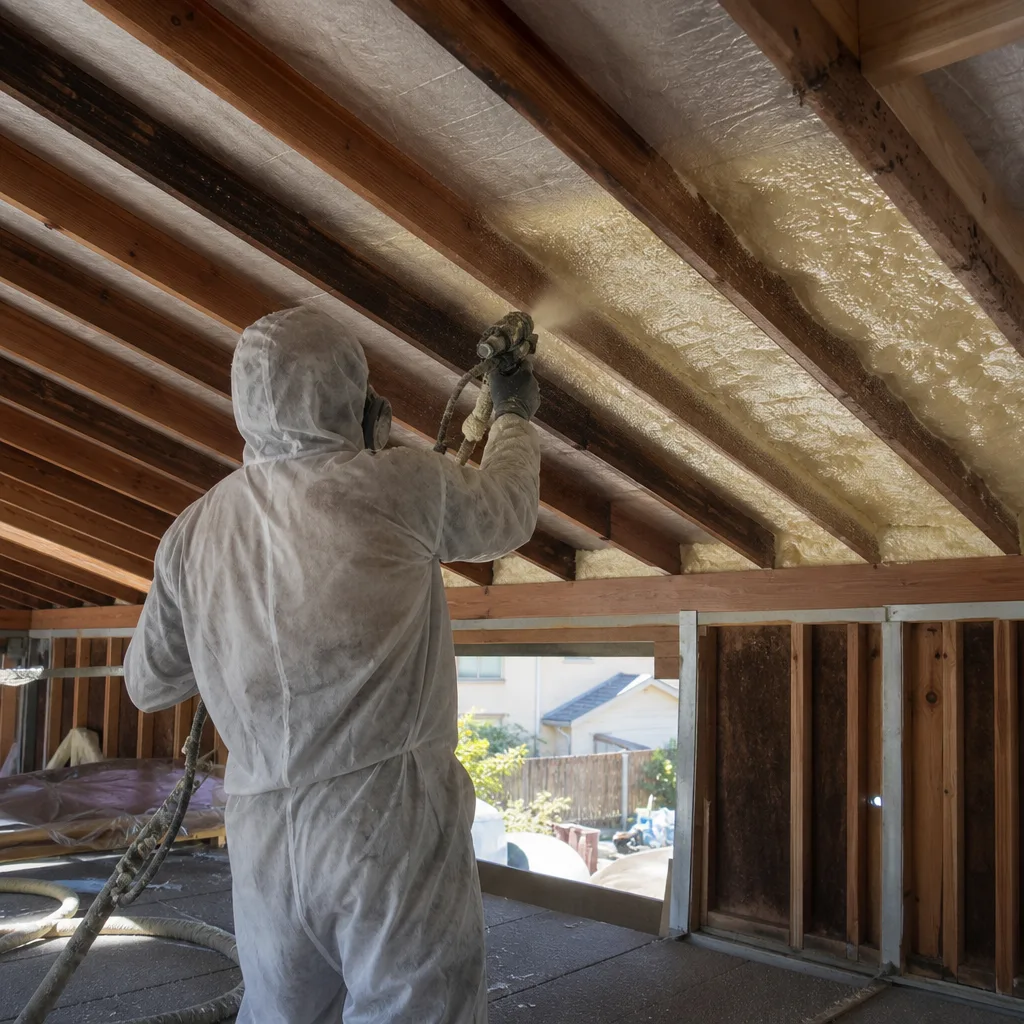
Spray foam insulation in Rolling Hills Estates runs roughly $3.50 to $7.20 per board foot for open-cell and $4.80 to $9.00 per board foot for closed-cell, and most peninsula jobs fall between $2,800 and $12,500 depending on square footage, access, and whether we’re sealing a windward attic or a detached workshop. Our crews roll out to the Palos Verdes Peninsula from Van Nuys, and because we work the 90505 zip consistently, we know which homes off Palos Verdes Drive East and Crest Road need marine-layer moisture control before any R-value gets applied. That’s the difference a dedicated Spray Foam Insulation specialist brings to Rolling Hills Estates. Call (855) 382-3451 for a free estimate and a same-week site visit.
Why Thermal Insulation Co Is Rolling Hills Estates’s Preferred Spray Foam Insulation Company
Ruben Castellano started Thermal Insulation Co because Rolling Hills Estates homeowners kept telling him the same thing: other contractors quoted one product and wouldn’t explain why. He built our company around carrying eight material brands – Owens Corning, Johns Manville, Knauf, Rockwool, CertainTeed, Icynene, Demilec, and GreenFiber – so we’re never forced to sell a single line and call it a fit. For peninsula homes, that usually means matching Icynene or Demilec closed-cell spray foam to windward attics and damp crawl spaces, not pushing batts where condensation will undo the work in three winters.
Our clients across Rolling Hills Estates have told us the same priorities keep coming up: knowing the foam won’t trap coastal damp behind it, getting the windward side sealed in the same visit, and having a crew that shows up when we say we will. For a large-lot home up a long private drive off Empty Saddle Road or a mid-century ranch off Silver Spur Road, one visit that actually finishes is the standard. We don’t ask a Rolling Hills Estates homeowner to take a day off work twice.
Crawl Space Spray Foam Insulation in Rolling Hills Estates
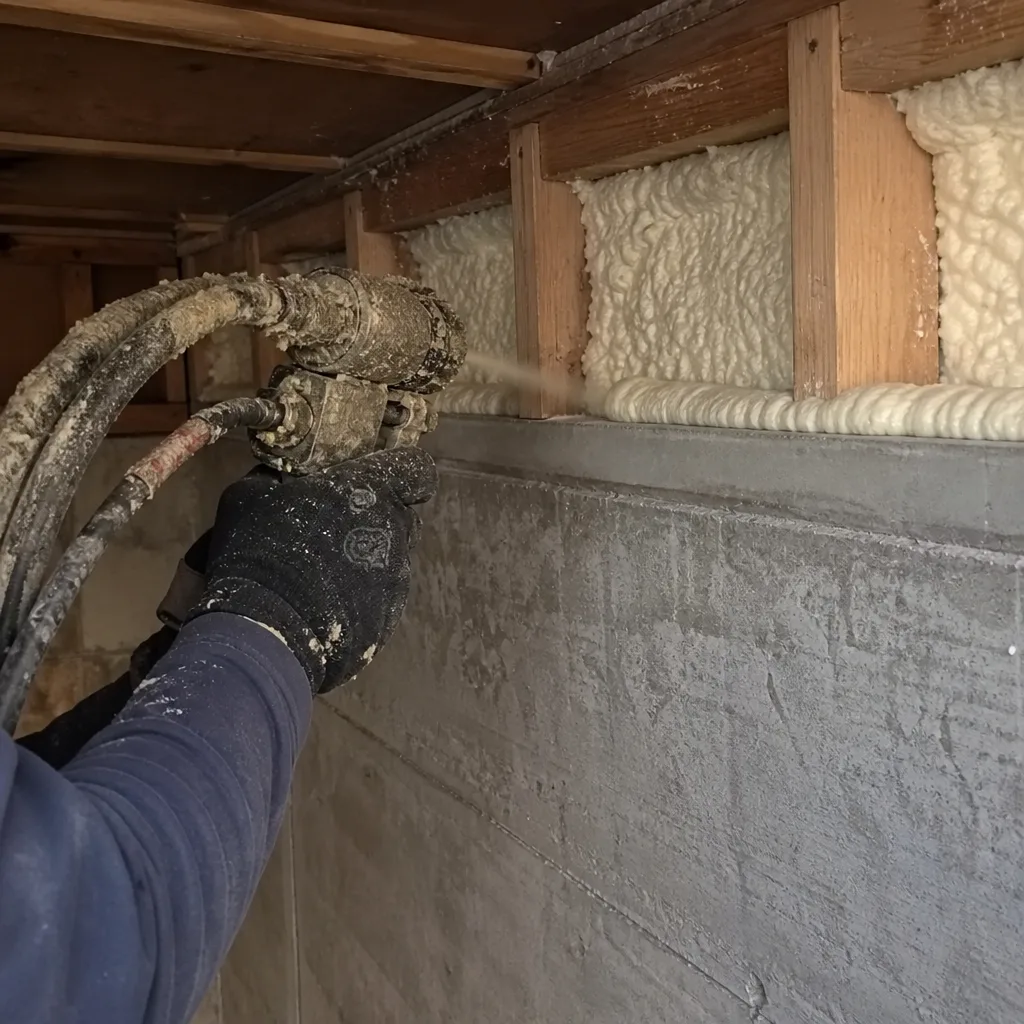
Crawl Space Spray Foam Insulation in Rolling Hills Estates is a moisture-control job before it’s an insulation job, because the marine layer that sits over the Palos Verdes Peninsula keeps ground vapor and onshore damp moving through vented crawl spaces most mornings of the year. In this part of the 90505 zip, closed-cell Icynene or Demilec sprayed on crawl space walls and the band joist blocks the vapor path and air-seals in one application, which is exactly what a hillside ranch over a dirt-floored crawl needs. A typical crawl space spray foam job in Rolling Hills Estates runs $3,400 to $8,800 depending on square footage, clearance, and how much rodent damage needs addressing before we spray.
Windward Crawl Spaces on Canyon Lots
On canyon-edge lots and lower slope lines in Rolling Hills Estates, the windward side of a crawl space takes the brunt of salt-laden onshore air. We see rim joist cavities where the sill plate gaps let that air wash in continuously, and the fiberglass hanging there is usually dark and wicking. Closed-cell foam against the rim joist and foundation wall stops that intrusion and gives the floor above a thermal break that actually lasts.
Rodent-Disturbed Crawl Spaces Before Foam
Rolling Hills Estates’ heavily wooded, large-lot hillside character means rodents, and rodents love crawl spaces. We won’t spray over nests or compromised vapor barrier; Ruben’s crews pull the old material, seal the entry points from the exterior, and then spray. A foam job done over active rodent conditions is wasted money, and we’d rather tell a Rolling Hills Estates client up front than let another crew leave it hidden.
Garage Spray Foam Insulation in Rolling Hills Estates
Garage Spray Foam Insulation in Rolling Hills Estates gets specified constantly for detached workshops and oversized garage spaces on those large hillside lots off Palos Verdes Drive North and Hawthorne Boulevard. We spray the ceiling and the shared wall between garage and living space, which matters when a homeowner has a three-car garage with living space above it or a detached workshop they want to keep at a semi-conditioned temperature for tools and vehicles. Typical garage spray foam work in Rolling Hills Estates runs $1,800 to $5,600, with detached workshops on the larger side depending on square footage and door count.
Conditioned Bonus and Workshop Spaces
Many Rolling Hills Estates homes have a finished or semi-finished room over the garage, and that floor assembly is where both heat and garage fumes push through in either direction. Closed-cell foam on the garage ceiling and the band joist above the overhead door keeps conditioned air upstairs and makes the garage itself buffer more consistently. For a detached workshop that someone uses as a home office or a studio, open-cell Icynene on the underside of the roof deck quiets the space and keeps it from swinging with the coastal temperature swings.
One-Trip Coordination for Large Lots
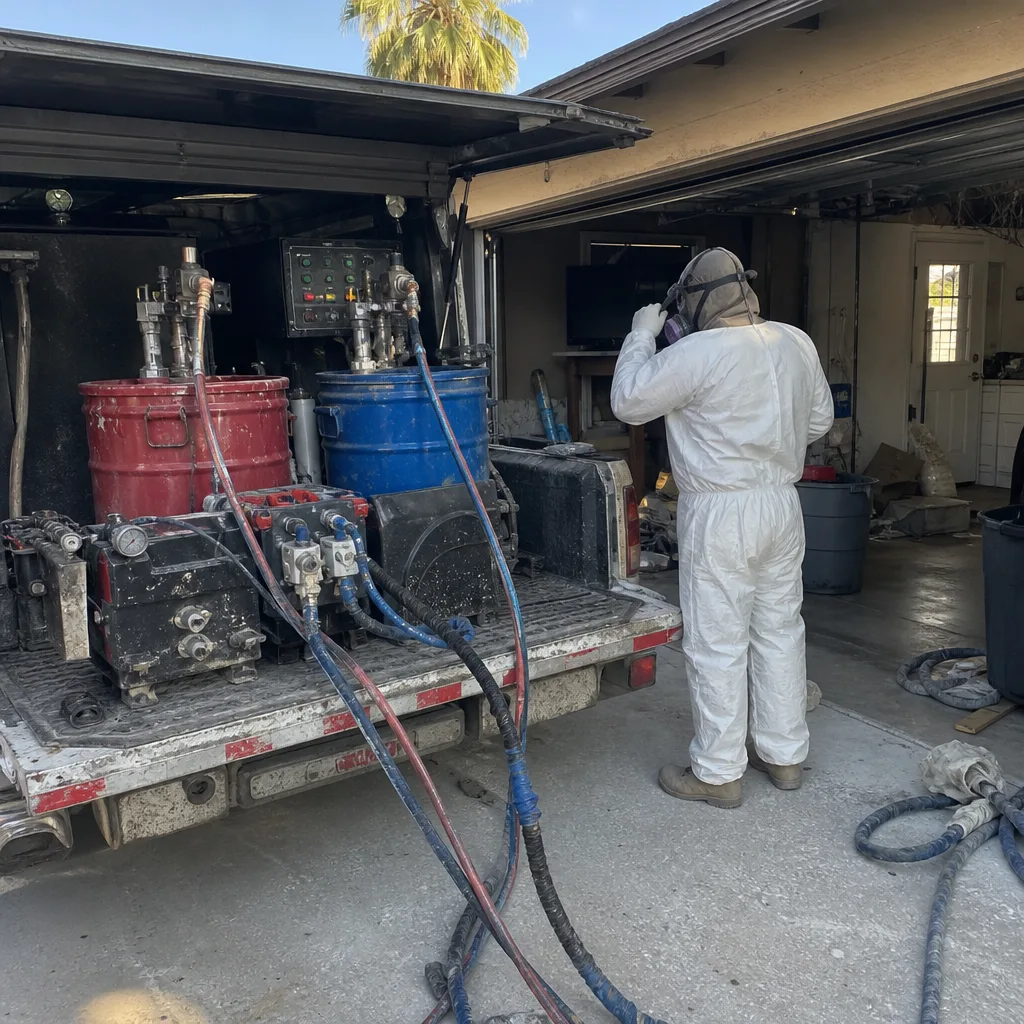
Rolling Hills Estates is not a place where you want a contractor showing up twice for one surface. We schedule foam work on the peninsula so one crew, one rig, and one full day handles the windward sealing, the foam application, and the walkthrough. If a homeowner has a detached garage and a main attic on the same visit, we plan the day around doing both, not around generating a second dispatch fee.
Trusted Brands We Service in Rolling Hills Estates
We carry Icynene and Demilec spray foam because those two lines let us pick open-cell or closed-cell based on what a Rolling Hills Estates structure actually needs. Icynene open-cell is the right call for interior sound control and a softer fill on vaulted ceilings; Demilec closed-cell handles the marine-layer damp, the rim joist, and the windward sheathing. Because we also stock Owens Corning, Johns Manville, Knauf, Rockwool, CertainTeed, and GreenFiber, we don’t have to pretend spray foam is the answer for every surface in Rolling Hills Estates. When batts make sense, we say so; when foam is the correct fix, we explain exactly where and why. Parts and material lead times for the 90505 are usually days, not weeks, because we plan peninsula jobs in advance.
Common Spray Foam Insulation Problems We See in Rolling Hills Estates Homes
- Closed-cell foam sprayed over windward sheathing without baffling. On canyon-edge attics off the Palos Verdes slopes, marine-layer condensation gets locked behind the foam and the sheathing stays wet for months. We open the windward side, seal the top plates, install baffles, and only then spray.
- Salt-laden air washing through unsealed top plates on ridge lots. Windy ridge lots in Rolling Hills Estates push onshore air through gaps around old batt edges and top plates, soaking into the foam’s edges. The fix is air-sealing the attic floor and windward bays first, then foaming the right planes.
- Thin foam packs in shallow vaulted cavities. Mid-century ranch and split-level homes in Rolling Hills Estates often have cathedral ceilings with cavity depths that were never meant for insulation depth. Spraying too thin leaves cold spots and condensation lines along the drywall. We spec closed-cell where depth is tight because it delivers more R-value per inch than open-cell.
- Foam sprayed over compressed or rodent-tunneled batts. Homes that have had thirty or forty years of peninsula rodents and wind working through the attic often still have old fiberglass in place. Foam applied over that mess just covers it. We remove and remediate the bays before spraying anything.
Pricing for Spray Foam Insulation in Rolling Hills Estates, CA
For Rolling Hills Estates specifically, expect open-cell spray foam to run $3.50 to $7.20 per board foot and closed-cell to run $4.80 to $9.00 per board foot installed. A standard 1,200-square-foot attic with full windward sealing in a mid-century ranch runs roughly $4,200 to $8,400. A detached oversized garage or workshop ceiling and walls typically runs $1,800 to $5,600. A crawl space rim joist and foundation wall package runs $3,400 to $8,800. What moves the number in Rolling Hills Estates is access on hillside lots, repairing rodent entry points before foam, and whether the windward sheathing needs baffling and sealing first – which it usually does on canyon-edge properties. Call (855) 382-3451 and we’ll schedule a free walkthrough and give you an exact number in writing.
We Also Serve Cities Near Rolling Hills Estates
While our crews are on the Palos Verdes Peninsula every week, we also run Spray Foam Insulation in Rolling Hills Estates and the surrounding coastal cities: Manhattan Beach, Torrance, Lomita, and Palos Verdes Estates. If your home sits on a windward ridge line or a shaded canyon lot anywhere in the South Bay, the same moisture-first approach applies.
Serving Rolling Hills Estates, CA — Our Local Coverage Area
We’re based in the Rolling Hills Estates area and know this community well. Use the map below to see our service coverage — if you’re nearby, we can almost certainly help.
FAQs About Spray Foam Insulation in Rolling Hills Estates
Because the Palos Verdes Peninsula pushes marine-layer damp and salt air into the windward side of your attic continuously, so the job is air-sealing and moisture control first and R-value second. Inland LA County attics mostly fight heat; Rolling Hills Estates attics fight condensation and wind-washed air, which means we baffle and seal the windward bays before any foam goes down. Call (855) 382-3451 and Ruben’s team will walk your attic with you and show you which side is windward.
Yes, one full day is the standard for a garage or detached workshop in Rolling Hills Estates, including the ceiling, shared wall, and any rim joist work. We schedule the rig, the crew, and the material so you don’t get double-dispatched out to a large hillside lot. Call us to book a visit to your property off Palos Verdes Drive and we’ll confirm the window.
Yes, but only after the old material is pulled and the entry points are sealed, because foam over compressed, wind-washed, and rodent-tunneled batts is wasted. That’s the exact condition we see in mid-century Rolling Hills Estates ranches, and it’s often the right call to remove, air-seal, baffle the windward side, and then spray closed-cell Icynene or Demilec. We’ll give you a straight answer on whether your attic needs full remediation or spot sealing before the foam goes down.
Yes, closed-cell spray foam on the crawl space walls and rim joist is the best defense against the peninsula’s persistent marine-layer humidity because it blocks both water vapor and air movement in one application. Fiberglass hanging under a Rolling Hills Estates floor just sits in that damp air and wicks; closed-cell Icynene or Demilec won’t. We spec closed-cell for peninsula crawl spaces every time, and Ruben’s crews inspect the drainage and rodent conditions before spraying.
It limits the total R-value you can achieve, which is why we use closed-cell foam in those shallow cathedral cavities to get the most performance out of whatever depth exists. A 2×8 rafter bay in a Rolling Hills Estates split-level can take roughly 7 inches of closed-cell, which hits about R-45, while open-cell at that depth gets you closer to R-25. We’ll tell you which one makes sense for the cavity and the moisture exposure rather than just filling it with whatever’s on the truck.
Written by Ruben Castellano, Owner at Thermal Insulation Co, serving Rolling Hills Estates and the Palos Verdes Peninsula.