
Fast, Reliable Spray Foam Insulation Across Highland
Spray foam insulation in Highland is primarily an envelope-sealing job aimed at stopping attic heat and wildfire smoke from entering living space. Most of the pre-1980s ranch and tract homes here lose more energy through unsealed top plates, can lights, and duct boots than through thin insulation alone. We serve all of Highland’s 92346 zip code with crews who know exactly what these foothill attics look like in August. Call (855) 382-3451 and we’ll get a trained crew to your Highland property, usually within one business day.
Why Thermal Insulation Co Is Highland’s Preferred Spray Foam Insulation Company
Highland homeowners call us because we treat spray foam as a sealing and performance tool, not a product to sell. Our work in this market centers on the failure modes we see repeatedly: collapsed batt insulation in older ranch attics, open can lights pulling 140°F attic air into hallways, and duct boots leaking into unconditioned space. We’ve worked on homes along Base Line, throughout the central tract neighborhoods, and in the newer subdivisions east of the core. The problem is consistent even when the house isn’t.
Ruben Castellano leads our team, and he’s built our Highland approach around one principle: diagnose the envelope first, then choose the foam. That’s why we stock both Icynene and Demilec open- and closed-cell systems, and why we’ll tell you when a different method makes more sense for your attic. We carry Johns Manville and Owens Corning batts for homes where spray foam isn’t the right call. Being a dedicated insulation contractor means that recommendation is based on your attic, not our inventory.
Open Cell Spray Foam in Highland
Open Cell Spray Foam in Highland gets used most often where homeowners need air movement control and sound dampening more than maximum R-value per inch. In a Highland attic, open-cell’s lower density and cost make it a practical fit for vertical rim joist bays, partition walls, and interior ceiling cavities where we’ve already sealed the primary envelope. A typical open-cell rim joist or ceiling application in Highland runs $1.50 to $2.80 per board foot installed.
It’s important to be direct here: open-cell is not the right product for sealing a Highland attic roof deck against radiant heat. The semi-arid summer climate pushes roof deck temperatures past 140°F. Closed-cell’s higher R-value per inch and vapor retarder properties handle that. Open-cell has a role, but we’ll tell you when it’s not the answer.
Rim Joist and Band Board Sealing
Rim joist bays in Highland’s raised-foundation ranch homes are a common path for dust and outside air. Open-cell foam expands into the bay and helps quiet the transfer of noise from crawlspace to living room. We’ve completed these jobs in single-day visits throughout the 92346 area.
Interior Sound Control Applications
Open-cell works well between bedrooms and living areas in older Highland tract homes with thin drywall. The open-cell structure absorbs sound better than closed-cell. It’s a practical upgrade when a remodel exposes a wall cavity anyway.
Spray Foam Insulation Contractors in Highland
Spray Foam Insulation Contractors in Highland should be able to explain exactly how foam will perform in your specific attic. We focus on the pre-1980s housing stock that defines much of this city: single-story ranches with shallow attic access, settled original batts, and ductwork running through unconditioned space. A full closed-cell attic roof deck application in Highland typically runs $4,500 to $9,000 depending on square footage, access difficulty, and how much sealing and prep work the attic needs first.
Our crews handle the prep that matters in Highland: air-sealing top plates, can light boxes, and duct boots before foam application. Foam sprayed over unsealed penetrations still leaks. We don’t skip that step, and it’s part of why our Spray Foam Insulation work holds up through Highland’s fire seasons.
Closed-Cell Roof Deck Application
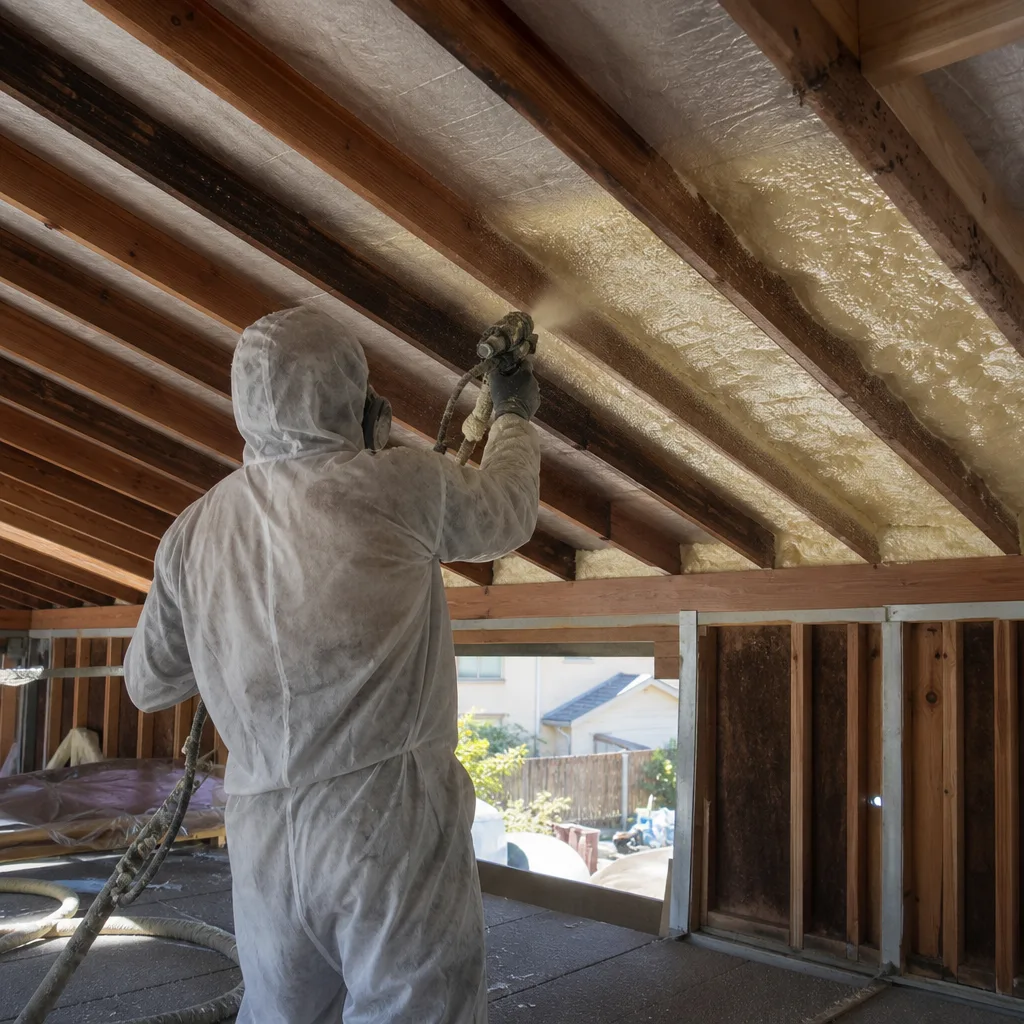
Closed-cell foam applied to the underside of the roof deck converts a vented Highland attic into a conditioned space. That matters here because it keeps ductwork and any mechanical equipment out of extreme heat. It’s the most effective approach for homes where supply ducts run through the attic and currently leak cold air into a 140°F space.
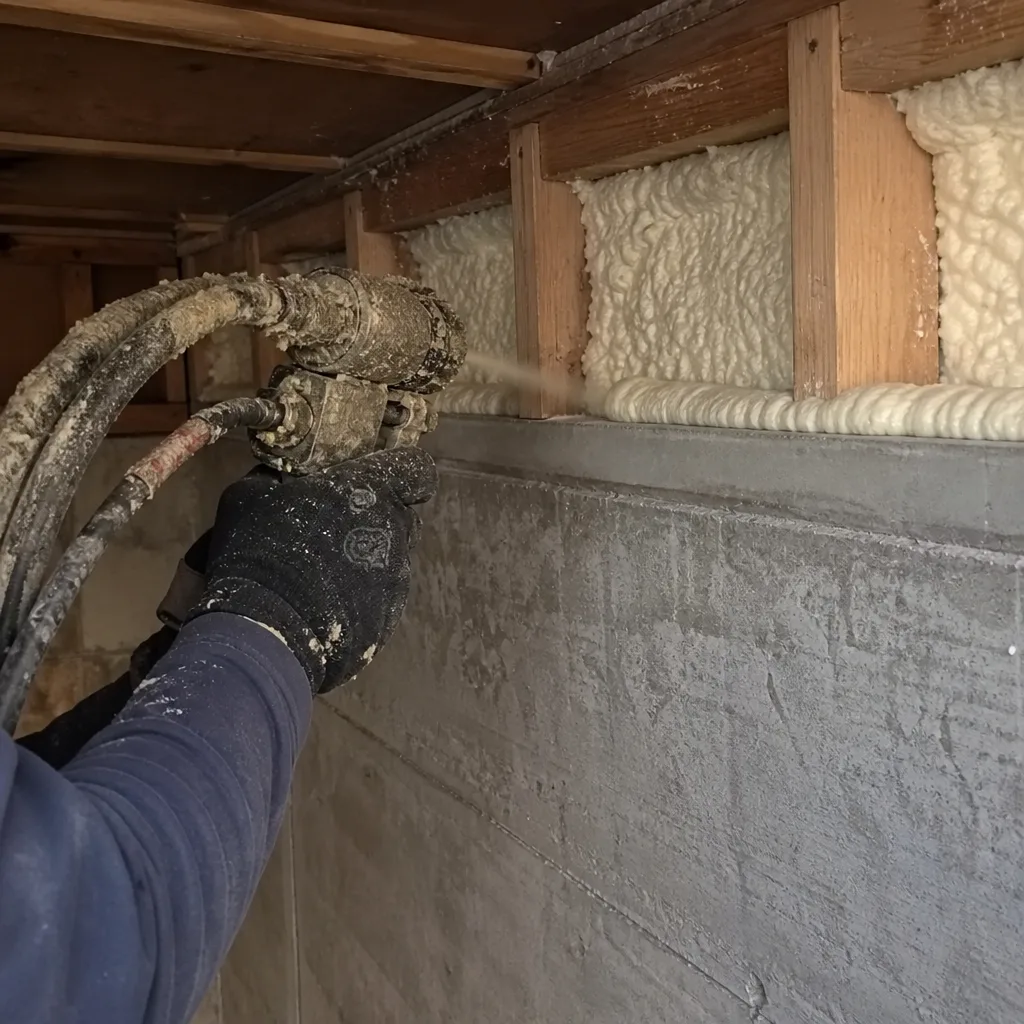
Attic Air Sealing Before Foam
Before any foam goes in, our team seals the top plates, can light housings, and duct boots. In a Highland ranch, failing to do this leaves a path for smoke and hot air to pull around the foam edges. This isn’t a premium add-on; it’s the actual job.
Trusted Brands We Service in Highland
We’re authorized to install Icynene and Demilec spray foam systems, and we stock Johns Manville and Owens Corning batts for hybrid attic work in Highland. Carrying competing brands means your attic recommendation isn’t driven by what’s left in the warehouse. For a Highland rancher where partial batt replacement and targeted foam sealing beats full foam, we’ll say so and use the right product. Our GreenFiber cellulose availability also gives Highland homeowners a recycled-content option for attics where loose-fill topping makes sense.
Common Spray Foam Insulation Problems We See in Highland Homes
- Open-cell foam on an attic roof deck trapping moisture. Highland’s summer attic heat can push the underside of a roof deck past safe open-cell limits. We regularly see open-cell installed against the roof deck in other contractors’ past work here, and it degrades faster than homeowners expect.
- Foam sprayed over unsealed can lights and top plates. The foam looks complete, but smoke and 140°F attic air still pull through gaps around the penetrations. The envelope was never actually closed. This is the most common failure we correct in Highland’s older ranch homes.
- Thin original batt left in place with only spot foam. A patchwork R-value leaves ductwork gaps untouched. The attic still runs hot, and cooling costs don’t improve. We see this when pressurized foam was sold as a quick fix without addressing the full attic floor.
- Duct boots never sealed before foam went in. Hot air enters the living space around register openings. In Highland’s high-summer climate, that can account for a measurable share of cooling loss. Sealing the boots is part of a correct foam job, not an extra.
Pricing for Spray Foam Insulation in Highland, CA
Closed-cell spray foam for a Highland attic roof deck typically runs $4,500 to $9,000. Open-cell applications at the rim joist or in interior wall cavities run $1,500 to $3,500 for a typical single-story ranch. The biggest cost driver here is attic access and prep work: low-slope roofs, shallow attic clearances, and the amount of air-sealing required before foam goes in. We give free estimates and an honest read on whether foam is the right spend for your home. Sometimes a hybrid batt-and-seal approach delivers better value on a highland rancher. Call (855) 382-3451 and we’ll assess your attic directly.
We Also Serve Cities Near Highland
Our crews work throughout the east Inland Empire. We serve San Bernardino, Muscoy, Redlands, and Loma Linda with the same one-trip sealing-and-foam approach we bring to Highland. If you’re in a neighboring city with the same pre-1980s attic problems, call us.
Serving Highland, CA — Our Local Coverage Area
We’re based in the Highland area and know this community well. Use the map below to see our service coverage — if you’re nearby, we can almost certainly help.
FAQs About Spray Foam Insulation in Highland
Yes, closed-cell spray foam can significantly reduce wildfire smoke intrusion when the attic envelope is properly air-sealed first. The foam closes gaps at the roof deck and around top plates and penetrations. But the sealing steps matter as much as the foam; we seal can lights, top plates, and duct boots before spraying. Call (855) 382-3451 for a smoke-readiness assessment of your attic.
Spray foam absolutely makes sense in Highland’s heat when installed as a roof deck application with closed-cell foam. Its value here is blocking radiant heat gain and keeping ductwork out of a 140°F attic, not winter warmth. The product selection and application details should be driven by that summer condition. We’d assess whether an unvented, conditioned attic is right for your specific home.
Usually not. Most 1960s Highland ranches need attic air sealing and targeted topping-up more than full removal. We find collapsed original batts around R-6 or less in many of these attics, and the bigger loss is from gaps around can lights and duct boots. A hybrid approach, sealing and adding blown-in or batts, often delivers the best result for the money.
It depends on what’s happening at the attic floor and the condition of those batts. In most Highland ranchers, the right move is to air-seal the top plates and penetrations, then either bed the existing batts properly or top them up rather than spray foam over them. If you want foam at the roof deck, we’d convert the attic to conditioned space and likely remove or bypass the old batts.
Because prepping the attic, sealing penetrations, and applying foam is a multi-step job that shouldn’t be split across weeks during fire season. Highland’s Santa Ana wind events and smoke episodes don’t wait, and homeowners near the foothills want the envelope closed before the next event. We schedule the full sealing-and-foam sequence in a single visit whenever possible.
If you’re in Highland and your attic is hot, smoky, or costing you money in August, call (855) 382-3451. We’ll send a crew that knows these attics, gives you an honest material recommendation, and gets the job done in one trip. Free estimates, no pressure.
Written by Ruben Castellano, Owner at Thermal Insulation Co, serving Highland and the Inland Empire with dedicated insulation expertise.