
Fast, Reliable Attic Insulation Across Valley Glen
If you live in a 1940s or 1950s stucco ranch in Valley Glen, there’s a good chance your attic insulation is original, failing, or barely there at all. We see it constantly across 91401, 91403, and 91405: attics where the fiberglass has slumped to R-11 or worse, roof decks baking in 150°F+ summer heat, and homeowners paying to cool air that escapes straight through the ceiling. Thermal Insulation Co fixes that. We’re insulation specialists, not general contractors, and we work in Valley Glen weekly. Call (855) 382-3451 for a free estimate, usually scheduled within days.
Why Thermal Insulation Co Is Valley Glen’s Preferred Attic Insulation Company
Valley Glen homeowners call us because we understand what these houses actually need. The homes here were built for mild Valley weather that no longer exists. Most were constructed with minimal insulation, no air sealing, and attic ventilation that amounts to a couple of small gable vents. We’ve worked on ranches near Victory Boulevard, along Hazeltine Avenue, and throughout the quiet residential blocks west of the 170. That local experience means we know what to expect when we open an attic hatch in Valley Glen before we even climb the ladder.
Ruben Castellano, owner of Thermal Insulation Co, has built the company around one principle: match the material and the method to the house, not the other way around. We carry fiberglass, mineral wool, spray foam, and recycled cellulose from eight manufacturers, so we don’t have to force a single product line onto every Valley Glen attic. We also stock the materials local retrofit work demands: attic baffles, air sealing supplies, ventilation components, and the loose-fill products needed to hit proper R-value targets in shallow attic cavities.
Insulation Contractors in Valley Glen
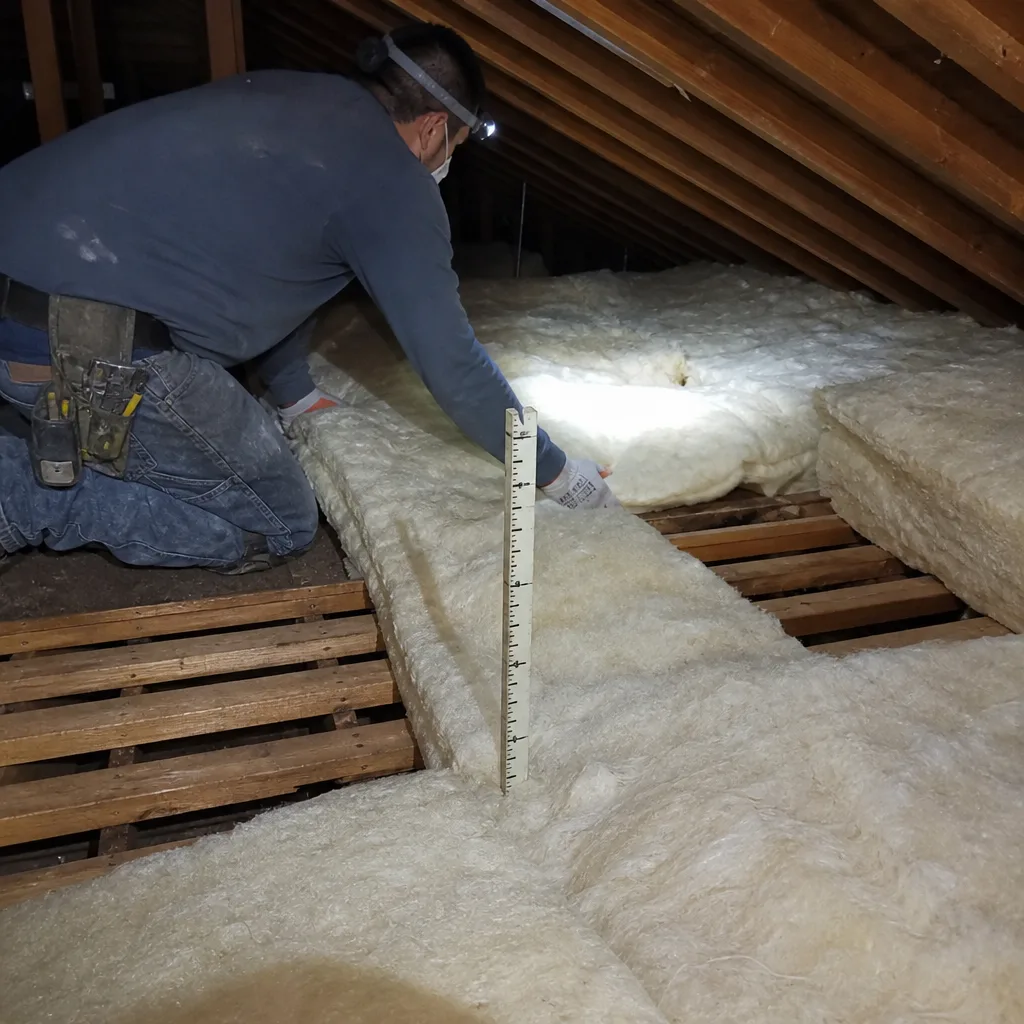
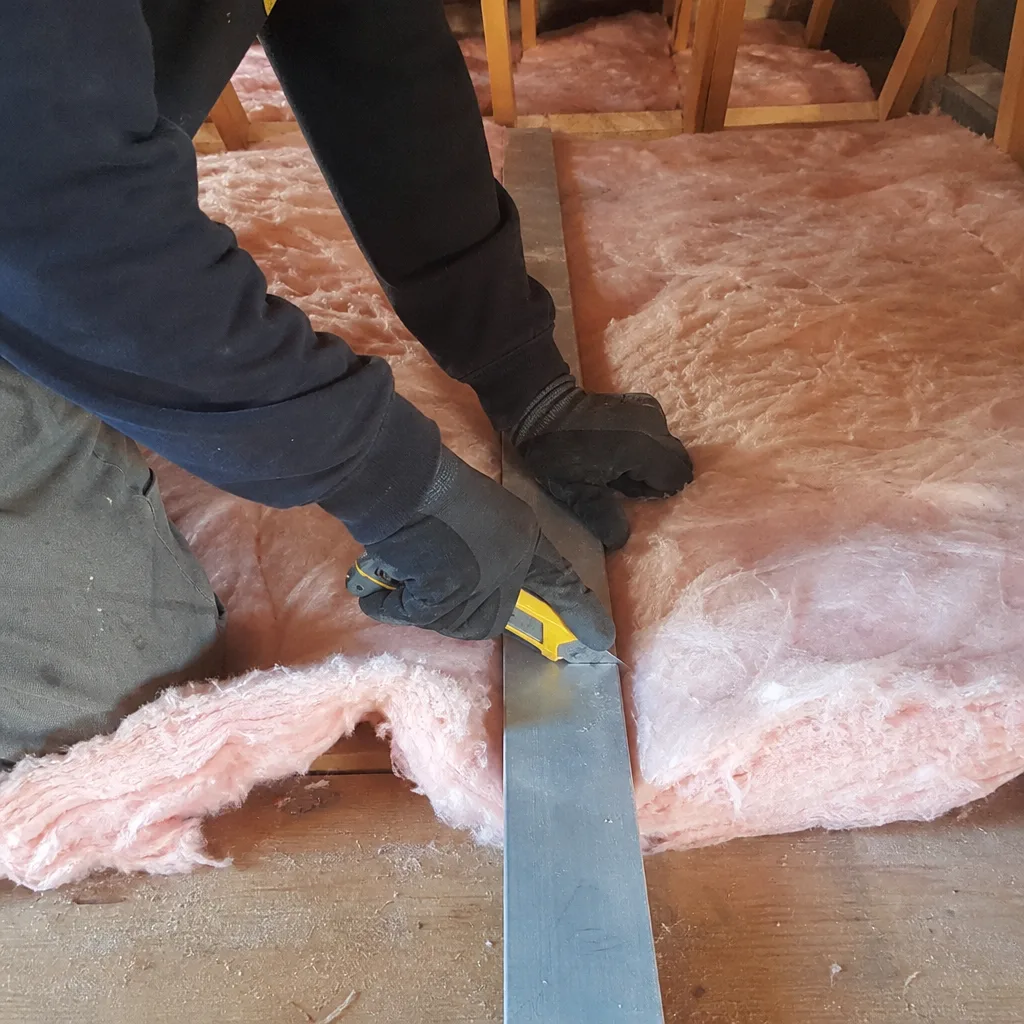
Insulation Contractors in Valley Glen face a specific challenge with these postwar ranches: most attics were never designed to hold enough modern insulation, and many have original wiring or obstructions that require careful planning before any material goes down. The job typically involves assessing what’s already up there, determining whether the existing material can stay or needs removal, air sealing the attic floor, and installing new insulation to R-49 or R-60 for Southern California residential building code. A full attic retrofit in Valley Glen runs $1,800 – $4,500 depending on square footage, access, and the condition of what’s already in place.
We’re licensed, bonded, and insured. We’ve done dozens of Valley Glen attics. The work is handled by our own crew, never subcontracted.
What the Job Involves in Valley Glen
In a typical Valley Glen ranch, we start by inspecting the attic floor for air leaks, recessed light housings, and any wiring that should be addressed. Air sealing matters here because the dry Valley climate and temperature swings create strong stack effect, pulling conditioned air up and out. Sealing before insulating can improve the performance of the new material significantly. Then we install the insulation; for most Valley Glen homes, blown-in fiberglass like Owens Corning ProPink L77 or cellulose like GreenFiber works best. These materials conform around existing framing and fill the odd cavities common in older construction.
Repair or Replace: How to Decide
If your Valley Glen attic has thin, original insulation, the answer is almost always replace. Insulation that’s been baked for 60 or 70 years usually isn’t performing at even half its labeled R-value. If it looks dirty, damp, rodent-disturbed, or has settled below the top of the ceiling joists, it’s past its service life. We can remove failed material, treat any sanitation issues, and blow in new product in a single day. If the existing material is in decent shape but underperforming, a top-up to reach proper thickness is often the more economical route, running $900 – $2,200 for a typical Valley Glen ranch.
Attic Ventilation in Valley Glen
Attic Ventilation in Valley Glen is often the missing half of the retrofit equation. Because Valley Glen’s postwar ranches were built without attic ventilation sized for 100°F+ summers, we routinely find roof decks baked to premature failure – making ventilation upgrades as critical as adding insulation itself. The attic in a 1950s stucco ranch here can reach 150°F or more on a July afternoon. That heat radiates down into the living space, forces the AC to work harder, and literally cooks the roof sheathing and shingles from underneath. A proper ventilation system – balanced soffit intake and ridge or static exhaust – drops that attic temperature dramatically. In Valley Glen, adding ventilation alongside insulation typically runs $800 – $2,500 depending on roofline length, existing soffit conditions, and whether you need a ridge vent or static roof vents.
This is not an optional upgrade for these homes. It’s the difference between an attic that works with your insulation and one that defeats it.
Signs Your Valley Glen Attic Needs Ventilation Work
You’ll notice the bedroom at the back of the house is five or ten degrees hotter than the rest of the home in summer. Or the AC runs constantly from 3 p.m. onward and the upstairs, if you have one, never quite cools down. Or you see shingles curling and granule loss on the sun-facing roof slopes before the roof is twenty years old. All of these point to an attic that’s holding heat instead of exhausting it.
How We Fix Ventilation in Postwar Ranches
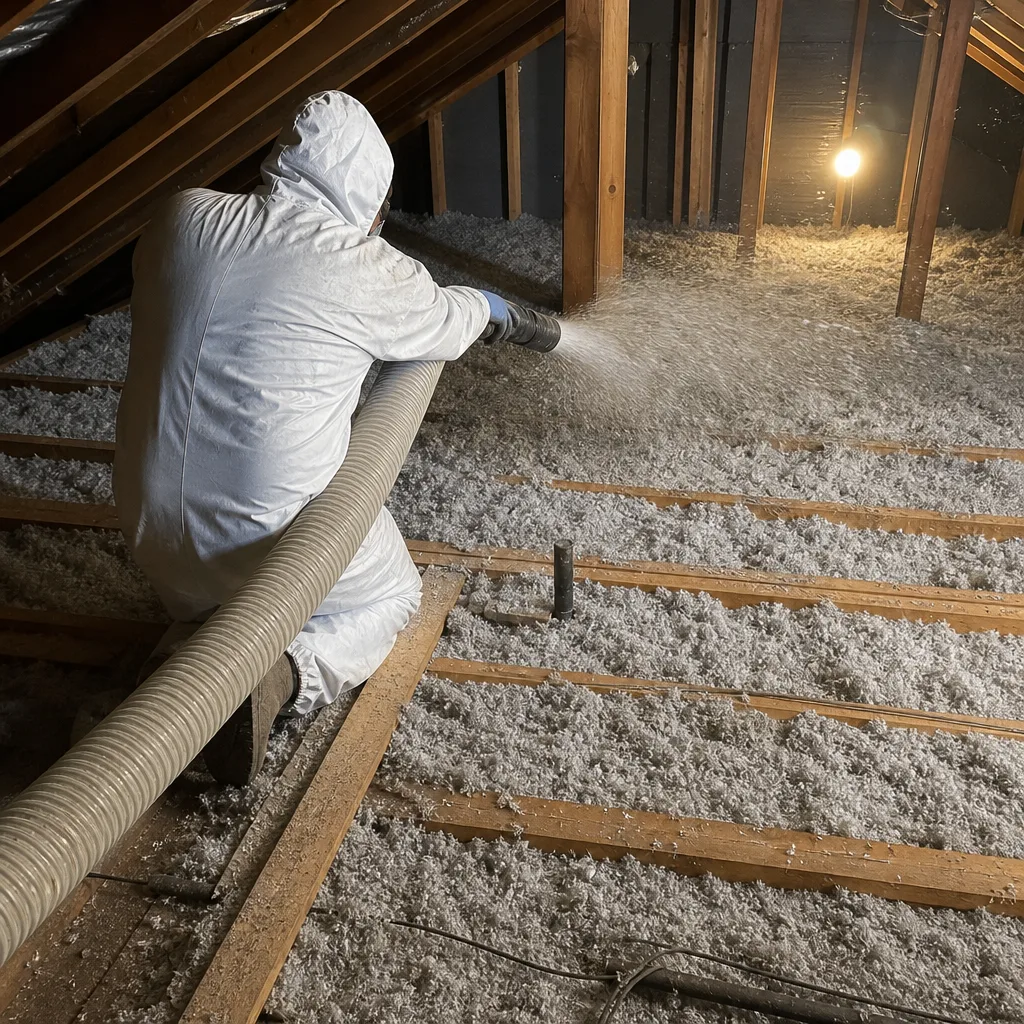
On a 1952 stucco ranch near Hazeltine Avenue and Victory Boulevard, our crew found the original fiberglass batt slumped and separated at the eaves, with the roof deck showing heat damage from decades of 150°F+ attic temperatures. We removed the failed material, air-sealed the attic floor, and blew in Owens Corning ProPink L77 to R-49 while installing a ridge vent and soffit vents to finally give the attic a way to breathe. That combination – insulation plus ventilation – is what these Valley Glen homes actually need. Insulation alone won’t stop the roof deck from cooking.
Trusted Brands We Service in Valley Glen
We’re authorized to install products from eight nationally recognized insulation brands: Owens Corning, Johns Manville, Knauf, Rockwool, CertainTeed, Icynene, Demilec, and GreenFiber. That matters in Valley Glen because different homes here need different solutions. A 1950s ranch with shallow attic cavities and existing wiring benefits from blown-in fiberglass or cellulose. A homeowner who wants maximum air sealing and R-value per inch might choose Demilec closed-cell spray foam. A landlord concerned about safety in a dingbat apartment building might choose Rockwool for its fire resistance. We stock the common materials Valley Glen jobs require, so most projects don’t wait on supply chain delays.
Common Attic Insulation Problems We See in Valley Glen Homes
- Slumped and separated fiberglass batt: Decades of 150°F+ attic temperatures cause original batt to slump and pull away from the eaves, leaving the entire perimeter of the ceiling uninsulated. We routinely find the center of the attic floor at R-19 while the edges are effectively R-0.
- Baked roof decks and premature shingle failure: Without proper ventilation, Valley Glen attics hold heat that radiates into the roof deck and cooks shingles from below. Shingles that should last 30 years are failing at 15 or 18 in some Valley Glen homes.
- Knob-and-tube or early Romex wiring under insulation: Many postwar Valley Glen homes still have original wiring, and burying it under insulation creates a fire hazard. We flag it before installing any material and recommend a licensed electrician handle upgrades first; we won’t blow insulation over hot, unprotected wiring.
- Recessed lights that leak conditioned air: The 1960s and 1970s remodels in Valley Glen often added can lights that were never rated for insulation contact. They leak air directly into the attic. We seal or replace them before insulating so the new material actually performs.
Pricing for Attic Insulation in Valley Glen, CA
Prices here reflect the reality of working on older homes. A blown-in attic insulation retrofit in Valley Glen typically runs $1,800 – $4,500 depending on attic square footage, access, existing material removal, and whether air sealing or ventilation work is included. A simple top-up over existing insulation runs $900 – $2,200. Attic ventilation alone – soffit vents, static roof vents, or a ridge vent – runs $800 – $2,500. Full attic air sealing before insulation adds $500 – $1,400 depending on how many penetrations need attention. Labor and material costs in Valley Glen are comparable to Van Nuys and North Hollywood; we quote the same rates across the central San Fernando Valley. Every estimate is free, itemized, and comes with a written scope of work. Call (855) 382-3451 and we’ll walk your attic, measure, and give you exact numbers.
We Also Serve Cities Near Valley Glen
Our Attic Insulation team covers the entire central San Fernando Valley. Beyond Attic Insulation in Valley Glen, we regularly work in Van Nuys, Sherman Oaks, Encino, and North Hills. If you’re just over the border, the same crew and the same pricing apply.
Serving Valley Glen, CA — Our Local Coverage Area
We’re based in the Valley Glen area and know this community well. Use the map below to see our service coverage — if you’re nearby, we can almost certainly help.
FAQs About Attic Insulation in Valley Glen
You can, but only if the existing material is dry, intact, and free of rodent activity or electrical hazards. In most 1950s Valley Glen ranchers, the original batt is too far gone to keep. We’ll inspect for free and tell you honestly whether it can stay or should be removed first. Call (855) 382-3451 and we’ll take a look.
Yes. Almost universally, yes. The postwar ranches in Valley Glen were not built with ventilation adequate for 100°F+ Valley summers, and attics here routinely hit 150°F. Insulation alone won’t protect the roof deck or meaningfully lower attic temperatures. Balanced ventilation – soffit intake plus ridge or static exhaust – is what makes the insulation work. We’ll include a ventilation assessment with every attic insulation estimate.
R-49 to R-60 is the right target for Valley Glen. For blown-in fiberglass like Owens Corning ProPink L77, that’s roughly 18 – 22 inches of material. For cellulose like GreenFiber, 14 – 17 inches. If your attic cavities are shallow or you want maximum performance per inch, Demilec closed-cell spray foam can deliver R-7 per inch, hitting R-49 in about 7 inches.
Yes. We can blow dense-packed cellulose or fiberglass into wall cavities through small holes drilled from the exterior, which are then patched and re-stuccoed to match. It’s a standard retrofit for Valley Glen’s stucco ranch homes, especially those with zero wall insulation. The work takes one to two days for a typical single-story home.
We install Owens Corning and Johns Manville fiberglass, GreenFiber recycled cellulose, and Icynene and Demilec spray foam, among others. The brand matters less than the material type and application method. For most Valley Glen attics, we recommend blown-in fiberglass or cellulose for attic floors and spray foam only where air sealing or space constraints demand it. We’ll show you the options and explain why one fits your home better than the alternatives.
Written by Ruben Castellano, Owner at Thermal Insulation Co, serving Valley Glen and the San Fernando Valley.