
Fast, Reliable Attic Insulation Across North Hills
Attic insulation in North Hills is not a maybe-later project. When your attic hits 150°F in August, the thin original fiberglass above your ceiling isn’t doing much. Most of the homes we work on in 91343 and 91393 were built between the 1950s and 1970s, and they came with R-11 batts, which is roughly a third of what today’s code calls for. That heat pushes down into living spaces and your AC runs nonstop. We’re based nearby in Van Nuys, so we can typically reach any North Hills address the same day you call. Our Attic Insulation team handles removal, re-insulation, air-sealing, and radiant barriers. If your upstairs rooms bake by mid-afternoon, call (855) 382-3451.
Why Thermal Insulation Co Is North Hills’s Preferred Attic Insulation Company
Ruben Castellano built Thermal Insulation Co around one trade: insulation. We don’t do roofing, we don’t do windows, we don’t do general contracting. That focus means we know exactly what’s happening in the attics of North Hills ranch tract homes because we’ve been inside hundreds of them. We know what R-11 batts look like after fifty summers in Sepulveda-adjacent neighborhoods. We know which homes off Woodley and Nordhoff have bare joist cavities. And we know which low-pitch composition roofs turn attics into convection ovens.
Homeowners in North Hills call us because we diagnose the attic as a system, not a single-product fix. We carry multiple installation methods and eight material brands, so the recommendation matches the house. A landlord with a 1960s rental near Sepulveda gets a different spec than someone in a stucco mid-century home off Plummer. We’ll tell you if you need blown-in over existing batts, or a full removal and re-insulation, or spray foam for a tight cavity. And we’ll explain why, in plain terms.
Attic Mold Removal in North Hills
Attic mold removal in North Hills is a problem we see most often in homes with unsealed attic access hatches and insufficient ventilation. When the valley’s hot, dry air meets the cooler conditioned air leaking through ceiling penetrations, condensation forms on the underside of the roof deck. That moisture, trapped in a 150°F attic, is exactly what mold needs. The first sentence of every mold conversation with a North Hills homeowner is this: mold in your attic is a moisture and ventilation problem, not just a surface stain. We remove contaminated insulation, treat the affected framing, identify the air leak or venting deficiency that caused it, and then re-insulate properly.
How We Remove Attic Mold
We start by containing the affected area and removing any insulation that’s been compromised by mold growth. Then we treat the wood surfaces and address the root cause, which in North Hills is almost always a combination of poor attic ventilation and air leakage from the living space below. Once the attic is dry and the ventilation corrected, we install new Attic Insulation matched to the home’s cavity depth and R-value target.
What It Costs in North Hills
Attic mold removal and re-insulation in North Hills typically runs $1,800 to $4,200 depending on attic size and how much insulation has to come out. Smaller ranch homes on 1,100-square-foot footprints sit at the lower end. Multifamily buildings along the 91343 corridors with larger attic footprints run higher. Every job includes the moisture-source correction, because without it the mold comes back.
Attic Insulation Removal in North Hills
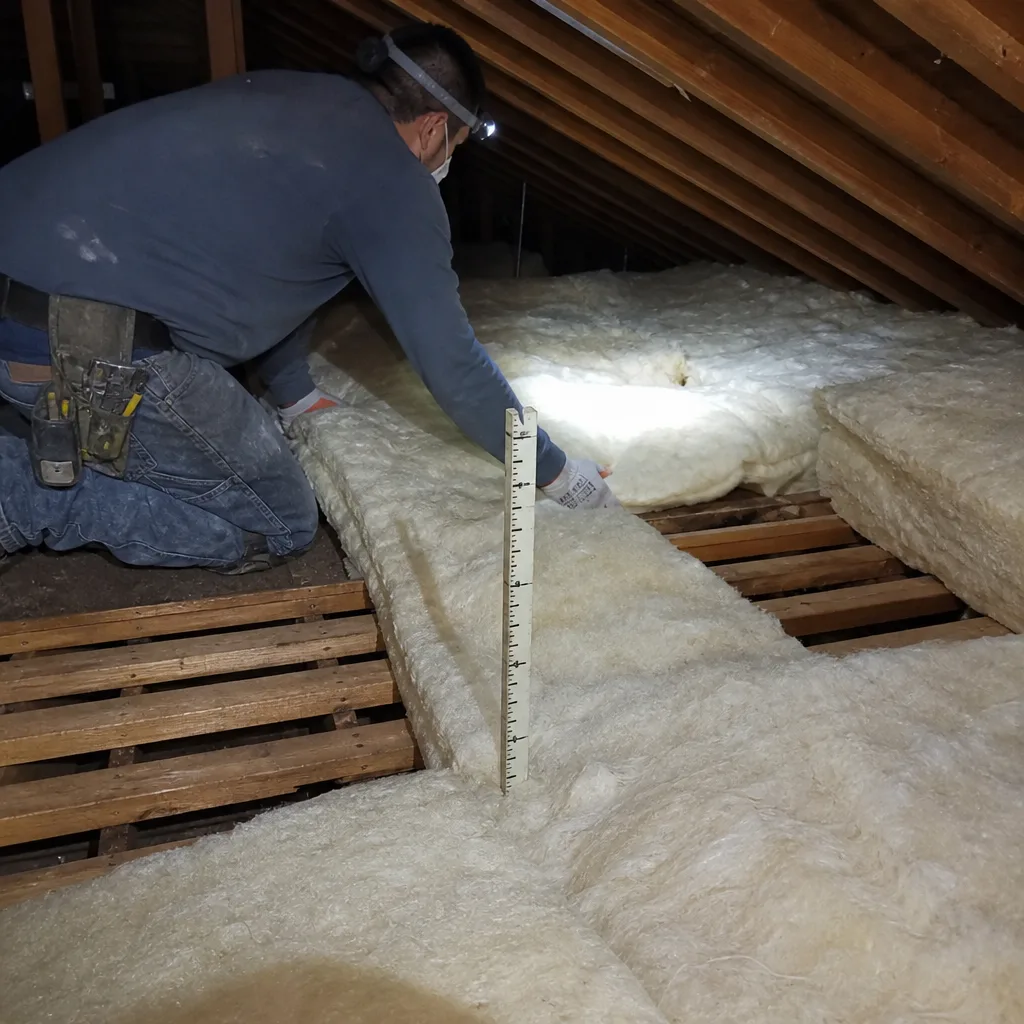
Attic insulation removal in North Hills is the starting point for most of our re-insulation jobs because the original material is almost always too far gone to keep. We’ve pulled R-11 fiberglass out of these attics that’s compressed to half an inch thick, full of rodent tunnels, and coated in decades of fine valley dust. The hot, dry attic environment bakes the binders out of old fiberglass, and it loses its loft. When insulation loses loft, it loses R-value. Keeping it in place means paying to cool a house that’s bleeding conditioned air through the ceiling, and you’d be surprised how many North Hills homeowners have been told by other contractors to “just blow more on top.”
What’s Involved
We remove all the old insulation down to the drywall, inspect the top plates and wiring, air-seal every penetration, then install new material at the correct depth for the R-value your home needs. For North Hills homes, that usually means R-38 to R-49, depending on the cavity depth and whether we’re adding a radiant barrier to address roof-deck heat gain.
Removal Cost in the 91343 Area
Full attic insulation removal in North Hills typically costs $1.50 to $2.50 per square foot of attic floor area. So a typical 1,200-square-foot ranch runs roughly $1,800 to $3,000 for removal and disposal. The re-insulation is quoted separately based on the material and method we recommend for your specific home.
Trusted Brands We Service in North Hills
We install Owens Corning and Johns Manville fiberglass products regularly, and for North Hills customers with sustainability priorities we carry GreenFiber recycled cellulose, which we blow in to a consistent R-value across the attic floor. For homes where we need closed-cell performance or moisture resistance, we work with Demilec spray foam systems. Because we’re authorized to install products across eight brands, we can be honest about trade-offs. We carry Owens Corning because their batt consistency is reliable for cavity work. We carry GreenFiber because it outperforms fiberglass in attics with irregular joist spacing and it’s made from recycled content. We stock materials in Van Nuys, which means short turnaround for North Hills jobs.
Common Attic Insulation Problems We See in North Hills Homes
- Compressed R-11 batts in 1950s-1970s ranch tract homes. The original fiberglass loses loft after decades of Valley heat. Compression kills R-value, and most homes in North Hills still have the original install.
- Bare joist cavities above the ceiling drywall. Rodent activity and HVAC work in these low-pitch attics displaces insulation. You’d only know by opening the hatch and looking.
- Unsealed attic access doors and hatches. Newer North Hills homes, the ones with builder-grade finishes, often have hatches with zero weatherstripping. Conditioned air pours into the attic through a gap the builder never sealed.
- Low-pitch composition roofs cooking the attic. When the roof can’t ventilate properly, the attic easily exceeds 150°F in summer. Insulation alone can’t solve that without addressing the radiant heat gain at the roof deck.
Pricing for Attic Insulation in North Hills, CA
We Also Serve Cities Near North Hills
Beyond our work in North Hills, Thermal Insulation Co serves homeowners in Northridge, Van Nuys, Valley Glen, and San Fernando. If you’re in one of those communities and dealing with the same Valley heat, the same aging housing stock, and the same thin original insulation, we can help. Our crews are already in the area most days, which keeps response times short across the northwest Valley.
Serving North Hills, CA — Our Local Coverage Area
We’re based in the North Hills area and know this community well, offering Reflectix repair in North Hills and beyond. Use the map below to see our service coverage — if you’re nearby, we can almost certainly help.
FAQs About Attic Insulation in North Hills
Why does my North Hills attic get so much hotter than attics in other parts of LA?
North Hills sits in the inland San Fernando Valley, farther from the coastal marine layer than neighborhoods west of the 405. Summer daytime highs regularly exceed 100°F, and with a low-pitch composition-shingle roof, the attic absorbs heat all day with nowhere to shed it. Attic temperatures above 150°F are routine here, which is roughly 30 to 40 degrees hotter than what you’d measure in a coastal attic on the same day. That’s why we recommend radiant barrier in combination with insulation for most North Hills homes, something we’d rarely push in a beach-adjacent area. Call (855) 382-3451 and we’ll measure your attic’s actual temperature and tell you what’s realistic.
My North Hills ranch home was built in the 1960s. Is the original insulation still worth keeping?
No, not in this climate. The original R-11 or R-13 fiberglass in a 1960s North Hills ranch has been through fifty-plus summers of 150°F attic heat, and it’s almost always compressed, dust-loaded, and disturbed by rodents. Its effective R-value is often under R-5. Keeping it and blowing more on top is cheaper short-term, but the old material is doing nothing and the air leaks in the ceiling are still there. We recommend removal, air-sealing, and new insulation for these homes. It’s the correct fix, and the cost difference is smaller than most people expect once you factor in actually solving the problem.
Do I need a radiant barrier in addition to attic insulation?
In North Hills, usually yes. Insulation slows conductive heat transfer from the attic to the living space. A radiant barrier reflects radiant heat from the roof deck before it ever enters the attic. On a low-pitch composition roof, which describes a huge share of homes here, the roof deck is the main heat source. A radiant barrier can drop attic temps by 20 to 30 degrees on a summer afternoon, which extends the life of your insulation and takes real load off your AC. Ruben Castellano’s crews install radiant barriers on most full re-insulation jobs in the 91343 and 91393 ZIP codes for exactly this reason.
Can you handle rodent-disturbed or compressed insulation in my attic?
We can, and we do it often. Rodent activity in North Hills attics is common, especially in the older tracts along Sepulveda and around the 91343 corridor. The insulation in those attics is frequently tunneled, flattened, and contaminated with droppings. We remove it all, sanitize the attic floor, seal entry points where the rodents got in, and install fresh material. We handle the full scope so you don’t have to coordinate an insulation contractor and a pest company separately. Call (855) 382-3451 and describe what you’re seeing, we’ll tell you what the job involves.
What brands of insulation do you install for North Hills attic upgrades?
We install Owens Corning and Johns Manville fiberglass, GreenFiber recycled cellulose, and Demilec spray foam, along with products from several other manufacturers. The brand matters less than the application. GreenFiber cellulose is our most common recommendation for North Hills attics because it fills irregular joist cavities in older ranch framing and holds R-value well in high heat. Demilec closed-cell foam gets specified for tight cavities or where we need a vapor barrier. Owens Corning batts work well for walls and flat, accessible attics. We’ll show you the trade-offs for your specific house and let you decide with actual numbers in front of you.
Written by Ruben Castellano, Owner at Thermal Insulation Co, serving North Hills and the San Fernando Valley.