
Fast, Reliable Attic Insulation Across Spring Valley Lake
Attic insulation in Spring Valley Lake typically costs $1,800 to $4,200 for a full removal and re-insulation of a 1,200 to 2,000 square foot home, with top-ups running $900 to $1,800. Most jobs take one day once we’re on site. If your home is a 1970s lakefront ranch with original batts and rooms that hit 90°F by 3 p.m., you already know something’s wrong. Call (855) 382-3451 and our Attic Insulation team will give you a straight answer about what’s happening up there and what it costs to fix.
Spring Valley Lake is a private, man-made lake community in the high Mojave near Victorville and Hesperia. The housing stock is concentrated, mid-20th-century-era single-family: early-1970s lakeside and golf-course homes with minimal attic insulation and unsealed duct runs. Ruben Castellano has walked hundreds of these attics. We know where these houses leak energy, and we know how to stop it.
Why Thermal Insulation Co Is Spring Valley Lake’s Preferred Attic Insulation Company
Insulation is our only trade. We don’t do plumbing, we don’t hang drywall, we don’t run HVAC. We install attic insulation, blown-in insulation, and spray foam, and we stock materials from eight manufacturers so the product we recommend matches your home’s condition rather than whatever happens to be on our truck. That focus matters here. Spring Valley Lake homes built in the 1960s through the 1980s need specific approaches: air-sealing first, ventilation checks second, insulation third. Most generalist contractors don’t do it in that order, and the result is an attic that looks insulated but still loses conditioned air through can lights, top plates, and unsealed duct runs.
We work throughout the 92395 ZIP code, from the lakeside streets off Lakeview Drive to the golf-course-facing homes on Spring Valley Parkway. Response time for quotes and scheduled work in Spring Valley Lake is typically one to three business days, and we’ll tell you upfront if your situation calls for a repair, a top-up, or a full removal and replacement. No upsell. No brand loyalty pitch replacing common sense.
Insulation Contractors in Spring Valley Lake
Insulation contractors in Spring Valley Lake need to understand what this specific community was built with, and what those original materials look like 50 years later. A 1972 ranch on Bear Valley Road has different attic conditions than a 1985 lakeside two-story off Elm Street. The first has settled 2×4 ceiling joists with maybe R-7 of compressed fiberglass. The second might have truss attics with some insulation but zero air-sealing. When a homeowner calls us, the first thing we do is determine what’s actually up there.
Duct Sealing and Top Plate Air-Sealing
Before we add insulation, we seal the leaks. In Spring Valley Lake’s low-slope attic spaces, unsealed duct runs are the single biggest source of energy waste we find. We use mastic and foil tape on every accessible joint, then seal top plates, can light housings, and plumbing penetrations with foam or caulk. Adding insulation over leaky ducts just hides the problem under more fiberglass.
Removal of Collapsed or Contaminated Batts
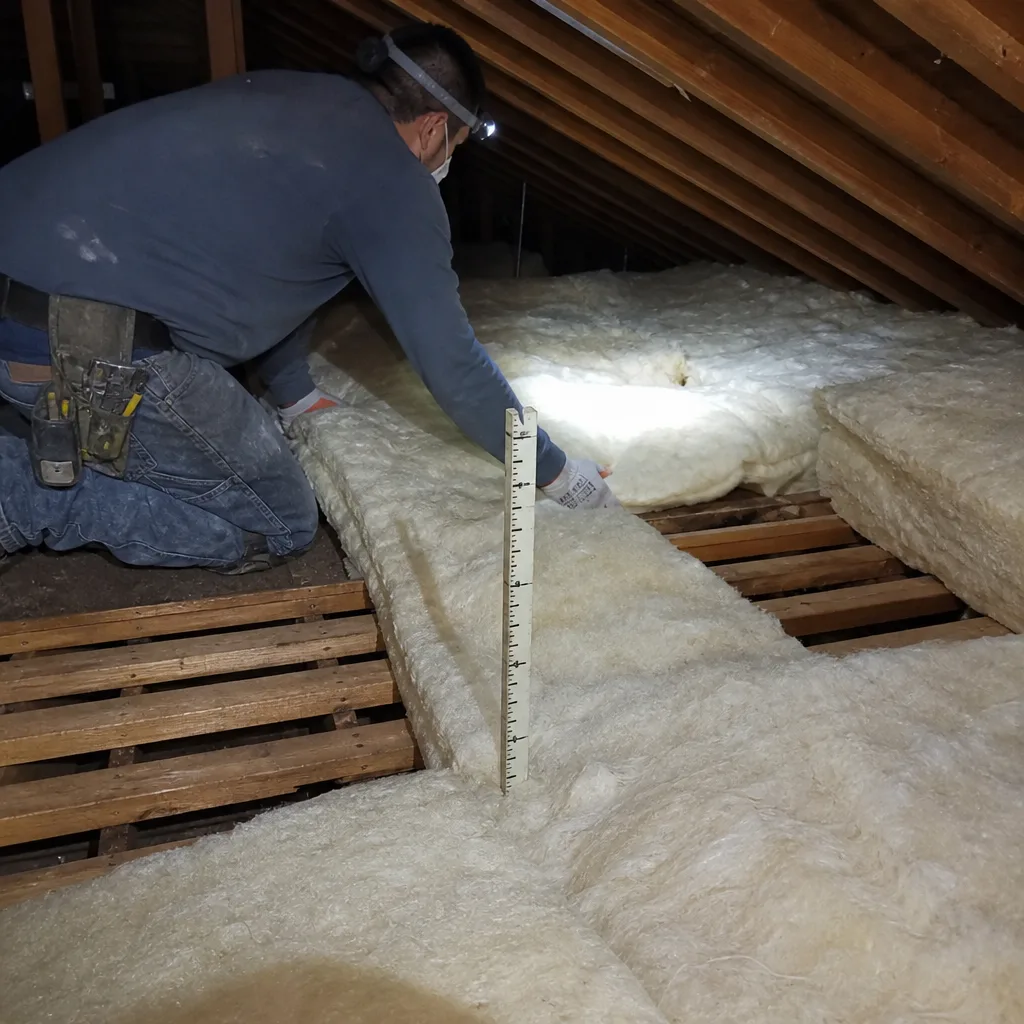
When we pull original 1970s batts, they’ve usually compressed to half their labeled R-value and absorbed decades of dust. In some Spring Valley Lake attics, roof leaks from the high-desert’s occasional intense downpours have soaked sections entirely. We bag and remove the old material, sanitize where needed, and prep the attic floor for new insulation at the correct depth.
Attic Ventilation in Spring Valley Lake
Attic ventilation in Spring Valley Lake is the part most homeowners overlook, and it’s the difference between an insulation job that works and one that doesn’t. The high desert’s diurnal swings, daytime highs above 100°F in July and nights that dip below freezing in winter, put enormous strain on under-roof spaces. If hot air can’t escape through balanced intake and exhaust vents, it cooks the roof deck from underneath. Shingles curl. Insulation loses effectiveness. In winter, trapped moisture condenses on the underside of the sheathing and drips onto your new insulation.
Baffles and Ridge Vent Prep
For homes with soffit intakes, we install baffles to keep insulation from blocking airflow at the eaves. In vaulted-ceiling sections where soffit-to-ridge airflow is limited, we’ll assess whether additional venting makes sense before adding material. A vaulted ceiling with no vent channel can’t be fixed by blowing in more cellulose; it needs a path for air to move.
Attic Fans and Gable Vent Repair
Some Spring Valley Lake homes have powered attic fans installed in the 1980s or 1990s that no longer work. We’ll test them, replace failed motors where the ducting and wiring are sound, and recommend removing units that are doing more harm than good. A broken fan that never runs is just a hole in your roof with a rusted housing.
Trusted Brands We Service in Spring Valley Lake
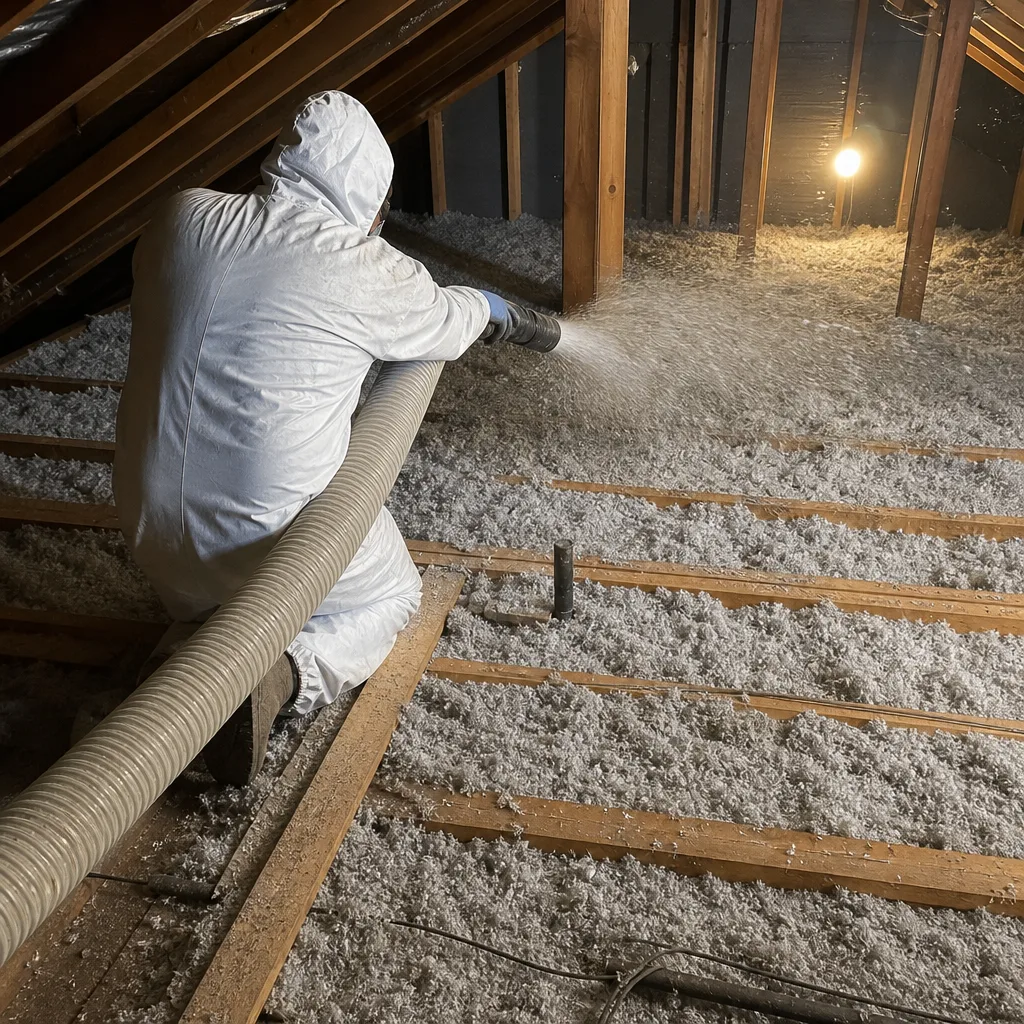
We carry Owens Corning and Johns Manville fiberglass because they deliver consistent R-value per inch and hold their loft for decades when installed correctly. We carry Knauf for certain remodels where batts are the right call. And we carry Rockwool for Spring Valley Lake attics where fire resistance and moisture performance matter, particularly in attached-wall and rim-joist applications near the water. Because we stock competing brands, we don’t have a reason to push one product line over another. The home’s conditions dictate what goes in, not our inventory spreadsheet. If you need a specific material matched to your 1970s lakefront home, we can usually source it within days, not weeks.
Common Attic Insulation Problems We See in Spring Valley Lake Homes
- Collapsed 1970s fiberglass batts. The original R-11 or R-19 material in lakefront attics has compressed, settled, and left entire sections of the ceiling assembly with no meaningful thermal barrier. West-facing rooms over water become ovens by mid-afternoon.
- Bare rim joists and knee walls. Spring Valley Lake’s original builds often skipped rim joist insulation entirely, especially where the floor framing meets the exterior wall. Afternoon solar gain off the lake and golf course hits those areas hard, and heat moves straight into living spaces.
- Leaking duct runs in low-slope attics. The tangled, unsealed metal ductwork we pull out of these houses is often dumping 20 to 30 percent of conditioned air directly into the attic. Insulation doesn’t fix a duct leak; it just buries it.
- Inadequate under-roof ventilation in vaulted-ceiling homes. Heat traps against the roof deck, shingles age prematurely, and the attic space never breathes. Adding insulation without fixing ventilation makes the problem worse in both summer and winter.
Pricing for Attic Insulation in Spring Valley Lake, CA
A full attic insulation replacement in Spring Valley Lake runs $1,800 to $4,200 for a typical 1,200 to 2,000 square foot home. This includes removal of old material, air-sealing of top plates and penetrations, and new insulation installed to R-49 (the current recommendation for the high desert). Attic top-ups, where the existing material is in decent shape but under-performing, cost $900 to $1,800. Attic baffles and ventilation prep add $300 to $800 depending on the number of soffit bays. Homes with vaulted ceilings and limited access run higher because the work is slower and more technical. Estimates are free, and we’ll give you a written number before any work begins. Call (855) 382-3451 for an exact quote on your home.
We Also Serve Cities Near Spring Valley Lake
Thermal Insulation Co serves the entire high desert corridor around Spring Valley Lake: Mountain View Acres, Victorville, Apple Valley, and Hesperia. If you’re just over the line in Apple Valley or managing a rental property in Hesperia, same team, same multi-brand approach, same one-trip job. Call us at (855) 382-3451 and we’ll schedule a walkthrough.
Serving Spring Valley Lake, CA — Our Local Coverage Area
We’re based in the Spring Valley Lake area and know this community well. Use the map below to see our service coverage — if you’re nearby, we can almost certainly help.
FAQs About Attic Insulation in Spring Valley Lake
Because the lake itself acts as a solar reflector. West-facing walls and rim joists on Spring Valley Lake homes absorb direct afternoon sun plus reflected glare off the water, which drives surface temperatures higher than identical walls in Victorville or Hesperia that face open desert. If the rim joists are uninsulated, that heat moves straight into the floor system and the rooms above. We address this with spray foam or Rockwool in the rim joist cavities before we touch the attic itself. Call (855) 382-3451 for an assessment.
Yes, and it’s one of the highest-return upgrades you can make on an original Spring Valley Lake home. The original material is R-11 or R-19 at best, and 50 years of settling means it’s performing at a fraction of that. A full removal and re-insulation to R-49 with proper air-sealing typically pays for itself in 3 to 5 years through reduced heating and cooling load. We quote removal, sealing, and new insulation as one bundled job.
We assess the ventilation channel first. In a vaulted-ceiling home, there’s often no usable attic cavity, only a narrow rafter bay. If baffles can be installed to maintain airflow from soffit to ridge, we can insulate within the rafter bays using batts or spray foam. If not, we’ll tell you directly that the ceiling cavity can’t be properly insulated without opening the ceiling, and we’ll give you options. We don’t sell work that won’t perform.
We stock Owens Corning, Johns Manville, Knauf, and Rockwool for attic applications, and we’re authorized to install those plus CertainTeed, Icynene, Demilec, and GreenFiber across our full service area. For Spring Valley Lake’s specific conditions, Owens Corning blown-in fiberglass and Rockwool for rim joists and knee walls are the most common pairings. We’ll explain why when we walk your attic.
Yes. The high desert swings from 100°F-plus summers to freezing winter nights, and insulation is directional: in summer it resists heat moving down into your home; in winter it slows heat moving up and out. The same R-49 attic layer that keeps the July heat out of your west-facing living room is what holds your furnace heat in during a 25°F January night. The key is pairing insulation with air-sealing so both directions work.
Call Thermal Insulation Co for Attic Insulation in Spring Valley Lake
We recently tackled an attic insulation job on a 1972 ranch-style home off Lakeview Drive, where the original fiberglass batts had collapsed and the west-facing rim joists were completely bare. Our crew removed the old material, air-sealed the top plates and can lights, and blew in Owens Corning ProPink to R-49, then sealed and re-routed a tangled duct run that was dumping conditioned air into the attic. The homeowner said the west-facing living room, which used to hit 90°F by mid-afternoon, now stays comfortable even during 100°F July days.
If your Spring Valley Lake home fights the sun every afternoon or loses heat on every cold night, let’s figure out what’s actually happening in the attic. Estimates are free, the work comes with a written scope, and we’ll explain the reasoning behind every material we recommend. Call (855) 382-3451 to schedule a walkthrough with Ruben Castellano’s team.
Written by Ruben Castellano, Owner at Thermal Insulation Co, serving Spring Valley Lake and the greater high desert area.