
Fast, Reliable Attic Insulation Across Apple Valley
Attic insulation in Apple Valley usually costs between $1,800 and $4,500 for a typical two-bedroom ranch and most jobs are knocked out in a single day. We run crews into the Victor Valley every week, so scheduling is straightforward and we’re familiar with the big-lot custom builds and 1980s production homes that dominate the 92307 and 92308 zip codes. Ruben Castellano and the Thermal Insulation Co team know this town’s specific problem: high-desert heat that bakes attics all summer and near-freezing nights that pull heat right back out in winter. Call (855) 382-3451 and we’ll get someone to your place, usually within a few days, for a free attic assessment.
Why Thermal Insulation Co Is Apple Valley’s Preferred Attic Insulation Company
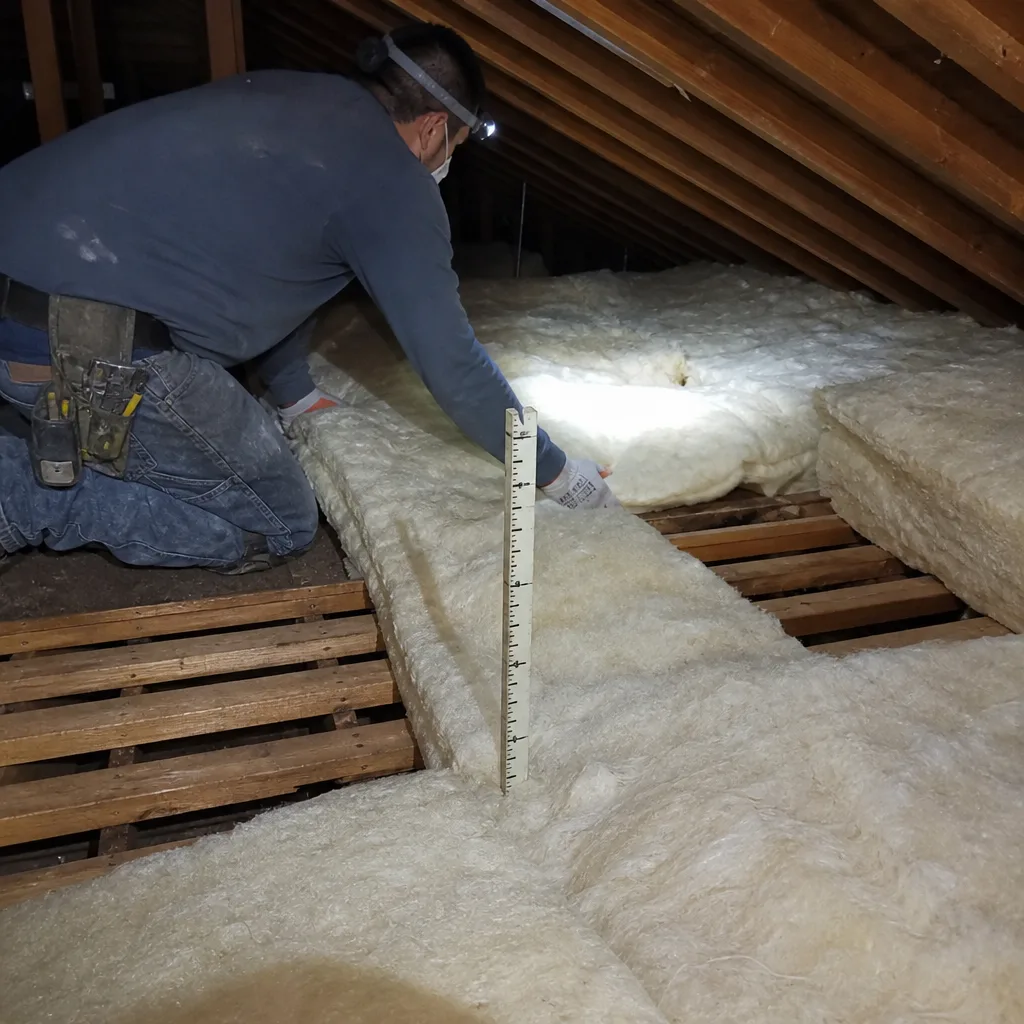
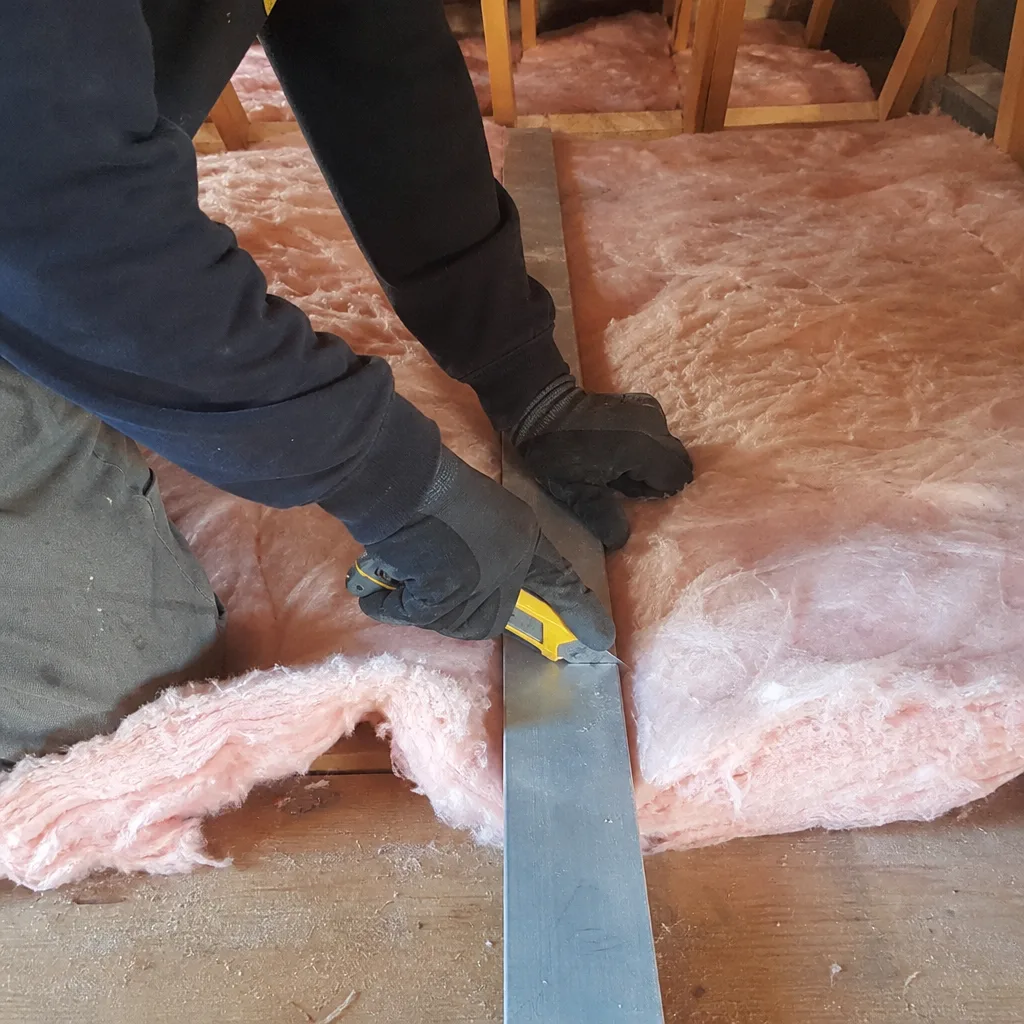
We’re a dedicated insulation contractor, not a generalist picking up attic work between bathroom remodels. That focus matters in Apple Valley because the housing stock here throws curveballs: vaulted ceilings that were never air-sealed, owner-builder attics with thirty-year-old settled fiberglass, and detached shops that bake in the same sun as the main house. Our crews work with three installation methods – batt, blown-in, and spray foam – so the recommendation follows the attic, not our inventory.
Customers along Apple Valley Road, around Sitting Bull, and up in the Mariana Heights area keep raising the same two points in their feedback: they appreciate a straight explanation of what their attic actually needs, and they like that we show up prepared to finish in one trip. We carry materials for multiple approaches on every truck, which means a job that starts as a blow-in top-up can pivot to Rockwool batts for a hard-to-reach cathedral transition without a callback. That is what Ruben built the company around: the right method for the specific attic, not whatever is left in the warehouse. Call (855) 382-3451 and you’ll get the same treatment.
Attic Mold Removal in Apple Valley
Attic Mold Removal in Apple Valley usually runs between $900 and $2,800 depending on how far the growth has spread and whether it is surface staining or embedded in the roof sheathing. The high-desert climate can make this worse than homeowners expect: winter condensation forms when warm interior air hits cold attic surfaces, and if the attic was never properly vented, that moisture lingers long enough for mold to take hold even in a dry climate. We remediate the affected sheathing and framing, then address the ventilation or air-sealing issue that caused the moisture in the first place. That second part is what actually prevents recurrence.
Signs Your Apple Valley Attic Needs a Look
Dark staining on the underside of roof decking, a musty smell that drifts down when the attic hatch is open, or visible fuzz on rafters near bathroom exhaust vents. We see this regularly in older custom homes around Central Road and Quantico Road where bathroom fans were vented directly into the attic rather than out the roof. None of these signs resolve on their own, and waiting means the mold digs further into the wood.
Removal and Prevention as One Job
We treat the affected surfaces with an EPA-registered antimicrobial, remove unsalvageable insulation that is embedded with spores, and then correct the airflow problem. In Apple Valley that often means proper soffit-to-ridge venting and sealing the attic bypasses around can lights and ceiling penetrations. The goal is not just a clean attic; it is an attic that stays dry enough that mold cannot return.
Attic Insulation Removal in Apple Valley
Attic Insulation Removal for an Apple Valley home typically costs between $1,200 and $3,000 depending on square footage, depth of the old material, and whether it is a straight pull or a more involved cathedral-ceiling extraction. Homeowners here frequently need this because of rodent activity, fire damage, or simply because the original owner-builder material has settled to a fraction of its intended R-value. Old fiberglass that has compressed flat is doing almost nothing; removing it and starting fresh is often cheaper than piling new on top when the existing layer is contaminated or condensed to a third of its depth.
When Removal Beats a Top-Up
If your attic insulation in Apple Valley has been wet, flattened by years of foot traffic, or chewed through by rodents, a top-up covers the problem without fixing it. We recommend removal when the existing material is below about R-19 after settling, shows significant contamination, or sits in an attic where air-sealing work needs full access to the ceiling plane. A clean slate lets us seal bypasses properly before new insulation goes in.
The Removal Process
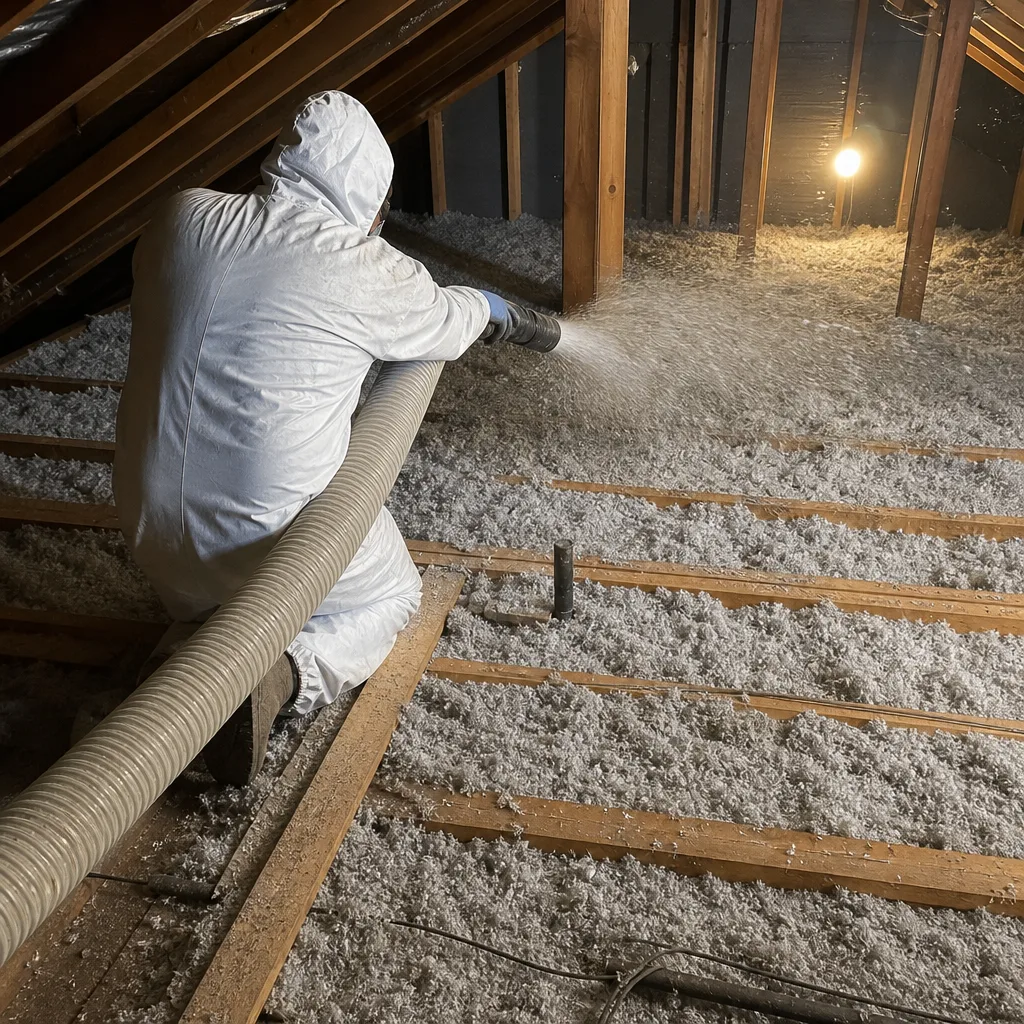
Our crew sets up a commercial HEPA-filtered vacuum outside, runs a hose into the attic, and pulls the old material out without dragging it through the house. The workspace is contained, and afterward we inspect the deck for moisture or mold problems that were hiding underneath. Then you get an honest read on whether new batt, blown-in, or spray foam fits the space best.
Trusted Brands We Service in Apple Valley
We carry Owens Corning and Johns Manville fiberglass for cost-conscious attic batts and blow-in work, and we stock Rockwool for Apple Valley applications where fire resistance and moisture performance matter. Having multiple brands on hand means we do not force a recommendation toward whatever is sitting on the shelf; the attic conditions drive the material choice. For large-lot Apple Valley properties with detached shops, that often means Rockwool in the outbuilding and blown GreenFiber or fiberglass in the main house. Parts and materials for follow-up visits are stocked locally, so warranty-related touch-ups do not require a two-week wait. If your existing attic has one of these brands in place and you need a section repaired or topped up, we can match it.
Common Attic Insulation Problems We See in Apple Valley Homes
- Settled owner-builder blown fiberglass reading below R-30. Many of the custom homes built in the 1980s along the Bear Valley corridor were insulated by the original owner, and three decades of gravity plus occasional foot traffic have compressed that layer badly. The attic that once held R-38 is now performing at half its rating, and the house feels it in both seasons.
- UV-degraded radiant barrier foil that has delaminated and fallen. The intense sun and wind cycling in Apple Valley breaks down stapled foil within five to seven years. We have opened attics where the foil was hanging in strips, doing nothing to reject radiant heat, while the ducts underneath were baking at 130°F plus.
- Vaulted and cathedral ceilings in older custom ranches with no air-sealing. These were often framed with little or no chase for insulation, and whatever batt was stuffed in at construction has shifted or compressed. Hot attic air bypasses the insulation entirely and migrates into the living space through cracks around ceiling boxes and framing joints.
- Detached shops and garages left completely uninsulated. On half-acre lots throughout Apple Valley, the outbuilding absorbs the same 100°F solar load as the house. If the shop shares a wall with living space or houses a home business, that uninsulated roof turns it into a heat bank that radiates all night.
Pricing for Attic Insulation in Apple Valley, CA
For a standard 1,500-square-foot attic in Apple Valley, blown-in fiberglass to R-38 runs $1,800 to $3,200. Batt insulation for the same space lands between $2,200 and $3,800 depending on brand and R-value. Spray foam starts around $4,500 and goes up from there, but it air-seals as it insulates, so for cathedral ceilings and bonus rooms it often beats the alternative. Attic top-ups on existing insulation run $800 to $1,600 when the base layer is sound. What changes your number: attic accessibility, how much old material needs removal, cathedral or vaulted sections, and whether detached structures are included. We quote the job, not a generic square-foot multiplier. Call (855) 382-3451 for a free on-site estimate and Ruben or a lead tech will walk the attic with you and explain exactly what the number covers.
We Also Serve Cities Near Apple Valley
Our crews cover the full Victor Valley, including Apple Valley and the surrounding communities of Mountain View Acres, Spring Valley Lake, Victorville, and Hesperia. If your property sits on the edges of 92307 or 92308, you are still in our service zone with the same one-trip scheduling. For more about our full-service approach, see our Attic Insulation overview.
Serving Apple Valley, CA — Our Local Coverage Area
We’re based in the Apple Valley area and know this community well. Use the map below to see our service coverage — if you’re nearby, we can almost certainly help.
FAQs About Attic Insulation in Apple Valley
Yes, and most half-acre-plus Apple Valley properties benefit from insulating the shop roof, especially if the building gets daytime use. A bare shop attic under 100°F sun reaches 160°F to 170°F inside, and that heat radiates downward for hours after sunset. Rockwool batts or blown-in cellulose between the shop joists will take the edge off, and the job costs $1,200 to $2,800 for a typical two-car detached garage. Call (855) 382-3451 and we will include the outbuilding in the same visit as the main house, which saves you a second mobilization fee.
Your attic is losing performance in both seasons because the original blown fiberglass has settled well below its rated R-value, often down to R-19 or less, and that thin layer cannot stop summer heat gain or winter heat loss. Add in skipped air-sealing around ceiling penetrations, and the insulation is being bypassed entirely. The fix is a full removal or a dense top-up to bring the attic back to at least R-38, which runs $1,800 to $3,200 for a standard Apple Valley ranch. Call (855) 382-3451 and we will measure the settled depth and tell you exactly what it would take to recover.
Radiant barrier foil in Apple Valley attics typically degrades within five to seven years due to high UV exposure and repeated wind flexing, causing the foil to delaminate, tear, and eventually hang loose from the rafters. Once it is no longer taut and reflective, it stops rejecting radiant heat. We remove the failed foil and can replace it or, more often, recommend a better-performing solution like air-sealing plus increased insulation depth to hit the high-desert target. Call (855) 382-3451 for a free attic inspection and we will show you what your foil looks like now.
Yes, and cathedral ceilings in Apple Valley custom homes are one of the most common sources of thermal bypass we encounter. The fix usually involves spray foam, because open-cell or closed-cell foam expands into the irregular framing cavities and seals as it insulates, handling both the R-value and the air leakage in one pass. Pricing for cathedral ceiling spray foam starts around $4,500 for a typical vaulted great room and runs upward based on square footage and foam depth. Call (855) 382-3451 and we will assess whether your ceiling can be foamed from the interior or if a roof-over approach makes more sense.
Yes, we remove old insulation and remediate mold as separate line items before new insulation goes in, and this is standard practice on Apple Valley jobs where the existing material is contaminated, settled, or hiding moisture problems. Removal runs $1,200 to $3,000, mold remediation adds $900 to $2,800, and then you choose the new material and target R-value based on the attic’s actual condition. Skipping removal when it is needed just buries the problem under new insulation. Call (855) 382-3451 and we will give you a line-by-line breakdown before any work begins.
Written by Ruben Castellano, Owner at Thermal Insulation Co, serving Apple Valley and the Victor Valley since day one.