
Fast, Reliable Attic Insulation Across Palm Springs
Attic insulation in Palm Springs typically runs $1,800 to $4,900 for a full replacement in a standard single-story home, with top-ups and targeted air-sealing jobs starting around $600. Most projects are completed in one day, and we schedule free estimates throughout the Coachella Valley within 48 hours of your call. If you’re dealing with a hot second floor, an AC unit that never shuts off, or a mid-century flat roof with zero attic cavity, call us at (855) 382-3451 and we’ll tell you exactly what’s going on.
Thermal Insulation Co has spent years working in Palm Springs homes that other insulation contractors won’t touch: low-slope roofs, cathedral ceilings, vacant snowbird properties, and 1960s concrete-block ranches. We know the housing stock here. More importantly, we know what actually performs when the attic hits 140°F in July and nobody’s home to notice.
Key Takeaways:
- Full attic insulation replacement in Palm Springs runs $1,800-$4,900 depending on method and square footage.
- Radiant barriers and air-sealing matter here far more than in coastal California climates.
- Flat-roof mid-century homes often need spray foam or rigid board, not blown-in fiberglass.
- We carry eight brands and three installation methods, so the recommendation fits your roof, not our inventory.
- Free estimates with same-week scheduling: (855) 382-3451.
Why Thermal Insulation Co Is Palm Springs’s Preferred Attic Insulation Company
Ruben Castellano started Thermal Insulation Co with a simple position: insulation is a building-science specialty, not a side job for a general contractor. That focus matters in Palm Springs, where a wrong insulation choice doesn’t just cost you a few extra dollars a month. It bakes your roof assembly, accelerates UV damage to sheathing and membranes, and fails silently while the house sits empty through a 110°F+ summer.
We work on Palm Springs homes every month. Our crews know the differences between a Little Tuscany hillside spread, a Sunmor mid-century ranch on a flat lot, and a 2000s build in a gated community off Bob Hope Drive. Each one needs a different approach, and we’ve seen enough of them to know before we open the attic hatch.
What we hear from Palm Springs customers: the estimate was specific, the crew showed up when they said, and the insulation choice was explained in plain terms with honest tradeoffs. We don’t push spray foam on every house. We don’t blow fiberglass into a flat-roof cavity that needs rigid board. We recommend what the home actually requires, and we stock the product lines to back that up.
Attic Ventilation in Palm Springs
Attic Ventilation in Palm Springs is not a comfort add-on. It’s load-bearing infrastructure. When outside air sits at 112°F and the roof deck absorbs direct sun all day, a poorly ventilated attic becomes an oven that bakes your insulation, cooks your AC ductwork, and drives heat down through the ceiling into living space. Proper ventilation here means balancing intake and exhaust so the attic stays as close to ambient temperature as the physics allow, and that is often the difference between an AC system that keeps up and one that runs 18 hours a day. A typical attic ventilation job in Palm Springs runs $450 to $1,200 depending on roof configuration and the number of vents needed, and it is almost always done as part of an insulation project rather than as a standalone fix.
What we check on every ventilation call
We start with the existing vent ratio. Most 1960s and 1970s Palm Springs homes were built with gable vents or a couple of static roof vents, and that math rarely meets what the attic actually needs in this climate. We also look for blocked soffit vents, bird and rodent screens that have clogged with dust and sand, and bathroom fans venting into the attic instead of through the roof. Those small failures compound. A bathroom fan dumping moisture into a 140°F attic creates a humidity pocket that degrades insulation and sheathing within a few summers.
Flat-roof and low-slope realities
On a flat or low-slope mid-century roof, standard ridge venting isn’t an option. We typically specify low-profile static vents or powered exhaust where the cavity allows, and we pair that with air-sealing so you’re not pulling conditioned air out of the house. This is where working with a contractor who understands Desert Modern roof assemblies matters. A vent spec that works in Rancho Mirage won’t necessarily survive a Palm Springs flat-roof remodel.
Radiant Barrier in Palm Springs
Radiant Barrier in Palm Springs is the single highest-impact upgrade for homes with an attic, because this climate throws more radiant heat at your roof than anywhere else in California. Radiant heat is not air temperature. It’s energy moving from a hot roof deck to cooler surfaces below it, and in a Palm Springs summer that roof deck can hit 150°F to 165°F. A radiant barrier reflects that energy back before it ever reaches your insulation or your ceiling. Installed cost for a typical single-story home runs $1,100 to $2,400, and when paired with air-sealing and sufficient insulation, it produces the kind of attic temperature drop you can measure with a simple thermometer before and after.
Why plain batt insulation underperforms here
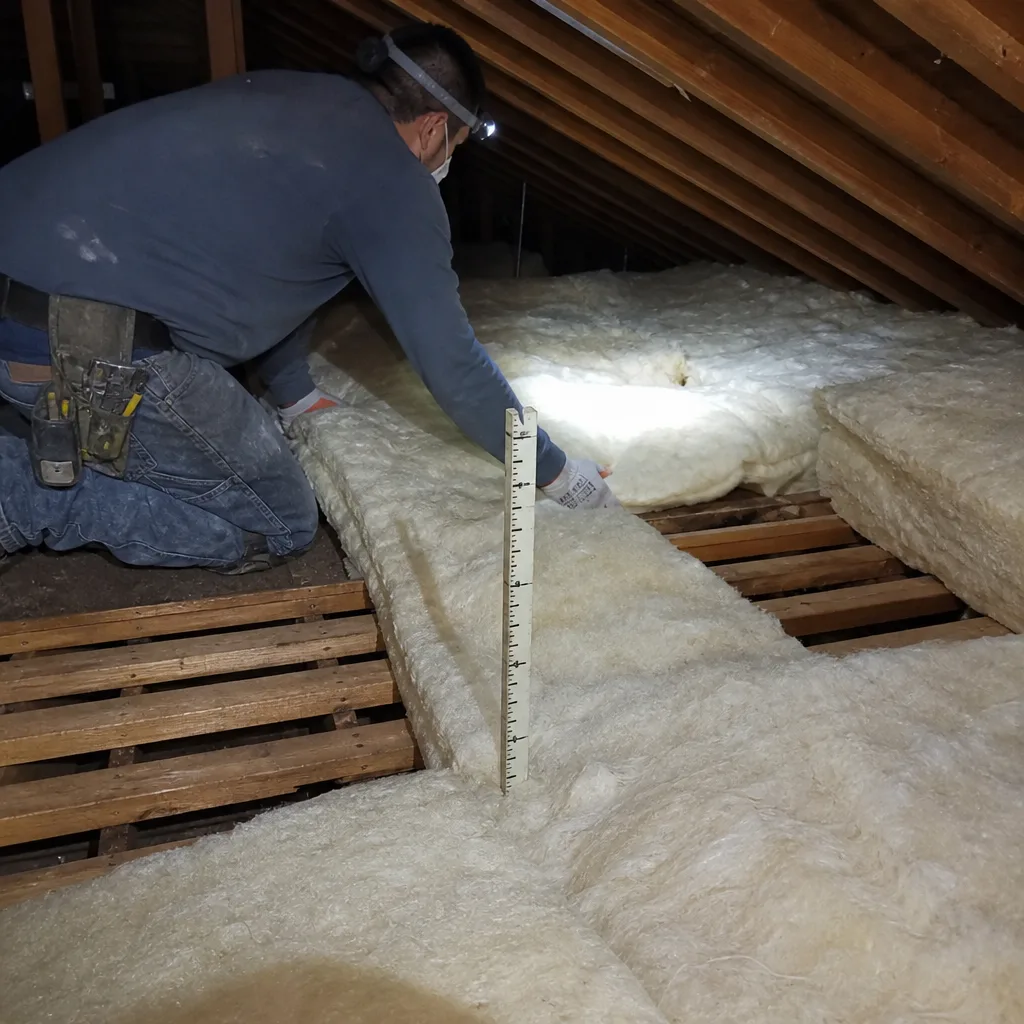
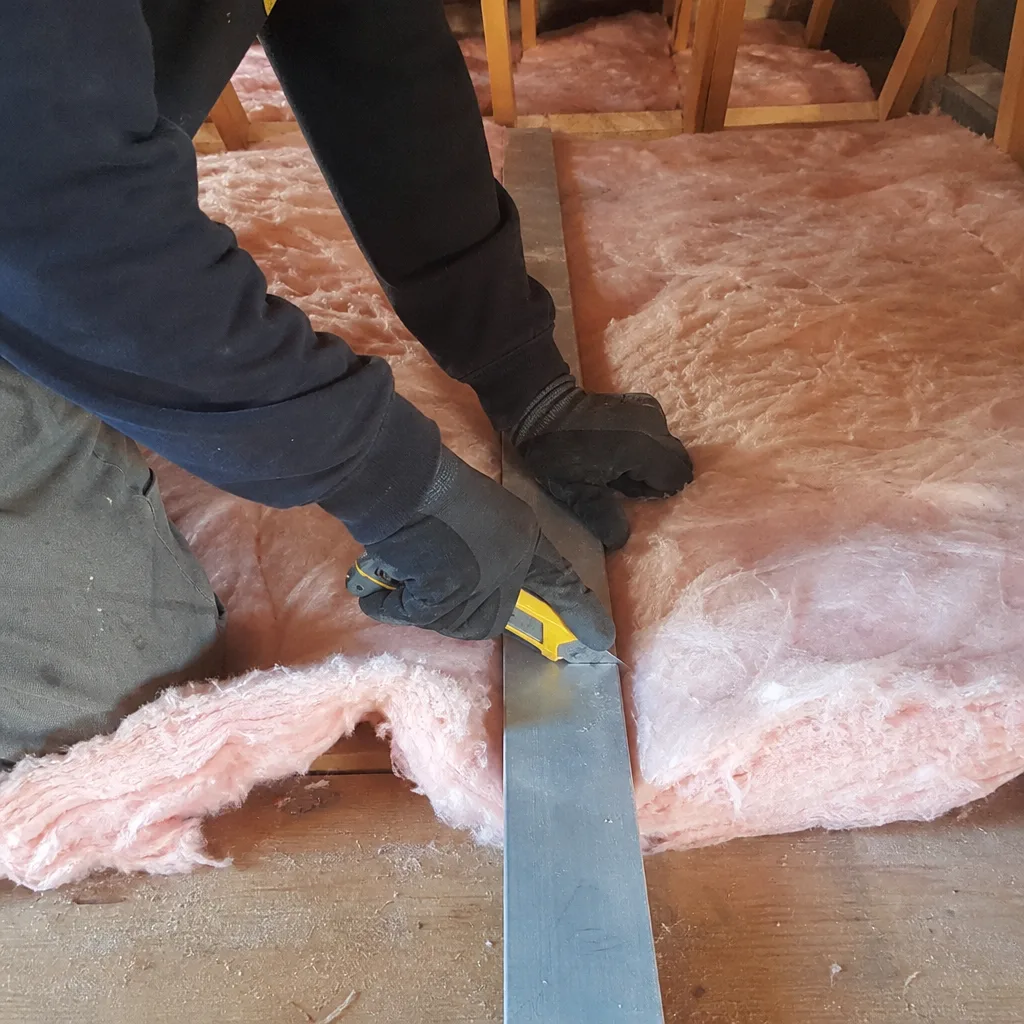
Fiberglass batt insulation slows conductive heat transfer. It does not reflect radiant energy. In a mild climate, that’s fine, because the temperature difference across the attic is modest. In Palm Springs, a 50°F temperature difference between roof deck and living space is routine, and radiant energy pours through even a well-batted attic floor. Leave the batt in place if it’s in good condition. But add a radiant barrier to the underside of the roof deck, and you’ve addressed the actual failure mode this climate creates.
UV degradation is a real maintenance issue
Radiant barrier materials have a service life, and in Palm Springs that life is shorter than the manufacturer’s national average. Intense UV exposure, airborne dust, and sustained extreme heat cause reflective surfacing to oxidize and chalk over time. In the Sunmor neighborhood (92264), we pulled an outdated radiant barrier off a low-slope ranch that had degraded to a dull gray powder. It wasn’t reflecting anything anymore. The homeowner had no idea, because the house sat empty from May through October, and the failure only showed up when a pre-season inspection found attic temps running 30°F hotter than the assembly should have allowed. We installed a new reflective barrier, air-sealed the top plates, and rebuilt the cavity insulation. The next empty-season check showed the attic running materially cooler.
Trusted Brands We Service in Palm Springs
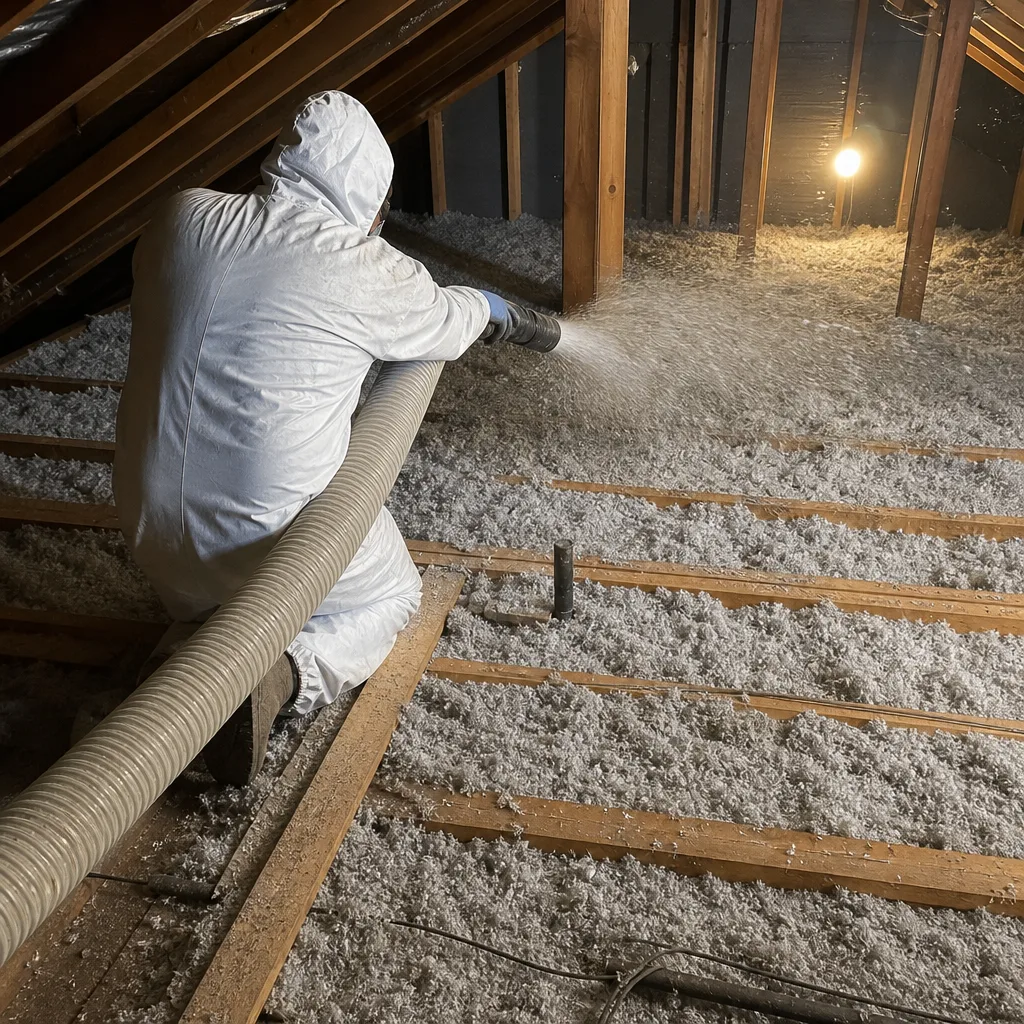
We carry Owens Corning, Johns Manville, Knauf, and GreenFiber, and our decisions about which to use are driven by your roof assembly, your R-value target, and your moisture conditions, not by brand loyalty. In most Palm Springs attics, we specify Owens Corning fiberglass batts or blown-in Johns Manville loose-fill because they hold up well to dry heat and are easy to top up later. GreenFiber cellulose is our go-to when a homeowner wants a recycled-content option, and it performs well in sealed attics where its density adds to air-sealing. We stock materials locally for Palm Springs jobs, which means no two-week waits for ordered product and no substitutions because the truck didn’t arrive.
Common Attic Insulation Problems We See in Palm Springs Homes
- Flat-roof cavities with compressed or nonexistent insulation. Many mid-century homes in neighborhoods like Vista Las Palmas and Racquet Club Estates were built with shallow roof cavities, and the original insulation has gone from R-19 to R-6 simply because it settled, compressed, or was never sized correctly. We see this on nearly every retrofit quote we write for pre-1980 homes.
- Vacant-home thermal gain that goes unnoticed. A house that sits empty through a Palm Springs summer can have its attic assembly degrade for two or three years before anyone notices. UV damage to sheathing, chalked radiant surfacing, and heat-damaged AC ducts all accumulate silently, and they show up on inspection reports, not comfort complaints.
- Unsealed top plates and penetrations. The framing where attic floor meets exterior wall is one of the biggest air leaks in any home, and in desert homes the pressure difference drives hot attic air right into wall cavities and the living space. Air-sealing is a $400 to $800 job in most Palm Springs attics, and it is routinely the highest-ROI line item on the estimate.
- Batt insulation installed without a radiant barrier. We see this constantly: a previous contractor blew in or laid batts, called it done, and the homeowner still has a hot upstairs hallway every July afternoon. The batt is doing its job. It just wasn’t enough for this climate, and no one explained that.
Pricing for Attic Insulation in Palm Springs, CA
Here’s what we actually quote for Palm Springs homes, based on typical single-story square footage between 1,200 and 2,000 square feet. Blown-in attic insulation runs $1,200 to $2,800. Batt replacement runs $1,500 to $3,500 depending on R-value and access. A full air-seal plus insulation package runs $1,800 to $4,900. Radiant barrier installation adds $1,100 to $2,400. Flat-roof cavity insulation using spray foam or rigid board is its own category, typically $3,500 to $9,000 because it’s labor-intensive and access is tight. Factors that move the number: roof configuration, existing insulation removal, ductwork in the way, and whether we’re air-sealing at the same time. Call (855) 382-3451 for a free estimate, and we’ll give you a line-item range before we ever schedule the work.
We Also Serve Cities Near Palm Springs
Thermal Insulation Co provides Attic Insulation services throughout the Coachella Valley, including Cathedral City, Rancho Mirage, Garnet, and Desert Hot Springs. If you’re in one of those communities, the same crew, the same brands, and the same honest recommendation model apply. Learn more about our local coverage on the Palm Springs page.
Serving Palm Springs, CA — Our Local Coverage Area
We’re based in the Palm Springs area and know this community well. Use the map below to see our service coverage — if you’re nearby, we can almost certainly help.
FAQs About Attic Insulation in Palm Springs
Yes, and in some ways it matters more. An empty house with no AC running through a 110°F+ summer puts the attic assembly under maximum thermal stress, and UV degradation of radiant surfaces, sheathing, and roof membranes accelerates when the house sits closed up. Insulation and radiant barriers installed correctly reduce attic temperatures even with no conditioned air inside, which protects the roof structure itself. If your Palm Springs home sits empty each summer, plan for a pre-season attic inspection between March and May. It’s the cheapest way to catch a failing assembly before it becomes a roof replacement. Call (855) 382-3451 to schedule yours.
Yes. Flat and low-slope roofs common to Palm Springs mid-century homes rarely have enough cavity depth for batt insulation, so we typically apply spray foam or rigid board directly into the roof assembly. In some cases we work from the exterior during a re-roof window; in others, from the interior by opening the ceiling. The right method depends on your roof structure and whether you’re replacing the roof covering at the same time. What we don’t do is try to squeeze batt into a 2-inch cavity and call it insulated. That’s a waste of your money in this climate. Call for a free inspection and we’ll tell you what your roof can actually hold.
Because batt insulation only slows conductive heat transfer, and Palm Springs attics are dominated by radiant heat gain from a roof deck that can reach 150°F+. In a mild climate, batt alone works because the temperature difference across the attic is small. Here, that difference is routinely 40°F to 50°F, and radiant energy pours through the attic space regardless of how much fiberglass is on the floor. A radiant barrier plus air-sealing addresses the actual heat path. Batt is still part of the right system, but it is not a system by itself. This is the most common misconception we correct on Palm Springs estimates.
Yes, a radiant barrier installed on the underside of the roof deck reflects radiant heat before it enters the attic cavity, and it also reduces UV exposure on the inner roof structure. In Palm Springs specifically, where intense sun and dry heat degrade reflective materials faster than national averages, we recommend a higher-grade barrier and an inspection every three to five years. A good barrier will keep attic temperatures 20°F to 30°F lower than an unshielded attic on a July afternoon. That number, by the way, is measurable, and we encourage homeowners to check it themselves before and after installation.
The fastest check is a visual: look for chalked or grayed radiant surfacing, compressed or settled insulation, dust trails or stains that indicate air leaks, and any sheathing that appears darkened or warped. Then check your attic temperature on a hot afternoon using a simple wireless thermometer. If your attic is running 150°F+ while the outside air is 110°F, something is not working. Finally, if your home sat empty through a Palm Springs summer and you haven’t had the attic inspected in three years or more, the safest move is to schedule a professional inspection before the next heat season. Estimates are free, and we’ll document what we find with photos.
If your Palm Springs attic is running hot, leaking air, or sitting empty through the summer heat, call Thermal Insulation Co at (855) 382-3451. We’ll inspect the full assembly, explain what’s actually happening, and give you a line-item estimate with real numbers. No pressure, no upsell, just the right insulation for a desert house.
Written by Ruben Castellano, Owner at Thermal Insulation Co, serving Palm Springs and the Coachella Valley.