
Fast, Reliable Attic Insulation Across Desert Hot Springs
Attic insulation in Desert Hot Springs isn’t a one-size job. With summer attic temps that routinely pass 150°F and wind that drives fine sand through every unsealed gap, most of what we do here starts before any new material goes in. We’ve worked across 92240 and 92241 long enough to know which homes hold up and which ones bake. Whether you’re near Hacienda Avenue, off Dillon Road, or in a manufactured home community near the 62, we get to Desert Hot Springs fast, and we bring the full range of what matters: fiberglass batts, blown-in cellulose, spray foam, and the air-sealing work this valley actually needs. Call (855) 382-3451 for a free estimate, and Ruben Castellano or one of our desert-seasoned techs will walk you through what your attic really needs.
Why Thermal Insulation Co Is Desert Hot Springs’s Preferred Attic Insulation Company
We’re an insulation contractor before anything else. That focus means our Attic Insulation crew has seen every failure mode this desert produces: sagging mid-century batts, sand-packed windward eaves, radiant heat pouring through older tile and low-slope roofs. Ruben Castellano runs our operation with a simple rule: match the material and method to the home, not the other way around. We stock Owens Corning and Johns Manville fiberglass, Rockwool for fire-resistant and moisture-prone spots, and GreenFiber cellulose when recycled content matters to the homeowner.
What that means in Desert Hot Springs is that you’re not getting the same quote as someone in Van Nuys. We know what a west-facing stucco tract home off Hacienda Avenue does at 4 p.m. in July. We know what manufactured homes in 92241 need that a custom-built two-story doesn’t. And we quote accordingly.
Attic Insulation Removal in Desert Hot Springs
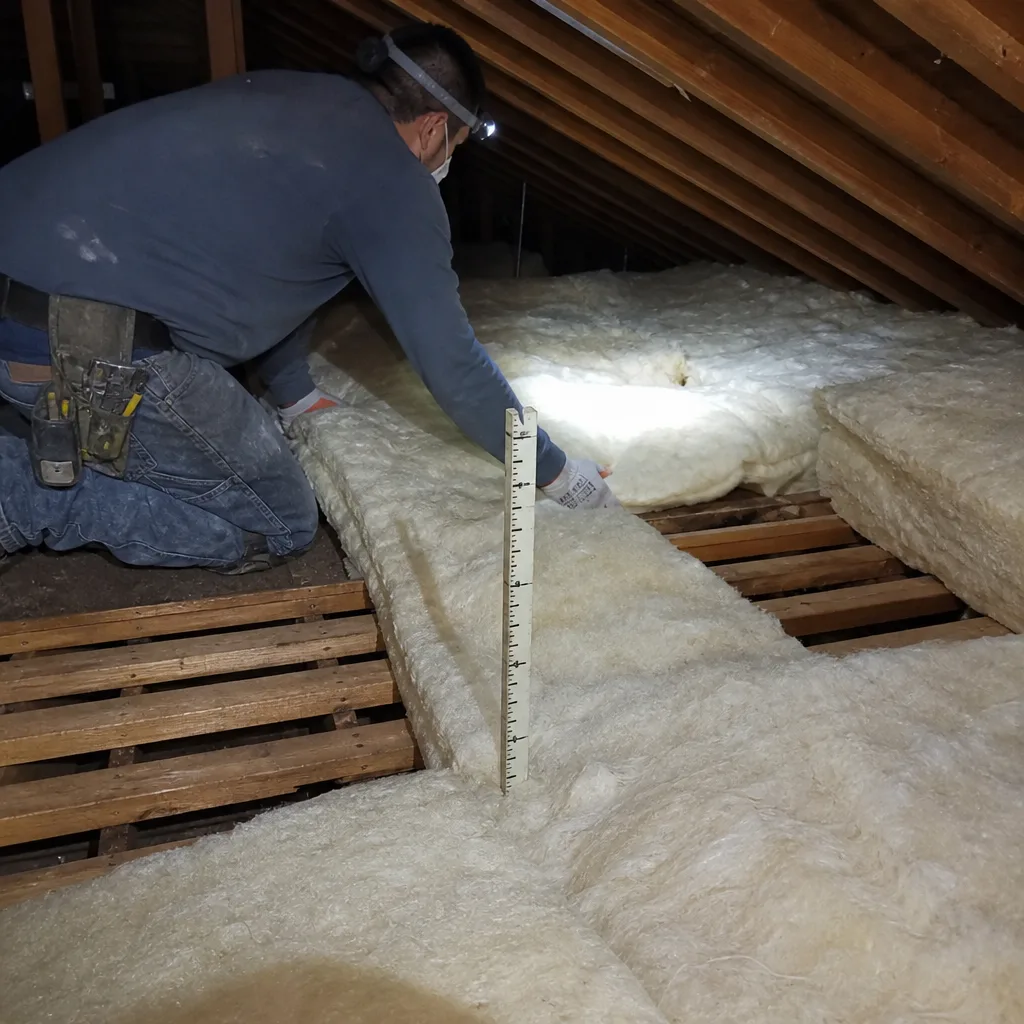
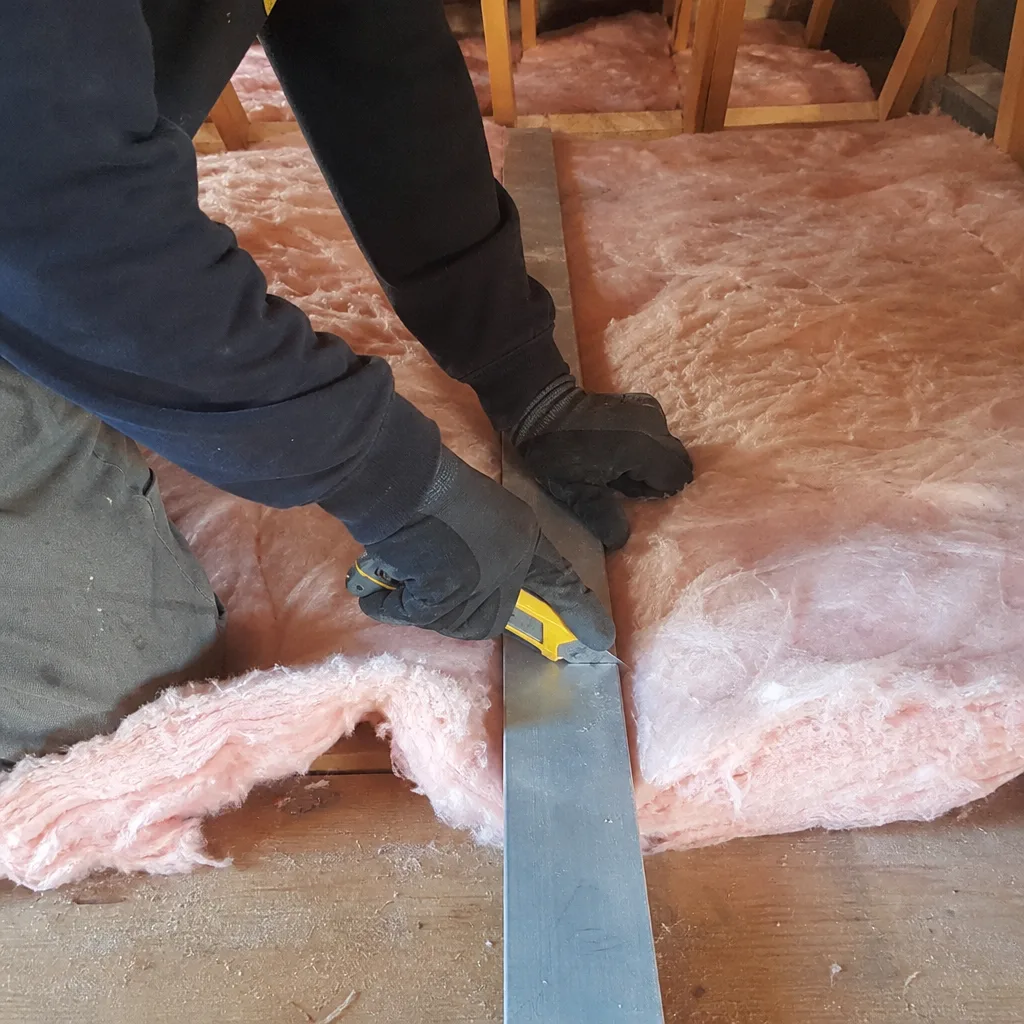
Attic Insulation Removal in Desert Hot Springs is often the first step, not an add-on. When original fiberglass batts have been cooked and sand-blasted for 30 or 40 years, blowing new insulation on top of them traps the problem. We remove the old material completely, then inspect the ceiling plane for gaps, dust intrusion, and rodent or pest damage before anything new goes in. A typical full removal in a 1,200 to 1,600 square foot Desert Hot Springs home runs $1,800 to $2,900, depending on attic height, access, and how much debris the old batts are holding.
Removal Before Air-Sealing
Once the old batts are out, we can see the top plates and vent penetrations along the windward eaves. That’s where we find the fine sand the wind has pushed through for years. Sealing those gaps before re-insulating is what keeps the next round of material from failing the same way.
When Removal Is the Only Honest Option
If your batts are flattened, water-stained, or packed with decades of desert dust, topping them off is wasted money. We’ll tell you straight when removal is required. Ruben Castellano doesn’t send our crews out to bury a problem that’s still active under new insulation.
Insulation Contractors in Desert Hot Springs
Insulation Contractors in Desert Hot Springs need to understand wind and heat as a pair. We do. Our crews work through the worst heat the Coachella Valley floor produces, and we schedule attic work early mornings when attic temps are still safe. A full attic retrofit with removal, air-sealing, and new blown-in insulation in Desert Hot Springs typically runs $3,400 to $6,200 for a single-story home, with radiant barrier adding $1,200 to $2,400 depending on roof geometry. Call (855) 382-3451 and we’ll give you a fixed number after an attic inspection, not a guess over the phone.
Air-Sealing Before R-Value
In Desert Hot Springs, air-sealing the top plate and vent penetrations matters more than adding another six inches of fiberglass. If the wind can push through unsealed gaps, no R-value holds up. That’s our order of operations here, and it shows in how the worst west-facing rooms perform after we finish.
Radiant Barrier Under Low-Slope and Tile Roofs
Most homes in 92240 and 92241 have low-slope or tile roofs with no radiant barrier or a thin, deteriorated one. Correct R-value keeps heat from conducting through the ceiling, but radiant barrier is what stops the roof deck from radiating that 160°F surface heat down into the attic air in the first place. We install it as part of most Desert Hot Springs retrofits.
Trusted Brands We Service in Desert Hot Springs
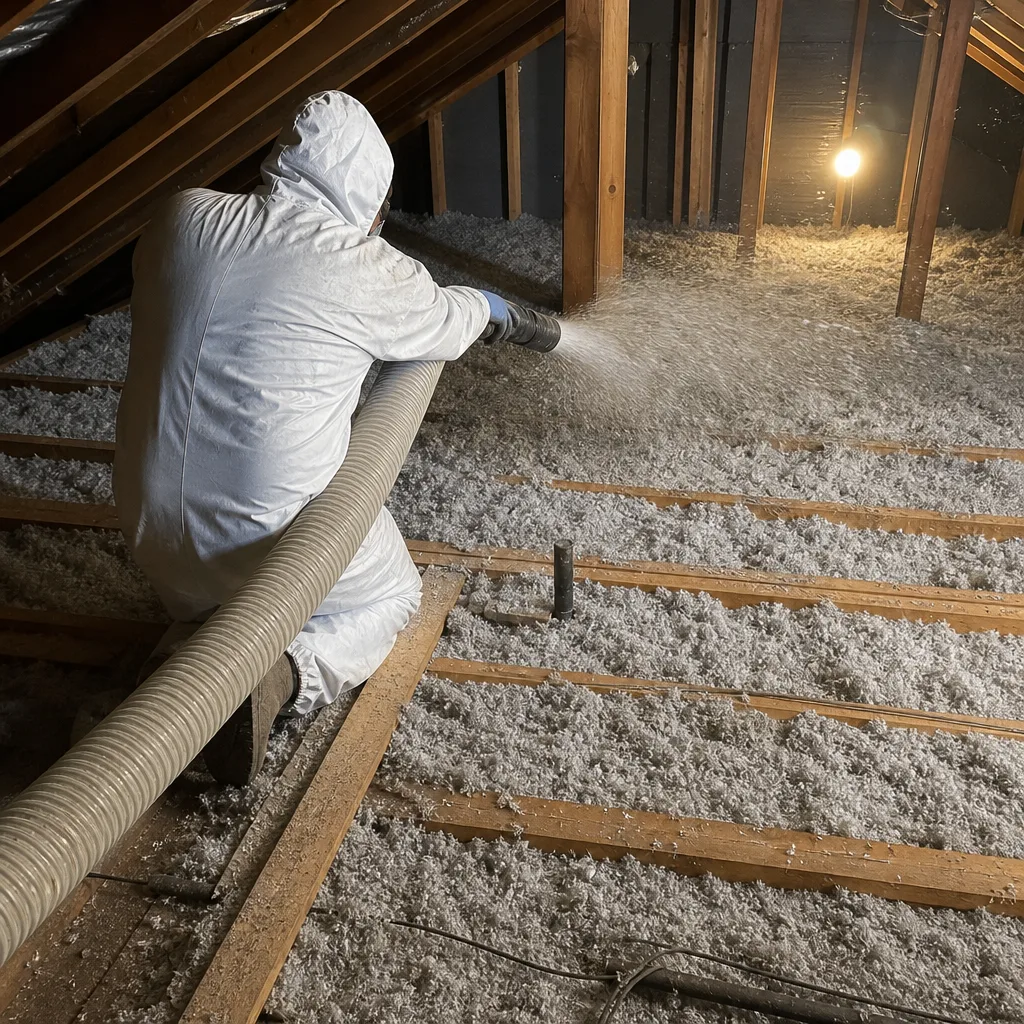
We carry Owens Corning and Johns Manville fiberglass because they hold up in high-heat attics and come in consistent R-values. We stock Rockwool for the fire-prone edges of the valley and for any application where moisture or pest resistance matters. And we install GreenFiber cellulose when a Desert Hot Springs homeowner wants a recycled-content option that also air-seals well in older, irregular attic cavities. Attic Insulation in Desert Hot Springs starts with the right product for the house in front of us, not whatever a supplier happened to ship that week. Local stock for these brands means we’re not waiting on a truck from Riverside to start your job.
Common Attic Insulation Problems We See in Desert Hot Springs Homes
- Wind-driven sand packed into windward eave batts. After a big blow, we find fine sand pushed through unsealed vents and top plates, settling into the batts just inside the eaves. That’s collapsed R-value exactly where the afternoon sun hits hardest.
- Settled, sagging fiberglass from decades of extreme attic heat. Mid-century and 1980s fiberglass batts in Desert Hot Springs lose their loft fast. By year 20 or 30, many are at half their original depth, leaving convective gaps at the ceiling plane.
- Thin or missing radiant barriers. Homes built before current energy codes rarely have a functional radiant barrier. Even with R-38 above the ceiling, a 160°F roof deck radiates heat into the attic and down through the ceiling.
- Unsealed top plates and vent penetrations. The same wind that drives sand through these gaps also depressurizes the attic. That pulls conditioned air out of the house in summer and winter, making your AC and heater work against the desert.
Pricing for Attic Insulation in Desert Hot Springs, CA
An attic insulation top-up with blown-in fiberglass or cellulose in Desert Hot Springs usually runs $1,100 to $1,800 for a single-story tract home. Full removal and re-insulation on that same house runs $3,400 to $5,200. Adding radiant barrier under a low-slope roof adds $1,200 to $2,400. Manufactured and mobile homes run lower on square footage but often need more air-sealing work, so they typically land between $1,800 and $3,500. The biggest cost drivers here are attic access, roof geometry, and how much of the old material has to come out. We give free, fixed estimates after we get eyes on your attic. Call (855) 382-3451 and we’ll schedule it.
We Also Serve Cities Near Desert Hot Springs
We cover Desert Hot Springs and the surrounding desert communities. You’ll find us in Desert Edge, Sky Valley, Garnet, and Thousand Palms, plus all of 92240 and 92241. If you’re just over the line in any of those spots, call (855) 382-3451 and we’ll get you on the schedule, not a waiting list.
Serving Desert Hot Springs, CA — Our Local Coverage Area
We’re based in the Desert Hot Springs area and know this community well. Use the map below to see our service coverage — if you’re nearby, we can almost certainly help.
FAQs About Attic Insulation in Desert Hot Springs
That’s wind-driven sand. The prevailing gusts push fine desert dust through unsealed eave and gable vents, and it settles into the batts on the windward side of the attic. Over time it packs the insulation down, collapsing R-value exactly where the afternoon sun hits hardest. We see this on nearly every older Desert Hot Springs home we open up. Call (855) 382-3451 and we’ll tell you if removal is needed or if a targeted top-up will do.
Most homes here need both. R-value slows conductive heat through the ceiling, but a 160°F roof deck radiates heat into the attic air no matter how much insulation sits on the floor. A radiant barrier under the roof deck stops that radiant transfer before it starts. In Desert Hot Springs, skipping it means your AC fights a losing battle every afternoon.
Yes, and in many Desert Hot Springs homes that’s the right move. We pull out the old material completely, inspect the ceiling for gaps and sand intrusion, then air-seal before blowing in new insulation. Removal typically adds $1,800 to $2,900 to the job, but it’s the only way to fix a problem that’s still active under the old batts.
It is. Manufactured and mobile homes in Desert Hot Springs have thinner roof cavities and more venting per square foot than site-built homes. That means air-sealing and a heat-appropriate R-value matter more than raw depth. We’ve retrofitted dozens of these around 92241 and the communities north of the 62, and we’ll match the method to the structure.
If your insulation is under 15 years old, hasn’t been sand-packed, and still has consistent depth, a top-up usually makes sense. If it’s original mid-century or 1980s material, flattened or packed along the eaves, or your home has no radiant barrier, a full retrofit with removal is the better spend. We’ll tell you which one your attic actually needs, and the quote is free. Call (855) 382-3451.
Written by Ruben Castellano, Owner at Thermal Insulation Co, serving Desert Hot Springs and the Coachella Valley.