
Fast, Reliable Attic Insulation Across Marina del Rey
Attic insulation in Marina del Rey runs $1.50 to $4.50 per square foot for batts and $1.75 to $3.50 per square foot for blown-in, depending on the material and whether we’re topping up or replacing legacy fiberglass. In most canal-front and marina-adjacent buildings here, the real problem isn’t missing insulation, it’s insulation that’s been saturated by decades of salt-laden marine air and fog. We’re a dedicated insulation contractor serving Marina del Rey and the surrounding beach cities, and we stock moisture-resistant materials specifically for this climate. Call (855) 382-3451 for a free estimate.
Why Thermal Insulation Co Is Marina del Rey’s Preferred Attic Insulation Company
We’re insulation specialists, not a general contractor who does insulation on the side. That focus matters in Marina del Rey, where most attics are tight, low-clearance spaces under flat or low-slope roofs. Our team, led by Ruben Castellano, has pulled original 1970s fiberglass out of enough Via Marina and Admiralty Way buildings to know exactly what happens when vapor barriers fail against salt air. Homeowners and property managers in Marina del Rey call us because we can explain why a specific material and method fits their building, not just quote a single product line. We cover the 90292 and 90295 ZIP codes, and our response time to Marina del Rey is typically same-day or next-day for insulation assessments.
We carry eight insulation brands, including Rockwool, Owens Corning, and Johns Manville. Most insulation contractors stock one or two product lines, which means their recommendation is often driven by whatever’s on the truck. We stock competing brands across categories, so we can recommend based on what the home actually needs – moisture control, fire resistance, R-value targets, or recycled content. When salt spray is degrading your exterior insulation, that choice matters more than it does inland.
Insulation Contractors in Marina del Rey
Insulation contractors working in Marina del Rey need to understand something most inland contractors never deal with: the air here is wet and salty. That changes what materials make sense in an attic. A typical attic insulation retrofit in Marina del Rey runs $1,800 to $4,200 for a condo or small apartment unit, while larger multi-story complexes can run $6,000 to $12,000 depending on access and square footage. What matters more than the number is whether the contractor is replacing the vapor barrier, not just the insulation. If they skip it, you’ll be back in the same spot in five years.
Full Insulation Replacement for Legacy Buildings
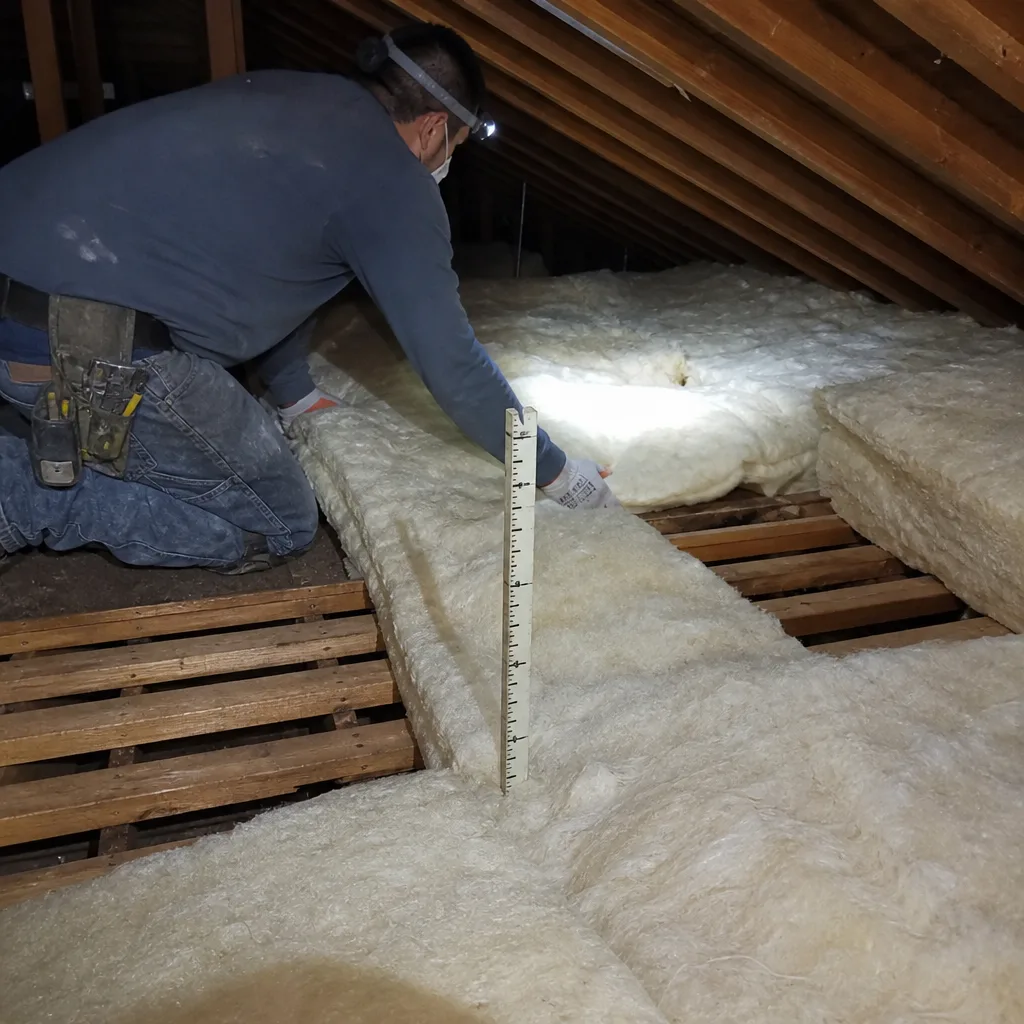
Original 1970s fiberglass batts in Marina del Rey attics are almost always compressed by now. Compression kills R-value – a batt rated R-30 that’s been squeezed into a 2×6 cavity performs closer to R-19. In canal-front buildings, you also get saturation: years of fog and occasional storm-driven rain seeping through degraded roof flashing and soaking the fiberglass. If the material feels damp or smells musty, it needs to come out, not get topped up. We remove the failed material, inspect the roof deck for moisture damage, and install fresh batts or blown-in with a new vapor barrier.
Blown-In Insulation for Tight Attic Cavities
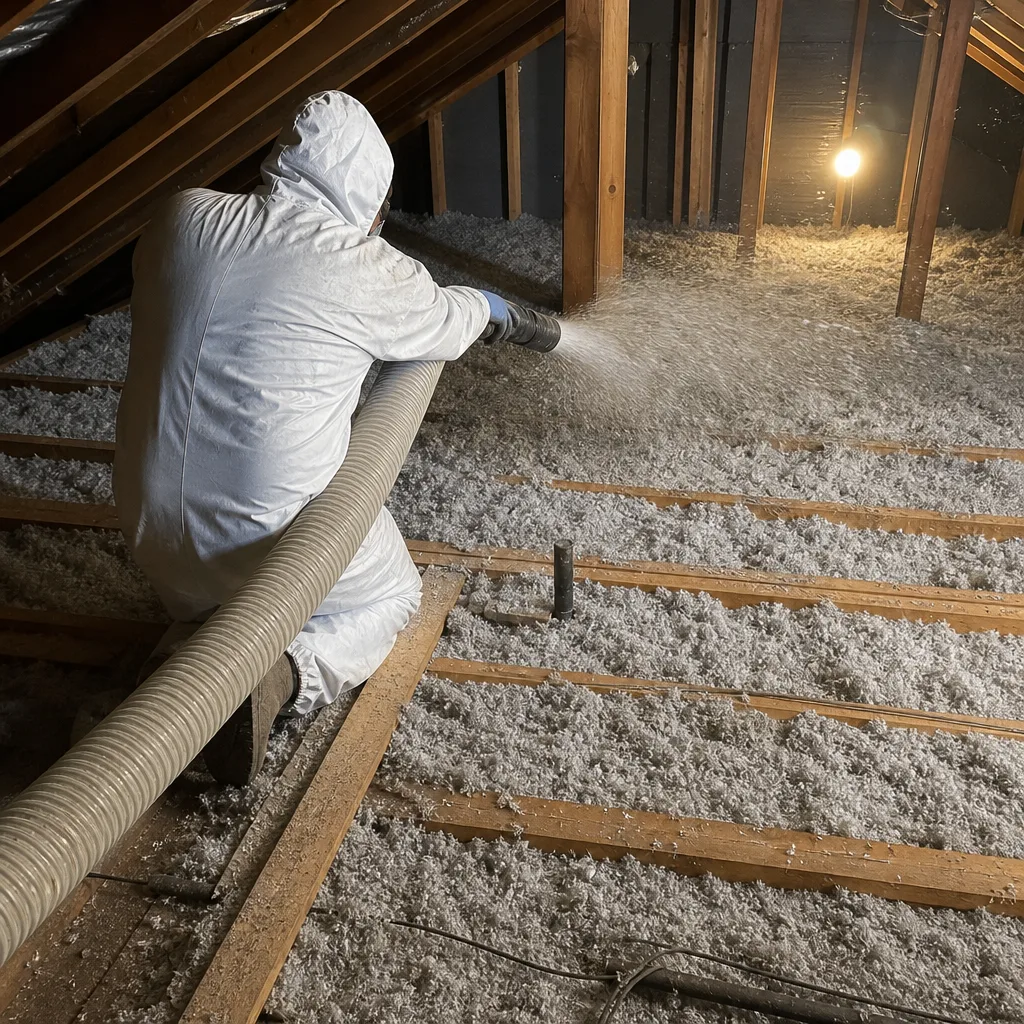
Many Marina del Rey condo complexes from the 1960s and 1970s have attic access hatches you can barely fit a ladder through. Blown-in loose-fill insulation is often the only practical method when you can’t physically maneuver batt material into a low-clearance space. We run hoses through the access point and fill the cavity to the specified R-value without needing to walk the space. For shared-wall condo buildings, blown-in also does a better job of filling irregular cavities than pre-cut batts ever can. It also has some sound-dampening effect, which matters when your upstairs neighbor’s unit shares an attic plenum.
Attic Ventilation in Marina del Rey
Attic ventilation in Marina del Rey is a moisture-management problem first and a temperature problem second. Inland LA attics need ventilation to shed heat. Here, the marine layer keeps temperatures moderate, but onshore fog pushes humid air into the attic every night. Without proper airflow, that moisture condenses on the underside of the roof deck, drips into the insulation, and feeds mold. Adding or upgrading attic ventilation in Marina del Rey typically runs $600 to $1,800 depending on whether we’re installing ridge vents, soffit vents, or a combination system. If your insulation is saturated, ventilation alone won’t fix it – the material has to be replaced first.
Low-Profile Ventilation for Flat-Roof Attics
Flat and low-slope roofs dominate Marina del Rey’s 1960s-1980s housing stock, and they change the ventilation math. A steep-pitch roof creates natural stack effect: hot air rises, escapes through the ridge, and pulls fresh air in through the soffits. Flat roofs don’t have that passive airflow. We install low-profile mushroom vents, eyebrow vents, and in some cases mechanical ventilation to force air movement through the shallow cavity. For buildings right on the canals where salt spray coats everything, ventilation placement matters more than total vent area – you want intake vents positioned away from the prevailing sea breeze to minimize salt intrusion.
Baffles and Intake Preparation
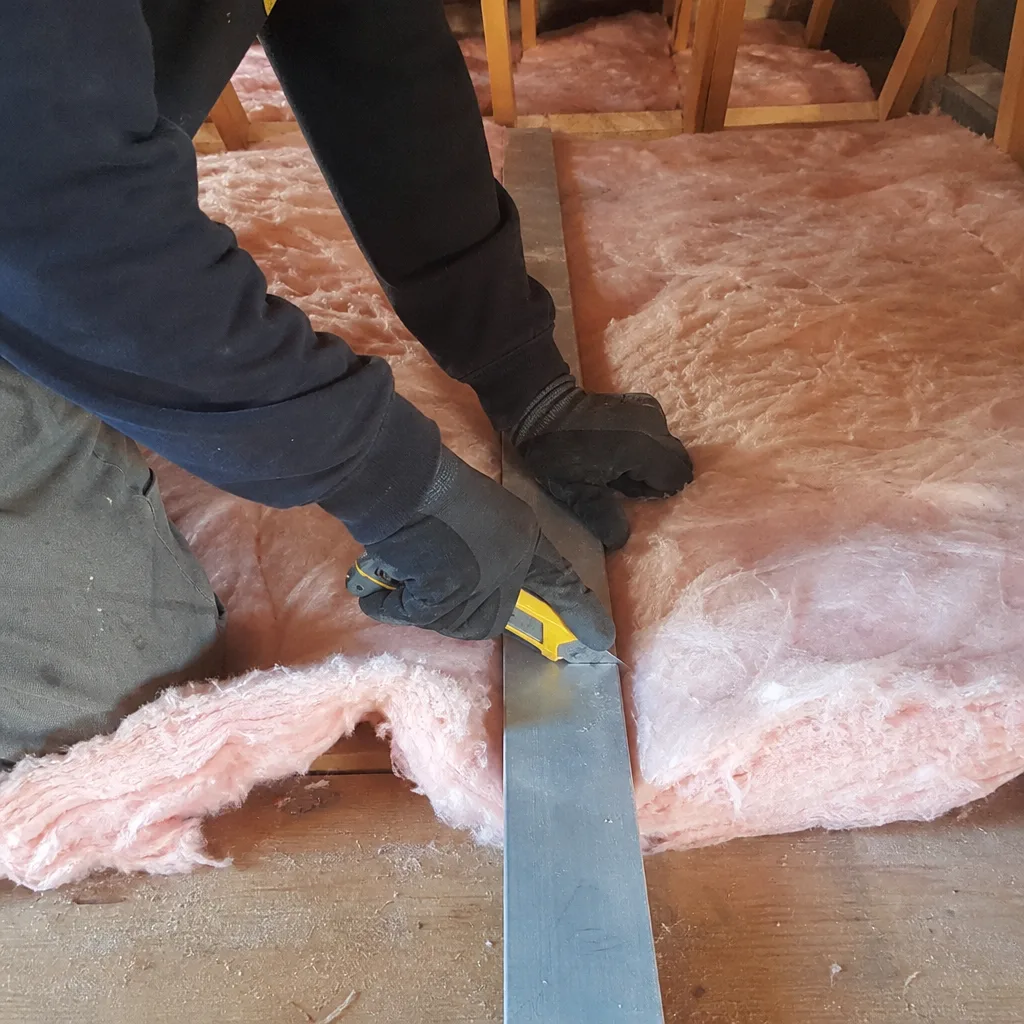
Soffit baffles are simple channels that keep attic airflow open when insulation is installed to the roofline. In many Marina del Rey attics we see, the original baffles were either never installed or have collapsed. When blown-in insulation covers the soffit vents, the attic stops breathing. We install rigid foam or vinyl baffles before any insulation work to guarantee a continuous air channel from the soffit to the attic space. It’s an inexpensive step – typically $150 to $400 – but skipping it is one of the most common reasons an insulation retrofit underperforms within the first year.
A field example from a recent job in Marina del Rey: we were called to a 1970s flat-roof condo on Via Marina where the original fiberglass batts had compressed and the foil vapor barrier was disintegrating from years of salt-laden fog. After removing the saturated material, we installed Rockwool batts with a new cross-laminated vapor barrier and added low-profile attic ventilation to manage condensation. The owner reported the persistent musty odor gone and the unit feeling noticeably drier within a week. That’s what fixing the actual problem looks like.
Trusted Brands We Service in Marina del Rey
Thermal Insulation Co installs products from eight manufacturers, but in Marina del Rey’s damp, salty environment we lean on a few particularly hard. We carry Rockwool mineral wool because it does not absorb moisture the way fiberglass can – if a roof leak develops, Rockwool dries out without losing R-value or growing mold. We carry Owens Corning fiberglass because its ProPink line is widely specified for attic retrofits and holds predictable R-values. We carry Johns Manville because its fiberglass batt format is a practical match for many older wood-frame cavity sizes we encounter in the 90292 ZIP. For canal-front buildings where salt air is a constant, we typically recommend Rockwool. For dry interior units, fiberglass is often the right value call. We stock these materials locally and can pull product for Marina del Rey jobs without waiting on a distributor order.
Common Attic Insulation Problems We See in Marina del Rey Homes
- Failed vapor barriers from salt-laden marine air. The foil or kraft facing on original 1970s insulation disintegrates after decades of exposure to salt-laden fog pushing into the attic. Once the barrier fails, moisture moves freely into the insulation, cutting R-value and feeding mold on the roof deck. We see this constantly in canal-front buildings along Via Marina, Bora Bora Way, and Pacific Avenue.
- Compressed or settled fiberglass in low-clearance attics. Flat-roof attics in Marina del Rey rarely have standing room, which means insulation gets walked on or squeezed during maintenance. Original batts rated for R-30 routinely perform at R-19 or lower once compressed. If you can see the original batt thickness has collapsed, the only fix is replacement.
- Inadequate attic ventilation trapping moisture. Marine fog pushes humidity into the attic every night, and without working venting, that moisture condenses and saturates insulation. Wood rot at the eaves and a musty smell in the upper floor are the standard telltale signs. Most 1960s and 1970s buildings here were built with minimal vent area that has since been blocked or painted over.
- Salt corrosion on attic hardware and roof penetrations. In marina-adjacent buildings, salt air corrodes nails, plumber’s tape, and roof flashing holding vents and mechanical equipment in place. Corroded flashing means roof leaks, and roof leaks mean insulation failure. When we replace insulation in these buildings, we flag corroded penetrations for repair so the new material doesn’t get soaked the next winter.
Pricing for Attic Insulation in Marina del Rey, CA
For a typical Marina del Rey condo or small apartment unit, attic batt insulation runs $1,800 to $3,200. Blown-in loose-fill runs $2,200 to $4,500 depending on target R-value and access difficulty. Full replacement with old insulation removal, new vapor barrier, and ventilation prep generally lands between $3,500 and $6,500 for a single unit. Larger multi-story complexes scale accordingly. What affects cost in Marina del Rey specifically: flat-roof attic access is harder than pitch-roof access, salt-damaged vapor barriers must be removed and replaced rather than built over, and many older buildings have electrical or mechanical equipment running through the attic that requires careful work-arounds. Estimates are free, and we give you a written line-item breakdown before any work begins. Call (855) 382-3451.
We Also Serve Cities Near Marina del Rey
In addition to Attic Insulation in Marina del Rey, our team covers the surrounding South Bay and beach cities. We are regularly in Lawndale, Hermosa Beach, Redondo Beach, and Hawthorne for the same retrofit work: failed vapor barriers, saturated batts, and ventilation upgrades on aging coastal housing stock. If you are a property owner anywhere in this corridor, the same materials and methods apply, and the same crew handles the work. Our Attic Insulation team is available for estimates across the region.
Serving Marina del Rey, CA — Our Local Coverage Area
We’re based in the Marina del Rey area and know this community well. Use the map below to see our service coverage — if you’re nearby, we can almost certainly help.
FAQs About Attic Insulation in Marina del Rey
Marina del Rey’s insulation problem is moisture, not heat. The marine layer pushes cool, humid air into attics every night, and salt-laden fog accelerates vapor barrier failure. Inland LA attics need ventilation to shed heat. Marina del Rey attics need vapor control and moisture-resistant materials first. Using a rockwool or closed-cell foam product instead of standard fiberglass is often the difference between an insulation job that lasts 20 years and one that fails in five. Call (855) 382-3451 for a free attic assessment.
Replace it. Original 1970s fiberglass in Via Marina buildings is almost always compressed, saturated, or both. Compression alone drops effective R-value by 30 to 40 percent, and if the vapor barrier has failed, the material is doing more harm than good. We remove the old material, inspect the roof deck, install a new vapor barrier, and put in fresh insulation matched to your building’s cavity depth and moisture conditions. Repairing failed fiberglass is not really possible – once it is compressed and damp, the product is done. Get an exact quote for your unit by calling (855) 382-3451.
Salt spray corrodes the foil facing on legacy vapor barriers and accelerates moisture absorption into fiberglass. In canal-front and marina-adjacent buildings near Admiralty Way, Panay Way, and the South Jetty, we routinely find vapor barriers that have turned brittle and delaminated from the insulation. Once that barrier fails, moisture moves freely through the material, cutting R-value and feeding mold. The fix is replacing both the insulation and the barrier with materials rated for moisture exposure, like Rockwool and reinforced poly vapor barriers. Call (855) 382-3451 and we can assess what’s happening in your attic.
Yes. We install low-profile roof vents, soffit baffles, and in some cases mechanical ventilation in flat-roof attics with minimal clearance. The technique changes depending on your roof construction, but low clearance does not rule out ventilation. In fact, flat-roof buildings need ventilation more than pitched-roof buildings because they lack natural stack effect. Expect to pay $600 to $1,800 for a typical ventilation upgrade, plus insulation replacement if the existing material is saturated. Call (855) 382-3451 for a site evaluation.
Rockwool mineral wool is our default recommendation for Marina del Rey attics with moisture exposure because it repels water and retains R-value when damp. Owens Corning fiberglass works well in dry interior units where cost is a driving factor. Johns Manville batts are a solid mid-range option for cavity-fill applications. The right choice depends on your building’s exposure – a canal-front unit with direct salt spray should not use standard fiberglass with a paper facing. We carry all three brands plus five others, so the recommendation is based on your attic, not our inventory. Get a free recommendation by calling (855) 382-3451.
Written by Ruben Castellano, Owner at Thermal Insulation Co, serving Marina del Rey and the surrounding South Bay area.