
Fast, Reliable Spray Foam Insulation Across Walnut
Spray foam insulation in Walnut typically costs $2.50 – $6.50 per board foot installed, depending on whether you need open-cell or closed-cell foam, and most attic or rim joist jobs in the 91788, 91789, and 91795 zip codes run $2,800 – $7,200 total. We get to Walnut homes fast, because we know the hillside tracts and semi-custom two-story plans that dominate this part of the San Gabriel Valley. If your west-facing second-floor rooms bake through the afternoon, or you’re tired of running the AC nonstop through September, call (855) 382-3451 for a free estimate. Ruben Castellano leads our crew, and we’ve spent years working the specific insulation problems Walnut homes throw at us.
Why Thermal Insulation Co Is Walnut’s Preferred Spray Foam Insulation Company
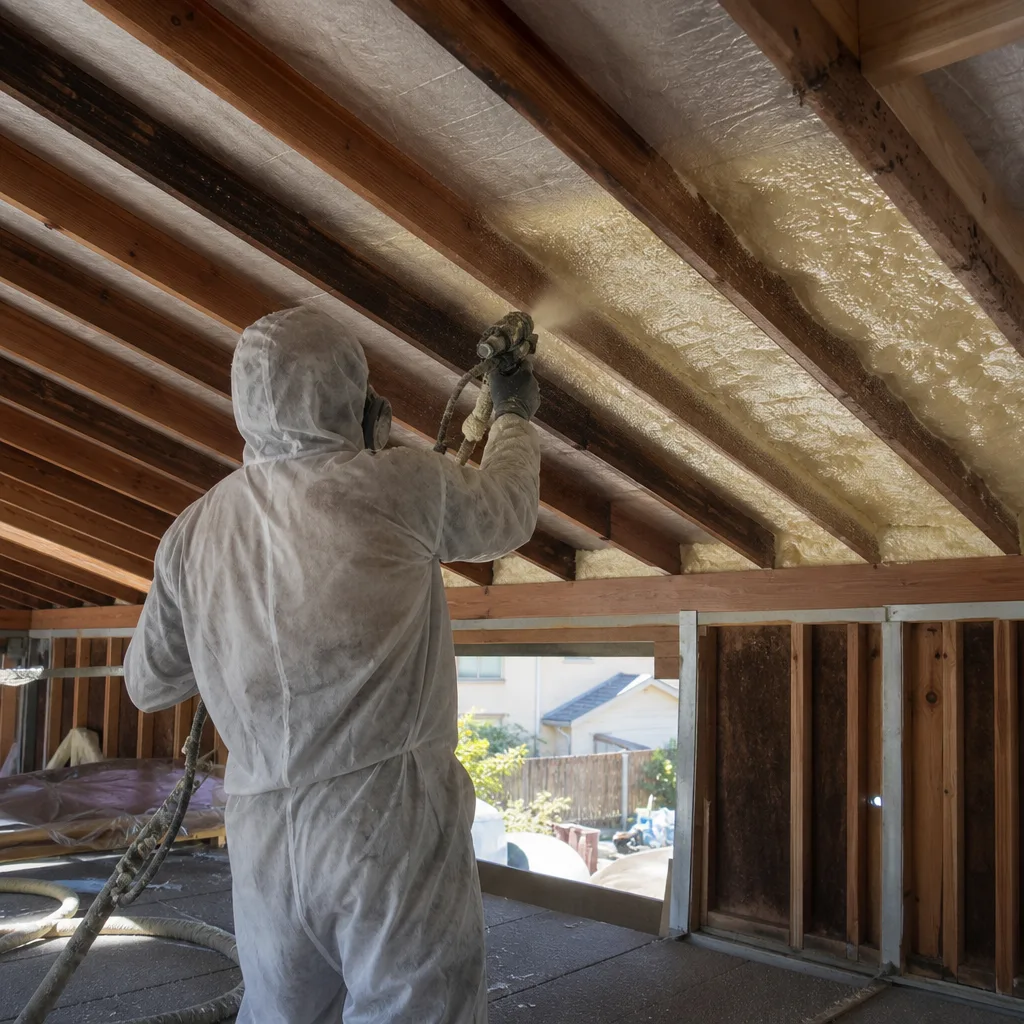
Most Walnut homes were built between the 1970s and 1990s, and the original insulation in those attics and walls was thin by today’s standards. We see the same story repeatedly: builders stuffed R-11 or R-19 batts into cathedral ceiling cavities, ran ducts through unconditioned space, and called it done. Homeowners then wonder why the upstairs never cools off. We’re a dedicated insulation contractor serving Walnut, not a generalist who does insulation on the side, and that focus means we diagnose before we quote.
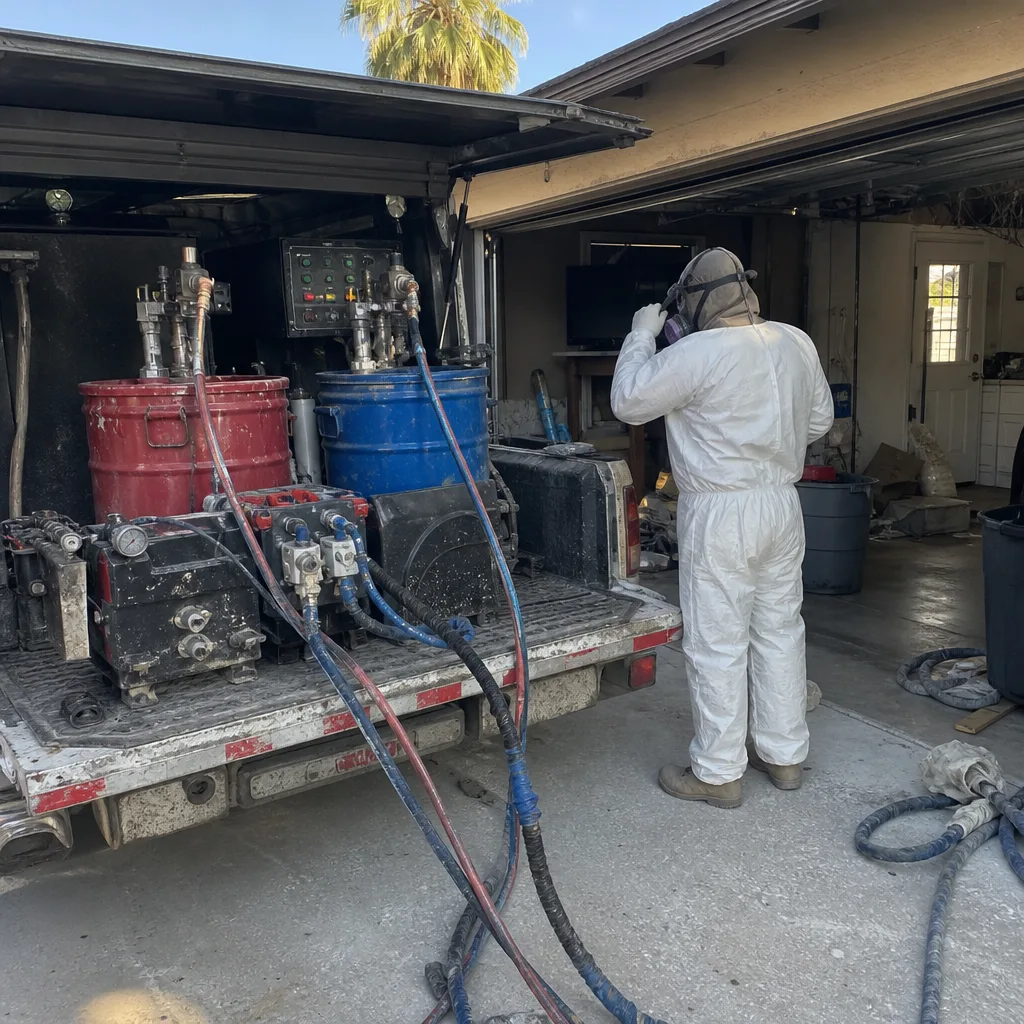
Having serviced hundreds of homes in Walnut, from the gated communities off Pierre Road to the hillside streets below the San Jose Hills, our crew recognizes the specific failure points in local construction. We carry both Icynene and Demilec spray foam systems, plus fiberglass, mineral wool, and cellulose options, so we’re not pushing one product. When we tell a Walnut homeowner their cathedral ceiling needs air sealing rather than another batt top-off, it’s because we’ve pulled back enough sagging insulation in this city to know what works.
We typically reach Walnut homes within 24 – 48 hours for estimates, and same-day service is often available for rim joist and attic jobs. Our reputation in the San Gabriel Valley is built on showing up when we say we will and explaining the why behind every recommendation.
Rim Joist Spray Foam in Walnut
Rim joist spray foam is one of the most overlooked upgrades for Walnut homes built in the 1970s-1990s, because the rim joist area, where the foundation meets the first floor, was rarely air sealed in that era’s construction. In a two-story Walnut tract home, the band joist above the foundation wall leaks valley heat straight into the wall assembly, and that warm air rises through the house. Sealing the rim joist with closed-cell spray foam stops that convective loop at the source. Rim joist spray foam in Walnut typically runs $1,800 – $3,500 for a standard two-story home, depending on linear footage and access.
Why Rim Joist Sealing Matters in Walnut’s Older Homes
The 1970s and 1980s tract homes across 91789 left the rim joist as bare wood with fiberglass stuffed in loosely, if at all. Fiberglass doesn’t stop air movement. Closed-cell spray foam does. When we seal the rim joists on a Walnut hillside home, we’re cutting off one of the primary paths for 100°F outside air to enter the conditioned envelope.
What the Job Actually Involves
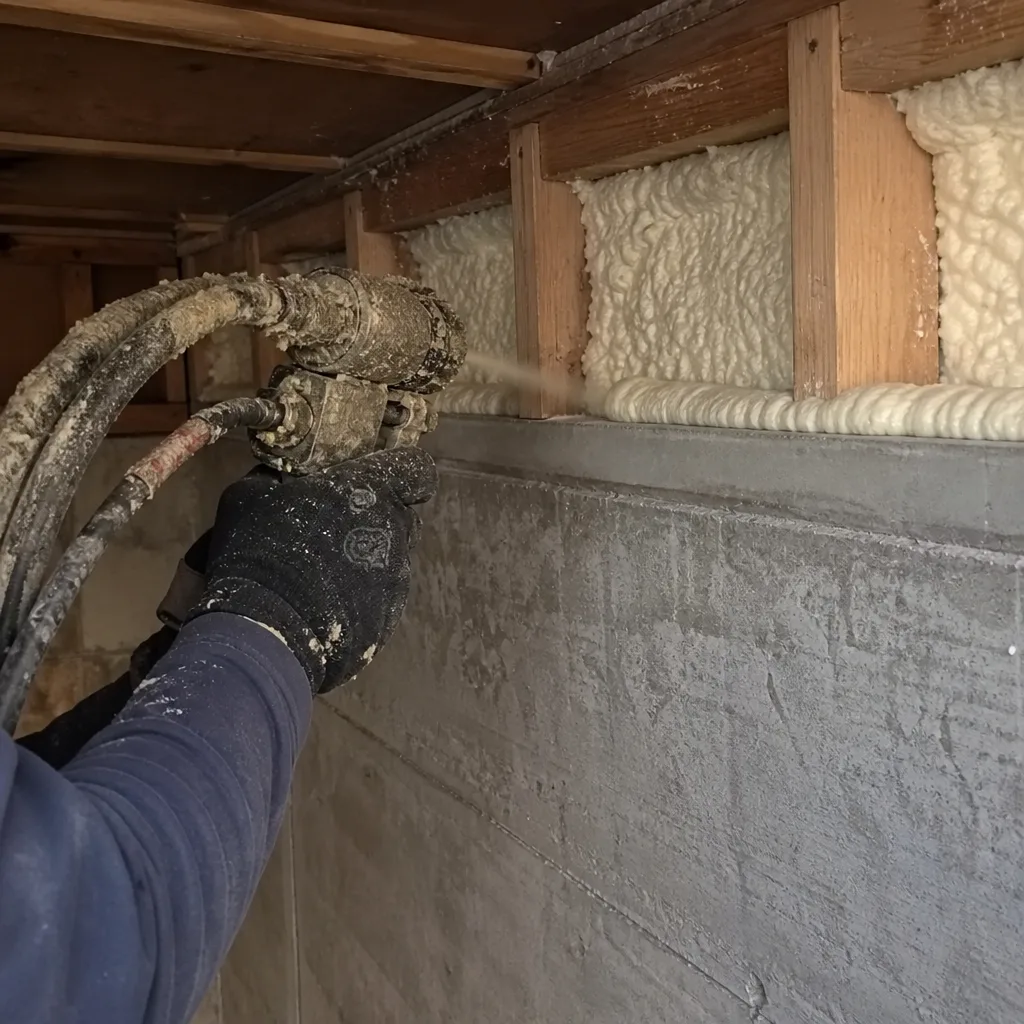
Our crew accesses the rim joist from the crawl space or basement, cleans the band joist surface, and applies a continuous layer of closed-cell spray foam across each cavity. We also seal any penetrations from plumbing, electrical, or HVAC lines. The whole job usually takes four to eight hours on a typical Walnut two-story.
Crawl Space Spray Foam Insulation in Walnut
Crawl space spray foam insulation addresses a different problem than rim joists, and in Walnut’s mild winters it’s more about humidity control and floor comfort than freeze protection. Homes in 91788 and 91795 with vented crawl spaces pull damp air under the first floor during summer, which makes floors feel clammy and pushes moisture into the subfloor. Crawl space spray foam insulation in Walnut typically runs $3,200 – $6,800 for a full encapsulation-level job, with smaller sealing projects starting around $1,400.
Moisture Control, Not Just R-Value
Walnut gets most of its humidity in summer, not winter, and that damp air condenses on cool surfaces under the house. Closed-cell foam on crawl space walls creates a continuous air and vapor barrier. It keeps floor joists dry and cuts the musty smell that creeps up into the living space.
When It Makes Sense for a Walnut Home
If your floors feel cold or damp in the mornings, or you’ve noticed condensation on ductwork under the house, the crawl space is likely the problem. Older Walnut homes with open vented crawl spaces are prime candidates. We’ll tell you honestly if a sealed crawl space is worth the investment for your specific floor plan.
Trusted Brands We Service in Walnut
We stock and install Icynene and Demilec spray foam systems because both are proven in the kind of hot, dry climate Walnut gets from June through October. We carry Demilec for closed-cell applications where air sealing and structural rigidity matter, like rim joists and roof decks, and Icynene’s open-cell foam for interior sound control and ceiling cavities. For Walnut homeowners who prefer a non-foam option, we also install Owens Corning and Johns Manville batt products, plus GreenFiber cellulose for blown-in applications. We keep materials staged so Walnut jobs move without waiting on supply runs from the Inland Empire.
Common Spray Foam Insulation Problems We See in Walnut Homes
- Sagging R-11 batts inside cathedral ceiling cavities. Homes on the slopes below the San Jose Hills have sloped ceiling planes that bake in the west-facing afternoon sun. The original 1970s batts compress and slide, leaving almost no insulation where the sun hits hardest.
- Open eave vents letting critter debris and dust pack the attic. Walnut’s hillside lots attract rodents and the open eave vents common on 1980s tract homes leave attic cavities filled with nesting material, droppings, and fine dust. Spray foam applied over that debris won’t bond, and the air seal fails.
- Rim joist and HVAC duct penetrations leaking heat into stucco walls. The two-story stucco construction common in 91789 leaves rim joists and duct chases unsealed, so hot valley air gets pulled into the wall assembly and circulates upstairs all afternoon.
- Cathedral ceilings with no air seal between the roof deck and the living space. Homeowners add attic insulation and don’t understand why the upstairs still feels like an oven. The problem isn’t R-value. It’s an unsealed sloped ceiling plane radiating heat downward.
Pricing for Spray Foam Insulation in Walnut, CA
Spray foam insulation in Walnut runs on a spectrum. Open-cell foam for interior walls and ceilings typically costs $2.50 – $3.50 per board foot; closed-cell foam for rim joists, roof decks, and moisture-prone areas runs $4.00 – $6.50 per board foot. A rim joist job on a typical 1980s two-story sits around $1,800 – $3,500, while sealing a cathedral ceiling plane can run anywhere from $3,500 to $9,000 depending on square footage and access. Factors that move the price: how much old insulation has to be removed, whether we’re reaching sloped ceiling cavities from the attic or working from inside, and whether duct sealing is part of the scope. We give free estimates in person or over video, and the quote we give is the price you pay. Call (855) 382-3451 to schedule yours.
We Also Serve Cities Near Walnut
Our Spray Foam Insulation team works throughout the eastern San Gabriel Valley. If you’re in nearby South San Jose Hills, Rowland Heights, West Covina, or Pomona, we handle those jobs too, and the same Walnut-caliber diagnosis applies. For a deeper look at what makes Spray Foam Insulation in Walnut different from surrounding areas, read on below.
Serving Walnut, CA — Our Local Coverage Area
We’re based in the Walnut area and know this community well. Use the map below to see our service coverage — if you’re nearby, we can almost certainly help.
FAQs About Spray Foam Insulation in Walnut
Because the original R-11 batts inside the cathedral ceiling cavity have sagged, compressed, and left the sloped ceiling plane essentially uninsulated. Adding insulation to the flat attic floor does nothing for a sloped ceiling that radiates heat from the roof deck into the living space. The fix is air sealing and insulating the sloped plane itself, usually with open-cell spray foam applied directly to the roof deck. Call (855) 382-3451 and we’ll tell you if this is what’s happening in your home.
Yes, they do. Open eave vents on 1970s-1990s Walnut tract homes let in dust, rodent debris, and hot air, which packs the attic cavity and prevents spray foam from bonding properly to the roof deck. We always clean the cavity before applying foam. If the vents are left open, the foam pulls loose and the air seal fails.
Almost certainly yes, because the rim joists in that era of Walnut construction were rarely air sealed, and they’re a major pathway for 100°F summer air to enter the wall assembly. Closed-cell spray foam on the rim joists stops that airflow and cuts the stack effect that pulls heat upstairs. A typical 1980s two-story rim joist job in Walnut runs $1,800 – $3,500.
Yes, but not for the winter. Walnut’s mild winters mean cold floors are rare. The real benefit is summer humidity control. A vented crawl space pulls damp air under the house all summer, leading to clammy floors and musty smells. Sealing crawl space walls with closed-cell foam stops that moisture at the source.
Retrofit spray foam is the right call when the existing insulation has failed in a way that can’t be fixed by topping off batts. In Walnut, that usually means sagging R-11 in cathedral ceilings, rim joists with no air seal, or open eave vents that have let the attic cavity fill with debris. If the old batts are dry, intact, and properly positioned, a simple top-off might do. If they’re compressed, debris-packed, or missing in key penetrations, spray foam is the correct fix. Call (855) 382-3451 for a free inspection, and we’ll tell you straight which one your home needs.
Written by Ruben Castellano, Owner at Thermal Insulation Co, serving Walnut and the San Gabriel Valley.