
Spray Foam Insulation in Sunnyslope: What It Costs and Why Older Homes Need It
Spray foam insulation in Sunnyslope typically runs $1.75 to $4.50 per square foot installed, with most attic projects falling between $3,200 and $7,800 for a 1,200 to 1,800 square foot home. Closed-cell foam costs more upfront but delivers roughly double the R-value per inch, which matters in this ZIP code. Most Sunnyslope homes we assess were built between the 1950s and 1980s with insulation that has long since stopped doing its job.
If you’re reading this because your cooling bill keeps climbing while your AC runs nonstop from May through October, the problem is likely not your HVAC unit. It’s what’s sitting above your ceiling. Call us at (855) 382-3451 and we’ll take a look.
Fast, Reliable Spray Foam Insulation Across Sunnyslope
Thermal Insulation Co serves the entire 92509 zip code, from homes along Jurupa Road to the residential streets west of the Santa Ana River and the older tracts near Van Buren Boulevard. We know these houses because we’ve crawled through dozens of attics in Sunnyslope, and we know exactly what the summer heat does to them. Our office in Van Nuys puts us close enough to reach most Sunnyslope addresses within a day for estimates and typically within a few days for installation. When you call (855) 382-3451, you’re talking to an insulation contractor who understands why a 1962 stucco rancher in Sunnyslope needs something different than a newer build in Riverside.
We’re a dedicated insulation company, not a general contractor dabbling in foam. That focus matters when the fix requires matching the right material to a 60-year-old attic structure, not just spraying whatever’s on the truck.
Why Thermal Insulation Co Is Sunnyslope’s Preferred Spray Foam Insulation Company
Homeowners in Sunnyslope call us because we explain the why before the what. When Ruben Castellano, our owner, walks a job, he checks the attic ventilation, the condition of the roof deck, the depth and state of any existing insulation, and the specific way heat is entering the living space. Then he recommends a material. Sometimes that’s open-cell Icynene for an attic that needs air sealing. Sometimes it’s closed-cell Demilec for a rim joist or a roof deck that needs a moisture and vapor barrier. We carry both because Sunnyslope’s housing stock demands both.
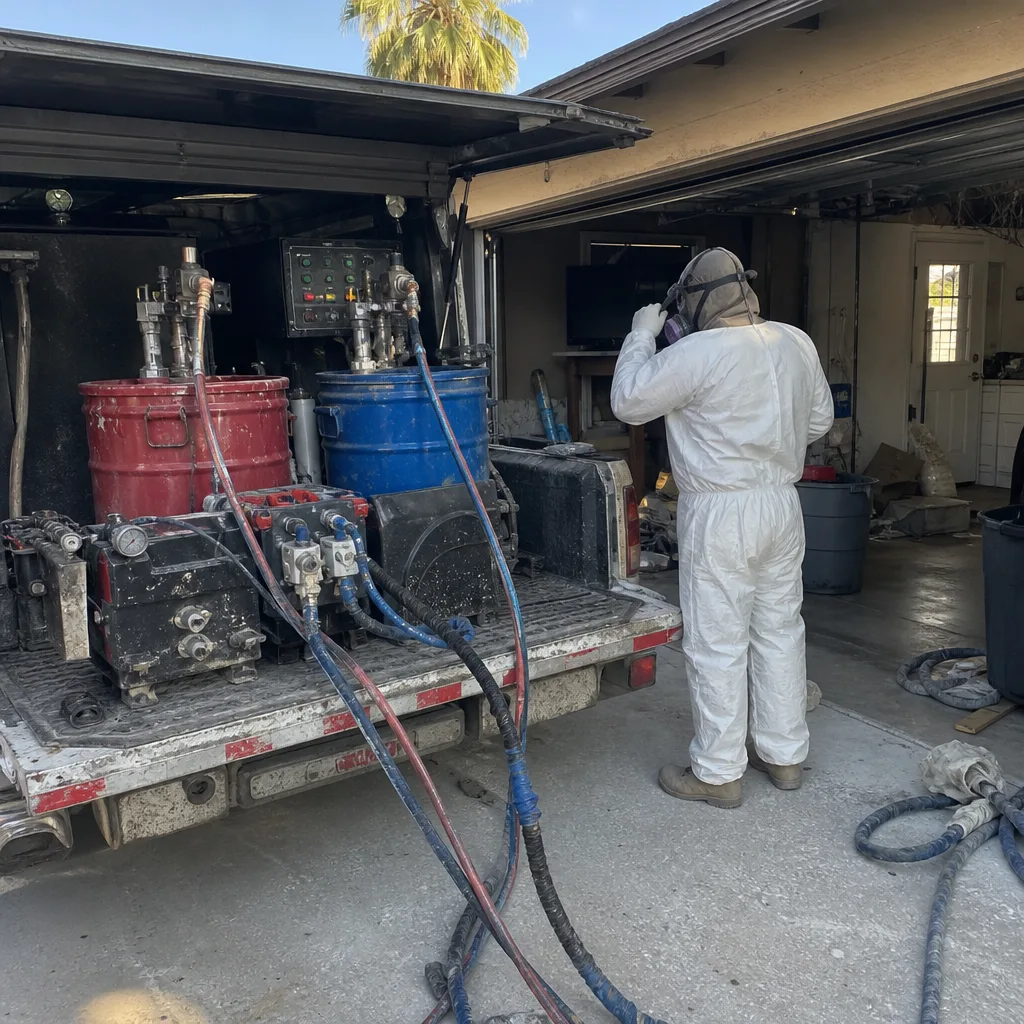
We don’t stock one brand and push it on every job. We install products from eight manufacturers, including Owens Corning, Johns Manville, Demilec, and Icynene. That range lets us match the product to the problem: an aging attic in Sunnyslope with collapsed fiberglass has different needs than a new garage ceiling that just needs a thermal break. Our Spray Foam Insulation team focuses entirely on foam applications, so the crew that shows up at your Sunnyslope home does this work every week, not occasionally between other jobs.
What our Sunnyslope customers tend to mention after the job isn’t the foam itself. It’s the quiet. The AC kicking off. The bedroom at the west end of the house finally holding temperature at 4 p.m. in July. That’s the outcome we’re after.
Spray Foam Insulation Contractors in Sunnyslope
Spray Foam Insulation Contractors in Sunnyslope handle two distinct problems: air leakage and conductive heat gain. In the 1950s through 1980s stucco tract homes that dominate the 92509 zip code, both are usually present. The original fiberglass batts were installed when R-11 or R-19 was considered adequate. Decades of 150°F attic heat have compressed those batts to a fraction of their original depth, and the framing gaps around top plates, can lights, and plumbing penetrations were never sealed at all. Foam addresses both: it fills the gaps and creates a continuous thermal barrier.
A typical open-cell attic application in Sunnyslope runs $1.75 to $2.75 per square foot. Closed-cell runs $2.75 to $4.50. The difference comes down to what the specific house needs, and that’s decided in the attic, not over the phone.
Open-Cell Attic Applications
Open-cell foam expands aggressively into irregular cavities and seals air leaks that fiberglass simply can’t address. It’s the right call for most Sunnyslope attics where the primary problem is heat infiltration through gaps in the ceiling plane. It performs well as a ventilated-attic application, keeping the conditioned space below sealed while allowing the attic itself to breathe through existing soffit and ridge vents.
Closed-Cell Structural Applications
Closed-cell foam adds rigidity and a vapor barrier, which matters for roof deck applications and rim joists in crawlspace-adjacent areas. Some Sunnyslope homes have enclosed patio rooms or garage conversions where closed-cell is the only option that won’t trap moisture against the framing. You pay more per inch, but you get more R-value per inch and a product that doesn’t absorb water.
Spray Foam Attic Insulation in Sunnyslope
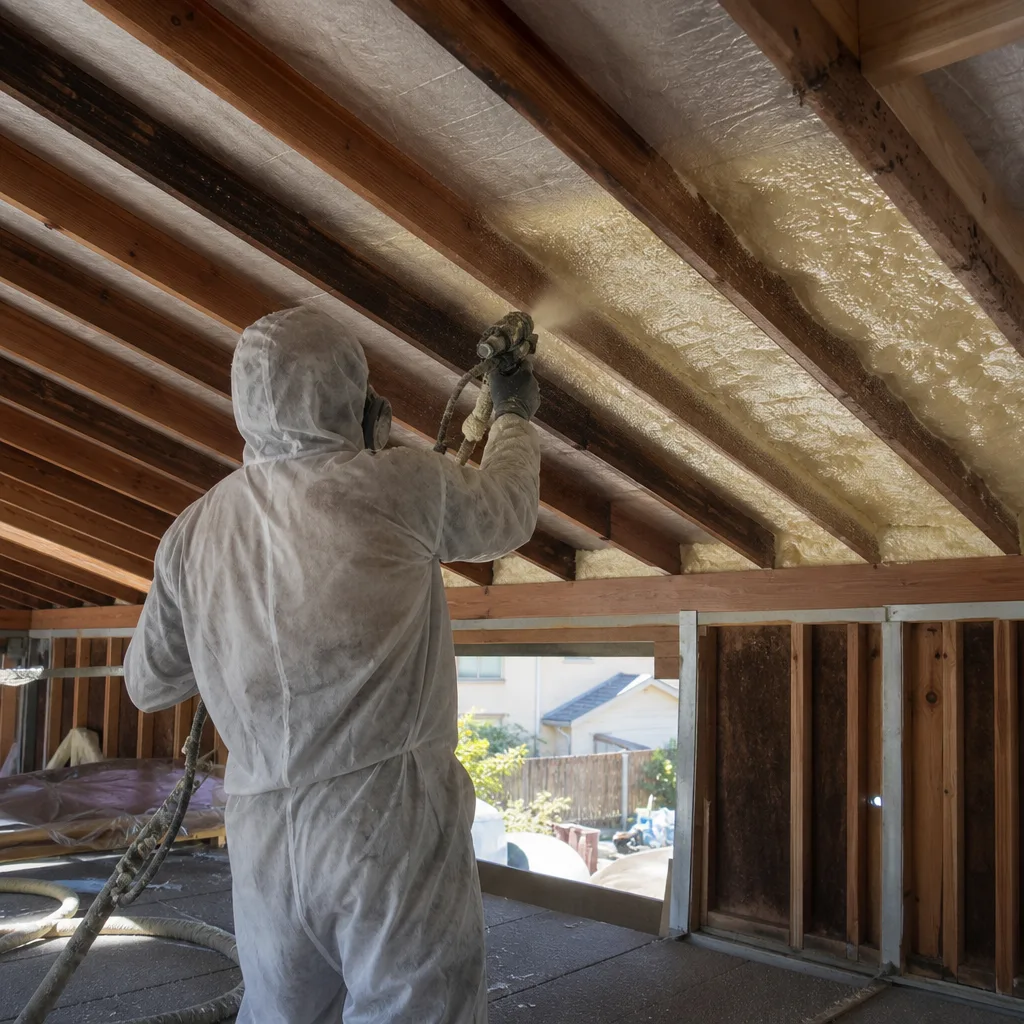
Spray Foam Attic Insulation in Sunnyslope is the single highest-impact upgrade we perform in this market. The reason is simple: Sunnyslope sits in the Jurupa Valley, where summer highs routinely exceed 100°F and there’s no coastal breeze to pull attic temperatures down at night. An uninsulated or under-insulated attic here can reach 150°F by early afternoon. That heat radiates into the living space through the ceiling for hours after sunset, forcing the AC to run well into the night. Foam applied to the attic floor or roofline cuts that heat transfer dramatically.
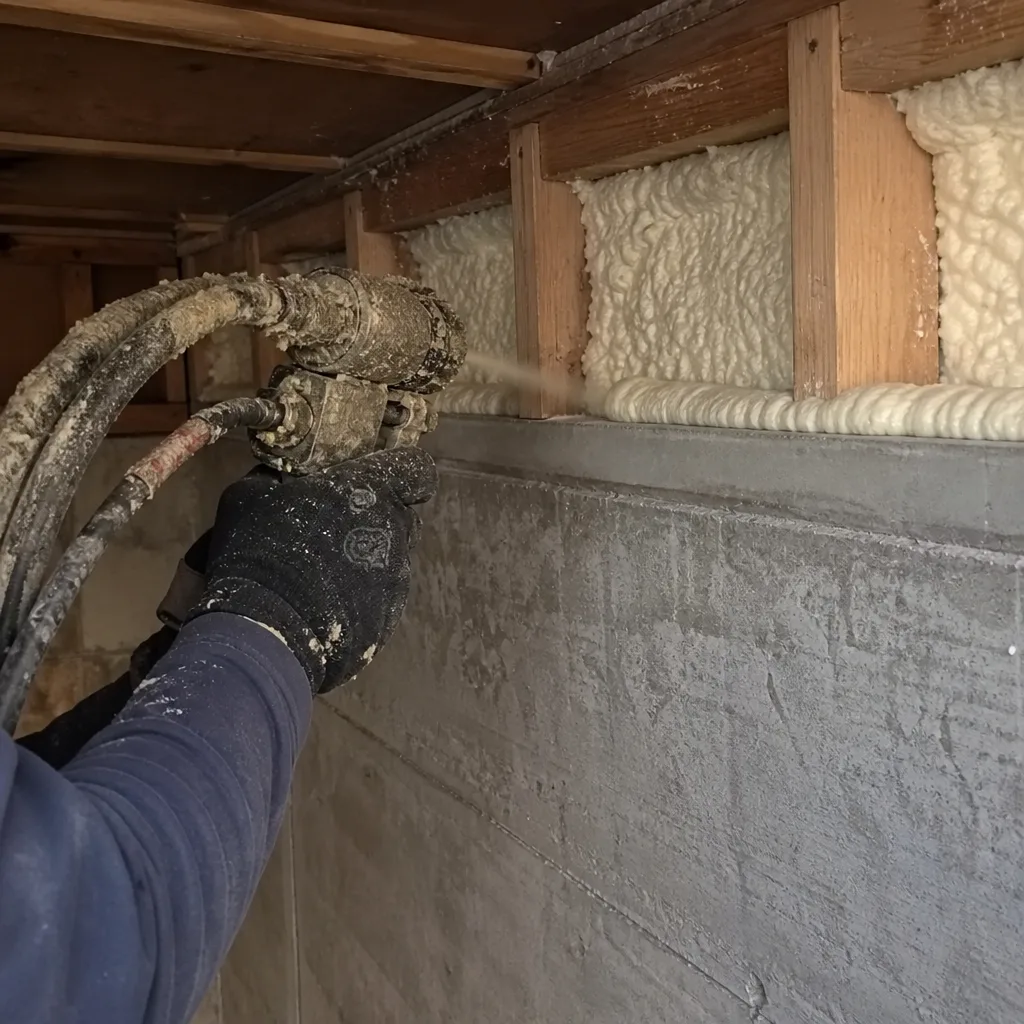
Most Sunnyslope attics we inspect have original insulation that measures R-7 or less once it’s compressed and settled. Current Title 24 standards call for R-38 or higher in this climate zone. The gap between R-7 and R-38 is where your summer electricity bill lives. An attic spray foam retrofit in Sunnyslope typically costs $3,800 to $7,200 for an average single-story home, depending on square footage and whether we’re spraying the floor or the roofline.
Roofline Foam for Unvented Attics
Some Sunnyslope homeowners choose to convert their vented attic to an unvented, conditioned space by spraying foam directly on the underside of the roof deck. This brings the attic inside the home’s thermal envelope, which can reduce dust, keep ductwork cooler, and improve HVAC efficiency. It’s a bigger job and costs more, but for homes with ductwork running through a 150°F attic, it can pay for itself in one or two Jurupa Valley summers.
Floor-Level Air Sealing and Foam
The less expensive retrofit is spraying foam on the attic floor after air sealing the top plates and penetrations. This keeps the existing vented attic design intact and is the right choice when the roof is older or the homeowner wants a faster, lower-disruption installation. We recently sprayed open-cell foam in a 1962 single-story stucco home near Sunnyslope’s Jurupa Valley border, where the original fiberglass batts had collapsed to R-5 and were laced with rodent debris. After air-sealing the top plates and applying 6 inches of Icynene, the attic temperature at 2 p.m. dropped from 152°F to 118°F, and the homeowner reported their AC cycling far less.
Trusted Brands We Service in Sunnyslope
We work with spray foam products from two of the industry’s most established manufacturers. Icynene open-cell foam is our default for attic floor and roofline applications where air sealing is the priority. Demilec closed-cell foam comes out for rim joists, crawlspace walls, and roof decks where moisture resistance and structural rigidity matter. We carry Owens Corning and Johns Manville fiberglass products for Sunnyslope homes where a batt retrofit paired with air sealing makes more sense than a full foam conversion. Ruben Castellano’s position is simple: we carry competing brands so we can be honest about what your house actually needs. When a Sunnyslope attic has good framing, intact drywall, and a newer roof, sometimes the right answer is not foam at all. We’ll tell you that too.
Common Spray Foam Insulation Problems We See in Sunnyslope Homes
- Foam delamination from roof sheathing. Sunnyslope attics experience brutal thermal cycling, with daytime temperatures swinging 80 degrees or more between dawn and mid-afternoon. When foam is applied to surfaces that weren’t properly prepped, that cycling causes adhesion failures that start as small gaps and grow into full sheets pulling away from the deck.
- Lingering chemical odor in tight older homes. Mid-century stucco homes in Sunnyslope were built tight, and when low-quality foam is sprayed without proper ventilation during the curing window, that odor can linger for weeks in a house that doesn’t move air well. We ventilate aggressively during and after installation and use foam formulations with faster cure times.
- Moisture trapping behind foam over unrepaired roof leaks. If a Sunnyslope roof has leaked at some point in its 50 or 60 years, the wood deck may have rot pockets that the homeowner never knew about. Spraying foam over that traps moisture against the framing and accelerates decay. We inspect the deck before any roofline application and flag repairs that need to happen first.
- Uneven foam depth on retrofit attic floors. Some Sunnyslope attics have non-standard joist spacing or old wiring runs that make consistent foam application tricky. When foam is applied too thin in spots, heat finds the gaps. Our crew measures depth as they spray and checks coverage before leaving the job.
Pricing for Spray Foam Insulation in Sunnyslope, CA
Here’s what you can expect to pay for spray foam work in the 92509 zip code. Open-cell attic floor applications run $1.75 to $2.75 per square foot. Closed-cell applications run $2.75 to $4.50 per square foot. A rim joist job in a typical Sunnyslope crawlspace runs $1,800 to $3,500. A garage ceiling or roof deck runs $1,500 to $3,800 depending on access and square footage. What moves the price: the condition of the existing insulation, whether removal is needed, the accessibility of the attic space, and whether the homeowner wants open-cell or closed-cell product. We provide free estimates on every Sunnyslope job, and the number we quote is the number you pay. Call (855) 382-3451 to schedule a site visit.
We Also Serve Cities Near Sunnyslope
Beyond our work in Sunnyslope, we regularly serve homeowners in Glen Avon, Pedley, Rubidoux, and Riverside. If you’re in the Jurupa Valley area or just across the river in Riverside, the same crew and the same eight-brand material selection applies. Most nearby addresses are within a 30 to 45 minute drive of our Van Nuys office, so response times stay short.
Serving Sunnyslope, CA — Our Local Coverage Area
We’re based in the Sunnyslope area and know this community well. Use the map below to see our service coverage — if you’re nearby, we can almost certainly help.
FAQs About Spray Foam Insulation in Sunnyslope
Yes, and these are the homes where spray foam delivers the most dramatic improvement. Your original fiberglass has likely compressed to R-7 or less from decades of heat cycling, and the framing gaps were never sealed. Open-cell foam fills those gaps and creates a continuous thermal barrier that brings the attic up to current standards. The before-and-after difference in a 1960s Sunnyslope home is usually immediate and measurable in the first summer electric bill. Call (855) 382-3451 and we can assess your specific attic.
Properly installed spray foam holds up well to the heat itself, but the installation has to account for the thermal cycling that Sunnyslope attics experience. Foam expands and contracts as temperatures swing from 50°F at dawn to 150°F by mid-afternoon. We prep surfaces accordingly and use products formulated for high-temperature attics. The bigger risk in Sunnyslope is not the foam degrading, it’s the foam being applied over moisture problems or poorly prepped surfaces that then fail under thermal stress. A properly prepped job lasts for decades.
Open-cell foam is softer, less expensive, and expands more, making it ideal for filling irregular cavities and air sealing attic floors in Sunnyslope. It’s about R-3.5 per inch. Closed-cell foam is denser, costs more, and delivers about R-6.5 to R-7 per inch, plus it acts as a vapor barrier. For most Sunnyslope attic retrofits, open-cell is the right choice on the floor. For rim joists, roof decks, and any area where moisture is a concern, closed-cell earns its higher price.
No, spraying foam over existing fiberglass doesn’t work. The foam needs direct contact with the surface it’s sealing, whether that’s the drywall, the framing, or the roof deck. In most Sunnyslope homes we remove the old fiberglass first, which also lets us inspect the top plates, wiring, and any signs of rodent activity or leaks before we spray. That step adds some cost but it’s the difference between a job that lasts and one that fails.
Properly installed spray foam should last for the life of the home in Sunnyslope’s climate. The material itself doesn’t settle or degrade meaningfully over time, and it doesn’t absorb moisture the way fiberglass does. The failure points in this area come from installation mistakes, not product breakdown: poor surface prep leading to delamination, moisture trapped against framing, or foam applied too thin in spots. When the prep work is right, we expect the foam to outperform the lifespan of the house. A retrofit today likely won’t need attention again in your lifetime.
Call Thermal Insulation Co for Spray Foam Insulation in Sunnyslope
If your Sunnyslope home is hot in the summer, cold in the winter, or just consistently uncomfortable while your electric bill keeps climbing, the attic is where we start. We’ll come out, inspect what’s actually above your ceiling, tell you honestly whether spray foam is the right fix or whether a different material makes more sense, and give you a written estimate. No pressure. Eight brands, three methods, one specialty. Call (855) 382-3451 to schedule your free estimate today.
Written by Ruben Castellano, Owner at Thermal Insulation Co, serving Sunnyslope and the Jurupa Valley area.