
Spray Foam Insulation in South Pasadena: Where It Actually Belongs on a 1920s Bungalow
Spray foam insulation in South Pasadena is rarely a whole-attic blanket job. It’s a targeted retrofit: the rear addition, the detached garage converted to a studio, the band joist where hot San Gabriel Valley air pushes through, and the attic plane above rooms that bake in high-90s August heat. We do this work on 1900s-to-1930s Craftsman and Spanish Revival homes every month, and we’ll tell you straight where foam makes sense and where it doesn’t. Call (855) 382-3451 for a free assessment.
Thermal Insulation Co specializes in Spray Foam Insulation for homes across South Pasadena, including the Mission Street and Orange Grove historic corridors, Monterey Hills, and the neighborhoods in 91030 and 91031. We’re based in Van Nuys, but our crews work South Pasadena jobs weekly, and we know the local building patterns: balloon framing, lath-and-plaster walls, knob-and-tube wiring, and preservation review triggers that most insulation contractors never plan for.
Why Thermal Insulation Co Is South Pasadena’s Preferred Spray Foam Insulation Company
We’re a dedicated insulation contractor, not a general remodeler who happens to own a foam rig. That focus matters in South Pasadena because the houses here are old, protected, and unforgiving to anyone who treats a 1923 bungalow like a 2005 tract build. Our crews have worked the historic blocks long enough to know what the preservation overlay cares about and what it doesn’t: you can seal and foam the interior side of a rear addition without touching the facade, but you can’t spray an exterior-facing assembly that changes the look of a contributing structure.
Ruben Castellano, our owner, sets that standard. He’s the one who walks South Pasadena jobs before foam goes in, checking for live knob-and-tube runs, fire-blocking gaps in balloon-frame cavities, and band-joist leaks that a quick attic quote would miss. South Pasadena homeowners tell us the same thing: other companies quoted them a whole-attic foam job without asking what’s inside the walls. We ask first.
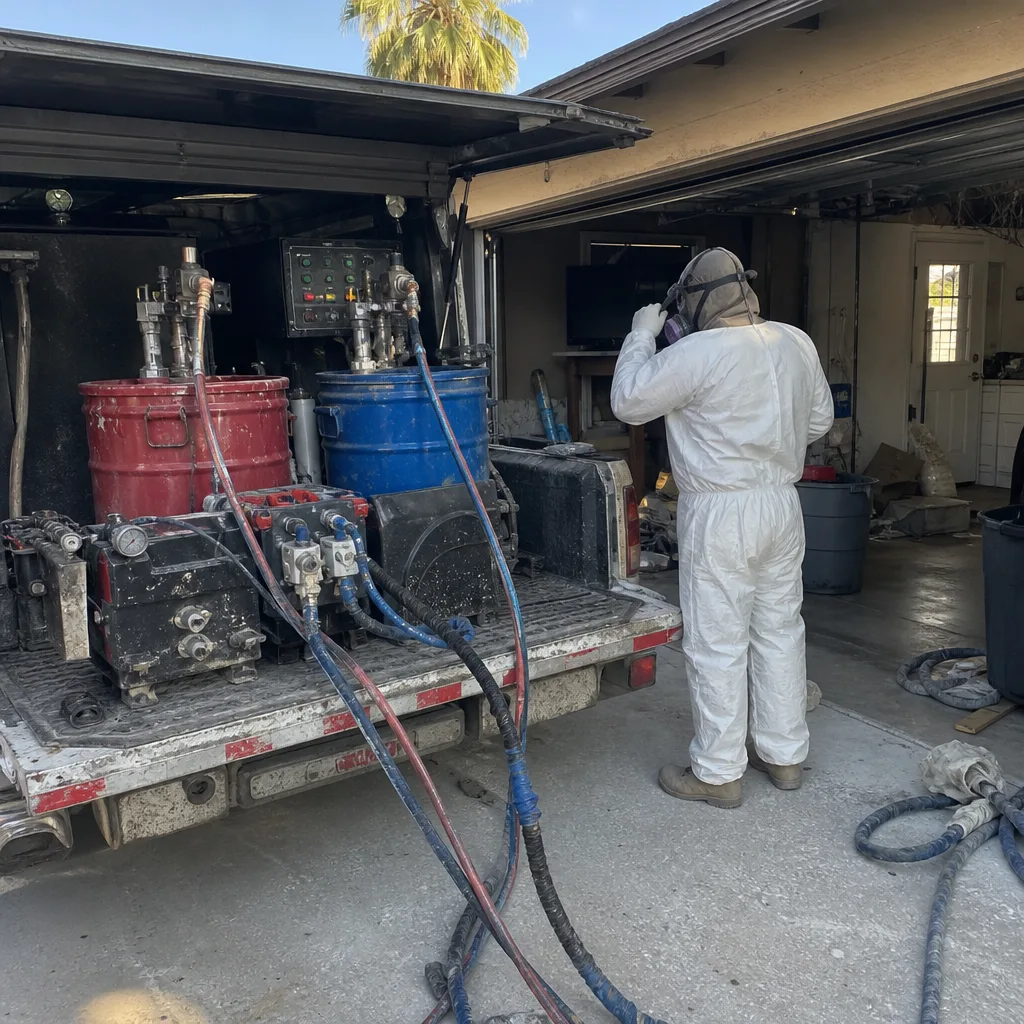
We carry two spray foam product lines, Icynene and Demilec, because different South Pasadena homes need different foam behavior. Open-cell for interior walls and rooflines where you want some vapor permeability. Closed-cell for band joists, rim joists, and areas where moisture or a higher R-value per inch matters. We stock both, which lets us match the foam to the assembly rather than pushing whatever’s on the truck.
Spray Foam Insulation Contractors in South Pasadena
Spray foam insulation contractors in South Pasadena work a very different set of houses than contractors in newer parts of Pasadena or Alhambra. The work here centers on pre-World War II bungalows and Spanish Revival homes with rear additions of mixed vintage, detached garages, and original plaster walls that should not be disturbed. On a typical South Pasadena job, we foam the addition’s wall cavities and roofline, seal the band joist where hot dusty air pushes through the crawl space, and leave the original house envelope alone unless an attic bypass makes it unavoidable.
What does a South Pasadena spray foam job cost? A targeted open-cell spray foam retrofit on a 300-to-600-square-foot rear addition typically runs $2,800 to $6,400. A band joist and rim joist sealing package for a standard 1920s bungalow foundation runs $1,400 to $2,800. A detached garage conversion with open-cell walls and a closed-cell roofline runs $3,200 to $7,500 depending on square footage and access. Those are the numbers we quote and the numbers we hold to.
Rear Addition and Garage Conversion Foam
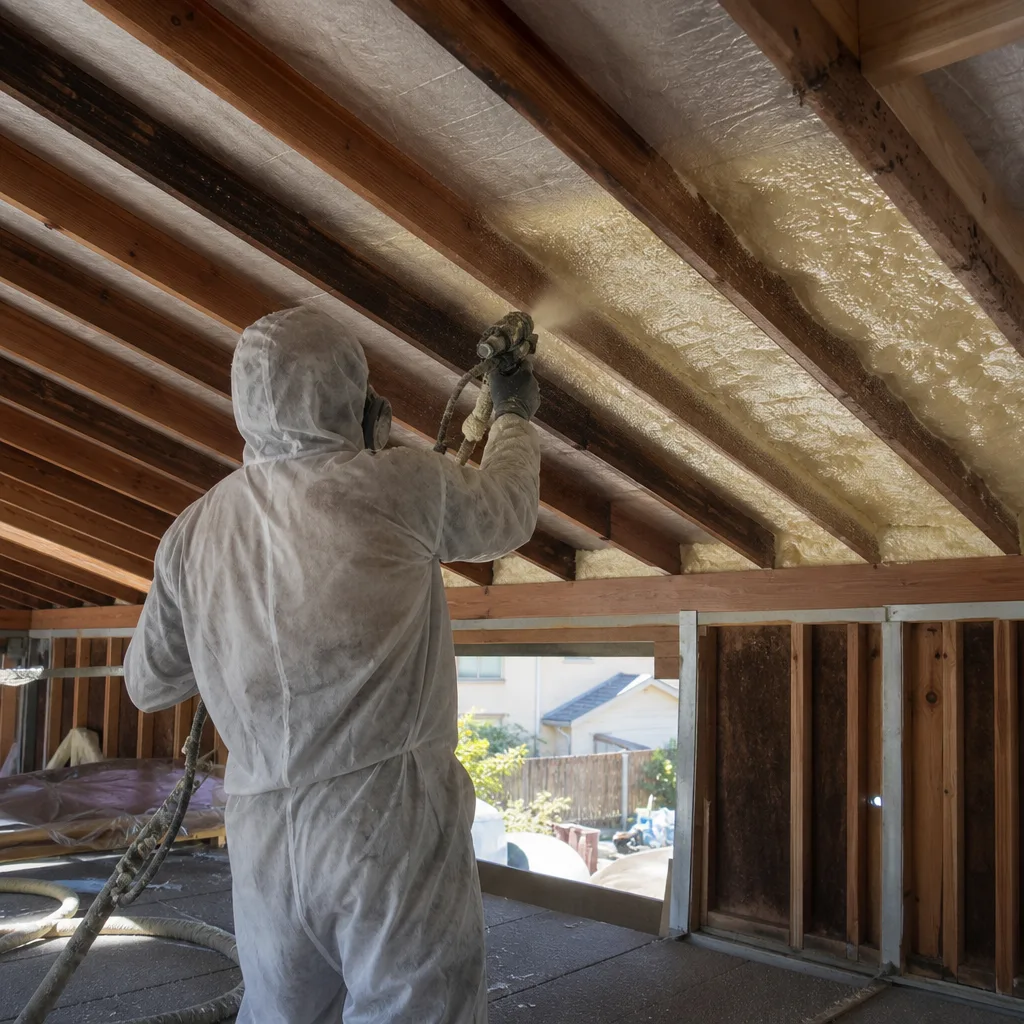
The additions on South Pasadena bungalows were often built fast and cheap, with open framing, no cavity fill, and a roofline that lets high-90s summer heat pour through. We foam those cavities and the underside of the roofline with Icynene open-cell, which fills gaps tightly and air-seals as it expands. The original house stays untouched, and the addition finally behaves like conditioned space.
Band Joist and Rim Joist Air Sealing
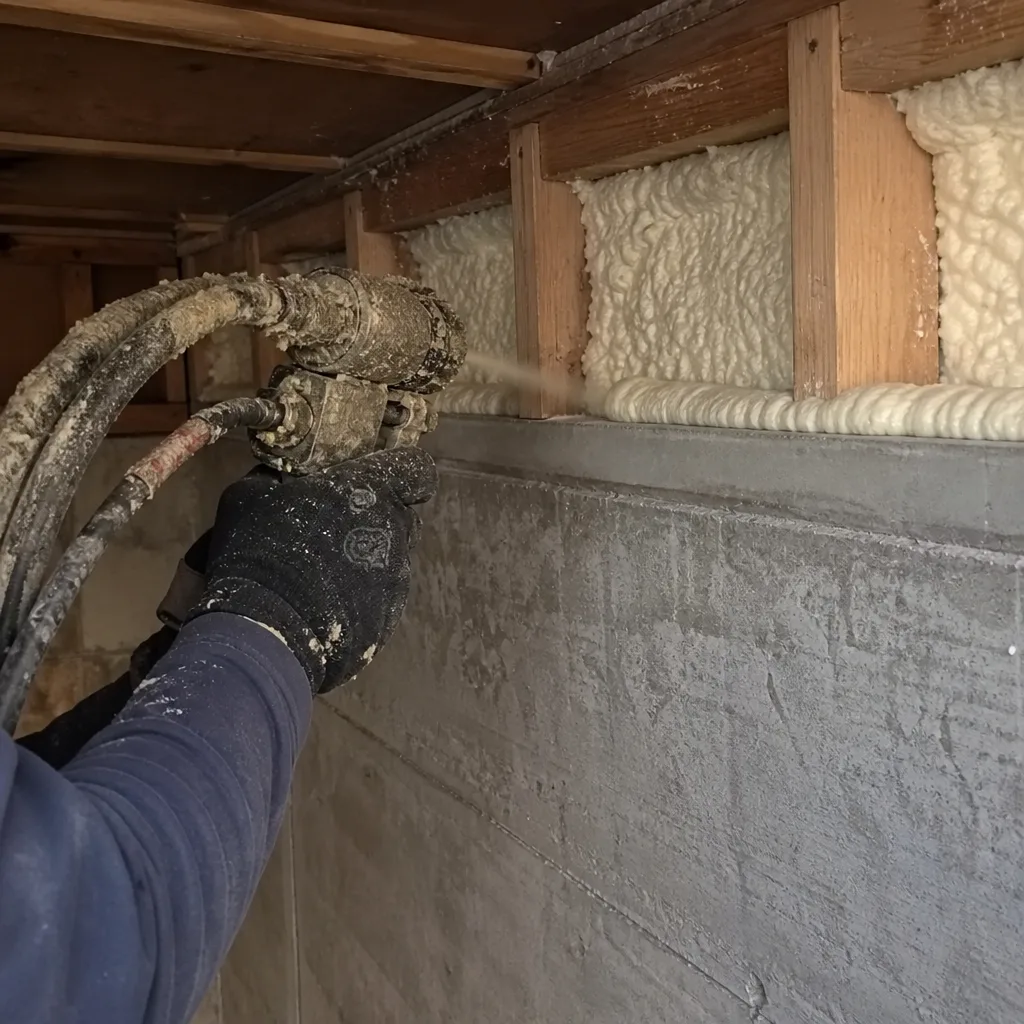
Old balloon-framed homes have a continuous open channel from the crawl space to the attic through the stud bays. Sealing the band joist around the foundation perimeter with closed-cell foam stops hot San Gabriel Valley air and smoke from drafting through the walls. This is the single highest-impact spray foam application on most South Pasadena bungalows, and it doesn’t touch the visible facade or the original plaster.
Spray Foam Attic Insulation in South Pasadena
Spray foam attic insulation in South Pasadena splits into two real-world scenarios. On homes with original 1900s-to-1930s attics, where knob-and-tube wiring still feeds the ceiling fixtures and the roof framing is part of the structure, we typically don’t foam the entire attic plane. We foam the attic floor bypasses, seal the top plates of balloon-frame walls, and leave the original wiring undisturbed. On newer rear additions and garage conversions with clean framing and no legacy wiring, we do spray the roofline directly.
The payoff in this climate is heat, not cold. South Pasadena sits inland-adjacent but still within the coastal basin’s reach, so the problem months are July through September, when attic temps climb well past 130 degrees and that heat radiates down through the ceilings. Sealing and insulating the attic plane drops the cooling load on the rooms directly below it.
Attic Bypass Sealing
The attic floor in an old bungalow is full of holes: plumbing chases, wire penetrations, gaps where the chimney meets the floor joists. Sealing these bypasses with spray foam stops hot attic air from siphoning down into the living space. It also keeps dust from the attic out of the house, which matters in a city where dry-season dust is constant.
Roofline Foam on Clean-Framed Additions
When the framing is modern and the wiring is Romex, spray foaming the underside of the roofline converts the attic into semi-conditioned space. That’s the right call for a 1990s addition with duct runs passing through the attic, because the ducts stop losing cool air to a 140-degree attic. We recommend Demilec closed-cell here when the roofline has limited depth and you need more R-value per inch.
Trusted Brands We Service in South Pasadena
We’re authorized to install Icynene and Demilec spray foam, and we carry Owens Corning, Johns Manville, and GreenFiber products for the blown-in and batt portions of a South Pasadena retrofit. We carry Icynene because its open-cell foam expands predictably into irregular old framing cavities, and Demilec because its closed-cell formula handles the band joist and rim joist moisture conditions you find on 1920s foundations. When a South Pasadena job calls for foam, we arrive with the product selected for that specific assembly, not whatever the distributor put on sale.
Common Spray Foam Insulation Problems We See in South Pasadena Homes
- Foam over live knob-and-tube wiring. Encapsulating old cloth-covered wiring in foam is a code violation and a fire risk in 1900s-to-1930s bungalows. We locate and map every circuit before foam goes in, and we don’t foam cavities that feed live knob-and-tube runs.
- Thermal breaks at the band joist and roofline. Foaming an addition’s walls while leaving the band joist open just moves the leak. Hot dusty San Gabriel Valley air finds the break and pushes through. We seal the full perimeter before calling a job complete.
- Design review surprises. Spraying an exterior-facing assembly that changes what a preservation reviewer sees from the street can trigger a stop-work conversation. We scope jobs around the facade and keep visible surfaces untouched.
- Detached garage treated as a continuous envelope. A converted garage on a 1925 lot rarely shares a foundation line or wall plane with the main house. Foaming it without sealing the transition at the band joist and roofline leaves a gap the hot air exploits.
Pricing for Spray Foam Insulation in South Pasadena, CA
Here are the ranges we quote in South Pasadena, not national averages. A rear addition wall cavity and roofline foam job on a 400-square-foot space runs $3,400 to $5,800. A band joist sealing package runs $1,400 to $2,800. A detached garage conversion with open-cell walls and a closed-cell roofline runs $3,200 to $7,500. Attic bypass sealing runs $900 to $1,800 depending on the number of penetrations. Every estimate is free, and every price is locked before we start work. Call (855) 382-3451 and we’ll walk your house in South Pasadena and tell you exactly where foam pays off and where it should be skipped.
We Also Serve Cities Near South Pasadena
Our crews cover South Pasadena and the surrounding communities, including Alhambra, Pasadena, San Marino, and San Gabriel. If you’re in one of those cities and need a spray foam assessment on an older home, the same process applies: we look at the framing, the wiring, and the preservation constraints before we quote a single square foot of foam.
Serving South Pasadena, CA — Our Local Coverage Area
We’re based in the South Pasadena area and know this community well. Use the map below to see our service coverage — if you’re nearby, we can almost certainly help.
FAQs About Spray Foam Insulation in South Pasadena
Because the wall cavities in a 1920s Craftsman bungalow are almost certainly balloon-framed and fed by knob-and-tube wiring that’s still live or at least still in the wall. Foam encapsulates the wiring, which is a code violation and a fire hazard, and it can trap moisture against the original lath and plaster. We foam the rear additions, the band joist, and the attic plane instead. Those are the assemblies where foam delivers real performance without touching the original house. Call (855) 382-3451 to have us check your specific walls.
No, not if the work is interior-facing and the exterior facade is untouched. South Pasadena’s preservation review cares about what’s visible from the street and what changes a contributing structure’s character. Foaming the inside of a rear addition wall or a garage conversion’s roofline doesn’t alter the exterior, so it doesn’t trigger review. If you’re planning work near the Mission Street or Orange Grove corridors, call (855) 382-3451 and we’ll scope it before you file anything.
Yes, specifically on the attic plane. Attic temperatures here climb past 130 degrees during July and August stretches, and that heat radiates down through the ceilings of the rooms below. Sealing attic bypasses and foaming the roofline on clean-framed additions cuts the cooling load in those rooms directly. The air-sealing component matters as much as the R-value, because stopping hot attic air from siphoning down is what changes how the rooms feel. Call (855) 382-3451 for a summer-ready assessment.
We can, but we don’t foam cavities that contain live knob-and-tube runs. The correct approach is to locate and map the wiring first, then foam the cavities that are clear and use a non-expanding sealant for the wiring penetrations themselves. On a 1920s Spanish Revival off Orange Grove, our crew cut around the knob-and-tube runs feeding the original house while sealing and foaming only the rear addition’s walls and roofline with Icynene. The historic facade and original lath-and-plaster stayed untouched, and the addition held temperature through the high-90s August stretch. Call (855) 382-3451 to find out which cavities in your house can be safely foamed.
We use Icynene open-cell for most interior wall and roofline applications, and Demilec closed-cell for band joists, rim joists, and moisture-prone areas. We carry both product lines because South Pasadena’s housing stock demands both: open-cell expands predictably into irregular old framing, while closed-cell handles the foundation-level moisture conditions on a 1920s bungalow. The choice depends on your specific assembly, not on what’s in our warehouse. Call (855) 382-3451 and we’ll explain which foam fits your home.
Written by Ruben Castellano, Owner at Thermal Insulation Co, serving South Pasadena and the San Gabriel Valley.