
Fast, Reliable Spray Foam Insulation Across Quail Valley
Spray foam insulation in Quail Valley has to do two jobs at once: seal out 100°F-plus summer heat and stand up to an attic that regularly cooks past 150°F in July and August. That’s why we approach every retrofit here differently than we would in a coastal city. The older, owner-built and manufactured homes scattered across Quail Valley’s brushy lots were rarely insulated to any modern standard, and what insulation exists has usually failed. We’re a dedicated insulation contractor serving all of 92587, and we can usually get a crew to your Quail Valley property within 48 hours. Call (855) 382-3451 and Ruben Castellano will walk you through what your home actually needs.
Why Thermal Insulation Co Is Quail Valley’s Preferred Spray Foam Insulation Company
Quail Valley homeowners call us because we don’t show up with a single product and a sales pitch. We carry eight material brands and three installation methods, so the recommendation comes from what your specific home requires, not what our warehouse happens to overstock. Ruben Castellano built the company on that principle: match the insulation to the house, not the house to the insulation. When a Quail Valley customer asks whether open-cell or closed-cell foam makes sense for their attic, we explain the difference in R-value per inch, moisture permeability, and cost, then let the home’s construction answer the question.
Technicians who work this territory know to expect collapsed fiberglass batts, rodent damage, and unvented attics with peeling duct insulation. That’s the everyday reality of Quail Valley’s 1970s to 1990s housing stock. We plan for full insulation removal and air sealing on almost every job here, because that’s what the homes actually need. Homeowners also appreciate that we stock Icynene and Demilec foam products specifically because both brands perform at the attic temperatures Quail Valley routinely hits. This is not a side service for us. Insulation is our only trade, and the depth shows in how we prep, install, and verify the work.
Spray Foam Attic Insulation in Quail Valley
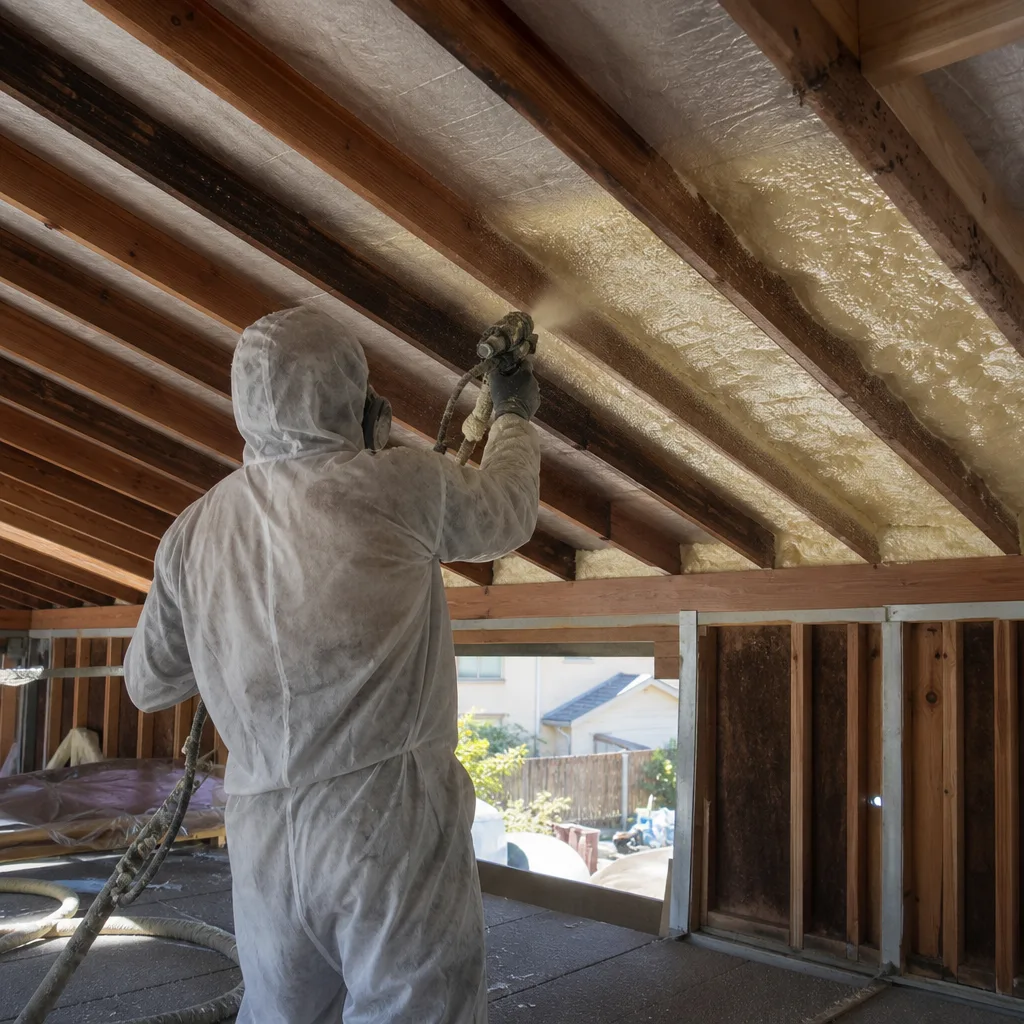
Spray Foam Attic Insulation in Quail Valley is the highest-impact upgrade most homes here can get, because Quail Valley’s position on the Inland Empire’s thermal belt means attic temperatures routinely exceed 150°F from June through September. Closed-cell foam applied to the roof deck moves the thermal boundary to the roofline and drops that attic temperature dramatically, which reduces the cooling load on your HVAC system and keeps ductwork from sweating. A typical attic retrofit in a 1,200 to 1,800 square foot Quail Valley home runs $4,800 to $9,500, depending on whether we’re doing the roof deck, the gable walls, or both. Open-cell foam runs less, typically $2,800 to $5,500 for a full attic, but it doesn’t deliver the same heat resistance in a 150°F attic as closed-cell. For most Quail Valley homes, closed-cell on the deck is the right call.
Roof Deck Foam and Radiant Heat Rejection
Applying foam directly to the underside of the roof deck is the single most effective way to stop heat from entering the living space, because it keeps the attic from becoming a 150°F oven in the first place. On Quail Valley’s hottest days, a vented attic with fiberglass batts on the floor lets the roof deck reach 160°F or more, and that heat radiates down through the ceiling insulation for hours after sunset. Sealing the deck with closed-cell foam stops that cycle. It also protects the roof sheathing from moisture, which matters in a climate where hot, dry days can hide condensation problems that show up during the mild, damper winter months.
Air Sealing and the Attic Floor
Before any foam goes in, our crew seals top plates, can lights, plumbing penetrations, and the attic hatch. In Quail Valley homes built in the 1980s, can lights are usually unrated for insulation contact, which means air leaks through them year-round. We rectify that first. After sealing, foam against the deck or on top of a sealed attic floor locks the building envelope tight, and that’s when you feel the real difference in your cooling bills. We then verify with a thermal camera to make sure no gaps exist.
Spray Foam Wall Insulation in Quail Valley
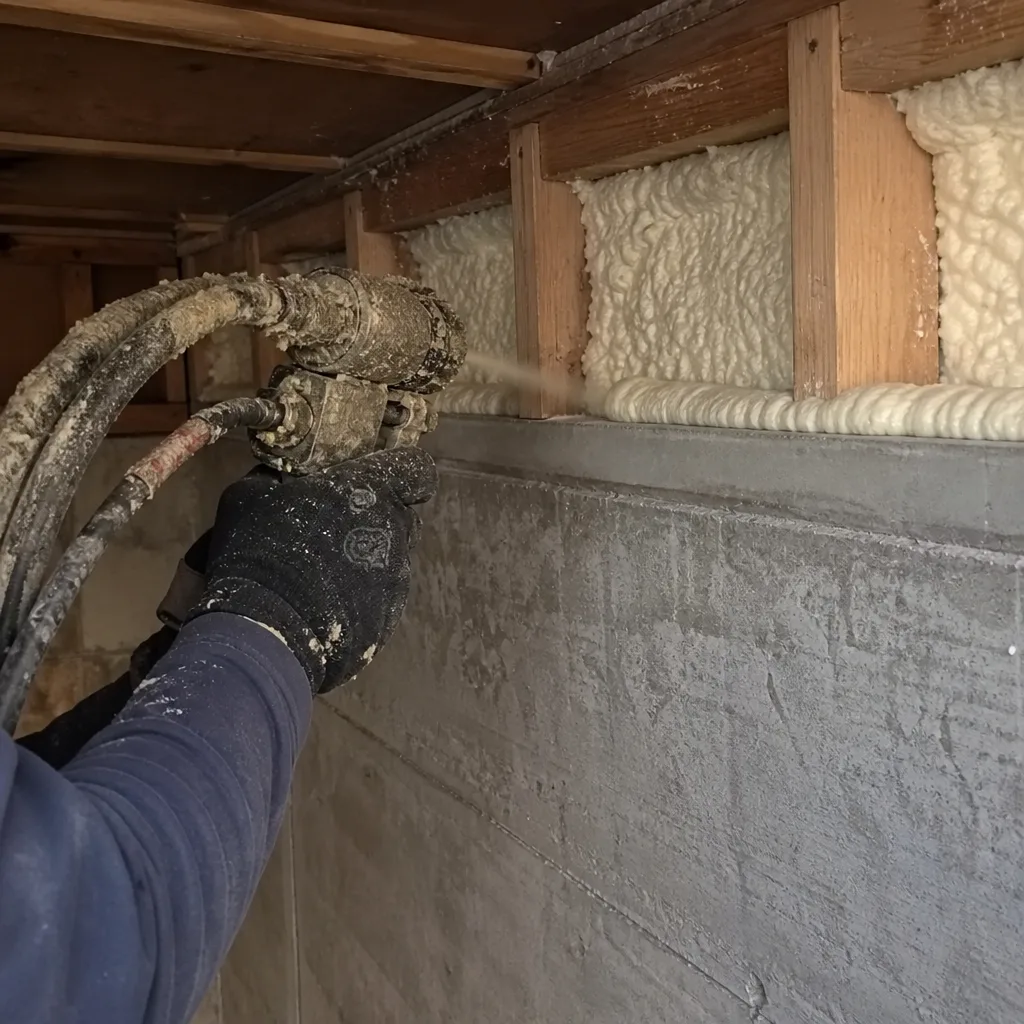
Spray Foam Wall Insulation in Quail Valley means filling wall cavities in homes where the original batt insulation has collapsed, been chewed through by rodents, or was never installed to begin with. Many Quail Valley homes are older owner-built structures or manufactured homes on pier-and-beam foundations, and those wall cavities are open highways for pests and hot air. For a site-built 1980s home, injecting Demilec open-cell foam into existing walls typically runs $2.50 to $4.00 per square foot of wall area, so a 1,500 square foot home with 1,200 square feet of exterior wall runs $3,000 to $4,800. In new construction or full gut-rehab situations, closed-cell foam in walls runs $1.50 to $3.00 per board foot installed, which for a standard 2×4 wall with 3.5 inches of foam comes to $5.25 to $10.50 per square foot.
Retrofitting Existing Wall Cavities
When we retrofit walls from the inside, we cut small injection ports, insert a wand into each stud bay, and fill the cavity slowly so the foam expands without bowing the drywall. This works especially well for Quail Valley’s pier-and-beam homes, where the floor deck creates access to wall cavities from below. When we retrofit from the exterior on stucco or siding homes, we drill from outside and patch carefully. In either case, removing the old fiberglass first is mandatory here. Foam sprayed over rodent-soiled, collapsed batts will not bond and will delaminate, which guarantees the project fails. That’s a lesson we learned years ago on a 1980s home near the old country club, and it’s the reason every Quail Valley quote starts with a removal line item.
Pier-and-Beam Floors and Skirting
Manufactured and mobile homes on pier-and-beam foundations in Quail Valley lose heat through the floor deck, and they also give rodents a shaded, brushy highway directly into the wall cavities. Applying closed-cell foam to the underside of the floor deck seals that entry point and adds both insulation and structural rigidity. It also stops cold drafts in winter, though with Quail Valley’s mild winters, the bigger win is keeping summer heat from radiating up through the floor. For homes with open skirting, we also foam the rim joist and seal skirting gaps. Plan on $2,000 to $4,500 for a typical single-wide or double-wide manufactured home in this area.
Trusted Brands We Service in Quail Valley
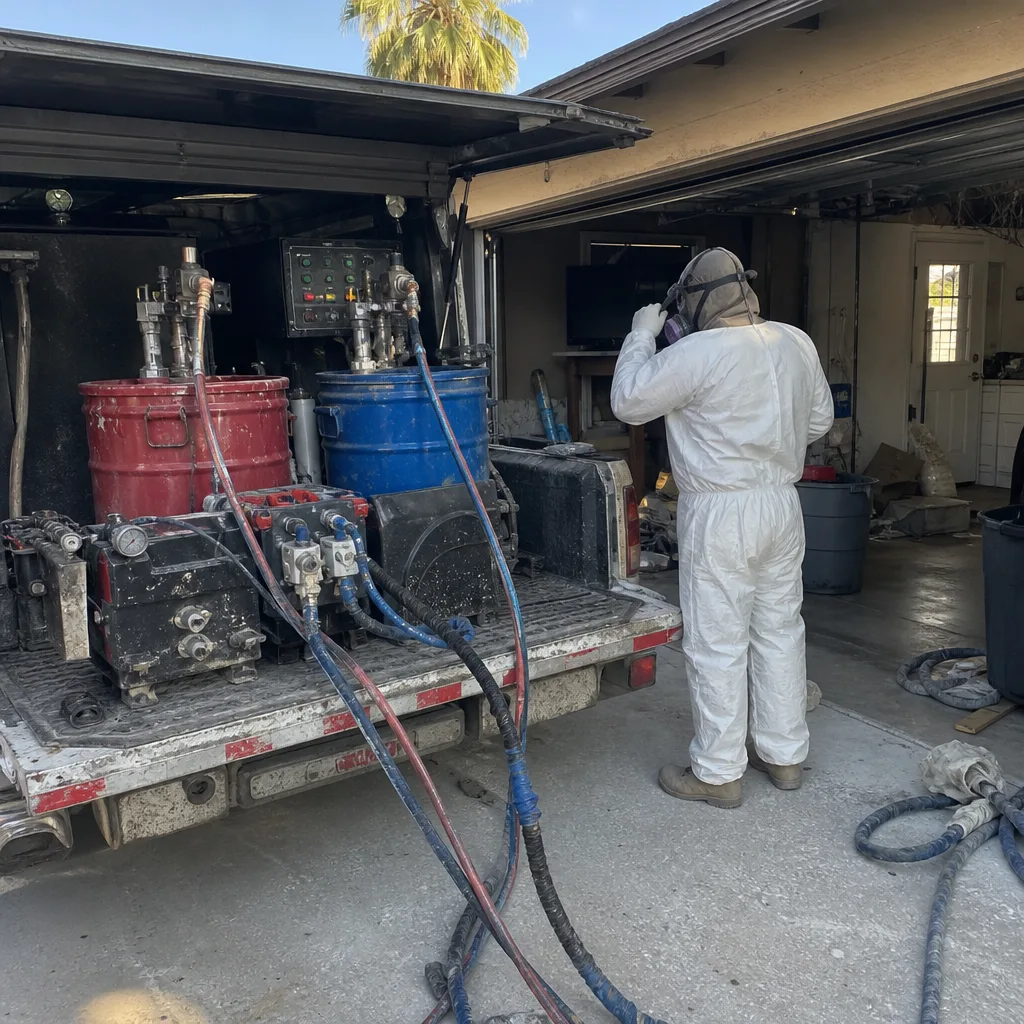
We install spray foam from Spray Foam Insulation brands Icynene and Demilec, and we keep both open-cell and closed-cell products available for Quail Valley jobs. Icynene open-cell gives excellent air sealing and sound control at a lower cost, which works well for interior walls and cathedral ceilings. Demilec closed-cell provides structural strength and a vapor barrier in one application, making it the better choice for 150°F attic roof decks and pier-and-beam floors. We also carry Owens Corning, Johns Manville, Knauf, Rockwool, CertainTeed, and GreenFiber for projects where fiberglass, mineral wool, or recycled cellulose is the right fit. The point is we’ll tell you which material actually makes sense for your home, not which one we happen to have in stock.
Common Spray Foam Insulation Problems We See in Quail Valley Homes
- Collapsed and contaminated original batts. On 1980s tract homes and older owner-built houses, the original fiberglass has usually settled to half its installed height or been shredded by rodents from the surrounding brushy lots. Spray foam cannot bond over that material, so full removal and sanitizing is step one.
- Overheated open-cell foam from poor attic prep. When open-cell foam is applied to an unvented attic deck in Quail Valley’s summer heat, it can off-gas and lose adhesion if the deck wasn’t cleaned and primed properly. We use closed-cell on hot roof decks for this exact reason.
- Rodent and termite tunnels through wall cavities. Pier-and-beam foundations and open brush make Quail Valley homes especially vulnerable to pests tunneling through insulation. Foam applied over an active infestation will fail, so we inspect every cavity before we fill it.
- Leaky, unsealed top plates and can lights. Before any foam goes in, the air leaks that would bypass the insulation have to be sealed. Unsealed top plates running through a 150°F attic chase hot air down into interior walls, and no amount of foam fixes that unless the chase is closed first.
Pricing for Spray Foam Insulation in Quail Valley, CA
Spray foam pricing in Quail Valley runs on square footage, foam type, and how much removal work your home needs first. For a full attic roof deck retrofit with closed-cell foam, expect $4,800 to $9,500. Open-cell attic work runs $2,800 to $5,500. Existing wall cavity injection runs $2.50 to $4.00 per square foot, which means a 1,500 square foot home lands between $3,000 and $4,800. Pier-and-beam floor and rim joist sealing for manufactured homes runs $2,000 to $4,500. Full insulation removal and sanitizing on a contaminated attic adds $1,200 to $2,800 depending on square footage and how much debris has accumulated. We quote every job after an on-site inspection. Call (855) 382-3451 and we’ll send someone out to Quail Valley for a free estimate, with the exact scope and price in writing before you commit.
We Also Serve Cities Near Quail Valley
Our crew serves Spray Foam Insulation in Quail Valley and the surrounding communities, including Sun City, Canyon Lake, Meadowbrook, and Romoland. If your home sits in one of those areas, the same crew, same brands, and same removal-first approach applies. Call (855) 382-3451 and we’ll confirm availability for your street.
Serving Quail Valley, CA — Our Local Coverage Area
We’re based in the Quail Valley area and know this community well. Use the map below to see our service coverage — if you’re nearby, we can almost certainly help.
FAQs About Spray Foam Insulation in Quail Valley
Most Quail Valley homes built between the 1970s and 1990s have original fiberglass batts that have collapsed, been chewed through by rodents, or soaked through with pest droppings from the surrounding brushy lots. Spray foam cannot bond to dirty, collapsed batts, and it certainly won’t solve the air leaks those batts are hiding. We remove the old material, sanitize the cavity, and only then apply foam. Skipping that step means paying for a job that fails within two years.
Closed-cell spray foam handles hot attic temperatures better than any other insulation material, which is why we spec it for roof decks in Quail Valley. Open-cell foam works fine in attic floors and wall cavities, but on a roof deck hitting 150°F, closed-cell is the only foam we’re comfortable using. It also adds structural strength to the roof sheathing. Call (855) 382-3451 and we’ll look at your specific attic before recommending a product.
Yes, closed-cell foam is the best material we’ve found for sealing the underside of pier-and-beam floor decks and rim joists in Quail Valley’s manufactured and mobile homes. It blocks rodent entry, stops summer heat from radiating up through the floor, and adds rigidity to the floor system. We’ll inspect for active pest damage first. If there’s termite or rodent activity, that gets resolved before any foam goes in.
Spray foam attic insulation applied to the roof deck stops heat at the roofline before it ever enters the attic, which is the most important upgrade for Quail Valley’s extreme summer heat. Spray foam wall insulation fills stud cavities to stop air movement through the walls, which matters more for pest sealing and room-to-room comfort than for whole-house heat gain. In a Quail Valley home, we usually see the biggest cooling improvement from attic work first, with walls as a strong second step.
Yes. Older owner-built homes in Quail Valley often have irregular stud spacing, non-standard cavity depths, and electrical wiring that was never meant to be buried in foam. We inspect every wall and ceiling before quoting so the foam depth and type match what’s actually behind the drywall. Some older homes also need electrical upgrades first, particularly if there’s aluminum wiring or fabric-wrapped cable. We’ll flag that before we touch the foam.
Written by Ruben Castellano, Owner at Thermal Insulation Co, serving Quail Valley and all of Riverside County’s Inland Empire communities.
Ready to talk? Call (855) 382-3451 for a free estimate on spray foam insulation in Quail Valley. We’ll come out, inspect your attic or walls, and give you a written quote that covers removal, air sealing, and the foam system best matched to your home. No pressure, no generic pitch. Just the right insulation for your house.