
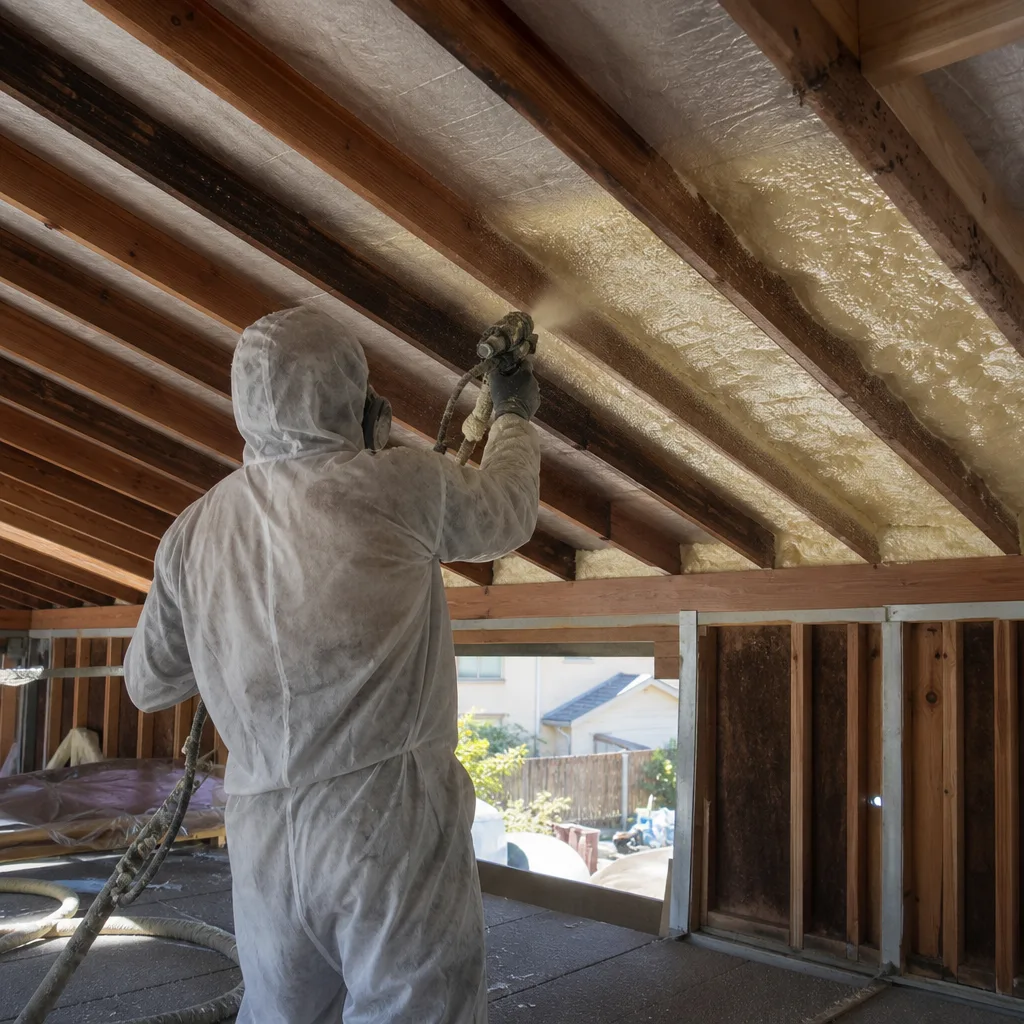
Fast, Reliable Spray Foam Insulation Across Morongo Valley
Spray foam insulation in Morongo Valley typically runs $2.40 to $5.10 per board foot installed, with most whole-attic jobs landing between $3,800 and $8,600 depending on foam type and roof configuration. We run crews from Thermal Insulation Co into Morongo Valley weekly, and we know what canyon wind does to a 1960s cabin on the 92256 corridor. Call (855) 382-3451 and we’ll tell you straight whether open-cell or closed-cell is the right call for your home, not just the product we happen to stock that week.
Why Thermal Insulation Co Is Morongo Valley’s Preferred Spray Foam Insulation Company
Most insulation contractors treat Morongo Valley as an afterthought, a pin on the map between Yucca Valley and Desert Hot Springs. We don’t. Our crews know the difference between a 1958 homestead off Highway 62 and a newer build near the Big Morongo Canyon Preserve, and that changes how we approach every foam job. We carry two spray foam lines, Icynene and Demilec, which means we can match open-cell or closed-cell to the actual problem a home has rather than pushing whatever foam is on the truck. Ruben Castellano has built this company around one trade: insulation. Not roofing, not HVAC, not windows.
We also stock fiberglass batt, blown-in, and cellulose because some Morongo Valley homes need foam only at the rim joist and gable ends, not a full attic conversion. That flexibility matters when you’re dealing with a 1956 cabin that still has original framing and a roof structure that was never engineered for modern insulation loads.
Closed Cell Spray Foam Insulation in Morongo Valley
Closed Cell Spray Foam Insulation in Morongo Valley is the standard recommendation for homes with pier-and-beam floors, exposed framing, and walls that lean into the canyon wind. A closed-cell job here typically runs $3.90 to $5.10 per board foot. The material cures rigid, adds structural racking strength, and creates a vapor-permeable barrier at about 2 inches that makes sense for attics and subfloors that see condensation swings from 105-degree days to below-freezing winter nights. At 2,500 feet of elevation, those swings happen in the same week during spring and fall.
Where closed-cell earns its cost in 92256
Homes on gable-facing lots near Morongo Canyon take wind that compacts open-cell insulation and pushes it back from the top plates. Closed-cell’s rigidity keeps it anchored in place. We also recommend it for mobile homes with metal skirting, where the floor cavity needs an air seal as much as an R-value bump.
If you have a garage ceiling that shares a wall with living space, closed-cell is the better call. It stops air movement through the shared wall cavity, which is where most garage-to-home odor and heat transfer happens in older Morongo Valley homes.
Open Cell Spray Foam in Morongo Valley
Open Cell Spray Foam in Morongo Valley usually costs between $2.40 and $3.30 per board foot and works best when the primary goal is noise control and slow air movement through an attic with mostly standard framing. It expands aggressively, fills irregular wall cavities in older desert cabins better than closed-cell does, and we can install it quickly over a single day on most 900 to 1,400 square foot homes. Open-cell is not a vapor barrier, which matters when we’re working around bathroom fans and kitchen vents that already struggle to move humid air out of an older sealed-up cabin.
The legacy-cabin retrofit
Many Morongo Valley cabins have stud bays that are 16 inches on center but with old plaster and drywall that was never sealed at the top plate or around electrical boxes. A flash-and-batt approach, open-cell in the tricky spots with batt over the main field, is often the smartest use of your budget. We’ll tell you when open-cell alone won’t hit the performance you want.
One caution: open-cell’s expansion pressure can push against aging drywall and lath if it’s applied too thick. Our crew checks the wall condition before spraying on homes built before 1980, especially those with older plaster that has already started pulling away at the ceiling corners.
Trusted Brands We Service in Morongo Valley
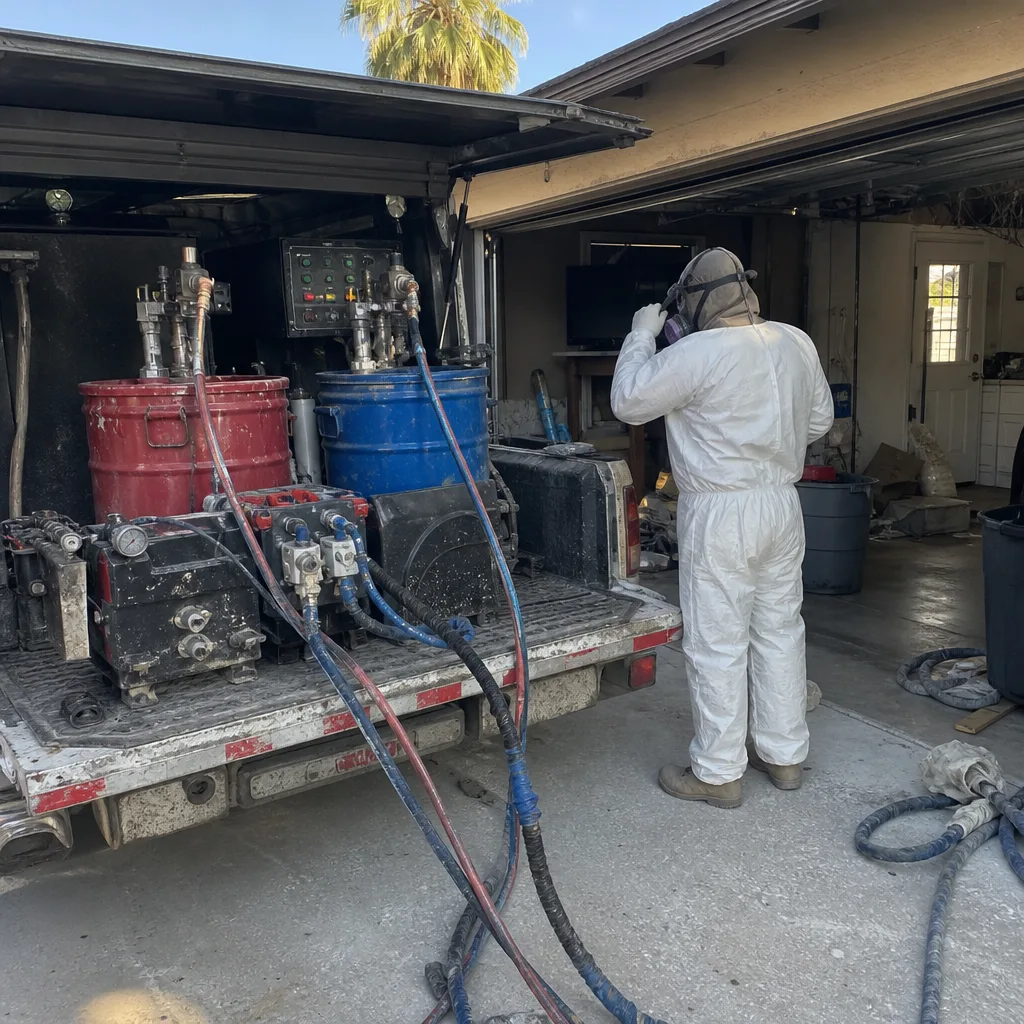
We install spray foam from Demilec and open-cell systems from Icynene. We also carry Owens Corning and Johns Manville batt products, plus GreenFiber cellulose for homes where a recycled-content blown-in approach makes more sense. Why multiple brands? Because a 1972 homestead with a sagging ceiling joist needs a different product than a 2015 manufactured home, and no single manufacturer covers both well. We stock the foam and related sealants that Morongo Valley customers most often ask about, which means we’re not ordering material after we show up. Call (855) 382-3451 and we’ll tell you what’s actually on the truck before scheduling.
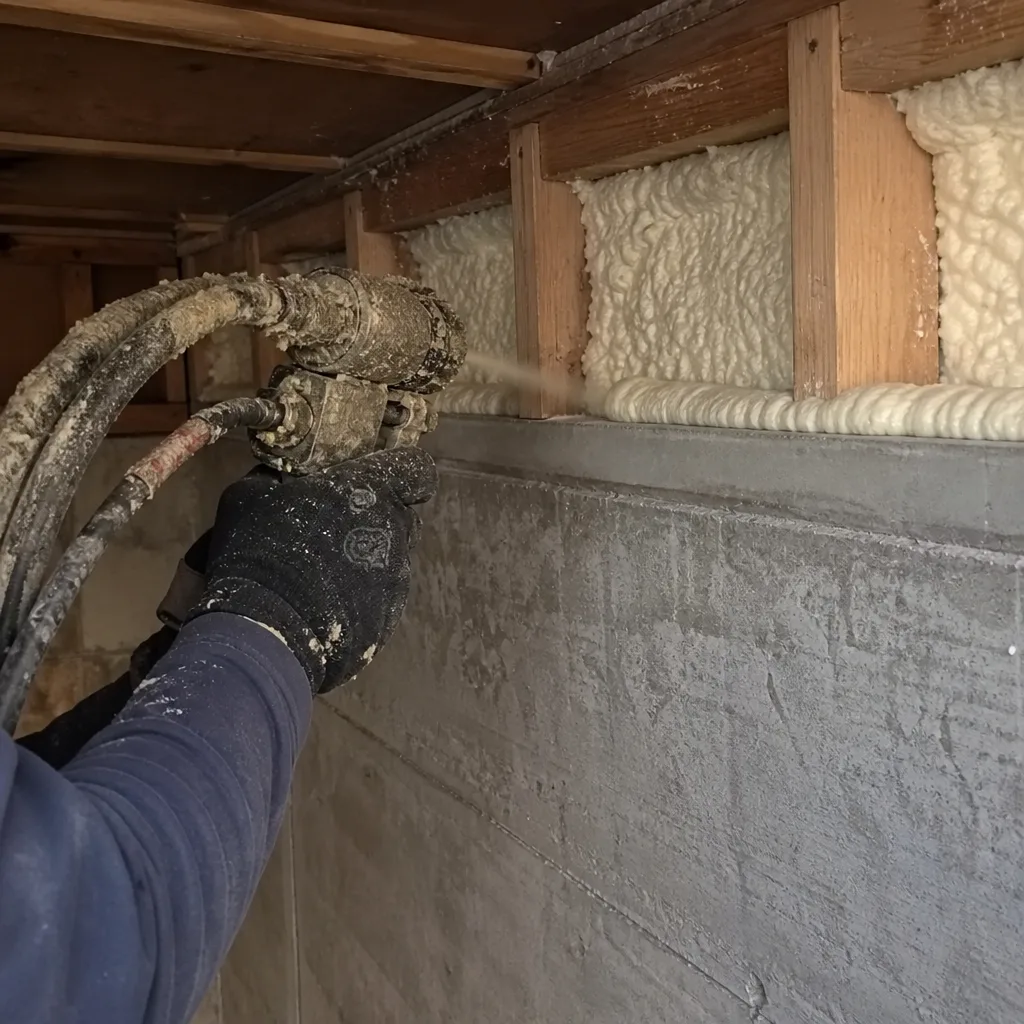
See our full Spray Foam Insulation capabilities and how we select between open-cell and closed-cell based on the home’s framing, moisture conditions, and wind exposure.
Common Spray Foam Insulation Problems We See in Morongo Valley Homes
- Wind-scoured attic foam: Canyon gusts push open-cell material back from gable ends during Santa Ana events, leaving the top plates exposed and the corner rooms cold. We find this on nearly half the 1950s through 1970s homes we inspect in 92256.
- Air-sealed windows never sealed at the framing: Original single-pane aluminum windows leak at the rough opening, and foam applied without sealing those gaps just traps the draft behind the wall. The fix is air-sealing at the jamb and sill before the foam goes in.
- Pier-and-beam cold floors: Homes on posts over open crawlspace lose floor heat to air moving below the subfloor. Foaming the subfloor without sealing the crawl perimeter leaves the floor cold, especially when the canyon wind funnels under the house.
- Compacted insulation in old mobile homes: Factory-installed fiberglass in 1970s and 1980s mobile homes settles and splits at the seams, and the metal skin conducts the cold. Closed-cell on the ceiling and knee walls stops the air movement that makes those units feel like ovens in July and iceboxes in January.
Pricing for Spray Foam Insulation in Morongo Valley, CA
Whole-attic spray foam in Morongo Valley runs $3,800 to $8,600 for most homes. A rim joist and gable-end job, which is what many older cabins actually need, lands between $1,400 and $2,800. Garage ceiling applications run $900 to $1,700 depending on square footage and access. Full subfloor and crawlspace perimeter sealing for pier-and-beam homes starts around $2,600. The price moves with foam depth, access difficulty, and whether we’re removing old insulation first. Estimates are free, and we put the number in writing before any material leaves the truck. Call (855) 382-3451 and we’ll schedule a walkthrough at your place in Morongo Valley.
We Also Serve Cities Near Morongo Valley
Our crews cover the full Morongo Basin and the desert corridor. We run regularly to Morongo Valley and the surrounding communities of Desert Edge, Garnet, Desert Hot Springs, and Yucca Valley. If you’re on the edge of any of these towns, call us and we’ll confirm the next scheduled run so you aren’t waiting.
Serving Morongo Valley, CA — Our Local Coverage Area
We’re based in the Morongo Valley area and know this community well. Use the map below to see our service coverage — if you’re nearby, we can almost certainly help.
FAQs About Spray Foam Insulation in Morongo Valley
The canyon wind that funnels off the San Bernardino Mountains hits gable ends and pushes open-cell foam back from the top plates. That’s a wind-scour issue, and the fix is either closed-cell spray foam at the gable-edge zone or re-capping with a batt that gets anchored more securely. We check for this on every Morongo Valley attic inspection because it’s so common here.
Closed-cell is better for most older cabins because it air-seals, adds rigidity to aging framing, and stays put when the wind kicks up. Open-cell works when the framing is sound and noise control is the priority. We’ll crawl the attic and tell you which one solves your actual problem. Call (855) 382-3451 for a free assessment.
Yes, but only if the crawl perimeter gets sealed along with the subfloor. Spraying foam on the subfloor alone leaves the air moving underneath, which defeats the work. We seal the perimeter first, then foam the floor cavity from below. It’s a two-step job, not a one-and-done spray.
If the roof or skirting has leaks, those need to be addressed first. Foam will trap moisture behind the leak and accelerate rot or rust on the metal frame. We’ll flag any damage we see during the walkthrough and tell you what needs fixing before we spray. The foam can go in the same week if the repairs are minor.
Retrofit when the existing insulation has compacted, been wind-scoured, or no longer fills the cavity. If the material is still performing and you just need more R-value, topping off with blown-in or batt makes more financial sense. For homes with pier-and-beam floors or gable-end wind exposure, foam retrofitting around the perimeter and edges is usually the better long-term move.
Thermal Insulation Co is built around one trade: insulation. We stock eight brands so we can match the material to the house, not the house to the material. For spray foam work in Morongo Valley, call (855) 382-3451 for a free estimate and a straight answer about what your home actually needs.
Written by Ruben Castellano, Owner at Thermal Insulation Co, serving Morongo Valley and the surrounding high desert communities.