
Fast, Reliable Spray Foam Insulation Across Mayflower Village
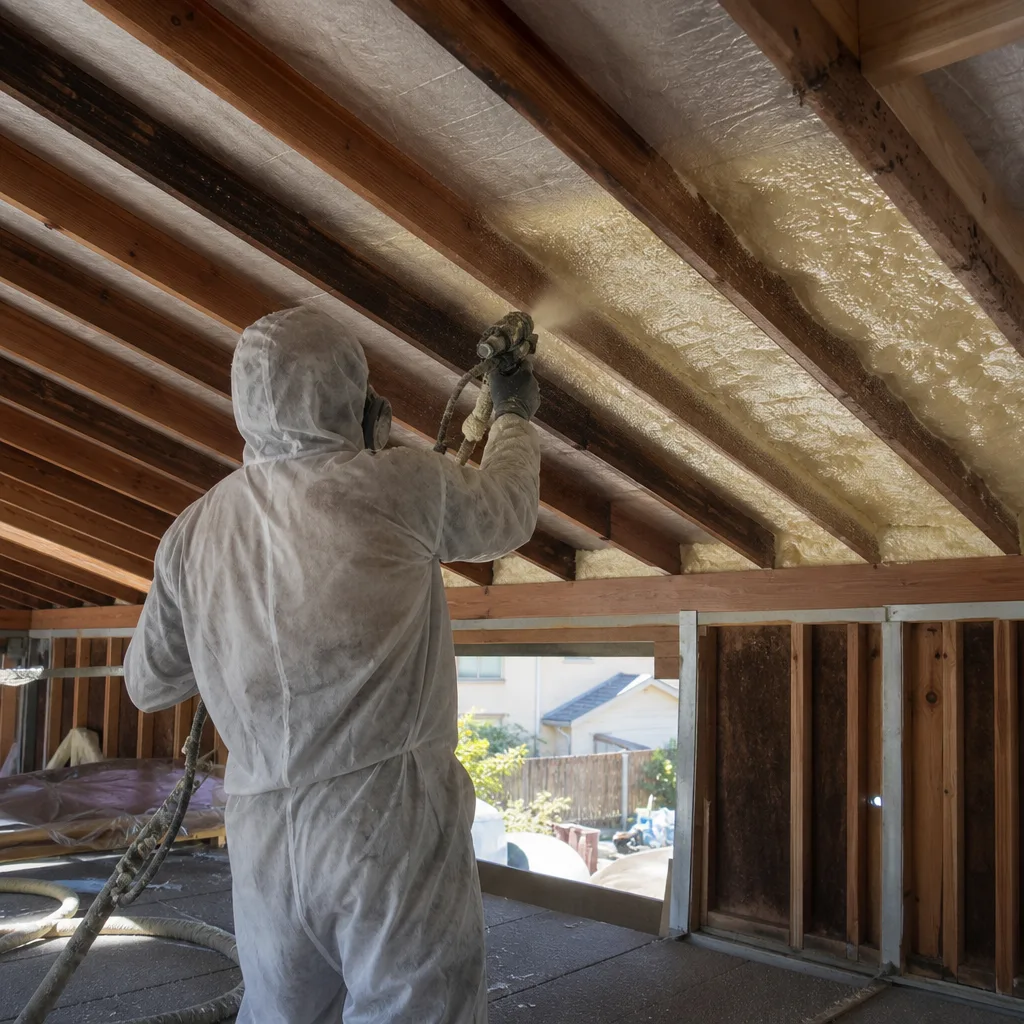
Spray foam insulation in Mayflower Village typically runs $2.50 to $6.50 per square foot installed, with most ranch-home attic or rim joist jobs landing between $1,800 and $5,400 depending on cavity depth and foam type. If you live off Mayflower Road, Bradbourne Avenue, or Grandview Avenue, we can usually schedule a site assessment within 3 to 5 business days. And if your attic is an original 1950s cavity with nothing but dust up there, we’ll tell you straight: closed-cell is the upgrade that actually handles this inland heat. Call (855) 382-3451 and we’ll walk the house with you.
Why Thermal Insulation Co Is Mayflower Village’s Preferred Spray Foam Insulation Company
Mayflower Village sits in an unusual spot. It’s unincorporated, so when a spray foam job needs a permit, you’re dealing with LA County, not the City of Arcadia or Monrovia. That extra step trips up contractors who don’t work here often. We’ve been through it enough to know which jobs need the County’s sign-off and which ones slide under the radar as repairs.
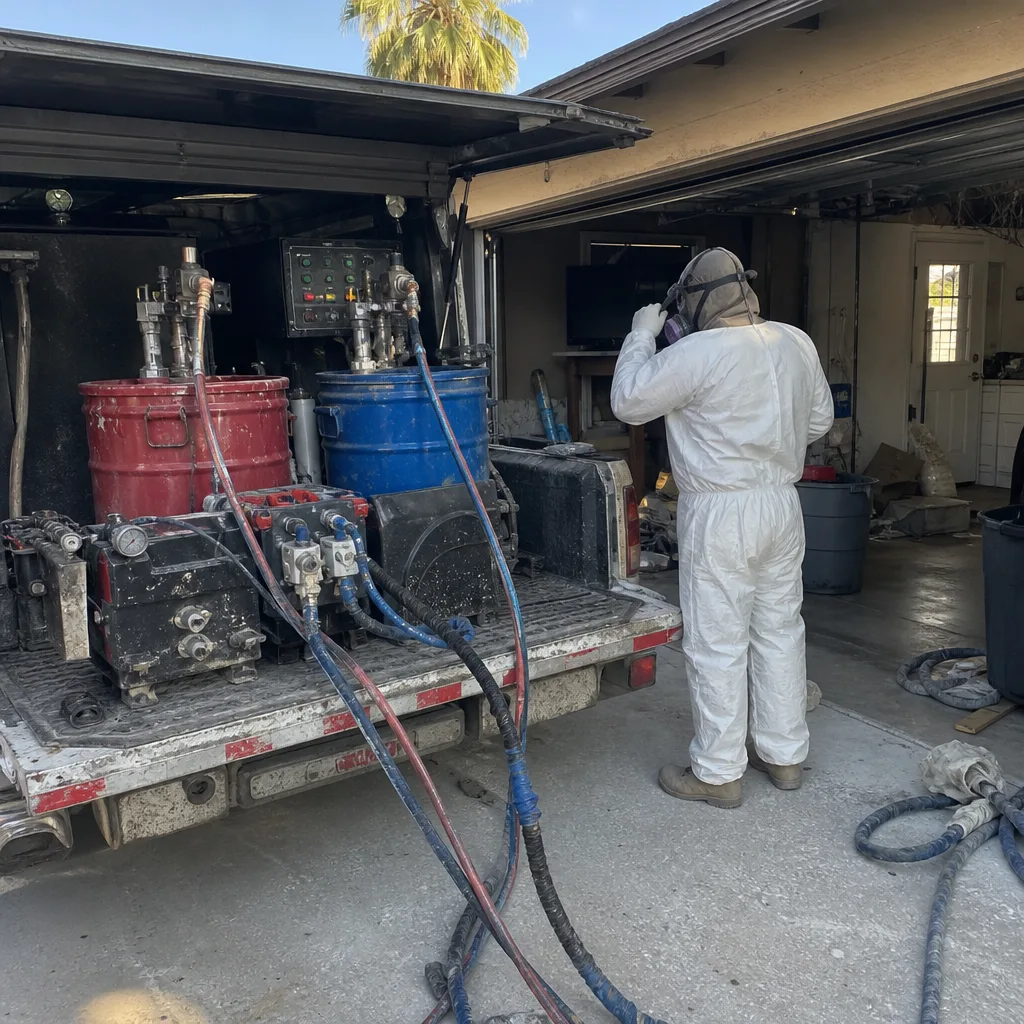
Homeowners here also tend to be particular about not getting overspray on a neighbor’s fence or citrus tree. The lots are narrow, the side yards are tight, and a sloppy foam crew will leave a mess. We mask everything and stage our equipment close to the house. Ruben Castellano, who owns Thermal Insulation Co, has made tight-access work a core part of how we train our crews. If your home is one of the 1940s minimal-traditional houses with a crawlspace you can barely crouch in, we’ve done that job before.
Spray Foam Wall Insulation in Mayflower Village
Spray Foam Wall Insulation in Mayflower Village means retrofitting the original wall cavities of mid-century wood-frame homes, most of which have plaster interior walls and no sheathing vapor barrier behind the stucco. We usually recommend closed-cell foam here because it adds surface strength to older framing and locks out moisture that moves through uninsulated stud bays. For a standard 1,100 to 1,400 square foot ranch, wall cavity foam runs $3,800 to $7,200.
The plaster is the complication. Unlike drywall, it doesn’t come off cleanly or patch invisibly. That’s why we often access stud bays from the exterior side when a re-side is happening, or use drill-and-fill through the top plate from the attic. Either route prevents us from tearing into your living room.
How we handle plaster walls
Older plaster-and-lath walls hide wire runs and odd framing. We probe each cavity before injecting foam, because a 1950s wall bay in Mayflower Village can have diagonal bracing or a surprise stud that stops the foam short. Missing that leaves air gaps that cancel out the R-value you paid for.
Returns on wall foam in this climate
Wall insulation matters here because the afternoon sun beats directly on west-facing stucco. The stucco absorbs heat, transfers it into the wall cavity, and that heat migrates inward for hours after sunset. Closed-cell foam stops that transfer at the source.
Rim Joist Spray Foam in Mayflower Village
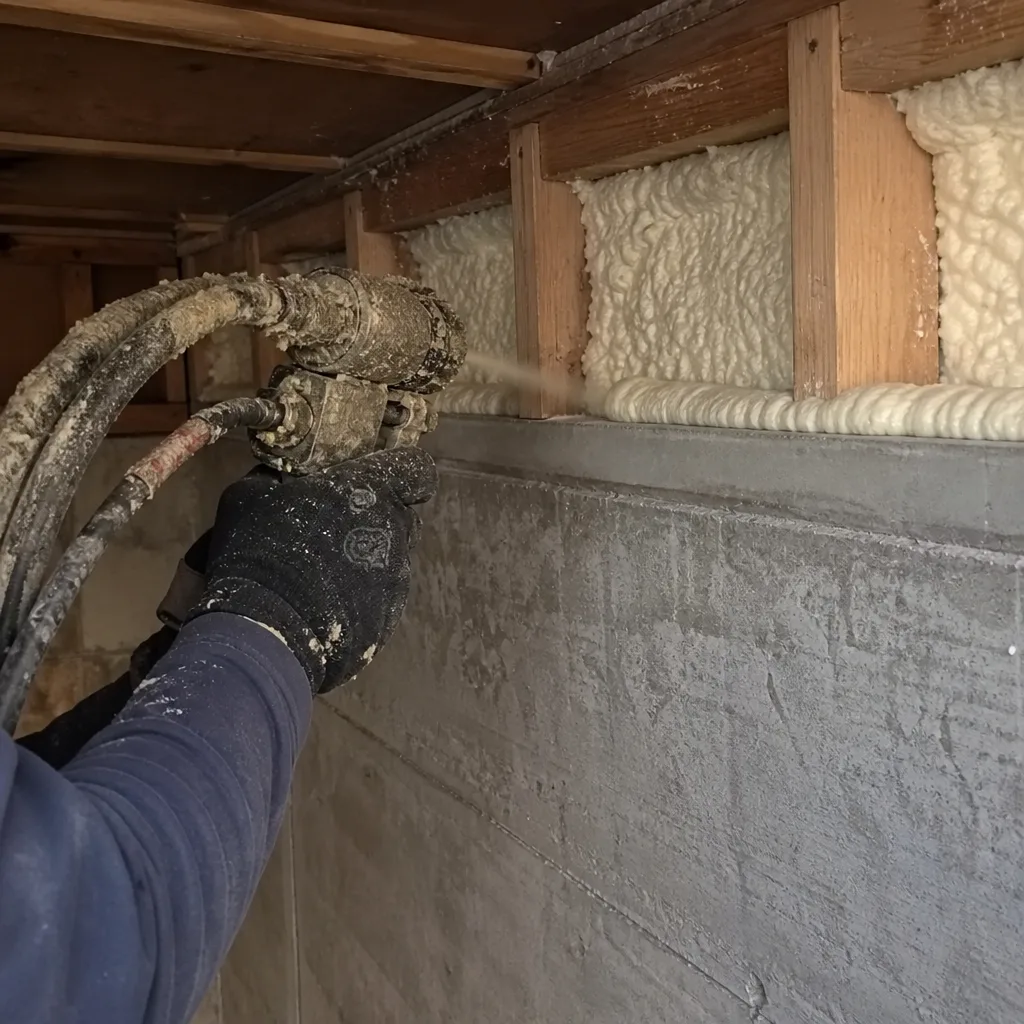
Rim Joist Spray Foam in Mayflower Village addresses the band board where your floor framing meets the foundation, and in the raised-foundation homes along streets like Duarte Road and Mayflower Avenue, that’s the single biggest air leak in the house. We seal it with open-cell or closed-cell foam, depending on whether the crawlspace has standing moisture. Standard rim joist sealing for a 1,200 square foot raised foundation runs $1,100 to $2,400.
Most of these homes were built before builders taped or sealed anything. Air moves freely through the rim joist, pulling crawlspace air up into the floor system. That air carries moisture, musty odors, and sometimes pest droppings. Sealing it off changes how the house smells and how the floors feel in January.
Working in tight crawlspaces
Mayflower Village crawlspaces are shallow. Some are 18 to 24 inches. That’s enough to work in, but not comfortably, and not with oversized spray rigs. We use reduced-reach hoses and low-profile guns to get full coverage against the band board without missing the corners.
Why air sealing beats adding more floor insulation
Adding fiberglass batts under the floor doesn’t stop air movement. It filters dust out of the air but lets the draft continue. Foam at the rim joist stops the draft itself. For a home with original douglas fir joists and a vented crawlspace, this is the most impactful insulation dollar you’ll spend.
Trusted Brands We Service in Mayflower Village
We run Icynene and Demilec spray foam systems because they’re the two foam brands we trust for different jobs. Icynene’s open-cell formula works well in attic rooflines where you want air and vapor movement. Demilec’s closed-cell line handles rim joists, wall cavities, and any space where moisture or structural rigidity is a concern. For the 1940s and 1950s homes here, most jobs call for both. We can also pair foam work with Spray Foam Insulation crews for larger whole-home retrofits. If your attic needs fiberglass or your walls need mineral wool instead, we’ll tell you that too. We stock GreenFiber blown-in for homes where the homeowner wants a recycled-content option, and Owens Corning for standard batt replacement when foam isn’t the right call.
Common Spray Foam Insulation Problems We See in Mayflower Village Homes
- Foam over clogged soffit vents. Citrus-era lots along Mayflower Road and Bradbourne drop leaves into attic vent openings. If we spray foam over a soffit vent that’s already blocked, the attic stops breathing and moisture builds up. We clear the vents first, then foam the areas that actually need sealing.
- Overspray in narrow side yards. Many homes here sit 3 to 5 feet from the property line. A careless foam crew will drift overspray onto a neighbor’s stucco or parked car. We mask, tarp, and use controlled-pressure application when we’re close to the boundary.
- Missed settling cracks in original framing. The wood in a 1950s ranch has moved over 70 years. Small cracks at stud junctions or top plates let air bypass the foam. We run a smoke pencil test before we finish, so we catch the gaps that foam alone can’t bridge.
- Unsealed rim joists behind original batts. Some Mayflower Village homes got a thin layer of fiberglass shoved into the rim joist area decades ago. It’s compressed, dusty, and doing nothing. We pull it out, clean the surface, and spray foam directly onto the band board.
Pricing for Spray Foam Insulation in Mayflower Village, CA
Here’s what Mayflower Village homeowners can expect to pay, based on jobs we’ve completed in the 91006 zip code.
| Job | Typical Range |
|---|---|
| Open-cell spray foam, attic roofline (1,000 sq ft) | $2,200 – $4,200 |
| Closed-cell spray foam, attic roofline (1,000 sq ft) | $3,500 – $6,500 |
| Rim joist sealing, raised foundation (1,200 sq ft home) | $1,100 – $2,400 |
| Wall cavity foam retrofit (1,200 sq ft home) | $3,800 – $7,200 |
| Garage ceiling spray foam (500 sq ft) | $1,200 – $2,800 |
What moves the number is access. If your crawlspace is 18 inches at the house and 12 inches at the back corner, we’ll charge more for the labor of working in that space. If your walls are all plaster and we can’t access the cavities from the attic, exterior drill-and-fill adds cost. The estimate is always free, and it’s based on what we see when we walk the house, not a square-foot formula. Call (855) 382-3451 to set a time.
We Also Serve Cities Near Mayflower Village
Our crews cover Mayflower Village and the surrounding San Gabriel Valley communities, including Arcadia, Monrovia, Sierra Madre, and North El Monte. If you’re just across the border in one of those cities, call us and we’ll put you on the Mayflower Village schedule if that gets us there sooner. For more about our work in this area, see Spray Foam Insulation in Mayflower Village.
Serving Mayflower Village, CA — Our Local Coverage Area
We’re based in the Mayflower Village area and know this community well. Use the map below to see our service coverage — if you’re nearby, we can almost certainly help.
FAQs About Spray Foam Insulation in Mayflower Village
Yes, in most cases. Mayflower Village is unincorporated, so LA County Department of Building and Safety reviews insulation permits rather than a city office. Replacing existing insulation in place usually doesn’t require a permit, but adding foam to wall cavities, converting attic space, or changing the roof assembly typically does. Your estimator will tell you during the walkthrough which path applies to your job. If a permit is needed, call (855) 382-3451 and we’ll handle the paperwork for you.
Spray foam works well in mid-century plaster-wall homes, but it requires careful installation. Plaster-and-lath walls don’t have the same predictable cavities as drywall, and the lath can deflect foam if it’s not anchored tightly. We find cavity depths with probing before we foam, and we use lower-pressure application on plaster-side walls to avoid pushing lath off its keys. The result is an air-sealed, insulated wall without tearing out your plaster. Call (855) 382-3451 if your home still has original plaster and you want an honest assessment.
Yes, spray foam helps significantly with the inland heat. Closed-cell foam against the roofline and in west-facing walls blocks the thermal transfer that turns Mayflower Village attics into ovens by 3 p.m. Afternoon attic temperatures in this area routinely exceed 140°F in July. Foam brings the attic closer to the indoor temperature, which means your air conditioner doesn’t have to fight a superheated ceiling mass every afternoon. Most homeowners notice it in how much later the house gets hot after the sun peaks. For a quote on your specific roofline, call (855) 382-3451.
Clogged soffit vents need to be cleared before any spray foam work begins. On older Mayflower Village lots, the original citrus trees and mature eucalyptus drop leaf litter directly into soffit openings. If that debris stays in place under fresh foam, the attic can’t vent moisture and the foam may not cure properly. We remove the debris, repair or replace the vent screens, and then foam only the areas that should be air-sealed. It’s a standard part of our prep work here. Call (855) 382-3451 if you suspect your soffits are blocked.
Yes, spray foam is well-suited to rim joists in narrow crawlspaces, as long as the installer uses the right equipment. We use reduced-reach foam guns and flexible hoses that let our crew work in 18-inch to 24-inch clearances without sacrificing coverage. The foam expands into the irregular gaps between the band board and the foundation, which is exactly what you need in a 1950s home with settled framing. If your crawlspace is particularly tight, we’ll scope it first and give you a realistic answer. Call (855) 382-3451.
Written by Ruben Castellano, Owner at Thermal Insulation Co, serving Mayflower Village since the company’s founding.