
Spray Foam Insulation in La Crescenta-Montrose: What It Costs and How It Works in These Homes
Spray foam insulation in La Crescenta-Montrose typically runs $2.50 to $6.50 per square foot installed, with most full attic retrofits on the 1940s-60s ranches here landing between $4,200 and $9,800 depending on foam type, depth, and how much air sealing the attic needs first. The real cost driver in this foothill community is rarely the foam itself; it’s the prep work on legacy construction. Homes here were built before modern energy codes, and most have open soffit vents, collapsed fiberglass, and original plaster walls that change how spray foam must be applied. Our team at Thermal Insulation Co handles those conditions every week, and we’ll give you a straight answer on what your house actually needs. Call (855) 382-3451 for a free estimate.
Why Thermal Insulation Co Is La Crescenta-Montrose’s Preferred Spray Foam Insulation Company
We work in La Crescenta-Montrose because the housing stock here demands a level of care that generalist contractors aren’t set up for. These are not tract homes with predictable framing. They’re individually built mid-century ranches and post-and-beam structures, many with original plaster, balloon framing in spots, and attics that have been patched together by four different owners over seven decades. Our Spray Foam Insulation team knows what to look for before the first can of foam gets opened: settled batts, unsealed top plates, recessed lights that leak air straight into the attic, and soffit vents that should have been addressed years ago.
Ruben Castellano, our owner, has built the company around one trade: insulation. That focus means we carry two major spray foam systems (Icynene and Demilec, in both open-cell and closed-cell) plus a full roster of fiberglass, mineral wool, and cellulose options from Owens Corning, Johns Manville, Knauf, Rockwool, CertainTeed, and GreenFiber. Most insulation contractors in the Burbank-to-La Cañada corridor carry one or two product lines and make your house fit their inventory. We work the other way. We bring eight brands and three installation methods, then match the material to what your La Crescenta-Montrose home actually needs.
Response time matters when your attic hits 140°F in August or when a cold snap sends your heating bill through the roof. We schedule La Crescenta-Montrose jobs within days, not weeks, and we’re familiar with the 91214 zip code, the streets up toward Briggs Terrace, the older sections off Foothill Boulevard, and the neighborhoods along Rosemont Avenue and Glenwood Avenue. When you call, you’re not explaining your house to a stranger. We’ve probably worked on a similar one within a mile of you.
Spray Foam Attic Insulation in La Crescenta-Montrose
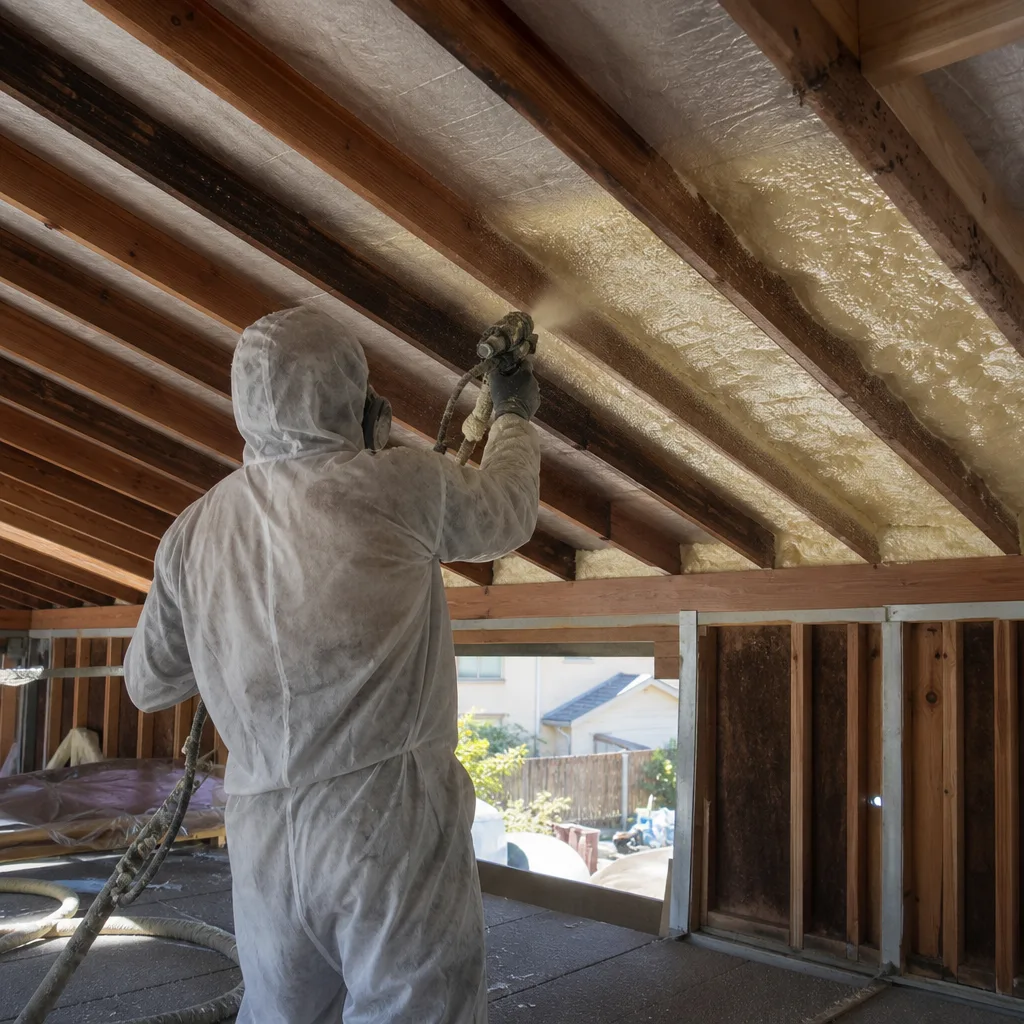
Spray Foam Attic Insulation in La Crescenta-Montrose is the single highest-impact upgrade for these homes, because the typical attic here has less than 2 inches of original insulation that has settled into a thin, ineffective mat since the Eisenhower administration. The job involves more than spraying foam. In most La Crescenta-Montrose attics we first air-seal around recessed light fixtures, top plates, plumbing penetrations, and the open soffit vents that pull hot afternoon air off the San Gabriel foothills straight into the insulation cavity. Then we apply open-cell or closed-cell foam to the roofline, depending on whether the attic is vented or unvented and whether you want the attic inside or outside the thermal envelope.
A typical spray foam attic retrofit on a 1,200 to 1,800 square foot ranch in La Crescenta-Montrose runs $4,800 to $9,500. That range includes prep work, which is the part many low bids skip entirely. If someone quotes you $2,500 for a full spray foam attic here, they’re almost certainly not sealing vents or top plates, and the foam won’t perform anywhere near its rated R-value.
Vented vs. Unvented Attic Conversion
Most mid-century homes in La Crescenta-Montrose were built with vented attics: soffit vents along the eaves, maybe some gable vents, designed for an era when insulation was an afterthought. Closed-cell spray foam at the roofline converts that attic to an unvented, conditioned space, which keeps the heat out of the entire attic rather than just the living-space ceiling. Open-cell foam can also work in vented configurations but performs differently in this dry foothill climate.
When the Roof Deck Needs Foam, Not the Floor
If your ductwork runs through the attic, like it does in most of these old ranches, spraying the roof deck puts your ducts inside the conditioned space. That alone changes what the house feels like by late afternoon. You’re not cooling air that’s already been heated to 130°F before it reaches your living room.
Spray Foam Wall Insulation in La Crescenta-Montrose
Spray Foam Wall Insulation in La Crescenta-Montrose usually means injecting slow-rise foam into wall cavities that were built empty. The 1940s and 1950s ranch homes here were framed when energy was cheap and insulation was optional, so most original walls are uninsulated: just plaster over lath over framing. That means the wall cavity is a vertical air channel moving heat up and down all day, and the day-to-night temperature swing at the foot of the San Gabriels makes it worse. Homes can see 90°F-plus afternoons and low-50s nights, and uninsulated walls transfer that swing directly into your living space.
Wall injection with slow-rise open-cell foam runs $3.00 to $6.00 per square foot of wall area in La Crescenta-Montrose, which puts a typical whole-house wall retrofit on a 1,400 square foot ranch between $6,500 and $11,000. Closed-cell wall applications cost more but add structural rigidity and a moisture barrier; we typically recommend closed-cell only for specific conditions like rim joists, band boards, or walls with moisture exposure.
Injecting Into Plaster Walls Without Cracking Them
Original plaster is brittle. If a contractor injects spray foam at the wrong pressure or without watching the fill rate, the plaster will crack, bulge, or blow out entirely. We use slow-rise, low-pressure foam systems specifically designed for retrofit injection, and our crews monitor each cavity. On a 1954 ranch off Rosemont Avenue, we foamed wall cavities through small holes drilled in the exterior stucco, patched them, and left the original interior plaster untouched. The homeowners saw their upstairs bedrooms stay within a few degrees of the main floor for the first time in 30 years.
Rim Joist and Foundation Sealing
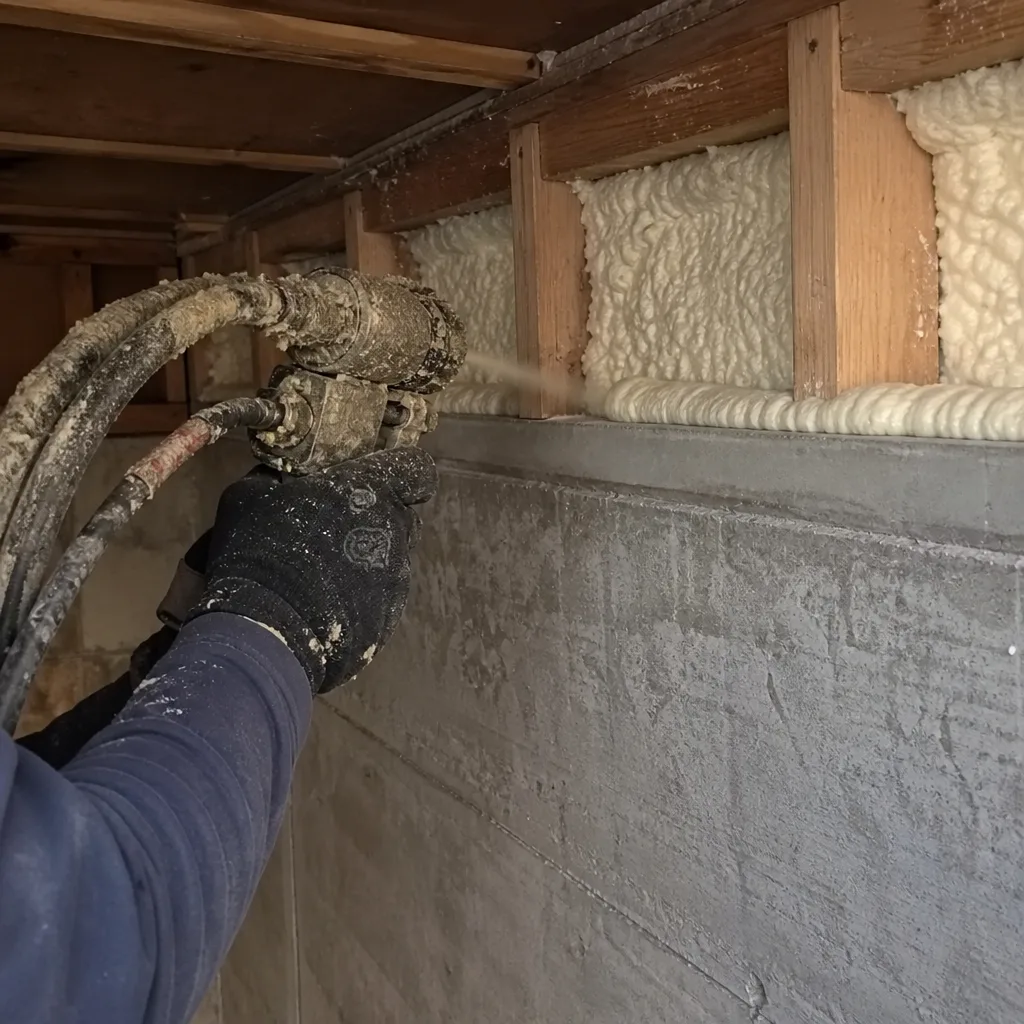
The raised foundations under most of these La Crescenta-Montrose homes create a rim joist band that’s almost never insulated or sealed. Cold air moves through the crawlspace, up the walls, and into the house. Closed-cell spray foam at the rim joist stops that stack effect and also blocks the moisture wicking that degrades insulation and invites mold during the cool, damp winters this foothill valley gets. Rim joist sealing alone typically runs $1,500 to $3,200 on these ranches, and it’s often the first thing we recommend because it’s fast, affordable, and the results are immediate.
Trusted Brands We Service in La Crescenta-Montrose
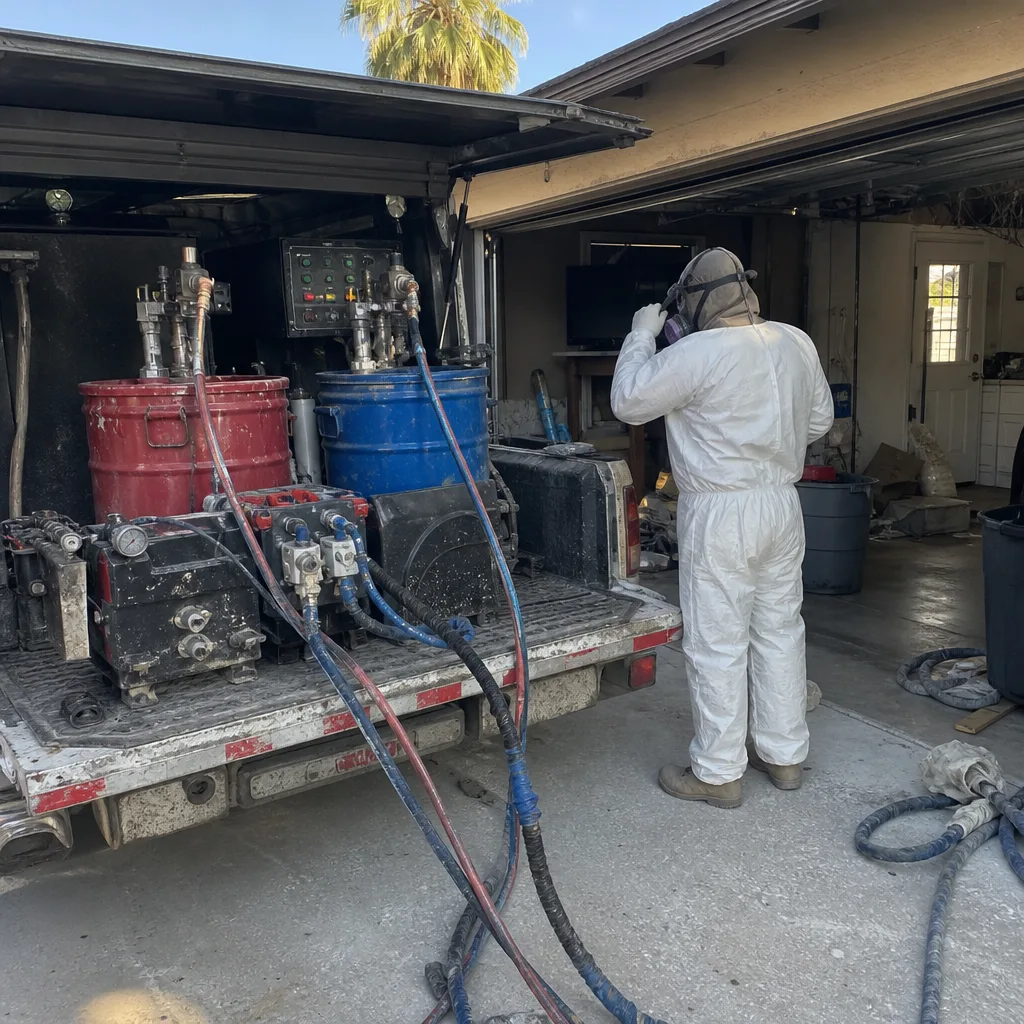
We stock Icynene and Demilec spray foam systems in both open-cell and closed-cell formulations because they’re two of the most consistent performers in the industry, and because having both lets us match the foam to the job rather than pushing one product. For homes where spray foam isn’t the right call, we carry Owens Corning and Johns Manville fiberglass, Rockwool mineral wool for fire-resistance applications near the wildland-urban interface, Knauf batt products, CertainTeed, and GreenFiber cellulose for homeowners who want a recycled-content option. We’re authorized installers, not reps, which means we can tell you honestly when a different material would serve your La Crescenta-Montrose home better. That’s the point of carrying eight brands: the house gets what it needs, not what we happen to have on the truck.
Common Spray Foam Insulation Problems We See in La Crescenta-Montrose Homes
- Settled attic insulation that’s less than 2 inches deep. These ranches were built when R-11 was considered generous, and after 60-plus years of compression, dust, and rodent traffic, the original material has lost nearly all its thermal value. A spray foam retrofit first requires removing or sealing over that dead insulation.
- Open soffit vents drawing hot afternoon air into the attic. The foothill heat pours through those vents from about 2 p.m. to sunset, and if you spray foam without sealing them, the foam cures unevenly and won’t bond properly at the eave line.
- Original plaster walls with no cavity insulation. Injection foam is the right fix, but only with proper depth control and pressure management. We’ve seen walls cracked by contractors who treated a 1950s plaster house like a 1990s drywall house.
- Raised foundations with uninsulated crawlspaces and rim joists. Moisture from the cool, damp winter ground wicks up into the framing, and unsealed rim joists let cold air into the wall cavities from below. Closed-cell foam at the rim joist fixes this, but it has to be applied before the walls are insulated or you’ll trap moisture in the wrong place.
Spray Foam Insulation vs. Traditional Insulation: Which Is Right for Your La Crescenta-Montrose Home?
Spray foam wins when you need air sealing and insulation in one step, which is most attics in La Crescenta-Montrose with their open vents and unsealed top plates. It also wins in wall cavities where you can’t open the wall and don’t have room for batts. But spray foam isn’t always the answer. Blown-in fiberglass or cellulose can hit R-38 or R-49 in a vented attic for less money than foam, so long as the air sealing gets done first. And in walls with existing partial insulation, dense-pack cellulose or fiberglass injection can fill gaps more cost-effectively than foam. We’ll tell you which approach makes sense for your house. That’s the whole reason we carry multiple materials and methods.
Spray Foam Insulation and Wildfire Ember Protection in La Crescenta-Montrose
La Crescenta-Montrose sits inside the wildland-urban interface, and homeowners here think about ember intrusion the way coastal homeowners think about salt air. Spray foam at the roofline and in wall cavities reduces the gaps where embers can enter, but it’s not a fireproofing product. Closed-cell foam has a Class I fire rating when properly covered with an ignition barrier, and it can help seal the eave-to-wall transitions where embers commonly get pulled into attics. If fire resistance is a priority, Rockwool mineral wool batts in the attic floor or roof assembly are worth considering as part of the same retrofit. We’ll walk through your options with you based on your specific home’s exposure, not a generic sales pitch.
Pricing for Spray Foam Insulation in La Crescenta-Montrose, CA
Open-cell spray foam in a La Crescenta-Montrose attic runs $2.50 to $3.80 per square foot installed; closed-cell runs $4.00 to $6.50 per square foot. Wall cavity injection with slow-rise foam runs $3.00 to $6.00 per square foot of wall area. A full attic and wall package on a typical 1,400 square foot ranch here generally lands between $10,000 and $16,000 depending on depth, foam type, and prep work. Smaller jobs like rim joist sealing run $1,500 to $3,200. The prep work is where our quotes differ from lowball bids: we include air sealing, vent treatment, and plaster-safe injection protocols in the price, because skipping them means the foam doesn’t do its job. Call (855) 382-3451 and we’ll give you a written, line-item estimate for your specific house. Estimates are free.
We Also Serve Cities Near La Crescenta-Montrose
Our crews work throughout the foothill communities, from La Crescenta-Montrose out to Tujunga, La Cañada Flintridge, Sunland, and down into Burbank. If you’re in any of those areas and dealing with a mid-century home that’s never been properly insulated, the same three-method, eight-brand approach applies. Our main shop is in Van Nuys, so we’re close by when you need us.
Serving La Crescenta-Montrose, CA — Our Local Coverage Area
We’re based in the La Crescenta-Montrose area and know this community well. Use the map below to see our service coverage — if you’re nearby, we can almost certainly help.
FAQs About Spray Foam Insulation in La Crescenta-Montrose
Yes, but only with slow-rise, low-pressure injection foam applied by a crew that understands plaster. Original lath-and-plaster walls are brittle and will crack under high-pressure foam injection. We drill small access holes, inject at controlled pressure, and monitor each cavity to avoid blowouts. Done right, you end up with insulated walls and your original plaster intact. Call (855) 382-3451 if you want an assessment of your specific walls.
Spray foam seals the small gaps at eave-to-wall transitions, roof decking joints, and top plates where wind-driven embers commonly enter attics during wildfire events. Closed-cell foam also adds a dense, continuous layer that’s harder for embers to ignite, though it still requires an ignition barrier. It’s not a substitute for defensible space or ember-resistant vent screens, but it reduces the openings where embers get in.
For this foothill climate, we recommend R-38 to R-49 in vented attics and R-30 to R-38 at the roofline for unvented spray foam conversions. The day-to-night swing here puts your attic through a daily cycle of expansion and contraction, so continuous coverage matters as much as the number. Gaps and voids defeat the R-value faster than a slightly lower number.
In most La Crescenta-Montrose homes, yes. The original soffit and gable vents from the 1950s are usually open, dirty, and pulling hot air into the attic. If you’re converting to an unvented spray foam roof deck, those vents get sealed completely. If you’re keeping a vented attic, they get cleaned, repaired, or replaced before insulation goes in. Skipping this step is the most common reason spray foam underperforms in these homes.
Yes, specifically at the rim joist and band board where the foundation meets the framing. Closed-cell spray foam is the right product there because it insulates and acts as a vapor retarder, blocking the moisture that wicks up from the damp winter ground. We don’t recommend open-cell foam in crawlspaces because it can absorb moisture and lose R-value over time.
Get a Straight Answer on Spray Foam for Your La Crescenta-Montrose Home
If you’re tired of upstairs bedrooms that bake by 4 p.m. and freeze by midnight, or if you’re just tired of feeding a heating and cooling system that runs constantly, call us. We’ll look at your house, explain what it needs and what it doesn’t, and give you a written estimate you can actually compare. Ruben Castellano built Thermal Insulation Co to be the insulation contractor that treats your house like a specific building, not a generic job. Reach us at (855) 382-3451 for a free estimate, and we’ll come out to La Crescenta-Montrose whenever works for you.
Written by Ruben Castellano, Owner at Thermal Insulation Co, serving La Crescenta-Montrose and the surrounding foothill communities.