
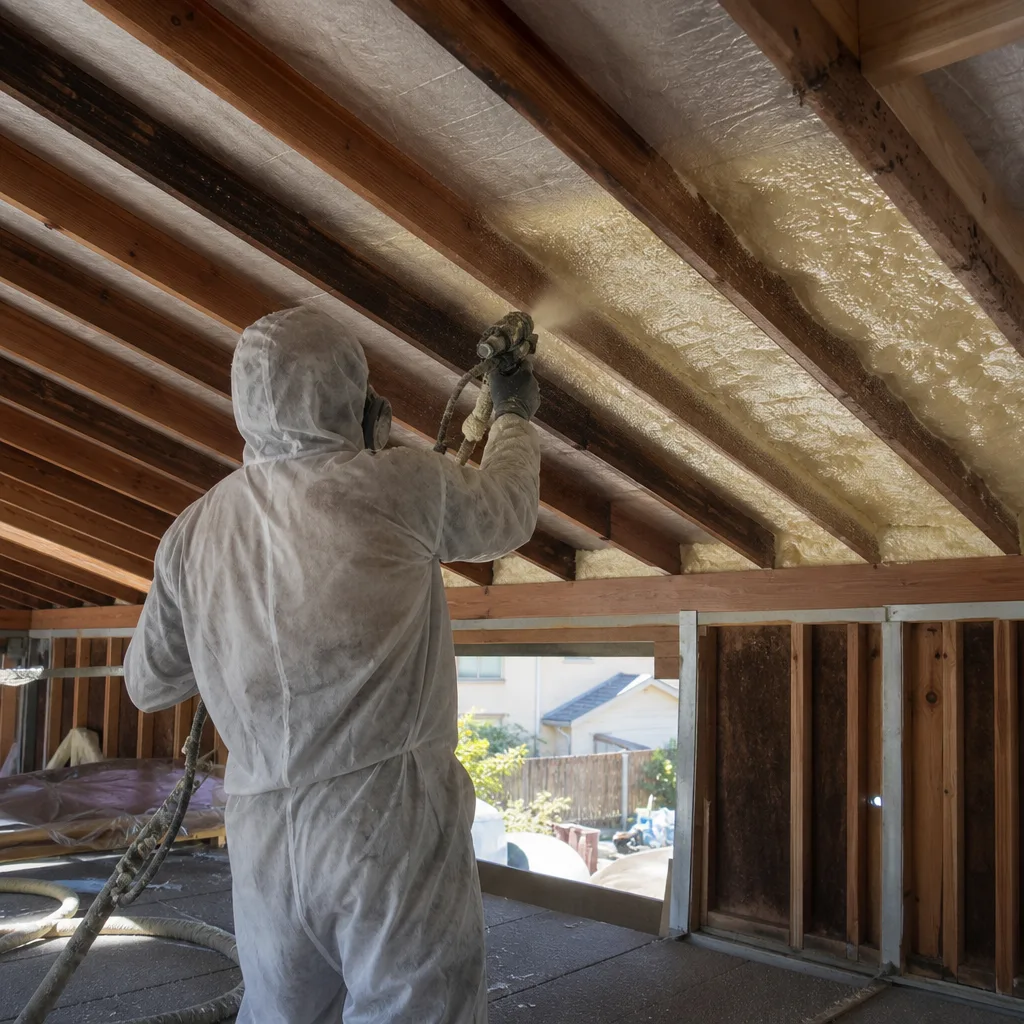
Fast, Reliable Spray Foam Insulation Across Glendora
Spray foam insulation in Glendora runs roughly $2.40 – $6.80 per board foot installed, with most whole-attic projects landing between $4,200 and $9,600 depending on rafter depth, square footage, and whether you choose open-cell or closed-cell. We get calls from Glendora homeowners in both 91740 and 91741 who are tired of rooms that won’t hold temperature, attics that bake the ceiling below, and Santa Ana wind finding its way through every seam. Thermal Insulation Co has been answering those calls from our Van Nuys shop, and we’re out in Glendora most weeks of the year. If you want an exact number for your house, call (855) 382-3451 and we’ll walk the space with you.
Why Thermal Insulation Co Is Glendora’s Preferred Spray Foam Insulation Company
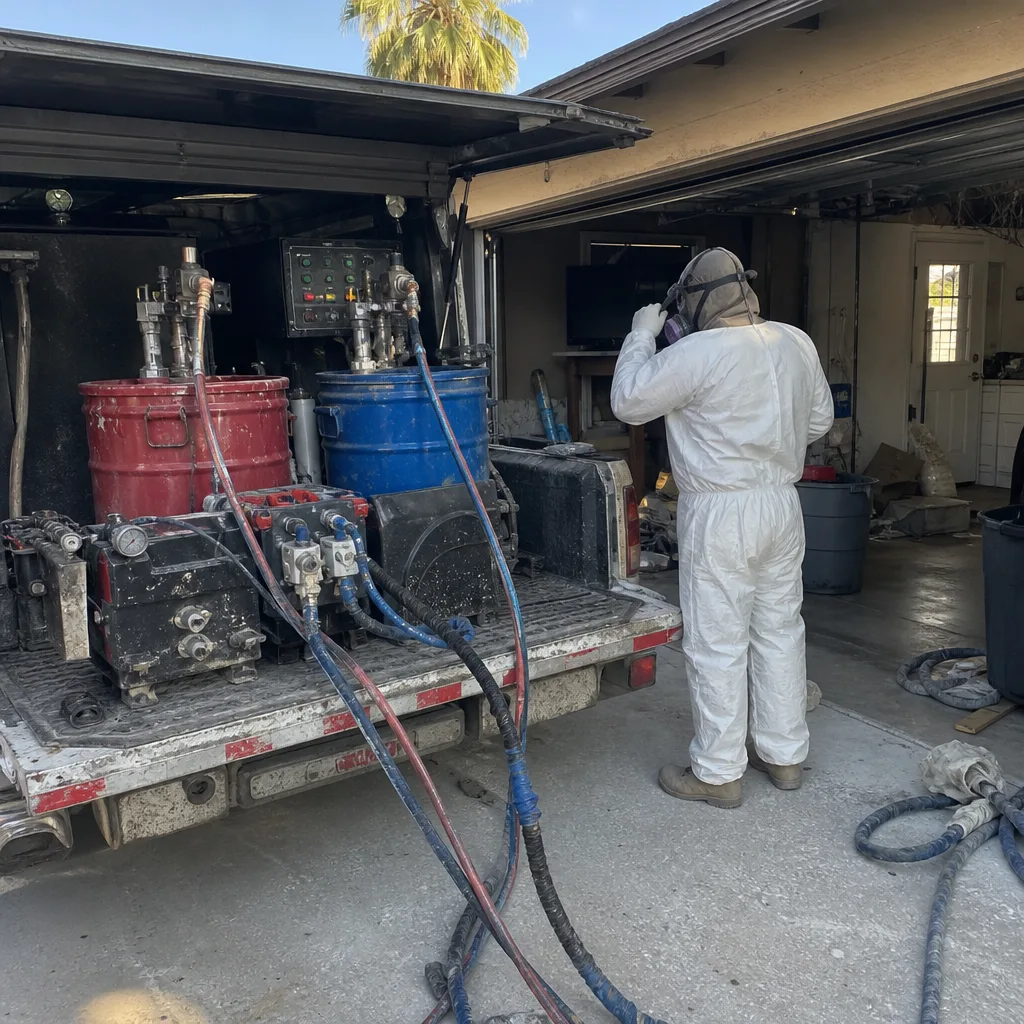
We’re an insulation contractor, full stop. We don’t pour concrete or re-roof. Spray foam, blown-in, and batts are what we do, and Glendora homeowners tend to notice the difference when we start talking rafter baffles, dew points, and Santa Ana pressure differentials instead of upselling a package. Ruben Castellano leads our crews, and he’s built the company around one idea: match the material to the house, not the house to whatever we happen to have on the truck. That’s why we carry eight insulation brands, including Icynene and Demilec for spray foam work across Glendora. Most single-trade shops stock one or two product lines. We stock competing brands so the recommendation comes from what your attic actually needs.
Glendora’s split housing stock means we see two very different homes in the same week. In the 91740 valley floor, it’s a 1950s or 60s tract house with an attic full of compressed fiberglass that stopped working decades ago. Up in 91741, it’s a bigger foothill custom with tall rafter bays, a carriage-house garage door, and wind pressure testing every seal. We know both. We also know the roads: coming up Lone Hill or Glendora Avenue, cutting across Foothill to get to the hillside streets, and which neighborhoods are a fast trip versus a slow climb. That local familiarity means we quote realistically and show up when we say we will.
Crawl Space Spray Foam Insulation in Glendora
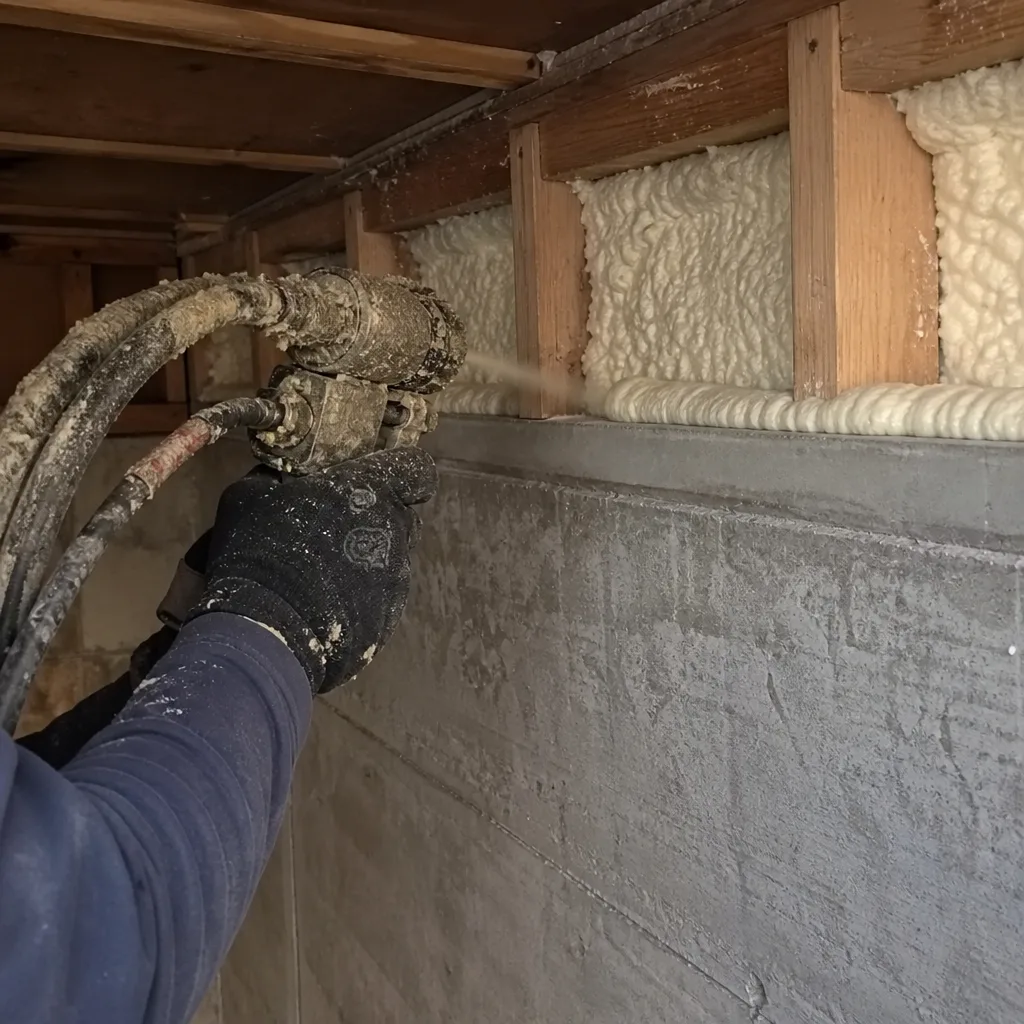
Crawl Space Spray Foam Insulation in Glendora addresses something a lot of homeowners never look at until the floor gets cold every winter and musty every summer. Many of the older valley-floor homes in 91740 sit on vented crawl spaces, and the original fiberglass batts stuffed between the floor joists have sagged, absorbed moisture, and fallen out of contact with the subfloor. Closed-cell foam applied directly to the crawl space walls or the rim joist area air-seals the space and stops ground moisture from migrating up through the floor assembly. In Glendora’s hot-summer climate, that also means less humid air pulled into the house every afternoon.
Closed-Cell Rim And Wall Sealing
We use closed-cell Demilec or Icynene foam for most crawl spaces because it gives you R-6.5 to R-7 per inch and acts as its own vapor barrier at about 2 inches of thickness. That matters under a Glendora house where the soil stays damp through the winter. The foam locks the framing and the soil gas out, and the floor above stops feeling like a heat sink in January.
When A Crawl Space Needs Foam Instead Of Batts
If your crawl space has active air movement, standing water after rain, or batt insulation that looks like a wet blanket, foam is usually the right call. We see this constantly in the flat 91740 tract homes where the original crawl space vents let in hot air all summer and cold air all winter. Foaming the walls converts the space to a conditioned or semi-conditioned zone, and the temperature of your living room floor gets noticeably more stable.
Garage Spray Foam Insulation in Glendora
Garage Spray Foam Insulation in Glendora often gets overlooked because nobody sleeps in the garage. But in 91741 foothill homes where the garage sits under a finished living space or carries a carriage-house wood door that faces the afternoon sun, an unfoamed garage ceiling turns the room above it into a hot plate. We foam the ceiling cavity between the garage and the living space above, sealing it against both radiant heat and the exhaust that rises from a parked car. For attached garages on a valley-floor tract home, foaming the shared wall between garage and house stops hot garage air from bleeding into the laundry room or den all summer.
Ceiling Cavities And Carriage-House Doors
On a foothill property up toward the San Gabriels in 91741, our crew foamed the open attic deck and air-sealed the top plates with Icynene to shut down wind-driven infiltration and ember pathways at the vents, then foamed the garage ceiling where a carriage-house-style wood door had been letting hot afternoon air bleed in. We matched the foam thickness to the rafter bays so the custom finished living space below stayed whisper-quiet and the smart thermostat held a flat setpoint through a Santa Ana episode instead of cycling all night. That’s the kind of integration work that matters when we work in Glendora’s higher-end homes.
Wood Door Trim And Seal Lines
A custom wood garage door expands and contracts through Glendora’s dry summers and cool winter nights, and the seal line around the frame is rarely airtight after a couple of seasons. We foam and seal the perimeter, then address the ceiling cavity above. The result is a garage that doesn’t dump heat into the house, and a door that stops letting wind-driven dust and hot air pour in around the edges during a blow.
Trusted Brands We Service in Glendora
We carry Icynene and Demilec for open-cell and closed-cell spray foam, and we stock the supporting materials our Glendora crews need for quick turnarounds without cross-town supply runs. If we’re pairing spray foam with a batts project or a blown-in retrofit, we can also bring Owens Corning, Johns Manville, or Knauf from the same truck. We carry multiple brands because a 91740 ranch with shallow ceiling joists has different R-value targets than a 91741 custom with 2×10 rafters, and we’d rather give you the right product than defend the one we happen to stock. Spray Foam Insulation is the core of what we do, and the brand lineup is part of why.
Common Spray Foam Insulation Problems We See in Glendora Homes
- Sealed foothill attics without balanced ventilation. Some crews foam every rafter bay in a 91741 attic and call it done. The Santa Ana wind pressure then drives heat and moisture into the assembly instead of out, because nobody addressed intake and exhaust airflow first.
- Closed-cell sprayed over old fiberglass in 91740 tract attics. We see this too often. The old compressed batt gets buried rather than removed, which traps the failed insulation and hides the fact that the original R-value was already gone.
- Thin or skipped garage ceilings. A garage ceiling under a custom wood carriage-house door gets coated with a half-inch of foam or skipped entirely. The room above stays hot every afternoon, and the homeowner thinks the door is the problem.
- Santa Ana wind finding the top plates. Foothill homes in 91741 take real wind loading. If the top plates and penetration points aren’t foamed and sealed, air moves through the attic and wall cavities all night during a blow, even when every window is shut.
Pricing for Spray Foam Insulation in Glendora, CA
A typical open-cell attic spray foam job in Glendora runs $4,200 to $7,800 for an average 1,200 to 1,800 square foot attic. Closed-cell runs higher, usually $6,400 to $9,600 for a full rafter bay application, because the material costs more per board foot and goes on at roughly half the thickness for the same R-value. Garage ceiling foam jobs are smaller scope, typically $1,200 to $2,700, and crawl space wall sealing falls in the $1,800 to $4,000 range depending on access and square footage. On every estimate, we line out what we’re removing, what we’re sealing, and what the ventilation plan is. Call (855) 382-3451 and we’ll come out to measure, look at your existing insulation, and give you a number you can plan around. Estimates are free.
We Also Serve Cities Near Glendora
Thermal Insulation Co works across the San Gabriel Valley and the foothill corridor. In addition to Glendora, we do spray foam and full insulation work in Azusa, Citrus, Covina, and Irwindale. If you’re in one of those neighborhoods or just over the Glendora line, the same crew and the same brand-agnostic approach apply. Call us and we’ll schedule a look.
Serving Glendora, CA — Our Local Coverage Area
We’re based in the Glendora area and know this community well. Use the map below to see our service coverage — if you’re nearby, we can almost certainly help.
FAQs About Spray Foam Insulation in Glendora
Because the foothill homes take real Santa Ana wind loading and bigger day-night temperature swings, so spray foam there is working as an air seal and an ember-resistance barrier at vent and penetration details, not just as R-value. The valley floor of 91740 needs insulation too, but the problem is mostly settled old fiberglass and radiant heat. In 91741, the wind finds every gap, and foam closes those gaps. Call (855) 382-3451 and we’ll explain what your specific street actually needs.
Yes, and this is exactly the kind of job we do in Glendora’s foothill homes. We foam the ceiling cavity to the correct rafter depth, seal the top plates and perimeter, and leave the wood door itself untouched except for sealing the air line around the frame. The living space above drops in temperature almost immediately during summer afternoons.
We do. Spraying over old compressed fiberglass in a 91740 tract attic traps failed insulation and hides the problem. We vacuum out the old material, inspect the framing and wiring, and then apply foam directly to the surfaces we’re sealing. That’s the only way the R-value math actually holds up over time.
Santa Ana winds pressurize the outside of the house and pull air through top plates, gable ends, and every penetration point. Spray foam expands into those gaps and stays put, eliminating the air channels that batt insulation leaves open. In a 91741 foothill home, that’s often the single biggest comfort upgrade we can make, because the wind stops winning every October night.
We spray Icynene and Demilec, both open-cell and closed-cell, and brand matters less than whether the right cell structure is chosen for the application. Closed-cell handles moisture and adds structural stiffness; open-cell is better for sound control and cost-effective full-cavity fills in tight rafter bays. We’ll recommend the one that fits your attic, your crawl space, or your garage ceiling. Call (855) 382-3451 for a free estimate and we’ll give you a straight answer.
Written by Ruben Castellano, Owner at Thermal Insulation Co, serving Glendora and the San Gabriel Valley foothills.