
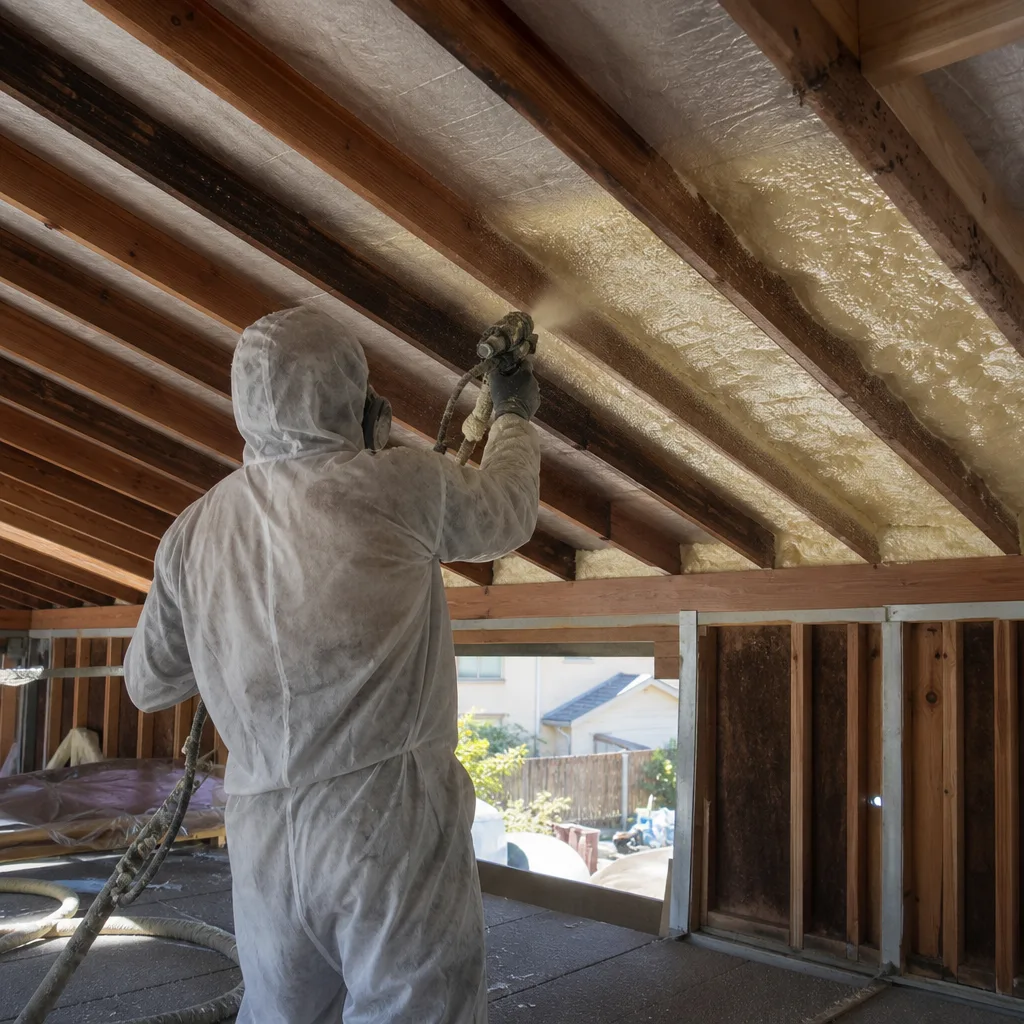
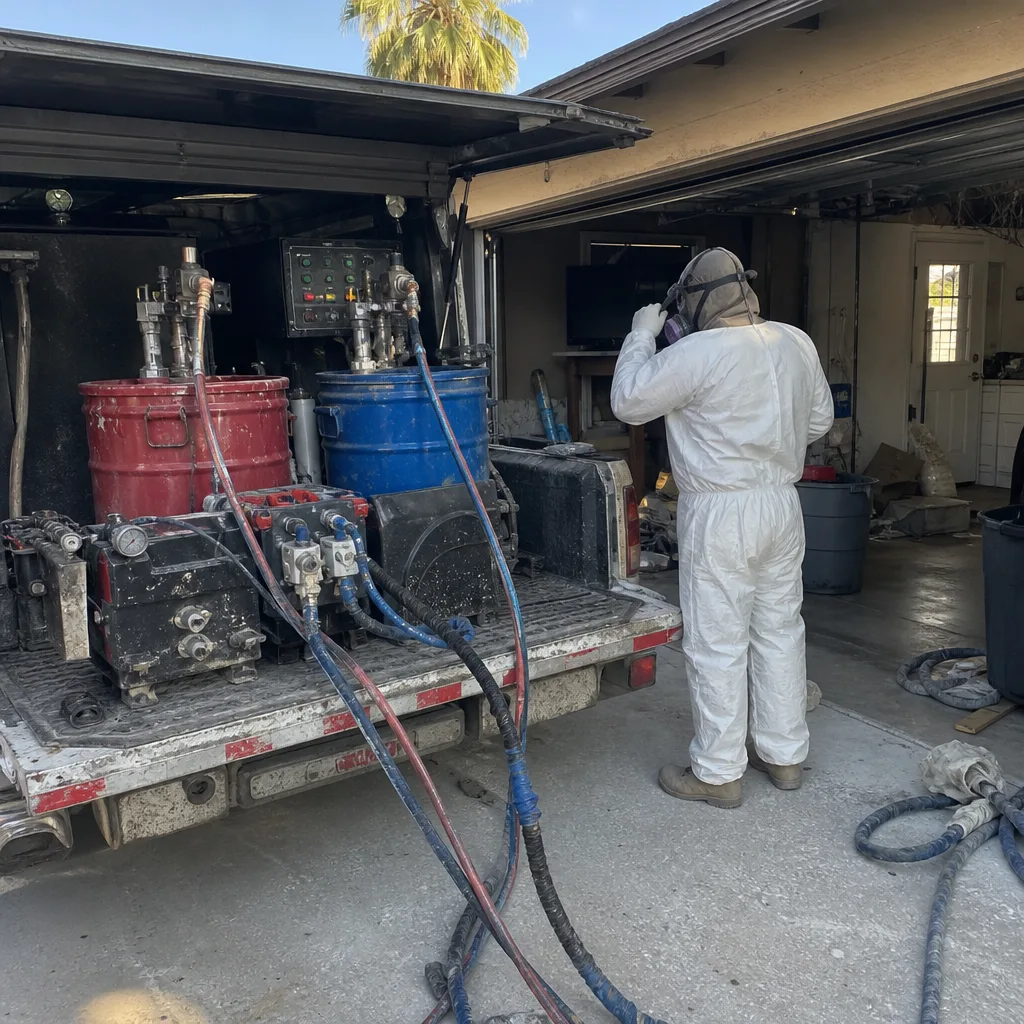
Fast, Reliable Spray Foam Insulation Across Bellflower
Spray foam insulation in Bellflower costs $1.90 to $3.80 per board foot for open cell and $2.80 to $5.50 per board foot for closed cell, with most whole-attic retrofits landing between $3,100 and $8,400 depending on square footage and prep work. The real cost driver in Bellflower isn’t the foam itself. It’s what we find when we open the walls and attic decks on homes built between the 1940s and 1960s: unsealed stucco penetrations, original wood window frames leaking hot afternoon air, and lath-and-plaster cavities that need careful surface prep before any foam goes in. We’re Thermal Insulation Co, and we’ve spent enough time inside 90706 and 90707 attics to know that spray foam here is a retrofit job, not a new-construction job. If you’re fighting hot rooms or high cooling bills, call Ruben Castellano’s crew at (855) 382-3451 for a free estimate. We’ll send a dedicated insulation specialist, not a general contractor who happens to carry one foam brand.
Why Thermal Insulation Co Is Bellflower’s Preferred Spray Foam Insulation Company
Insulation is the only trade we do. General contractors rotate through flooring, roofing, drywall, and foam. We don’t. We’re authorized to install products from eight brands, but for Bellflower’s older housing stock, we typically reach for Icynene and Demilec open- and closed-cell foams. That’s not brand loyalty. It’s because those two systems perform consistently in hot, dry inland climates where cooling load matters more than anything else.
Our team knows Bellflower from the inside out. We work in the 90706 ZIP code constantly: low-pitched hip roofs near downtown Bellflower, flat-roof additions in the neighborhoods east of Lakewood Boulevard, small stucco bungalows off Alondra Boulevard, and ranch tract homes west of the 605. When a homeowner calls from Bellflower, we’re not mapping the route for the first time. We already know what the housing stock looks like, what the attics vent like, and what the lath-and-plaster walls will do when we start prepping cavities.
Ruben Castellano leads every Bellflower assessment personally. He walks the attic, checks the roof type, maps air leaks along stucco and sill plates, and then tells you which foam system actually makes sense for your home. Not which one we happen to have loaded on the truck. Call (855) 382-3451 and we’ll get someone out to Bellflower fast.
Closed Cell Spray Foam Insulation in Bellflower
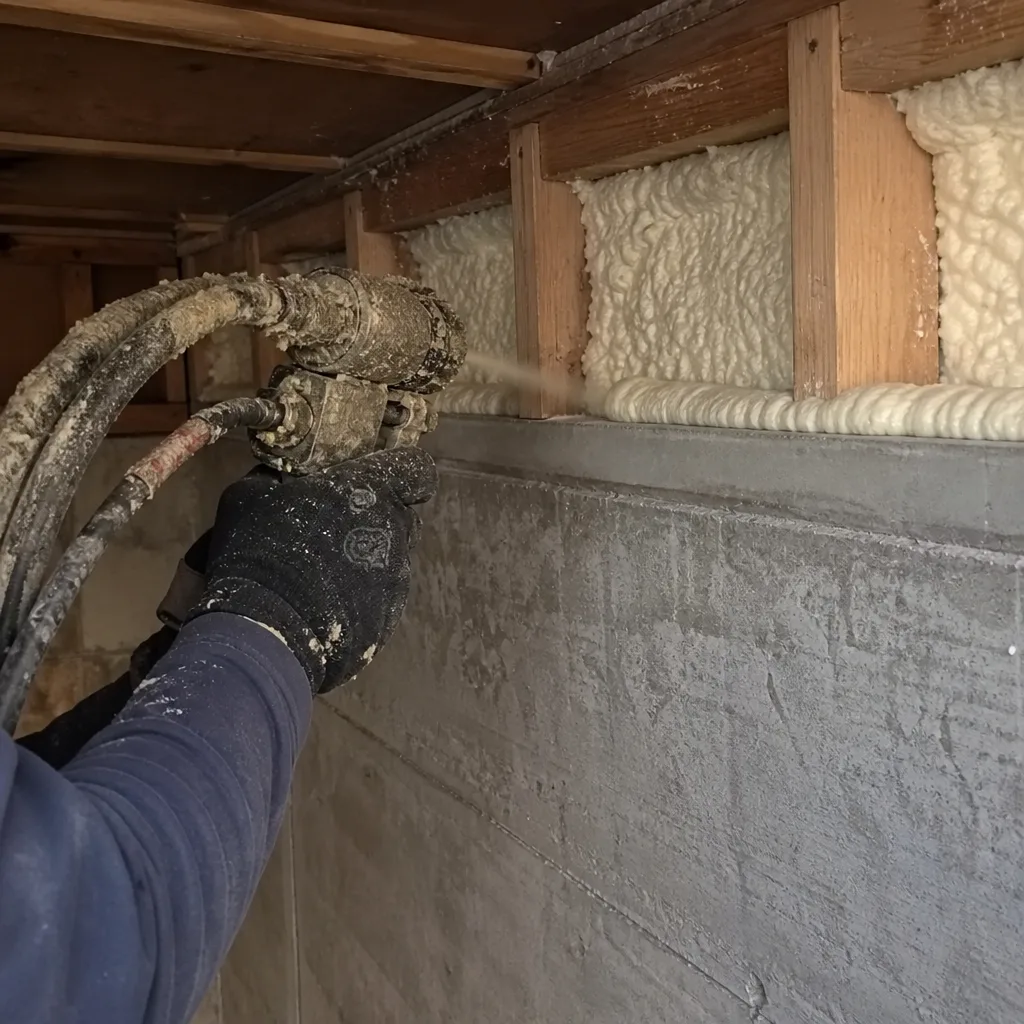
Closed Cell Spray Foam Insulation is the workhorse for Bellflower retrofits because it adds structural rigidity to 2×4 wall cavities while delivering R-6.5 to R-7 per inch, something a 1950s bungalow with original uninsulated walls desperately needs. In Bellflower’s 1940s through 1960s tract homes, closed cell also acts as an air barrier at roughly 2 inches of thickness, which matters because air sealing is the actual fix here. Hot afternoon air moves through unsealed stucco penetrations and original wood window frames. Foam without sealing is just a lid on a leaky pot.
Rim Joist and Garage Ceiling Applications
Ranch tract homes in Bellflower typically have rim joists that were never insulated, which means the perimeter of the floor lets heat directly into the living space. We foam rim joists with closed cell, using the same Demilec system we apply to attic decks. For attached garages, a closed cell coat on the garage ceiling keeps hot garage air from bleeding into bedrooms above or adjacent to the garage.
What Closed Cell Costs in Bellflower
Expect $2.80 to $5.50 per board foot. A full closed cell attic deck retrofit on a 1,100-square-foot Bellflower ranch typically lands between $5,200 and $7,800. Wall cavity flash coats run lower because we’re only applying 1 to 2 inches inside the stud bay, not filling the entire cavity. Free estimates are standard. Call (855) 382-3451 and we’ll give you a line-item number, not a rough guess.
Open Cell Spray Foam in Bellflower
Open Cell Spray Foam is the right choice for Bellflower attics where venting needs to stay intact and the goal is air sealing plus solid R-value at a lower material cost. Open cell runs R-3.5 to R-3.8 per inch and costs $1.90 to $3.80 per board foot, which makes it a pragmatic option for attic decks on low-pitched hip roofs where closed cell’s vapor barrier properties would work against the structure. In Bellflower’s hot, dry climate, the attic has to breathe. Open cell seals air but stays vapor-permeable, so it won’t trap moisture against the roof deck the way closed cell can when applied to the wrong substrate.
Attic Decks on Mixed Roof Types
90706 has a real mix of roof configurations: original low-pitched hip roofs, flat-roof additions from the 1960s and 1970s, and the occasional gable roof on corner-lot homes. Each one changes how the attic vents and how much open cell foam makes sense. We don’t blow foam into a Bellflower attic without first mapping the roof type, checking existing venting, and confirming the deck can handle the foam depth. That’s the difference between a job that lowers cooling bills and one that just looks insulated.
Open Cell Pricing
An open cell attic deck retrofit in Bellflower usually falls between $3,100 and $5,900 on a typical ranch home. Wall cavity applications are uncommon with open cell in these older homes because the flash-coat approach works better with closed cell, but we’ll tell you honestly if open cell will do the job. Estimates are free. Call (855) 382-3451.
Trusted Brands We Service in Bellflower
We carry Icynene and Demilec spray foam systems because they hold up in Bellflower’s specific conditions: 100-degree summer afternoons, dry air, and retrofit applications on older substrates. We also install Johns Manville and Owens Corning for homes where a hybrid approach, meaning sprayed foam plus traditional batt, makes more sense. Parts and material availability for Bellflower jobs is rarely an issue. We’re a dedicated Spray Foam Insulation team, so our trucks are stocked for open-cell and closed-cell work before we leave the shop. That means fewer return trips and a faster completion window on your attic.
Common Spray Foam Insulation Problems We See in Bellflower Homes
- Foam over unsealed original window frames and stucco penetrations. Closed-cell foam applied before air sealing traps hot air behind the foam. Cooling bills barely move because the leak is still pushing heat into the wall cavity from the outside. We seal stucco and sill lines first, then foam.
- Attic decks foamed without mapping the roof type. A flat-roof addition in 90706 vents differently than an original hip roof. Cream crews that don’t check roof type can block the exact venting Bellflower’s hot, dry summers require. We map the deck and venting before any foam goes down.
- Lath-and-plaster wall cavities over-filled or under-prepped. Foam expands. Push too much into a 2×4 cavity behind lath-and-plaster and you’ll loosen plaster keys and crack walls. Under-prep the dusty cavity surface and the foam won’t bond. We prep first, then apply a controlled flash coat.
- Cooling-load focus ignored. Bellflower homes don’t need freeze protection. They need cooling-load reduction. Foam applied without considering radiant heat gain, attic venting, and air leakage through the stucco won’t deliver the comfort homeowners expect. Our assessments start with where the heat is actually getting in.
Pricing for Spray Foam Insulation in Bellflower, CA
Open cell spray foam in Bellflower runs $1.90 to $3.80 per board foot. Closed cell runs $2.80 to $5.50. A typical attic deck retrofit on a 1950s ranch or bungalow in 90706 lands between $3,100 and $8,400, with closed cell on the higher end and open cell on the lower. Wall cavity flash coats with closed cell usually add $1,800 to $3,200 depending on how much lath-and-plaster prep is required. Rim joist work adds $800 to $1,600. The biggest variable in Bellflower is not square footage. It’s what we find when we open the walls: original framing, unsealed penetrations, and dust-heavy cavity surfaces all require prep work that a simple blow-in job never encounters. We’ll give you a written estimate before any work starts. Call (855) 382-3451 to schedule a free assessment. Ruben Castellano will walk the attic and walls with you and explain exactly what your home needs and what it will cost.
We Also Serve Cities Near Bellflower
If you’re in Bellflower or the surrounding area, we cover the same specialized retrofit work in Paramount, Norwalk, Artesia, and Cerritos. Same crew, same material portfolio, same approach: air sealing first, then the right foam for the structure. Call (855) 382-3451 if you’re in any of these cities and dealing with hot rooms or high cooling bills.
Serving Bellflower, CA — Our Local Coverage Area
We’re based in the Bellflower area and know this community well. Use the map below to see our service coverage — if you’re nearby, we can almost certainly help.
FAQs About Spray Foam Insulation in Bellflower
Yes, but only if the approach honors how those walls were built. Lath-and-plaster over 2×4 studs means limited cavity depth and fragile plaster keys. We use a closed-cell flash coat, typically 1 to 2 inches, rather than filling the entire cavity. That gives you air sealing and a meaningful R-value bump without risking cracked plaster. The cavity stays shallow intentionally. Call (855) 382-3451 and we’ll assess your specific bungalow before recommending anything.
Because 90706 has mixed roof types: low-pitched hip roofs, flat-roof additions, and gable roofs on corner lots. Each one vents differently, and each one needs a different foam depth and placement pattern. A standard blow-in assumes one roof profile. Bellflower doesn’t have one roof profile. Our assessment maps the roof type and venting first, then decides where foam goes and where ventilation stays. Free estimates are part of the job.
Closed cell is the typical choice for wall cavities and rim joists in ranch tract homes because of its higher R-value per inch and air barrier properties. Open cell works well on attic decks where venting needs to stay vapor-permeable. The real answer depends on your home’s specific framing, roof type, and where the heat is entering. Call (855) 382-3451 and Ruben Castellano will walk you through the call without pushing a specific brand or system until we’ve seen the structure.
No. If your original wood window frames and unsealed stucco penetrations are letting hot air in, foam added on top won’t stop the leak. The heat moves through the wall cavity and the foam just holds it there. We air seal along the stucco and sill plates first, then apply foam. That’s the order that actually lowers cooling loads in Bellflower’s specific housing stock. Skipping the air sealing step is the most common mistake we see.
We seal the stucco penetrations and sill plates before applying foam. That means caulking, foam sealing, or both along the stucco-to-framing transition and around window rough openings. Original wood window frames stay in place, but the air gap between the frame and the stucco gets sealed. Then closed-cell foam goes into the wall cavities. The result is a continuous air barrier from the exterior skin to the interior wall. Call (855) 382-3451 for an exact quote on your Bellflower home.
Written by Ruben Castellano, Owner at Thermal Insulation Co, serving Bellflower since our first retrofit in 90706.