
Insulation Company in San Marino, CA
Blown in insulation is the most common retrofit we perform in San Marino, and for good reason: the city’s 1910s-1960s estates were rarely insulated to modern standards, and the original plaster walls and clay tile roofs make blowing loose-fill into existing cavities the least invasive way to fix that. Most San Marino calls start because an upstairs bedroom or bonus room becomes unusable by 3 p.m. in July. Our team at Thermal Insulation Co has handled those exact envelope problems since 2012. Call (855) 382-3451 for a walk-through and an honest read on what your home actually needs.
Why San Marino Homes Are Different
San Marino is a nearly built-out city of large, architecturally significant homes, many from the 1910s through the 1930s, with mid-century rebuilds mixed in. These are not tract houses with predictable cavities and uniform attics. Spanish Colonial Revival and Mediterranean estates dominate, with stucco and masonry walls, original plaster interiors, and fragile clay tile roofs that are expensive to walk and easy to break. Insulation work here has to respect those surfaces, not punch through them.
The climate shapes the work too. San Marino sits in a warm, dry, inland stretch of the San Gabriel Valley. Summers are long, with intense sun beating directly on those tile roofs. Attic temperatures climb past 140 degrees, and that heat radiates down into upstairs bedrooms and bonus spaces for hours after sunset. Winter cold is mild by comparison. The insulation priority here is almost always summer heat rejection, not deep-winter winterization. That changes material choices: we lean on loose-fill cellulose and fiberglass with strong air-sealing, and on radiant-heat-focused attic upgrades, rather than the heavy vapor-retarder assemblies you’d see in colder climates.
One more local reality: the mature oaks and deodar cedars that shade so many San Marino lots also drop year-round debris onto roofs and screen them unevenly. A shaded roof stays cooler; a sun-exposed section roasts. We find attics where insulation was disturbed or compressed during past re-roofs over clay tile, and where original 1930s loose-fill has long since settled to a useless depth. The work is often less about starting from zero and more about correcting what time, tree cover, and past trades left behind.
Our Main San Marino Services
Two services account for most of the calls we take from San Marino homeowners: attic insulation, because it addresses the single largest source of summer heat gain, and spray foam, because custom homes with odd-shaped bonus rooms and unvented roof decks often need an air-sealing material that batts and loose-fill cannot provide.
Attic Insulation in San Marino
Attic work in San Marino almost always involves working under or around original clay tile roofing, which means planning access around tile breakage and keeping foot traffic to a minimum. We air-seal first, then install blown-in fiberglass or cellulose to the depth required for the attic’s target R-value. On estates with original plaster ceilings, we keep the work completely contained to the attic so no interior surface is touched. For a full picture of how we handle these jobs, see Attic Insulation in San Marino.
Spray Foam Insulation in San Marino
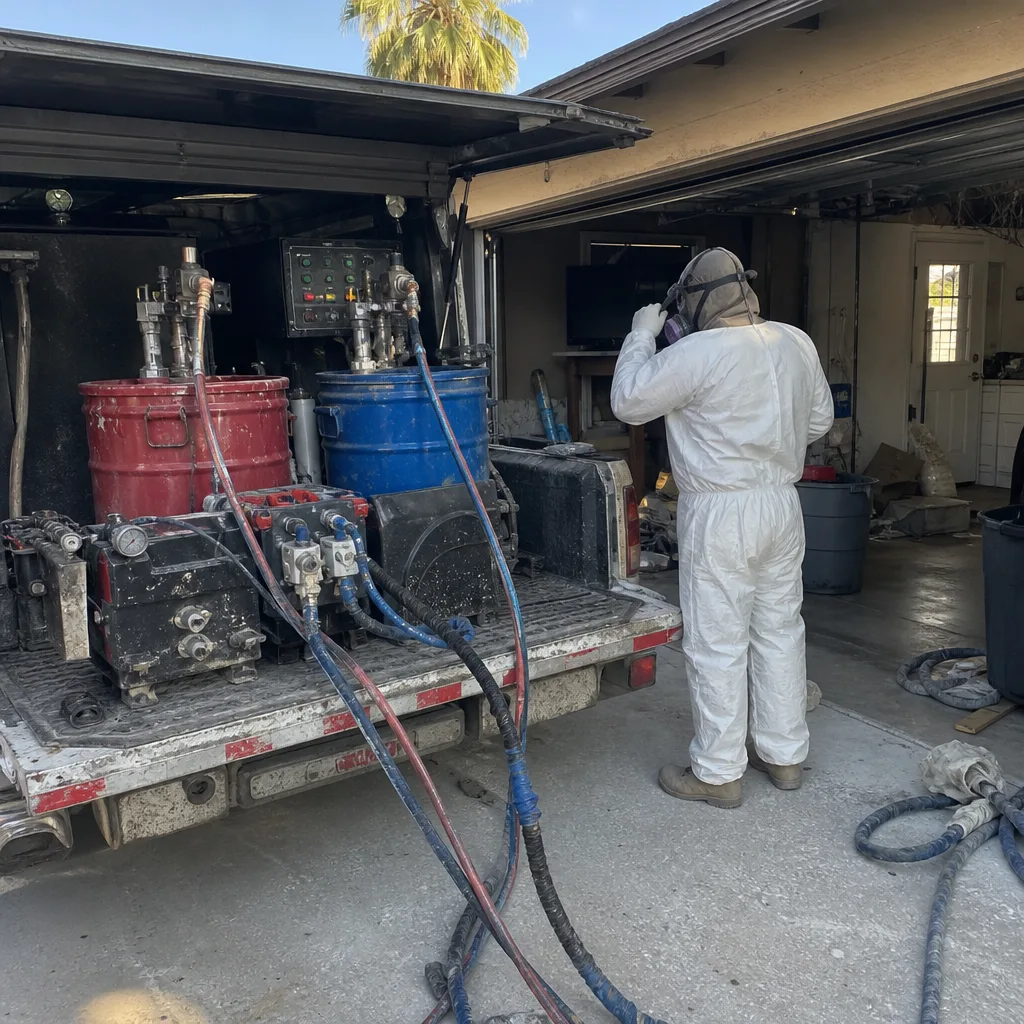
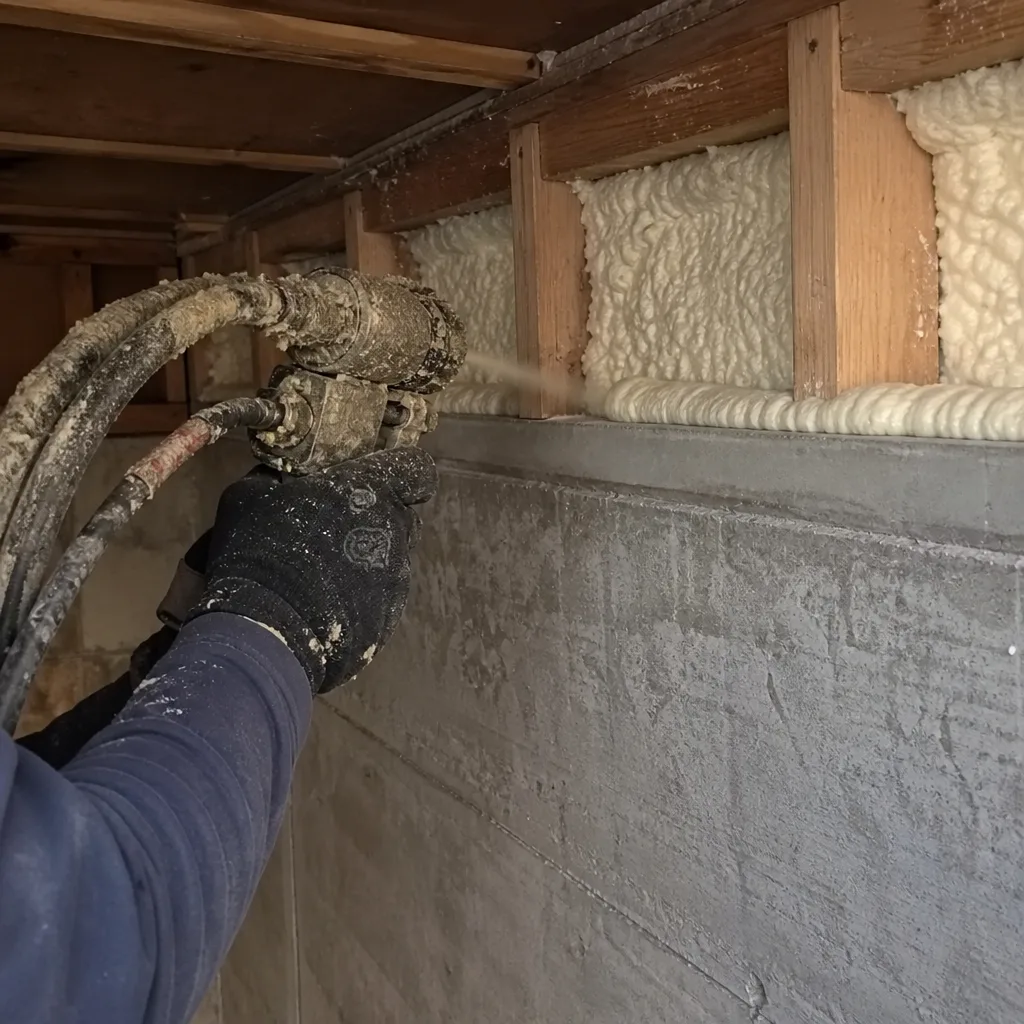
Spray foam earns its place on San Marino’s custom homes when the job involves unvented roof decks, bonus rooms with complicated framing, or rim joists and band boards on masonry walls. Open-cell foam handles interior sound control and air-sealing; closed-cell adds structural rigidity and moisture resistance where a wall or roof line is tight on space. We install both using Icynene and Demilec systems. For the specifics, read Spray Foam Insulation in San Marino.
What happens when you call
- 1
A real person answersNo phone trees — you reach a local pro.
- 2
You get an upfront price rangeHonest numbers before anyone is dispatched.
- 3
A background-checked tech heads outLicensed & insured, dispatched right away.
- 4
You approve before work beginsNothing starts until you say go.
Blown In Insulation in San Marino
Blown in insulation is the retrofit that makes the most sense for San Marino’s older custom homes, because it can be installed through small access points without tearing out original plaster or disturbing clay tile roofs. In a city where the dominant problem is a hot attic pumping heat into upstairs rooms, the right loose-fill material plus proper air-sealing can change how the whole upper floor feels by late afternoon. For homeowners who want to understand the method in more depth, our Blown In Insulation page covers the full range of what we install and why.
Cellulose Insulation
Signs you need it
Upstairs rooms stay hot long after sunset and the attic has settled or uneven loose-fill from decades ago, which is common in San Marino homes that have never been re-insulated since the original build.
What it costs in San Marino
Blown in cellulose insulation in San Marino typically runs $1.20 to $2.30 per square foot, with most whole-attic jobs landing between $1,800 and $4,200 depending on depth and access.
How we do it
We air-seal ceiling penetrations and top plates first, then blow GreenFiber recycled cellulose to the target depth using a contained hose run that keeps original plaster and finishes untouched.
Blown In Attic Insulation
Signs you need it
The attic floor has bare spots or insulation compressed below the joist tops after past re-roofs or decades of settling, and the rooms directly below run noticeably warmer than the rest of the house.
What it costs in San Marino
Blown in attic insulation here typically runs $1.50 to $3.10 per square foot for complete jobs, or $2,100 to $4,900 on a typical San Marino attic with generous square footage and clay-tile access constraints.
How we do it
We pull back or work around existing batts where needed, air-seal the attic floor, and blow loose-fill fiberglass or cellulose to the R-value the attic actually calls for.
Blown In Fiberglass Insulation
Signs you need it
Your attic has old batts that have slumped or been walked down during roof work, and you want a clean, even layer of loose-fill that holds its depth without settling the way older products did.
What it costs in San Marino
Blown in fiberglass insulation in San Marino typically costs $1.40 to $2.90 per square foot, with most complete attic jobs landing between $2,000 and $4,600.
How we do it
We remove or reposition compromised material, seal the attic floor, and blow Owens Corning or Johns Manville loose-fill fiberglass to a consistent, uniform depth across the full attic plane.
Loose Fill Insulation
Signs you need it
There are irregular cavities, low-clearance attic slopes, or bonus-room kneewalls where rigid batts would leave gaps, and you need a material that flows into odd shapes and fills them completely.
What it costs in San Marino
Loose fill insulation in San Marino typically runs $1.20 to $3.00 per square foot depending on the material and the depth required, with most jobs between $1,700 and $4,400.
How we do it
We map the cavities, isolate the work area with containment, and blow the loose-fill at controlled density so slopes, kneewalls, and tight clearances end up with a full, even fill.
What Blown In Insulation Costs in San Marino
| Item | Typical range in San Marino |
|---|---|
| Blown in cellulose insulation | $1.20 – $2.30 per sq ft |
| Blown in fiberglass insulation | $1.40 – $2.90 per sq ft |
| Full attic blown-in job (typical estate) | $2,100 – $4,900 |
Pricing moves with attic square footage, access difficulty around clay tile and mature trees, and the depth needed to hit the R-value target. We quote the full job upfront.
Is blown in insulation worth it in an older San Marino home?
Yes, usually. San Marino’s 1910s-1960s homes often have little to no effective attic insulation, and blown-in is the least invasive way to fix that without tearing into original plaster. The comfort difference is most noticeable in upstairs rooms during summer.
Will blown in insulation disturb my original plaster ceilings?
No, installation happens entirely from the attic side. Your plaster ceilings stay untouched. We use contained hose runs and controlled density so nothing inside the living space is affected.
Brands We Service in San Marino
We work with Owens Corning and Johns Manville fiberglass, GreenFiber recycled cellulose, and Demilec spray foam systems. Parts are stocked locally for most common San Marino jobs, which keeps turnaround tight on attic and wall retrofits. See our brands for the full material lineup.
Pricing for Insulation Company in San Marino, CA
| Service | Typical range in San Marino |
|---|---|
| Blown in cellulose insulation | $1.20 – $2.30 per sq ft |
| Blown in fiberglass insulation | $1.40 – $2.90 per sq ft |
| Full attic blown-in job (typical estate) | $2,100 – $4,900 |
| Loose fill insulation | $1.20 – $3.00 per sq ft |
| Blown in attic insulation | $1.50 – $3.10 per sq ft |
| Attic air sealing plus blown-in retrofit | $2,600 – $5,800 |
| Kneewall and bonus-room loose-fill | $1,500 – $3,600 |
| Spray foam open-cell (rim joist / bonus room) | $2.00 – $4.50 per sq ft |
| Spray foam closed-cell (unvented roof deck) | $3.00 – $6.50 per sq ft |
San Marino pricing runs higher than the valley average for two reasons: access around fragile clay tile roofs and original plaster, and the sheer attic square footage of large custom homes. We give every customer a fixed, upfront price before any work starts, and that number doesn’t change unless the job scope changes.
Neighborhoods We Serve in San Marino
We work across the full San Marino zip code area, 91108 and 91118, from the streets south of Huntington Drive up through the estate lots around Lacy Park and the areas bordering the Huntington Library grounds. Our typical response time in San Marino is 24 to 48 hours for estimates, with emergency attic work usually scheduled within the week.
- Lacy Park area
- South of Huntington Drive
- Near the Huntington Library and Gardens
- San Marino School District corridor
- Estate lots off Lombardy Road
Service Area – Cities Near San Marino
For jobs just outside San Marino’s border, we also cover the neighboring San Gabriel Valley communities. Homeowners in San Gabriel, CA, East San Gabriel, CA, Alhambra, CA, and East Pasadena, CA get the same insulation-specific approach and the same eight-brand material access we bring to San Marino.
Serving San Marino, CA — Our Local Coverage Area
We’re based in the San Marino area and know this community well. Use the map below to see our service coverage — if you’re nearby, we can almost certainly help.
FAQs About Insulation Company in San Marino
Most San Marino estimates happen within 24 to 48 hours of your call. We schedule around your availability, and if the attic is already opened up for a re-roof or remodel, we can often coordinate the walkthrough to match the contractor’s timeline.
Interior insulation and attic work generally don’t require city permits or HOA review, though some San Marino HOAs want notice for any contractor on the property. If you’re unsure, we’ll tell you what we know and point you to the right person to confirm.
Yes. We run all attic and blown-in work from the attic or exterior access points, keep containment in place, and work around original plaster, tile roofs, and landscaping without turning the job into a remodel. Call (855) 382-3451 and we’ll lay out the whole plan before we start.
What happens when you call
- 1A real person answersNo phone trees — talk to a local insulation pro.
- 2You get an upfront price rangeHonest numbers before anyone is dispatched. No surprises.
- 3A background-checked tech heads outLicensed & insured, typically same-day.
- 4You approve before work beginsNothing starts until you say go.
What San Marino Customers Say
"Work is good and the house is noticeably more comfortable. There was insulation debris left in the hall closet under the attic access that I had to clean up."
— Maya Singh"Attic was at maybe R-11 from the 1970s and blown in over the top would have just buried the problem. They removed the old material, air sealed the top plates and penetrations first, then blew in to R-49. The upstairs is a completely different house in August."
— Christine Park"Handled the utility rebate paperwork, which knocked a real amount off the final cost."
— Chris Kowalski