
Insulation Company in Montclair, CA
Blown in insulation solves the biggest problem in Montclair’s older housing stock: empty wall cavities and under-insulated attics that turn 100-degree Inland Empire heat into an indoor furnace. Most homes here were built between the late 1940s and early 1970s, when builders skipped wall insulation and put minimal batts in the attic. We specialize in retrofitting those exact homes, using blown in fiberglass or cellulose to fill cavities that were never insulated in the first place. If your Montclair home has hot bedrooms, an upstairs that never cools, or cooling bills that climb every summer, call us at (855) 382-3451 for a free estimate.
Why Montclair Homes Are Different
Montclair sits in the Pomona Valley on the western edge of the Inland Empire, and its housing stock follows a very specific pattern. Most of the city’s single-family homes are post-WWII to early-1970s tract builds: stucco over wood frame, single story, slab foundation. Many of those homes went up before California’s 1978 energy code required wall insulation, so the stucco is applied directly over open stud bays or settled, compressed batts that have lost most of their R-value. The attics are often vented with a few passive vents and insulated with thin fiberglass batts that have sagged to maybe R-11 or R-13 at best, instead of the R-38 to R-49 that makes sense for this climate. In the summer months, when temperatures climb well past 100°F for weeks at a time, attic surfaces can reach 140 to 160°F, and that heat radiates down through the ceiling drywall for hours after sundown. Older batts degrade quickly under that repeated thermal cycling: they flatten, they get dusty, they stop performing. Meanwhile the walls offer almost no resistance, so the afternoon sun turns uninsulated stucco into a thermal mass that keeps pushing heat indoors long after the air starts cooling down outside.
Balloon-style framing appears in some mid-century Montclair homes, which means wall cavities can run open from the floor to the attic. That makes blow-in wall insulation especially effective because a dense-pack application can fill the entire cavity from the top plate without opening the interior walls. It also means heat from the attic can drop straight down into the walls, so air-sealing the attic floor and top plates is an important part of the work we do here. Homes in the south part of Montclair near the 10 freeway feel the same heat loads, but neighbors closer to the 60 or along the border with Ontario and Upland deal with similar conditions. The housing stock is consistent: mid-century, stucco, single-story, under-insulated. That is exactly the profile blow-in insulation was designed to solve, because we can fill stud bays and attics without removing drywall, which keeps project costs down and disruption minimal.
Our Main Montclair Services
Two services account for most of the insulation work we do in Montclair: attic insulation for heat-driven homes with overloaded cooling systems, and spray foam for homeowners who want air sealing and high R-value in one application.
Attic Insulation in Montclair
Most Montclair homes lose more conditioned air through the attic than anywhere else, and that problem gets amplified when the ceiling plane is baked by the afternoon sun. We inspect the existing attic material, check for air leaks around the top plates and can lights, and bring the attic up to R-38 or R-49 with batts or blown in material depending on the attic’s layout. In older Montclair homes, the existing batts are almost always under-performing, and air sealing the attic floor is the first step before adding more insulation. That combination is the highest-value upgrade most homes here can get. Attic Insulation in Montclair explains the full process, including what we look for in mid-century attics.
Spray Foam Insulation in Montclair
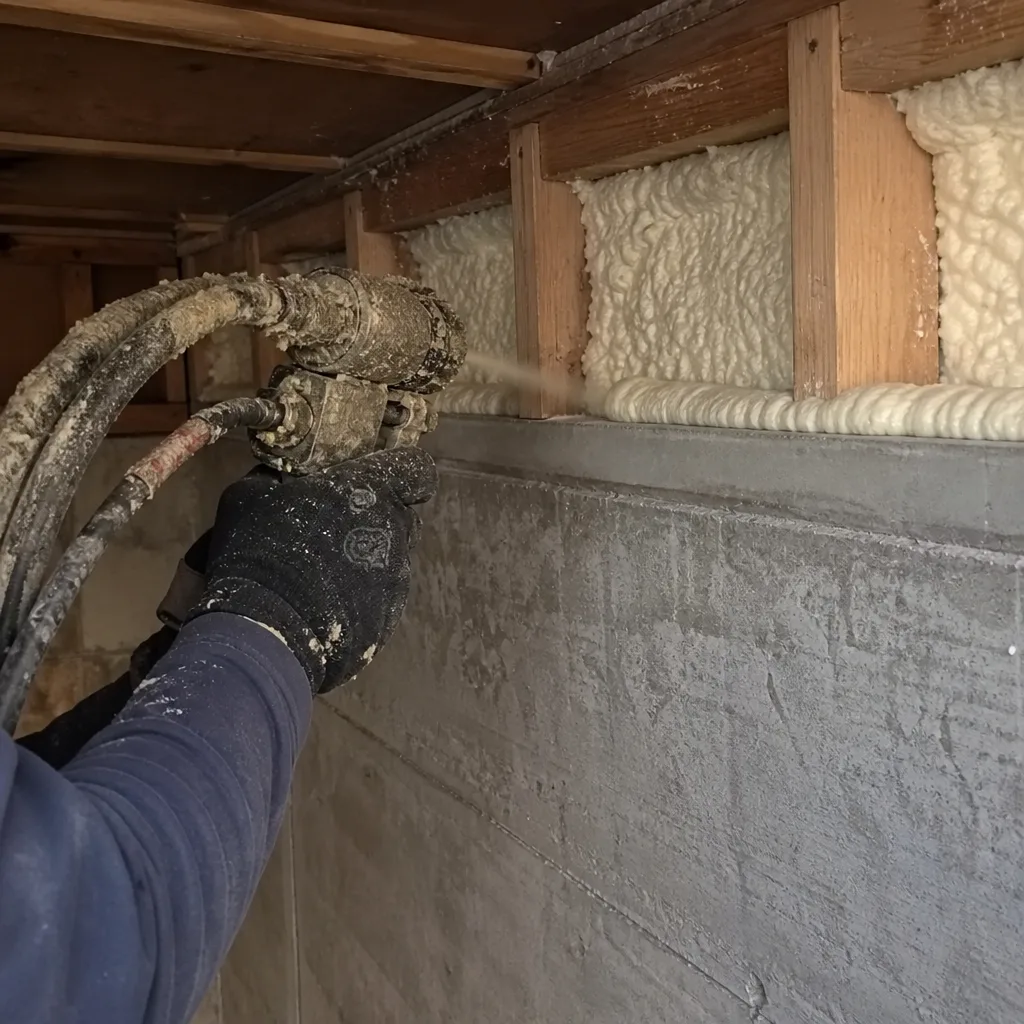
Spray foam does two jobs in one pass: it insulates and it air-seals. In Montclair’s stucco tract homes, that matters because the open wall cavities and leaky attic access points let hot exterior air move into the house even before the afternoon sun loads the walls. Open-cell foam works well for interior walls and sound control, while closed-cell foam adds structural strength and vapor resistance in crawlspaces and rim joists. For homes with attics the family actually uses or ductwork running through unconditioned space, spray foam on the roofline can transform the thermal performance of the entire envelope. Spray Foam Insulation in Montclair walks through the two foam types and where each makes sense for a mid-century Pomona Valley home.
What happens when you call
- 1
A real person answersNo phone trees — you reach a local pro.
- 2
You get an upfront price rangeHonest numbers before anyone is dispatched.
- 3
A background-checked tech heads outLicensed & insured, dispatched right away.
- 4
You approve before work beginsNothing starts until you say go.
Blown In Insulation in Montclair
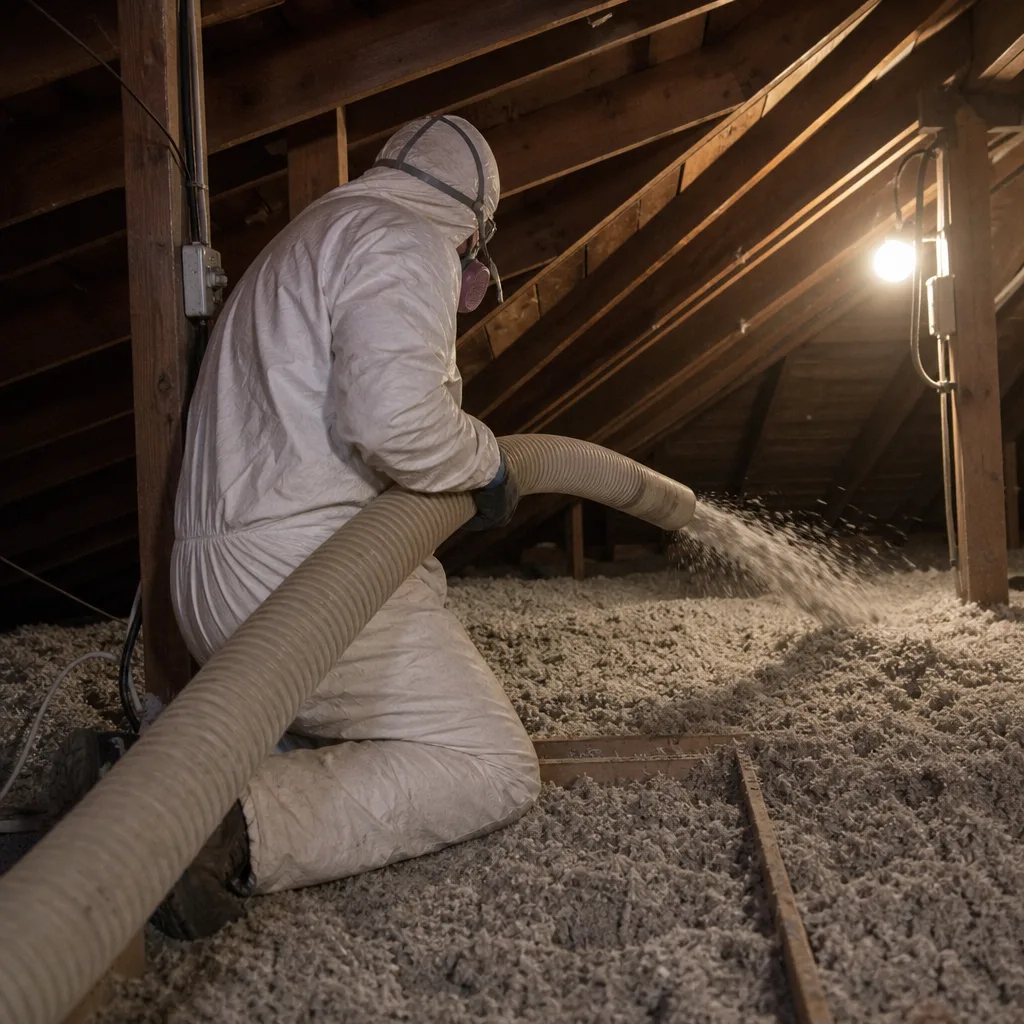
Blown in insulation is the most practical retrofit solution for Montclair’s 1940s-to-1970s tract homes because it reaches places batts cannot: closed wall cavities, uneven attic floors, and attic edges with tight clearances. We blow loose-fill fiberglass or cellulose into existing wall and attic spaces through small access holes, filling the cavities fully and bringing attic R-values up to the levels modern energy codes expect for the Inland Empire. For homes built before 1978 with no wall insulation, blown in wall work is often the single most noticeable comfort upgrade a Montclair homeowner can make. Blown In Insulation explains the full method across all the markets we serve.
Cellulose Insulation
Signs you need it
Your attic batts sit at or below the joist tops and rooms run 8 to 12 degrees warmer than the thermostat setting in the afternoon, which means the existing material has settled and lost its loft.
What it costs in Montclair
Blown-in cellulose attic work in Montclair generally runs $1,700 to $3,800 depending on depth and access, with GreenFiber recycled-content cellulose available as a standard option.
How we do it
We air-seal the attic floor penetrations first, then blow cellulose with a calibrated machine to a consistent depth that hits R-38 to R-49 across the entire attic.
Blown In Attic Insulation
Signs you need it
The upstairs or back bedrooms facing south or west stay hot well into the evening, and the HVAC system runs continuously from 2 p.m. to 8 p.m. during inland heat waves.
What it costs in Montclair
Blown in attic insulation in Montclair typically costs between $1,700 and $3,800 depending on square footage, existing depth, and how much air sealing the attic floor requires.
How we do it
We remove or flatten failing existing batts as needed, seal the leakage points, then blow fiberglass loose-fill to a uniform, code-correct depth across the full attic floor.
Loose Fill Insulation
Signs you need it
Your attic has thin spots, bare areas, and batts that are compressed or shifted, so the ceiling temperature varies by room and the insulation no longer performs consistently.
What it costs in Montclair
Loose fill attic insulation for mid-century Montclair homes falls in the $1,700 to $3,800 range, with attic size and access difficulty affecting the final line.
How we do it
We calculate the depth for the target R-value, mark reference points, and blow loose fill evenly down to the eaves with baffles preserving airflow.
What Blown In Insulation Costs in Montclair
| Item | Typical range in Montclair |
|---|---|
| Blown in attic insulation (fiberglass) | $1,700 – $3,800 |
| Blown in attic insulation (cellulose) | $1,700 – $3,800 |
| Blown in wall insulation (dense pack) | $1,700 – $3,800 |
Is blown in insulation worth it for a 1950s Montclair home?
Yes, because those wall cavities are usually empty, and filling them changes how the house rides out afternoon heat. Blown in work is the most cost-effective retrofit for that era of construction, and we match the material to the cavity rather than pushing one product.
Can you blow insulation into existing walls without removing the stucco?
Yes. We drill small access holes at the top of each stud bay from the exterior or interior and blow in material under pressure, then patch the holes. Stucco removal is not needed, and we work from the outside whenever the finish allows a clean patch.
Brands We Service in Montclair
We carry products from Owens Corning, GreenFiber, Demilec, and Johns Manville for Montclair jobs, along with our full brand lineup. Material is delivered per job rather than drop-shipped, so scheduling stays predictable. See our brands for details on the full eight-brand portfolio.
Pricing for Insulation Company in Montclair, CA
| Service | Typical range in Montclair |
|---|---|
| Blown in attic insulation (fiberglass) | $1,700 – $3,800 |
| Blown in attic insulation (cellulose) | $1,700 – $3,800 |
| Blown in wall insulation (dense pack) | $1,700 – $3,800 |
| Attic insulation (batts/blankets + air sealing) | $1,800 – $3,500 |
| Spray foam insulation (open-cell) | $2,200 – $5,000 |
| Spray foam insulation (closed-cell) | $2,800 – $6,000 |
| Attic air sealing (with insulation) | $400 – $1,200 |
| Rim joist insulation (closed-cell foam) | $900 – $1,800 |
| Crawlspace wall insulation (foam or batts) | $1,200 – $2,500 |
Montclair pricing runs toward the upper end when attics are shallow, access is tight, or the home has balloon framing that exposes wall cavities to attic air. We quote upfront and do not change the number at the end of the job.
Neighborhoods We Serve in Montclair
We work across all of Montclair within the 91763 ZIP code, including the mid-century tracts that make up most of the city’s housing stock. Typical response for an estimate visit is one to three business days, and we schedule attic-heavy work early in the morning to avoid the worst of the summer heat on installers.
- North Montclair / Arrow Highway corridor
- Central Montclair / Benito Street area
- Monte Vista Park neighborhood
- King Ranch tract
- Anders Park area
Service Area – Cities Near Montclair
Our crews serve the Pomona Valley and surrounding Inland Empire cities from our Van Nuys base. Homeowners in Claremont, CA, Ontario, CA, Upland, CA, and La Verne, CA get the same three-method, eight-brand insulation service, with the same direct answer on which material suits their home. If you are outside Montclair city limits, give us a call and we will confirm coverage.
Serving Montclair, CA — Our Local Coverage Area
We’re based in the Montclair area and know this community well. Use the map below to see our service coverage — if you’re nearby, we can almost certainly help.
FAQs About Insulation Company in Montclair
Most Montclair estimates happen within one to three business days. We schedule attic inspections in the morning during summer because attic temperatures by mid-afternoon make a safe inspection difficult, and we measure, photograph, and give you the quote on-site before we leave.
Most retrofit insulation jobs do not require a permit because they are not structural changes, but jobs involving re-roofing, new construction, or certain spray foam applications can trigger plan-review requirements depending on building department interpretation. We are familiar with Montclair’s building department expectations and will tell you during the estimate if your job needs paperwork.
Both. Most of our Montclair work is retrofit because that is what the housing stock demands, but we also insulate additions, converted garages, and new builds in the city. The material recommendation changes with the construction type, and we will tell you which method fits the actual frame you have.
What happens when you call
- 1A real person answersNo phone trees — talk to a local insulation pro.
- 2You get an upfront price rangeHonest numbers before anyone is dispatched. No surprises.
- 3A background-checked tech heads outLicensed & insured, typically same-day.
- 4You approve before work beginsNothing starts until you say go.
What Montclair Customers Say
"Handled the utility rebate paperwork, which knocked a real amount off the final cost."
— Chris Kowalski"Plastic laid from the front door to the attic hatch and they vacuumed the hallway afterward."
— Gabriela Rodriguez"Work is good and the house is noticeably more comfortable. There was insulation debris left in the hall closet under the attic access that I had to clean up."
— Maya Singh