
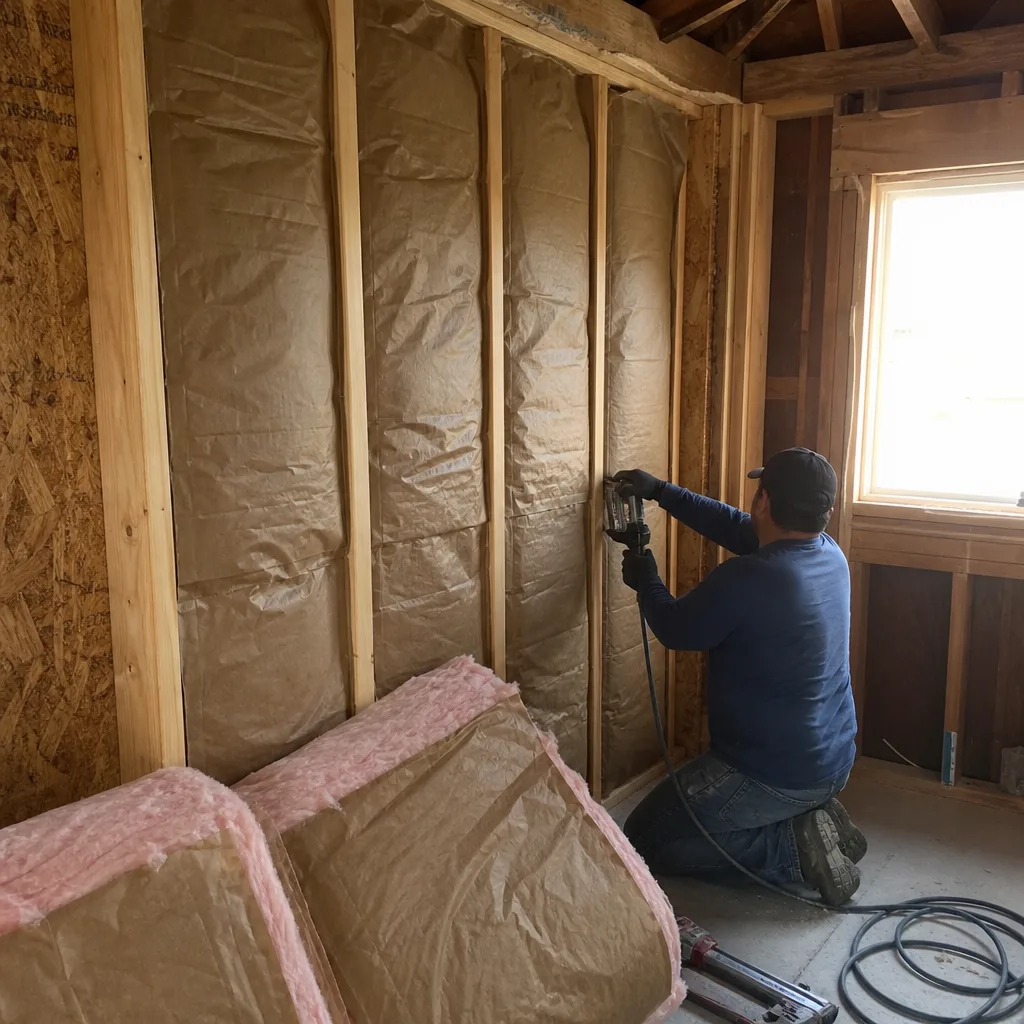
Reflectix Insulation in Los Angeles, CA | Thermal Insulation Co
We provide independent Reflectix service across Los Angeles, and the one thing that makes our Reflectix work different here comes down to this: in LA, you’re almost never installing Reflectix for winter heat retention. You’re installing it to stop radiant heat from turning shallow attic cavities and west-facing walls into ovens during a seven-month hot season. That single difference shapes every recommendation we make about foil placement, air space, and whether your existing barrier can be saved or needs to come out. Call us at (855) 382-3451 for an honest read on your Los Angeles property. As a dedicated insulation contractor, we work with Reflectix radiant barrier products every week because they solve a problem LA homes actually have. We’re also well placed to say when they aren’t the answer. Our Reflectix sales & service work across the Los Angeles service area keeps us in attics, crawl spaces, and roof decks from Koreatown to South LA, so we’ve learned what holds up under sustained Southern California heat and what fails quietly.
Why Los Angeles Residents Choose Us for Reflectix Service
Most insulation crews in Los Angeles treat Reflectix as an afterthought, a roll of shiny stuff they staple up before moving on to the blown-in job that actually pays. We don’t. We carry genuine Reflectix rolls because foil thickness and bubble core density determine how well the product reflects radiant heat, and we won’t substitute a thin foil knockoff that delaminates after one summer. Our founder, Ruben Castellano, grew up in Montebello and studied building science at East Los Angeles College before spending the better part of two decades diagnosing why LA homes stay hot even after someone already insulated them. That background matters when you’re looking at a 1920s bungalow in the 90008 ZIP and trying to figure out why the rear bedrooms won’t cool down. We’re an independent Reflectix service provider and installer, not affiliated with, authorized by, or endorsed by Reflectix, Inc. What that means for you is simple: our recommendation about your barrier comes from what we see in your attic, not from a brand playbook.
Ruben puts it a certain way: “If a room in your house has always been the wrong temperature, there is usually a straightforward reason, and it is worth knowing what it is before spending money on anything.” He’s not wrong. We’d rather spend forty minutes in your attic finding the actual failure than quote you a replacement you might not need.
Common Reflectix Insulation Problems We Solve in Los Angeles
- Delamination and foil flaking: The reflective foil facing separates from the bubble core after years of sustained heat cycling in LA attics. Roof decks in the 90005 through 90008 ZIP codes regularly hit 140+ degrees in August, and that thermal expansion and contraction eventually breaks the bond. Once the foil flakes, the surface loses its low-emissivity performance and stops blocking radiant gain. In many cases, the fix is a full replacement with genuine Reflectix material installed correctly.
- Emissivity degradation from dust and soot film: In Westlake and Koreatown lots near busy arterials like Olympic or Wilshire, airborne grime gradually coats the foil face. That thin film quietly kills the barrier’s reflectivity, so homeowners assume the product stopped working. Sometimes it has. Other times, the foil is mechanically sound and just needs cleaning, but most people never check until a bedroom has become unusable by 3 p.m.
- Improper installation against hot unvented cavities: Reflectix stapled tight to roof sheathing or facing a shallow unvented attic with no air space creates a contact failure. The barrier conducts heat instead of reflecting it, and the attic actually gets hotter. This is the single most common mistake we find, and it’s especially common in pre-war Los Angeles housing where attic space is minimal and installers skip the standoff.
- Moisture and condensation trapping in crawl spaces: When Reflectix is used as a crawl-space facing without a proper vapor barrier strategy, the foil traps condensation against wood framing during occasional winter rains. It’s a slower failure, but it fuels rot and attracts pests. We see this most often in 1920s-40s bungalows where someone tried a DIY fix years ago.
- Wrong product for the application: Not every shiny roll is the same. Reflectix Double Bubble, Double Reflective Foil, and Reflective Foam Core all behave differently depending on whether they’re going on a roof deck, a wall, or a duct run. We regularly find the wrong one installed in the wrong place, which is an easy diagnosis once you know what to look for.
Reflectix Service in Los Angeles: What Local Conditions Mean for Your Equipment
The 1920s-40s Craftsman bungalows and Koreatown Reflectix service calls in Westlake apartment courts in the 90001-90010 corridor often have shallow, unvented attic cavities, and a surprising number of them were originally framed as garages below living space. That housing stock changes how Reflectix work has to be sequenced here. You can’t just staple foil to the underside of the roof deck and walk away. In a shallow unvented cavity, the barrier needs baffling and air-sealing against hot attic air before any foil goes up, otherwise you’ve created a heat-bridge failure that traps heat instead of reflecting it. This sequencing problem doesn’t show up in newer suburban housing with deep vented attics, so a crew that learned Reflectix installation in Santa Clarita or Orange County tract homes will often get it wrong on a Westlake apartment court. We approach every Los Angeles Reflectix retrofit by looking at the cavity first, because in this city the cavity is usually the constraint, not the product.
Reflectix Models & Products We Service in Los Angeles
We work with the full Reflectix lineup: Double Bubble Insulation, Double Reflective Foil Insulation, Reflective Foam Core Insulation, and Duct Wrap rolls. In Los Angeles, the Double Bubble product gets the most use on attic radiant barrier retrofits because it’s forgiving in tight cavities and holds up well when properly stood off from the roof deck. The Duct Wrap is a quiet workhorse here too, especially in older buildings where duct runs pass through unconditioned attic or crawl spaces and pick up heat before the air ever reaches a register. For any new reflective assembly, we spec genuine Reflectix-brand rolls, because the foil thickness and bubble core determine real-world emissivity. We won’t install a thin knockoff that delaminates in one season. When existing Reflectix is still sound, we repair and re-tension rather than upsell a replacement, but we tell you plainly when a foil surface has lost emissivity or a crawl-space install is trapping moisture and needs to come out.
Reflectix Service Pricing in Los Angeles
Reflectix service in Los Angeles usually lands between $1.50 and $3.50 per square foot for material and labor on a typical attic radiant barrier install. Duct wrap runs a bit less per square foot because the runs are simpler. Repairs and re-tensioning of existing barriers are typically charged on an hourly basis, and most jobs in the 90005 through 90008 ZIP codes take half a day to a full day depending on access. What drives cost here more than anything is cavity geometry. A 1920s Koreatown apartment court with a shallow unvented attic means more prep work, baffling, and air-sealing before Reflectix in Echo Park or nearby areas goes up. A newer home with a tall vented attic costs less per square foot because the cavity is cooperative. A free estimate from us includes a look at the actual cavity, the condition of any existing barrier, and a straight answer about whether repair makes more sense than replacement. Call (855) 382-3451 for an exact quote on your Los Angeles property.
Serving Los Angeles, CA — Our Local Coverage Area
We’re based in the Los Angeles area and know this community well. Use the map below to see our service coverage — if you’re nearby, we can almost certainly help.
FAQs – Reflectix Insulation in Los Angeles
Will a Reflectix radiant barrier actually lower attic temperatures in a Los Angeles bungalow, or is it wasted money in a mild climate?
Yes, a properly installed Reflectix barrier will lower attic temperatures even in LA’s mild-winter climate, because the product targets radiant heat gain rather than conductive heat loss. The low-angle sun and long hot season here mean attics hit 130-140 degrees in summer, and a correctly stood-off foil barrier can knock that down measurably. What makes it work or fail is the air space and the condition of the foil face. If you’re wondering whether your specific attic is a fit, call (855) 382-3451 and we’ll tell you straight.
My Koreatown apartment building has a shallow unvented attic over an old garage. Can Reflectix go up there at all?
Reflectix can work in a shallow unvented attic over an old garage, but only if the cavity is sealed and baffled first. Stapling foil directly to the roof sheathing in that setup creates a contact failure that traps heat. We’ve done this retrofit on apartment courts in Westlake and Koreatown, and Reflectix repair in Silver Lake follows the same rule: the sequencing matters more than the product. Call (855) 382-3451 and we’ll assess the cavity before recommending anything.
The foil on my existing Reflectix barrier looks dull and chalky. Do I need a full replacement?
Not necessarily. A dull or chalky film on the foil face is usually dust or soot buildup, especially near busy Los Angeles arterials, and a cleaning can restore much of the reflectivity. If the foil has actually flaked or delaminated from the bubble core, that’s a mechanical failure and replacement is the honest fix. We’ll tell you which one you have after a look. Estimates are free at (855) 382-3451.
Is Reflectix a good fit for a crawl space in LA, or does it cause moisture problems?
Reflectix in a crawl space can cause moisture problems if it’s installed without a proper vapor barrier strategy. The foil facing can trap condensation against wood framing during winter rains and fuel rot. In most Los Angeles crawl spaces, we recommend a different approach unless the vapor barrier and drainage are already handled correctly. If someone already installed Reflectix in your crawl space and you’re worried, call (855) 382-3451 and we’ll inspect it.
How is Reflectix different from just adding more blown-in attic insulation?
Reflectix and blown-in insulation do different jobs. Blown-in insulation slows conductive heat transfer through the attic floor into the living space. Reflectix reflects radiant heat away from the roof deck before it enters the cavity in the first place. In Los Angeles, the radiant component is usually the bigger player in summer heat gain, so a barrier often does more for comfort than another six inches of fiberglass. The right answer depends on your attic, and we’ll tell you which matters more after looking at yours. Call (855) 382-3451.
Service Areas Near Los Angeles
We work throughout the central Los Angeles basin and into the Valley. That includes Van Nuys and Valley Glen for homes with garage-adjacent attics, Sherman Oaks and Studio City for older ranch-style builds, and Encino and North Hills where duct runs in unconditioned spaces make Reflectix Duct Wrap a practical fix. For specifics in those areas, see our Reflectix service in Inglewood page and Reflectix service in Boyle Heights page, where we cover the cavity conditions common to those streets.
Book Your Reflectix Service in Los Angeles Today
If your Los Angeles attic is baking your bedroom or your Reflectix barrier looks like it stopped working years ago, call us at (855) 382-3451. We’ll send someone who actually understands LA roof decks and crawl spaces, and we’ll give you an honest answer about Reflectix service in Hollywood or anywhere in LA that’s worth fixing. Same-day estimates are usually available.
Written by Ruben Castellano, Owner at Thermal Insulation Co, serving Los Angeles for nearly two decades.