
Fast, Reliable Attic Insulation Across Piñon Hills
Attic insulation in Piñon Hills isn’t a coastal job. Your attic bakes past 140°F on a July afternoon and drops toward freezing the same December night, and most Southern California insulation specs were never built for that swing. We design attic systems for the high desert’s dual climate: reject solar gain, hold heat through hard freezes, and stop the wind that slips through unsealed eaves on acreage homes. If your rooms overheat upstairs while your heater runs all night, the attic is usually where it’s leaking. Call us at (855) 382-3451 for a free estimate, and we’ll tell you exactly what’s happening up there.
Why Thermal Insulation Co Is Piñon Hills’s Preferred Attic Insulation Company
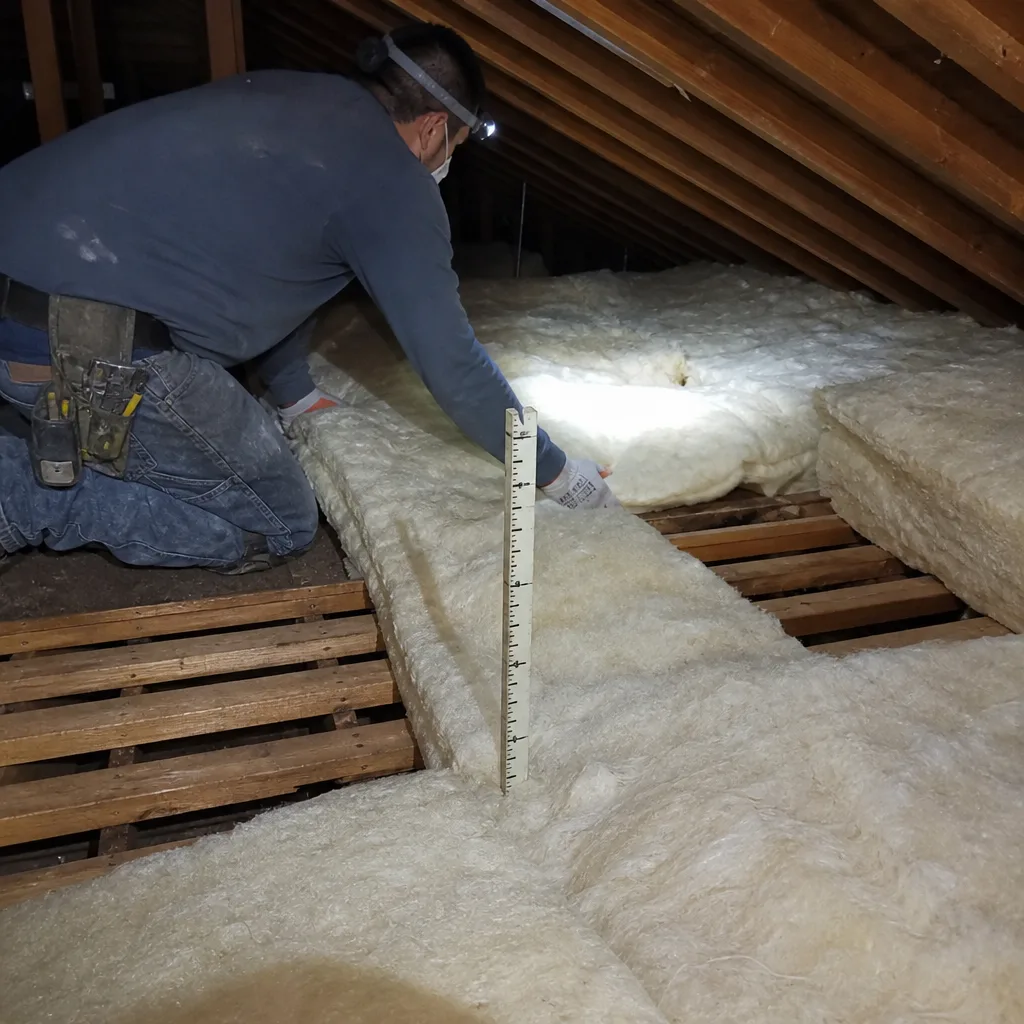
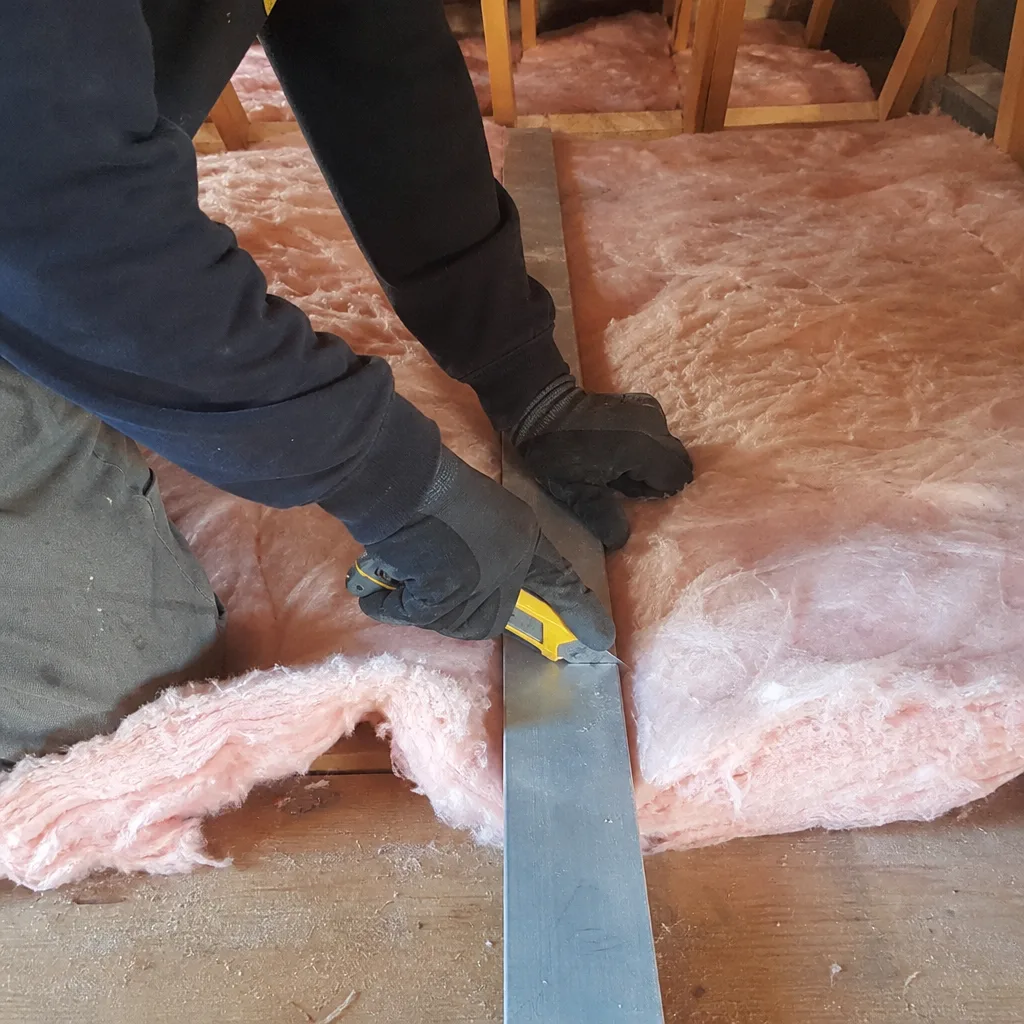
We’re a dedicated insulation contractor, not a generalist squeezing attic work between bathroom remodels. Insulation is the only trade we practice. That focus matters in Piñon Hills because the housing stock here demands more than a quick batts-and-go job. We’ve opened attics off Phelan Road, along El Centro Road, and up around the 92372 ZIP where original 1970s fiberglass sits slumped between joists, no radiant barrier in sight, wind-packing insulation against one gable while the other side barely holds heat. Ruben Castellano and our crew know these homes because we’ve worked in them.
We carry eight insulation brands, including Owens Corning, Johns Manville, GreenFiber, Demilec, and Rockwool. Most insulation companies in the area stock one or two lines. We stock competing brands across categories so the recommendation we give you is driven by your attic’s R-value targets, moisture profile, and framing, not by whatever happens to sit in a warehouse. When a Piñon Hills homeowner needs a radiant barrier, we don’t have to talk them out of it so we can sell a product we’re overstocked on. We install what the house needs.
Radiant Barrier in Piñon Hills
Radiant barrier in Piñon Hills is not a gimmick, and it’s not optional on most older homes here. In our experience, a 1970s or 1980s owner-built attic with exposed roof decking will hit 140°F-plus on a summer day, and that heat radiates straight through the ceiling into the rooms below. A radiant barrier stapled under the roof deck reflects the sun’s heat before it ever reaches your insulation. R-value alone slows conductive heat; it doesn’t stop radiant heat. In the high desert, you need both.
Homeowners across Piñon Hills tell us the same story: the AC runs from noon to midnight in July and the living room still won’t cool below 78°F. That’s radiant gain, and it’s the single biggest comfort problem we see up here. Installing a radiant barrier in a typical 1,800-square-foot home in Piñon Hills runs roughly $900 to $2,200 depending on attic access, roof pitch, and whether we’re also air-sealing the eaves. It’s often the fastest improvement we can make to July energy bills and nighttime comfort.
Where It Goes and What It Does
We staple or secure the barrier to the underside of the roof rafters, leaving the attic floor insulation untouched. The reflective surface faces the attic air space, bouncing radiant heat back before it reaches ceiling joists. In Piñon Hills, where a clear summer day is the default, the effect is immediate. The attic temperature drops 20 to 30 degrees on the worst afternoons. That means the insulation below works less hard, and the rooms below stay closer to the thermostat setting.
When It’s Not Enough Alone
Radiant barrier is not a substitute for attic insulation. We’ve seen homes where someone added a barrier but skipped air-sealing, and the wind still washed through the eaves, stripping performance on winter nights. The correct sequence in Piñon Hills is air-seal first, then radiant barrier, then reassess loose-fill or batt depth. Ruben will tell you the same thing on the phone whether or not it means a smaller initial job for us.
Attic Cleaning Services in Piñon Hills
Attic cleaning services in Piñon Hills are about more than hauling out old fiberglass. On a 1979 owner-built home off Phelan Road, we opened the attic to find original R-11 batts slumped between joists, no radiant barrier, and wind-washed fiberglass packed against one gable where gusts off the Antelope Valley corridor had been pushing air through unsealed soffits for decades. We air-sealed the eaves and top plates, added a radiant barrier under the roof deck, and blew GreenFiber to a high-desert R-value target so the same attic could hold heat on a sub-freezing January night. That’s what a proper attic reset looks like up here, not just sweeping and bagging.
In Piñon Hills, attic cleaning typically runs $700 to $1,900 depending on attic size, depth of existing insulation, and access. If rodents have been present, we bag and remove contaminated material rather than blowing over it. That matters more here than in the city: acreage homes back up to open desert, and mice plus pack rats find attics fast. You don’t want new insulation laid over old droppings and nesting. It keeps the smell, the allergens, and the problem.
When Cleaning Beats Adding On
If your existing insulation is thin, soggy, or packed down, adding more on top traps the old problems underneath. Your attic should be emptied, inspected, air-sealed, and then re-insulated to current high-desert specs. We recommend this route for most Piñon Hills homes built before 1990. The old material wasn’t rated for the temperature extremes and wind exposure your house actually faces.
Blow-In Over Existing Insulation
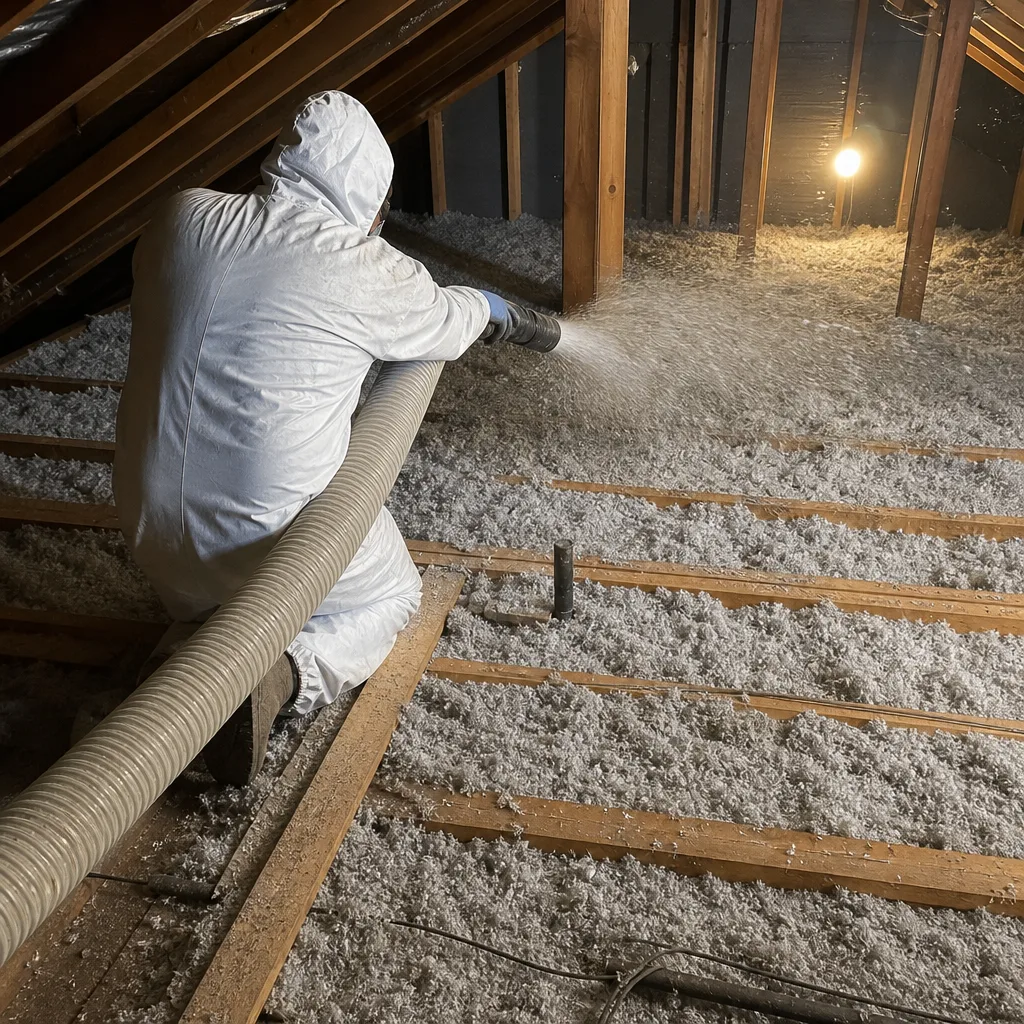
When the existing insulation is dry, clean, and simply underperforming, we can often top it up without full removal. This is the faster, lower-cost path for newer builds that just need more R-value. In Piñon Hills, an attic top-up with recycled cellulose or fiberglass loose-fill generally falls between $1,100 and $2,600 for a typical 1,600-to-2,200-square-foot home. We’ll only recommend it if the substrate below is worth keeping.
What happens when you call
- 1
A real person answersNo phone trees — you reach a local pro.
- 2
You get an upfront price rangeHonest numbers before anyone is dispatched.
- 3
A background-checked tech heads outLicensed & insured, dispatched right away.
- 4
You approve before work beginsNothing starts until you say go.
Trusted Brands We Service in Piñon Hills
We’re authorized to install products from Owens Corning, Johns Manville, GreenFiber, Demilec, and Rockwool, among others, and we keep our recommendation brand-agnostic. That’s not a marketing line; it’s how we work. We carry GreenFiber because recycled cellulose makes sense in high-desert attics where we need dense coverage and wind resistance. We carry Rockwool because some Piñon Hills homeowners want mineral wool’s fire resistance on a property surrounded by dry brush. We carry Demilec spray foam because open-cell and closed-cell each solve different problems, and vaulted ceilings or tight framing often call for one specifically. When a customer calls for Attic Insulation advice, the material choice comes from the house, not a sales target. Local jobs mean we can get material to Piñon Hills quickly and schedule most work within a few days.
Common Attic Insulation Problems We See in Piñon Hills Homes
- Wind washing along unsealed eaves. Gusts off the Cajon and Antelope Valley corridors push through soffit gaps and strip heat right out of the insulation. We see fiberglass packed hard against a gable wall while the opposite side of the attic stays cold, which is a telltale sign the insulation has been wind-scoured for years.
- No radiant barrier on older roof decks. Most 1970s and 1980s owner-built homes in Piñon Hills were framed with exposed rafters and never retrofitted for radiant heat control. The result is a July attic that cooks the ceilings below into radiators.
- Slumped legacy fiberglass in minimally finished attics. Original R-11 batts compressed between joists aren’t doing much of anything, especially after forty years of high-desert temperature swings. The attic looks insulated but isn’t.
- Vaulted ceilings with little or no insulation cavity. Many custom builds on acreage off Phelan and Piñon Hills roads used vaulted ceilings for the look, then left a 2×6 cavity as the only thermal break. That’s brutal for both July cooling and January heating loads.
Pricing for Attic Insulation in Piñon Hills, CA
Here’s what we tell Piñon Hills homeowners before we ever step in the attic. Blown-in attic insulation for a standard 1,600-to-2,200-square-foot home runs $1,700 to $3,800, depending on depth, material, and whether we air-seal beforehand. A radiant barrier install runs $900 to $2,200. Full attic cleaning plus re-insulation runs $1,800 to $4,600 when old material has to come out first. Vaulted ceiling retrofits with spray foam vary more because each framing layout is different, but most jobs land between $3,500 and $8,000. The big cost drivers are attic access, existing vapor barriers, and how much wind sealing the eaves actually need. Call (855) 382-3451 and Ruben will walk you through the actual numbers for your house. Estimates are free, and the quote won’t change unless the attic changes.
We Also Serve Cities Near Piñon Hills
Beyond Piñon Hills, we regularly schedule attic work in Phelan, Wrightwood, Oak Hills, and Adelanto. The elevation and wind profiles shift from one town to the next, so we spec each job for the actual conditions, not a template. If your property is on the Tri-Community edge, we’ll tell you straight what the attic needs for the altitude it actually sits at.
Serving Piñon Hills, CA — Our Local Coverage Area
We’re based in the Piñon Hills area and know this community well. Use the map below to see our service coverage — if you’re nearby, we can almost certainly help.
FAQs About Attic Insulation in Piñon Hills
A Piñon Hills attic swings from over 140°F on July afternoons to below freezing on January nights, and the wind off the Cajon and Antelope Valley corridors washes heat through unsealed eaves. Coastal specs only address mild temperatures and still air, so we spec for radiant rejection plus hard-freeze retention plus wind resistance. That’s a three-problem design envelope most insulation contractors don’t even check for. Call (855) 382-3451 for an attic assessment that addresses all three.
Wind washing is what happens when wind blows through soffit gaps and along the underside of the roof, pushing air through the top layer of insulation and cutting its effective R-value dramatically. On large-lot Piñon Hills homes with open exposure, wind washing is often the single biggest performance leak. Sealing eaves and top plates before insulating fixes it for good.
Radiant barrier helps a lot in Piñon Hills because the problem here is radiant heat first and conductive heat second. R-value stops heat from moving through materials; it does nothing for the sun’s radiant heat heating your roof to 140°F. A radiant barrier reflects that heat, and in our experience it’s the single fastest July comfort improvement for older exposed-rafter attics. Most Piñon Hills homes need both, not one or the other.
If the old insulation is compressed, dusty, mouse-trafficked, or wet, we clean it out and start fresh with air-sealing and new material. Adding over compromised insulation traps the problem underneath, and in a Piñon Hills attic with hard-freeze winters, that means heat leaks you can’t fix from above. If the existing material is clean and dry, a top-up can work fine. We’ll give you the honest call either way after looking at it.
Yes, spray foam is the usual route for vaulted ceilings and under-insulated attic cavities in Piñon Hills custom builds. Open-cell foam fills 2×6 and 2×8 cavities and seals air movement at the same time. Closed-cell foam adds higher R-value per inch for tight spaces. Some exposed-beam ceilings need a different approach, and we’ll spec that after seeing the framing. Estimates are free at (855) 382-3451.
Written by Ruben Castellano, Owner at Thermal Insulation Co, serving Piñon Hills and the surrounding high desert.