
Fast, Reliable Attic Insulation Across Mayflower Village
Attic insulation in Mayflower Village typically runs $1,800 – $4,200 for a full retrofit, with most jobs completed in a single day. The real issue here isn’t just missing insulation. It’s what decades of citrus-era shade trees have done to the venting system that’s supposed to keep that insulation working. Call (855) 382-3451 for a free estimate and we’ll tell you exactly what’s going on above your ceiling.
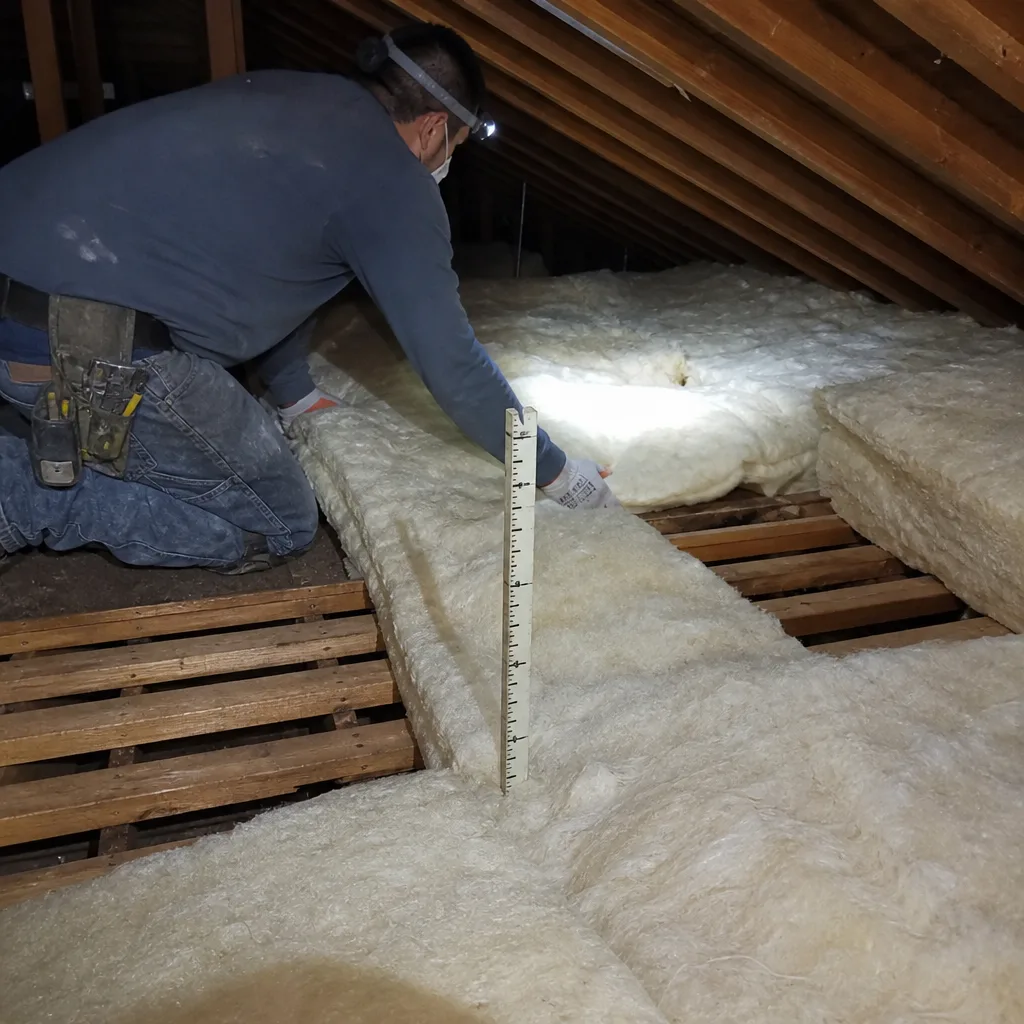
We’re Thermal Insulation Co, led by Ruben Castellano, and Attic Insulation is what we do every day – not a side line. If you live in the 91006 ZIP, between Monrovia and Arcadia, you already know the summer afternoons that bake a roof. What you may not know is that most Mayflower Village attics we open are fighting a losing battle before we even add a single batt, because the soffit vents buried under 70 years of leaf pack stopped doing their job long ago.
Why Thermal Insulation Co Is Mayflower Village’s Preferred Attic Insulation Company
We carry eight insulation brands because no single material fixes every Mayflower Village attic. Owens Corning batts, Johns Manville blown-in, GreenFiber recycled cellulose, Icynene and Demilec spray foam, Rockwool mineral wool, Knauf, and CertainTeed – we stock competing products across categories so the recommendation comes from your roof, your framing, and your duct layout, not from whatever’s on the truck. Most single-trade contractors carry one or two lines. We carry eight because a 1952 ranch with plaster walls and a low-pitch hip roof needs something different than a 1963 minimal traditional with a gable and a newer drywall ceiling.
Insulation is our sole trade. We don’t do roofing, plumbing, or windows. That focus matters in Mayflower Village because the houses are specific: mid-century wood-frame, original sheathing, narrow attic hatches, and the kind of tight citrus-era side yards that turn equipment access into a puzzle. Ruben Castellano and our crew have worked these streets enough to know which homes have gable vents, which have soffit-only venting, and which have neither. That’s the difference between an estimate we can stand behind and a guess.
We respond to Mayflower Village calls the same day we can, and we’re honest when that means tomorrow morning instead of tonight. Estimates are free. We’ll walk you through what’s in the attic now, what’s salvageable, and what the right method is for your house – batts, blown-in, or spray foam.
Attic Ventilation in Mayflower Village
Attic Ventilation is the fix most Mayflower Village homes need before any new insulation goes down. The citrus-era lots along the Monrovia/Arcadia edge are lined with mature shade trees whose constant leaf and seed drop clogs soffit and gable vents, and most attic jobs here stall until we clear those vents and remove any pest-compromised insulation that’s blocking the airflow path. In the 91006 ZIP, vent clearing plus basic soffit and gable vent restoration typically runs $400 – $900, and if we’re adding new vent boxes or replacing rotted vent framing, that range climbs to $900 – $1,600. An attic that can’t vent will cook any insulation you put in it, so this step isn’t optional.
Why Blocked Soffits Fail Fast in the San Gabriel Valley
When Mayflower Village soffit vents clog with citrus leaf litter, the attic becomes a sealed oven. Inland summer afternoons here routinely hit the mid-90s to low 100s, and a sealed attic above a 1940s or 1950s ranch can reach 140°F before the sun sets. That heat radiates down into the living space and forces your AC to fight all evening. We open the soffits, clear the seed and leaf pack, and verify the gable vents actually move air before we add insulation. Sometimes the fix is just a cleaning. Sometimes the vent framing itself has dry-rotted from decades of trapped moisture.
Pest Damage and Vented Soffit Prep
Leaf-clogged vents attract rodents and birds looking for a sheltered place to nest. In nearly every Mayflower Village home we open, there’s evidence of pest activity near the vent openings – droppings, nesting material, or compromised batts that have to come out. We remove the contaminated insulation, sanitize the area, and only then blow or lay fresh material over a properly vented attic. Skipping this step means laying new insulation over a problem that’ll just come back.
Radiant Barrier in Mayflower Village
Radiant Barrier in Mayflower Village is one of the highest-return upgrades a homeowner can make, because it directly targets the inland San Gabriel Valley heat that defines this area. A radiant barrier installation – typically Owens Corning or a comparable foil-faced product – for a standard Mayflower Village ranch attic runs $1,200 – $2,800 depending on rafter configuration and whether we’re pairing it with insulation replacement. When your afternoon roof is hitting 140°F, a radiant barrier can drop attic air temperatures by 20 – 30°F, which means your ceiling plane stays cooler and your AC cycles less.
How It Works on a Mid-Century Mayflower Village Roof
The sun beats down on your roof deck all afternoon. Radiant barrier is a reflective foil attached to the underside of the rafters. It bounces that radiant heat back out of the attic instead of letting the roof deck radiate it down into the insulation and through the ceiling. In a single-story Mayflower Village home with original 1940s – 1960s framing, this is often the single most effective improvement we can make for summer comfort, because the original builders never accounted for modern AC loads.
Pairing Radiant Barrier With Vented Soffits
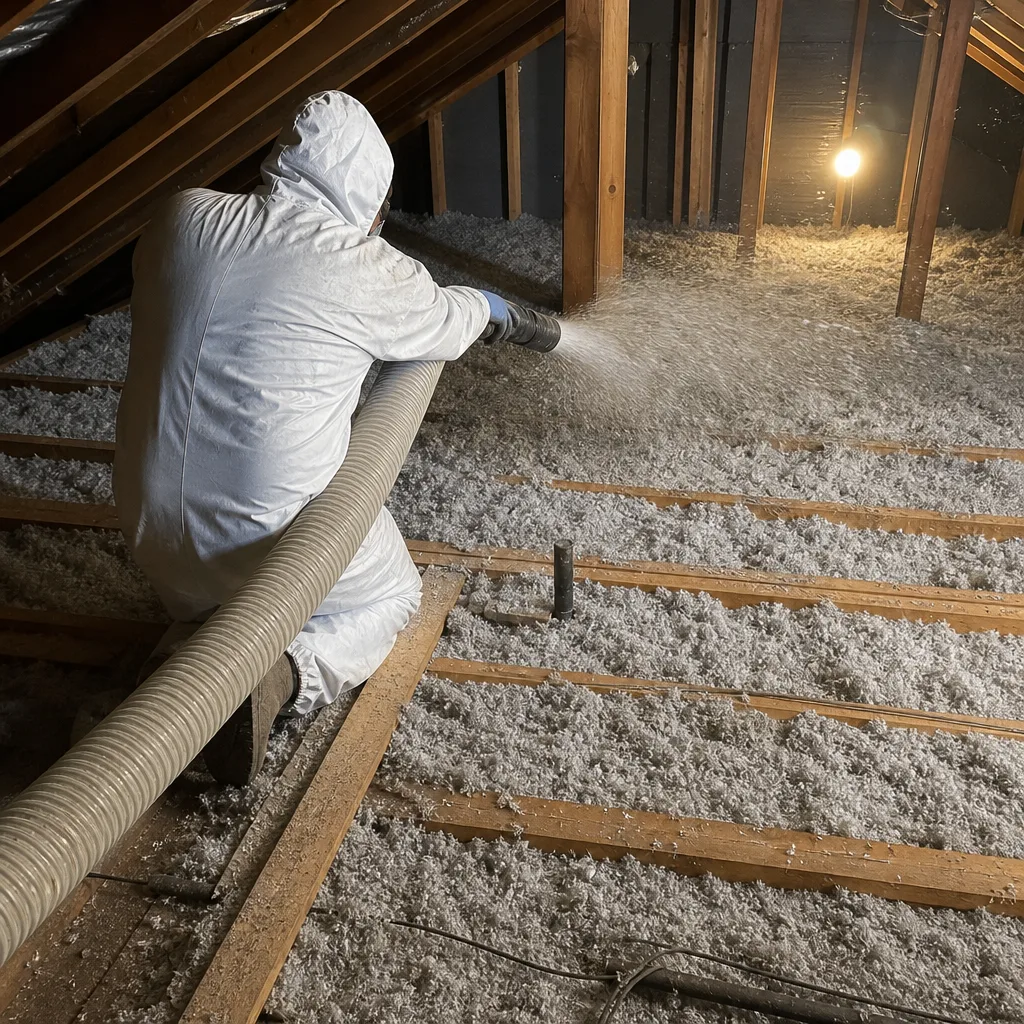
Radiant barrier only works if the attic can shed the heat it reflects. That means the soffit and gable vents need to be clear and moving air. When we install radiant barrier in Mayflower Village, we check vent function first. If we find the usual citrus leaf pack or pest nesting, we clear it. A radiant barrier over a blocked vent stack is wasted money. A radiant barrier over a properly vented attic is measurable comfort.
Trusted Brands We Service in Mayflower Village
We carry Demilec spray foam because its closed-cell formulation handles the San Gabriel Valley’s sharp temperature swings without losing R-value. We carry GreenFiber cellulose because it’s a recycled-content option that fills the irregular cavities in Mayflower Village’s original plaster-walled ceilings better than any batt can. And we carry Owens Corning because their fiberglass batts have been the standard for mid-century ranch retrofits for decades. For Mayflower Village customers, we keep the materials we need for these homes on hand, so we’re not waiting on a distributor when your attic is already opened up. Fast turnaround starts with knowing what these houses need before we even climb the ladder.
Common Attic Insulation Problems We See in Mayflower Village Homes
- Leaf-debris-clogged soffit and gable vents. Every mature shade tree on these citrus-era lots drops leaves and seeds into the vent openings. The attic overheats even after new insulation is installed because air can’t move.
- Pest-compromised original batts. The original 1940s – 1960s batts are compressed, soiled, or missing entirely. Rodents and birds have used them for nesting, leaving the plaster-walled ceiling cavities under-insulated for modern AC loads.
- Sharp heat and cooling swings leaking conditioned air. The inland San Gabriel Valley swing – 90s to low 100s by day, then cool winter nights – means unsealed top plates and leaky ducts lose conditioned air both ways. That’s the number one reason Mayflower Village energy bills spike in summer.
- Missing or collapsed radiant barrier. If a previous owner added a foil barrier in the 1980s or 1990s, it’s often torn, sagging, or completely detached by now. We see this constantly. It has to come down before new insulation can go in.
Pricing for Attic Insulation in Mayflower Village, CA
A blown-in insulation top-up over existing material in a Mayflower Village ranch typically runs $1,200 – $2,000. A full attic insulation replacement with air sealing and vent clearing runs $2,800 – $4,200. Adding radiant barrier pushes the total to $4,000 – $6,000. Spray foam runs higher because of material cost and prep work, usually $3,500 – $7,500 depending on open-cell versus closed-cell and roof deck condition. What actually drives your price is attic access, how much old material has to come out, and what the vents look like once we open them up. We don’t quote over the phone without seeing the attic. Call (855) 382-3451 for a free estimate and we’ll give you a number we’ll stand behind before any work starts.
We Also Serve Cities Near Mayflower Village
Our Mayflower Village work regularly takes us into Arcadia, Monrovia, Sierra Madre, and North El Monte. The housing stock and tree canopy are similar across all five communities, which means the same vent-clearing and pest-remediation issues come up again and again. If you’re in any of these areas and your attic hasn’t been opened in years, call us. We’ll treat it the same way we treat every Mayflower Village job: look first, quote honestly, then do the work right.
Serving Mayflower Village, CA — Our Local Coverage Area
We’re based in the Mayflower Village area and know this community well. Use the map below to see our service coverage — if you’re nearby, we can almost certainly help.
FAQs About Attic Insulation in Mayflower Village
Because the mature citrus-era shade trees lining these streets drop leaves and seeds into the soffit and gable vents all year, and those vents have to move air for insulation to work. We clear the vents and remove pest-compromised material before any new batts or blow-in goes down. Call (855) 382-3451 and we’ll open the attic and show you exactly what we find.
Yes. Afternoon roof temperatures in Mayflower Village hit 140°F regularly in summer, and a radiant barrier can drop attic air temperature by 20 – 30°F. That’s the single biggest summer-comfort improvement we make in these homes. It pairs best with a properly vented attic, so we check that first.
Yes, and GreenFiber cellulose is the material we use most often for these jobs. Blown-in fills the irregular cavities behind original plaster far better than batts, which leaves gaps the old plaster keys can’t hide. We also seal the top plates and any ceiling penetrations first, since air leaks through those are a bigger loss point in plaster homes than in newer drywall construction.
Mayflower Village is unincorporated Los Angeles County territory, so there’s no city building department sign-off on insulation work. Inspections and permitting run through LA County when required. That changes how we document the retrofit, and it means you don’t have a local city inspector looking over the job – you have us. We document everything and build to current energy code regardless.
The narrow side yards on these old citrus-era lots can make it tough to get a ladder and full-size insulation machine into position. We plan around it. We’ve worked these Mayflower Village lots enough to know which access points work and which don’t before we even arrive, which saves you time and keeps the job on schedule.
Written by Ruben Castellano, Owner at Thermal Insulation Co, serving Mayflower Village and the surrounding San Gabriel Valley communities.