
Fast, Reliable Attic Insulation Across March Air Force Base
Attic insulation in March Air Force Base is shaped by one thing more than any other: the 1950s-70s military family quarters that make up much of the 92551 housing stock. These homes were built fast, insulated to the standards of their day, and have spent decades absorbing HVAC retrofits, base-mandated pest-control treatments, and Inland Empire heat. That’s why so many attics here need removal and replacement rather than a simple top-up. We’re Thermal Insulation Co, an insulation-only contractor led by Ruben Castellano, and we work these attics every week. Call (855) 382-3451 for a free estimate.
Why Thermal Insulation Co Is March Air Force Base’s Preferred Attic Insulation Company
We’re a dedicated insulation contractor, not a generalist who picked up a blower machine on the side. That matters in March Air Force Base because the attics here demand real diagnostics. A crew that only installs new batts in fresh construction doesn’t know what to do with a 1964 base quarters attic where the original fiberglass has been trampled flat by two generations of pest-control work.
Our team has worked the streets and tracts around March ARB long enough to recognize the patterns: the slumped R-8 batts, the bare ceiling patches over bedrooms, the air handlers wadded with old insulation. We also know the scheduling rules around base access. When a job sits on actual base property, DoD pass coordination adds a layer no neighboring city requires. We handle it without hand-wringing.
The Attic Insulation team carries materials from eight manufacturers so we can match the fix to the house. March Air Force Base customers tell us the same thing: the single-brand contractor quoted a product, while we quoted a solution. That’s the difference.
Attic Mold Removal in March Air Force Base
Attic mold removal in March Air Force Base usually starts with the same call: a homeowner notices dark staining on ceiling corners or smells something musty after a stretch of cool winter nights. The semi-arid climate keeps attics dry most of the year, but winter condensation and decades-old ventilation gaps create pockets where mold takes hold. In 92551 tract homes from the 1950s-70s, single-pane windows and limited eave ventilation mean moisture doesn’t always leave the attic the way it should.
A proper mold removal job here means pulling the affected insulation, treating the framing, and addressing the ventilation so it doesn’t return. Prices for attic mold removal in March Air Force Base typically run $800 to $2,500 depending on the square footage affected and whether the insulation must come out or just be spot-treated. If the mold is extensive and the insulation is already compressed or degraded, removal and replacement is the only honest fix. Call (855) 382-3451 and tell us what you’re seeing. We’ll tell you what it needs.
Ventilation Correction Before New Insulation
Pulling moldy insulation without fixing the airflow that caused it is a waste of the homeowner’s money. In the 92551 corridor, we often find soffit vents blocked by original construction debris or gable vents that never actually connected to the attic space. We correct these before any new material goes in.
When Mold Is Not the Only Problem
Sometimes the mold is a symptom of a bigger issue: a bathroom fan venting directly into the attic (common in post-war military quarters) or a roof leak that’s been slow-dripping for years. We identify what’s actually feeding the moisture and address it as part of the job.
Attic Insulation Removal in March Air Force Base
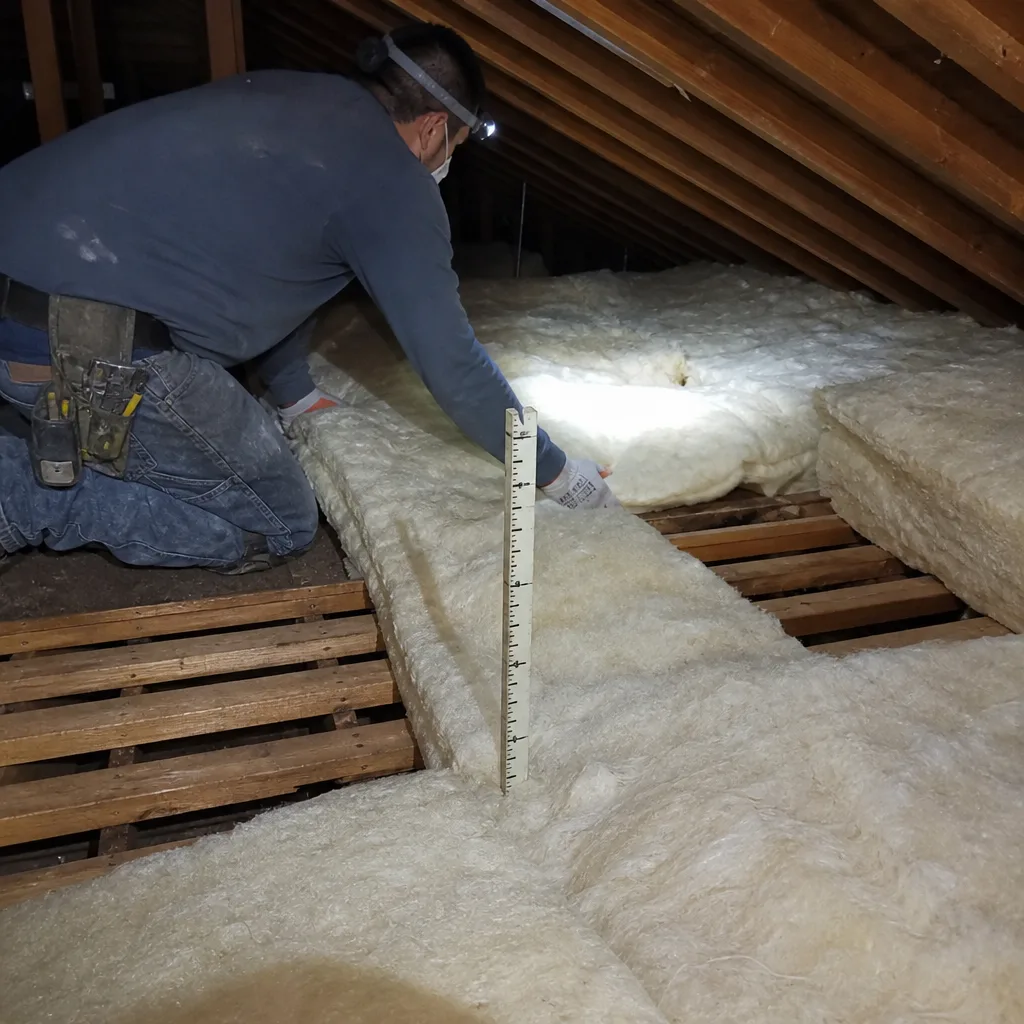
Attic insulation removal in March Air Force Base is not a luxury upgrade. It’s the standard starting point for most homes built as military family quarters in the 1950s-70s. The original batts are compressed flat, shifted into piles after repeated HVAC swap-outs, and filthy after decades of base-mandated pest-control work trampling through the space. Topping off over that mess just buries the problem under fresh material. Full removal usually runs $1 to $2 per square foot in this area, so an average 1,200-square-foot attic comes to roughly $1,200 to $2,400.
Once the old insulation is out, we can see the framing, the wiring, and any hidden damage. That’s the point. You can’t fix what you can’t see. Call (855) 382-3451 if you suspect your attic has never been properly cleared, and we’ll inspect it.
Clearing the Slate for a Real R-Value
The original batts in these homes were rated around R-8 to R-11 when installed. Today a March Air Force Base attic should be at R-38 or better for our cooling-dominated climate. Removal lets us hit that target with an even, consistent blanket, not a patchwork of old and new.
When Pest Control Has Destroyed the Blanket
Base-mandated pest treatments have been a fact of life in 92551 housing for decades. The result in most attics we see: insulation shoved aside, compressed into corners, and never replaced. Removal before new insulation goes in is the only way to restore a continuous thermal barrier.
Trusted Brands We Service in March Air Force Base
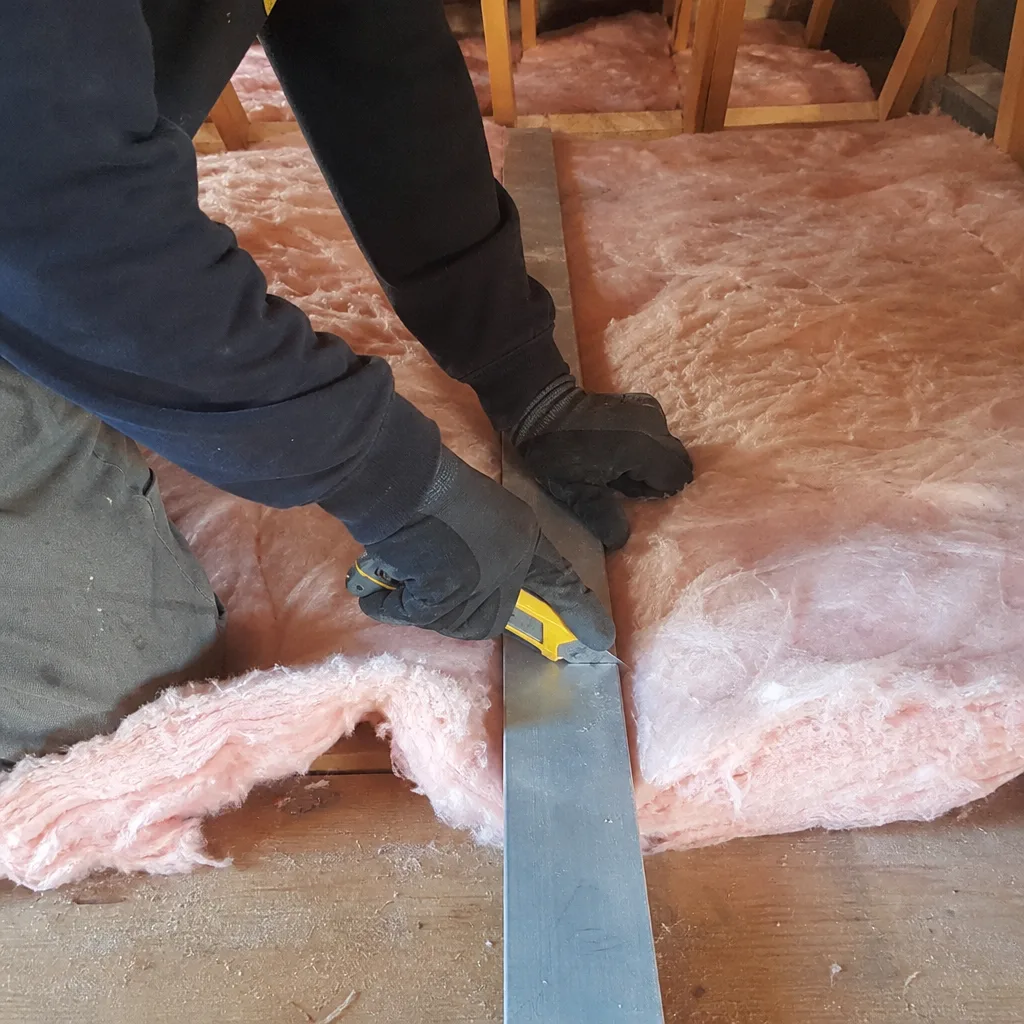
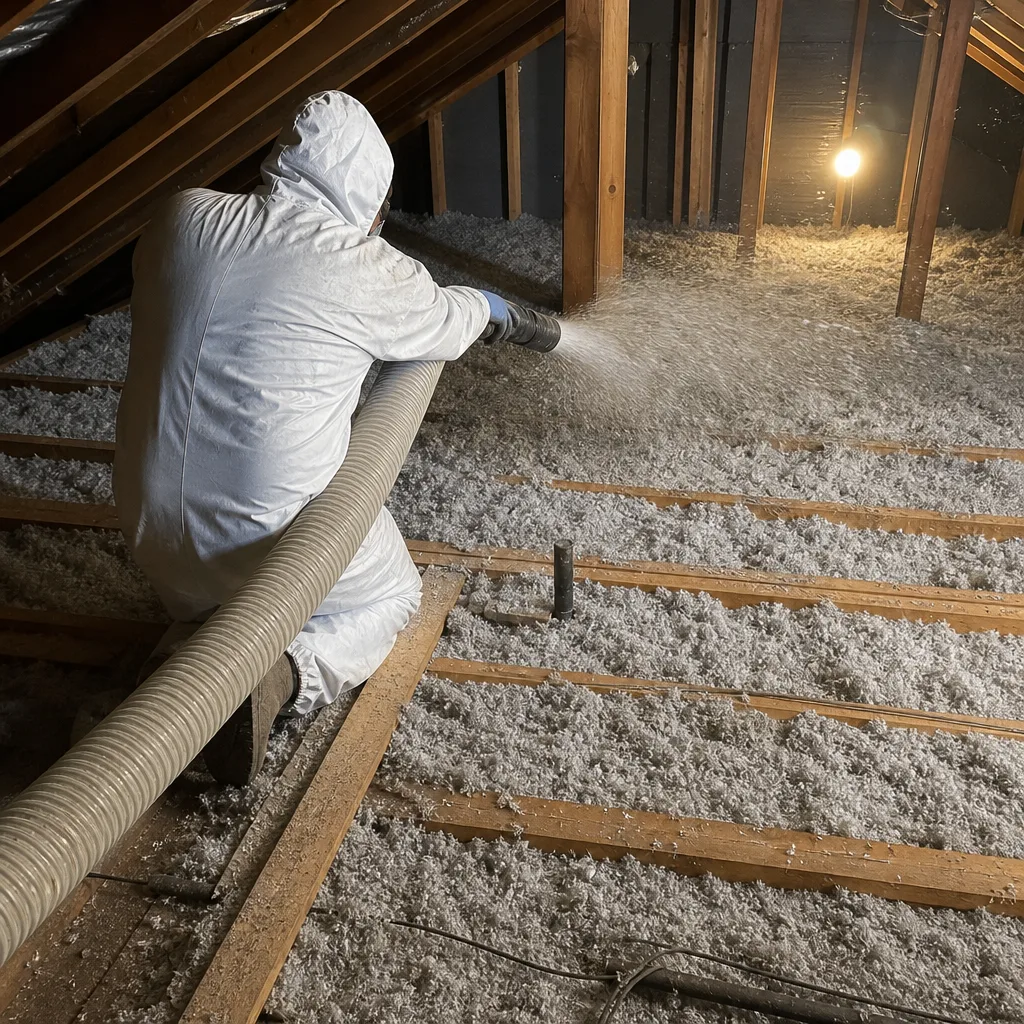
We carry GreenFiber because its recycled cellulose works exceptionally well in older attics where an even, blown-in blanket matters more than brand-new batts. We use Owens Corning and Johns Manville batts for jobs where the homeowner wants a traditional, tested material with known R-values. That range lets us pick the right product for the house rather than forcing the house to fit what’s on the truck. We stock parts and materials locally and can typically schedule March Air Force Base jobs within a few days of the estimate.
Common Attic Insulation Problems We See in March Air Force Base Homes
- Compressed legacy batts in 1950s-70s military quarters. The original fiberglass was never meant to last 60 years, and after that many HVAC retrofits, it’s usually wadded and flat. R-8 today does almost nothing when summer days push past 95°F.
- Pest-control damage to the thermal blanket. Decades of crawl-through treatments for base housing have shifted and trampled insulation, leaving bare ceiling patches that bake under Inland Empire sun and drive up cooling bills.
- Missing or blocked soffit vents in post-war tracts. Many of these homes were built with minimal attic ventilation, and the vents that do exist are often clogged with dust or debris. Poor airflow shortens the life of any insulation we put in.
- Single-pane windows and near-zero wall insulation forcing the attic to carry the full cooling load. In legacy quarters, the attic is the only real thermal barrier. A thin or patchy blanket shows up fast as rooms that never cool down and a compressor that runs all afternoon.
Pricing for Attic Insulation in March Air Force Base, CA
Attic insulation removal in March Air Force Base typically runs $1 to $2 per square foot. A full removal-and-replacement for a standard 1,200-square-foot attic lands between $2,500 and $4,500, depending on whether we’re installing blown-in cellulose or batts and what R-value the home needs. Attic mold removal here runs $800 to $2,500 depending on scope. A simple top-up over disturbed-but-otherwise-intact insulation starts around $1,000 to $1,800. Every estimate includes a written scope of work, and the quote is free. Call (855) 382-3451 to schedule one.
We Also Serve Cities Near March Air Force Base
Thermal Insulation Co serves March Air Force Base and the surrounding Inland Empire communities, including Moreno Valley, Woodcrest, Perris, and Good Hope. If you’re just outside the 92551 boundary, we still cover your attic. Call (855) 382-3451 and we’ll confirm service for your street.
Serving March Air Force Base, CA — Our Local Coverage Area
We’re based in the March Air Force Base area and know this community well. Use the map below to see our service coverage — if you’re nearby, we can almost certainly help.
FAQs About Attic Insulation in March Air Force Base
Because decades of HVAC retrofits and base-mandated pest-control work have compressed and shuffled the original 1950s-70s batts into piles, leaving bare patches that topping off can’t fix. You need the old material out to see the framing, fix ventilation, and install an even thermal barrier. Call (855) 382-3451 for an attic inspection and we’ll tell you what yours actually needs.
Yes. Jobs on actual base housing require DoD pass coordination before our crew can enter, which adds scheduling time compared to off-base homes in the 92551 corridor. We handle the paperwork and coordinate with the housing office, but it’s worth booking a few days earlier than you’d expect for a civilian job. Call (855) 382-3451 and we’ll confirm your timeline up front.
Look for rooms that never cool down in summer, a compressor that runs nonstop during heat waves, or visible attic dust and debris around your access hatch. If pest-control or HVAC crews have been in your attic repeatedly over the years, there’s a strong chance the insulation has been trampled and displaced. A free attic inspection from our team will show you exactly what’s up there. Call (855) 382-3451.
If you have visible staining, a persistent musty smell, or your old insulation is damp, then yes. New insulation installed over mold simply seals the problem into your attic. We’ll kill the mold, treat the framing, fix the ventilation that caused it, and then install fresh material. Call (855) 382-3451 to schedule an attic assessment.
We install GreenFiber blown-in cellulose, Owens Corning batts, and Johns Manville products among others, selecting the material based on your attic’s condition and your home’s age. Most older 92551 homes benefit from blown-in cellulose for even coverage over older framing, while newer stucco tracts do fine with batts. Call (855) 382-3451 for a recommendation specific to your house.
Written by Ruben Castellano, Owner at Thermal Insulation Co, serving March Air Force Base.