
Fast, Reliable Attic Insulation Across Laguna Hills
Attic insulation in Laguna Hills typically runs $1,800 – $4,200 for a full 1,200 – 2,000 sq ft attic upgrade, with most jobs completed in a single day. We work throughout 92653 and 92654, and our crews know these foothill tract homes well. When your attic hits 140°F in August and your AC runs nonstop, the problem is usually what’s above your ceiling, not the unit itself. Call (855) 382-3451 for a free estimate and we’ll tell you exactly what your attic needs.
Laguna Hills isn’t like the coastal towns ten miles west. The summer heat here sits on these ridgelines, and a tile roof that looks fine from the curb is often baking whatever insulation sits underneath it. We’re a dedicated Attic Insulation contractor, not a generalist, and most of what we do in this city is remove settled builder-grade batts and bring attics up to code. Ruben Castellano, our owner, runs every Laguna Hills job with a simple standard: we match the material and method to the house, not to whatever happens to be on the truck.
Why Thermal Insulation Co Is Laguna Hills’s Preferred Attic Insulation Company
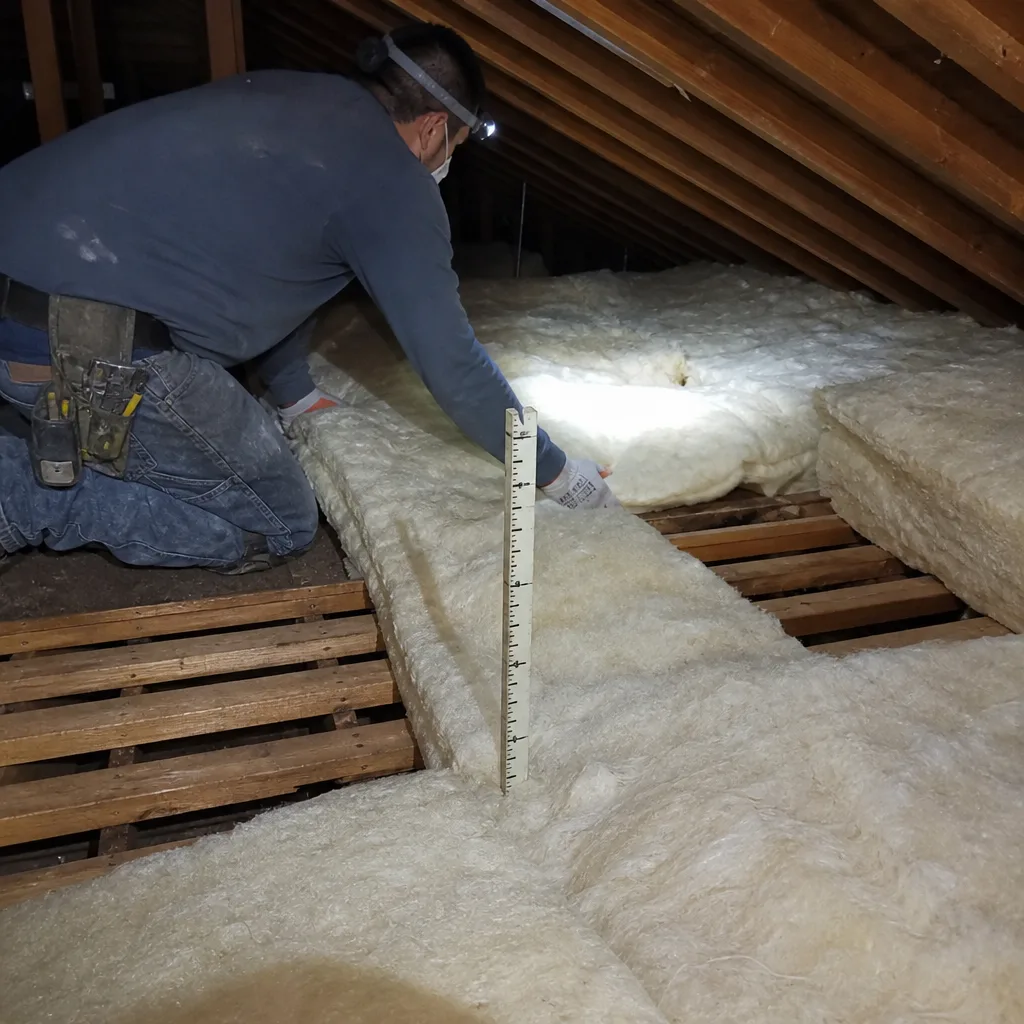
Most homes in Laguna Hills were built between the 1960s and 1980s, and the original attic insulation in these houses has been quietly losing performance for decades. We’ve worked across Moulton Ranch, Nellie Gail Ranch, and the hillside tracts off Paseo de Valencia, and the pattern is consistent: builder-grade R-11 batts compressed to half their labeled value, air gaps at top plates, and attic temperatures that climb 20 to 30 degrees above the living space by mid-afternoon.
Because we install products from eight manufacturers, including Owens Corning, Johns Manville, and Knauf, we don’t push a single solution. A 1980s ranch with cathedral ceilings needs a different approach than a 1960s single-story with a standard vented attic. That flexibility matters here, where the housing stock is uniform in age but not in framing or roofline. Our response time to most Laguna Hills neighborhoods is same-day or next-day for inspections, and we bring the full material range with us so we can test options on site.
Attic Ventilation in Laguna Hills
Attic Ventilation in Laguna Hills is the difference between an attic that works and one that cooks your shingles, your ductwork, and your insulation from above. This city’s ridgeline exposure means attics bake under concrete tile roofs during long summer afternoons, and without proper airflow, that heat has nowhere to go. A vented attic in 92653 needs balanced intake and exhaust: soffit vents pulling cooler air in, ridge or box vents letting hot air out.
Ridge Vents and Tile Roof Adaptation
Concrete tile roofs are common across Laguna Hills, and tile complicates standard ridge vent installation. We cut and flash the ridge to accommodate a proper vent profile, then verify the airflow path isn’t blocked by original paper-faced batts pushed into the eaves. A properly vented tile-roof attic runs 20 – 30°F cooler on a 90-degree day, which directly extends the life of whatever insulation sits below it.
Ember-Resistant Venting for Canyon-Adjacent Homes
Homes along the eastern ridgelines and near canyon edges face wildfire exposure that coastal neighborhoods don’t. We install ember-resistant attic vents with fine mesh screening that blocks wind-blown embers from entering the vent cavity and igniting dry insulation or framing. For Laguna Hills homeowners backing onto open land, this is a practical upgrade our crews now recommend as standard practice when we’re already in the attic.
Radiant Barrier in Laguna Hills
Radiant Barrier in Laguna Hills addresses the single biggest heat source in this city: a concrete tile roof absorbing hours of direct foothill sun and re-radiating that heat downward into the attic. A radiant barrier is a reflective foil installed on the underside of the roof deck that bounces radiant heat back toward the roof instead of letting it saturate the attic airspace. In a 92653 tract home with a south- or west-facing roofline, the effect is immediate: attic temperature drops of 15 – 25°F are typical.
Foil Decking Under Tile Roofs
Tile roofs hold heat and release it slowly into the evening. A radiant barrier stapled to the rafters or laid over existing attic flooring creates a reflective plane that interrupts that transfer. We install radiant barrier in conjunction with insulation, not as a replacement for it: the barrier handles radiant heat, the insulation handles conductive and convective heat. Together they address how a Laguna Hills attic actually fails.
When a Radiant Barrier Makes Sense
If your upstairs rooms run 8 – 10 degrees warmer than downstairs in summer, or your AC runs in long cycles that never quite satisfy the thermostat, a radiant barrier is often the most cost-effective first step. We quote it as a line item, typically $1.20 – $2.50 per square foot installed, depending on whether it’s stapled under the rafters or deployed over the floor. For tile-roof homes with existing insulation, a radiant barrier plus air-sealing usually delivers more comfort per dollar than ripping out and replacing batts that are still within 20% of spec.
Trusted Brands We Service in Laguna Hills
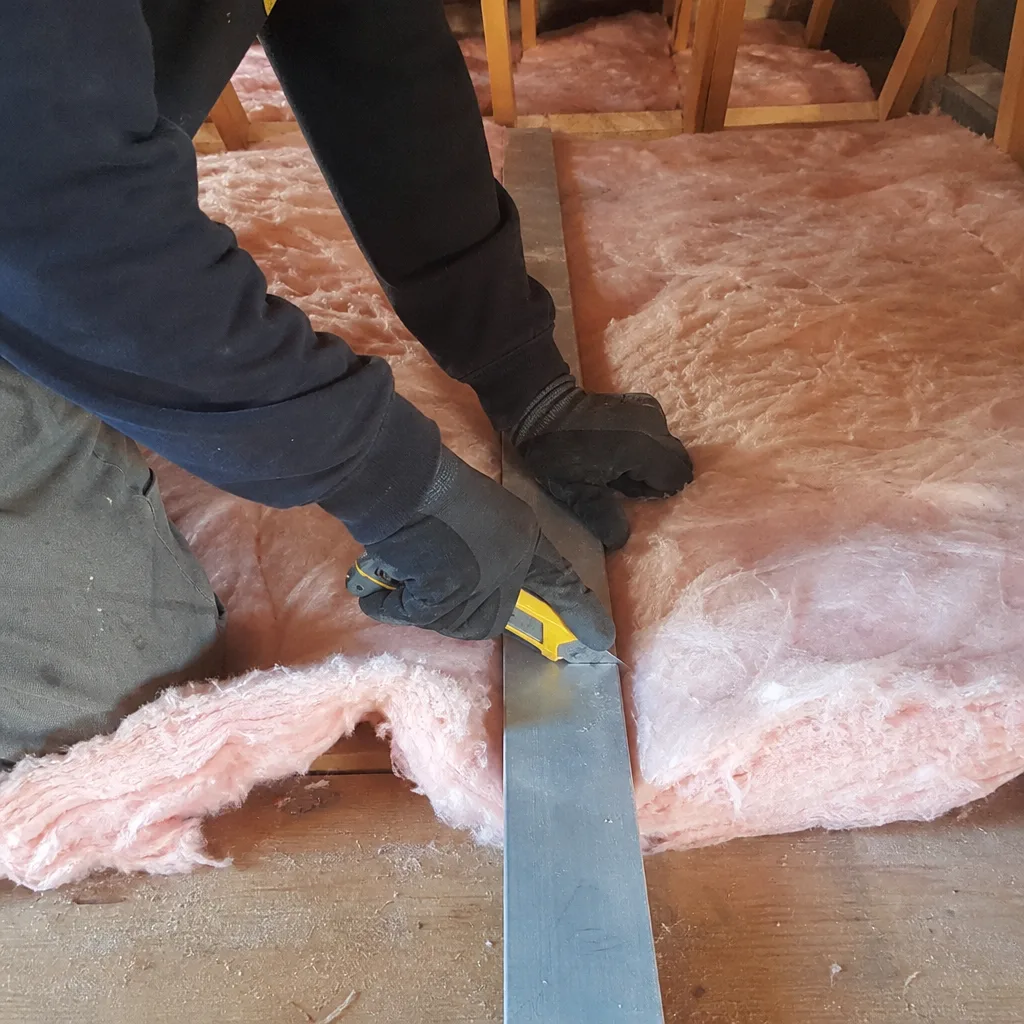
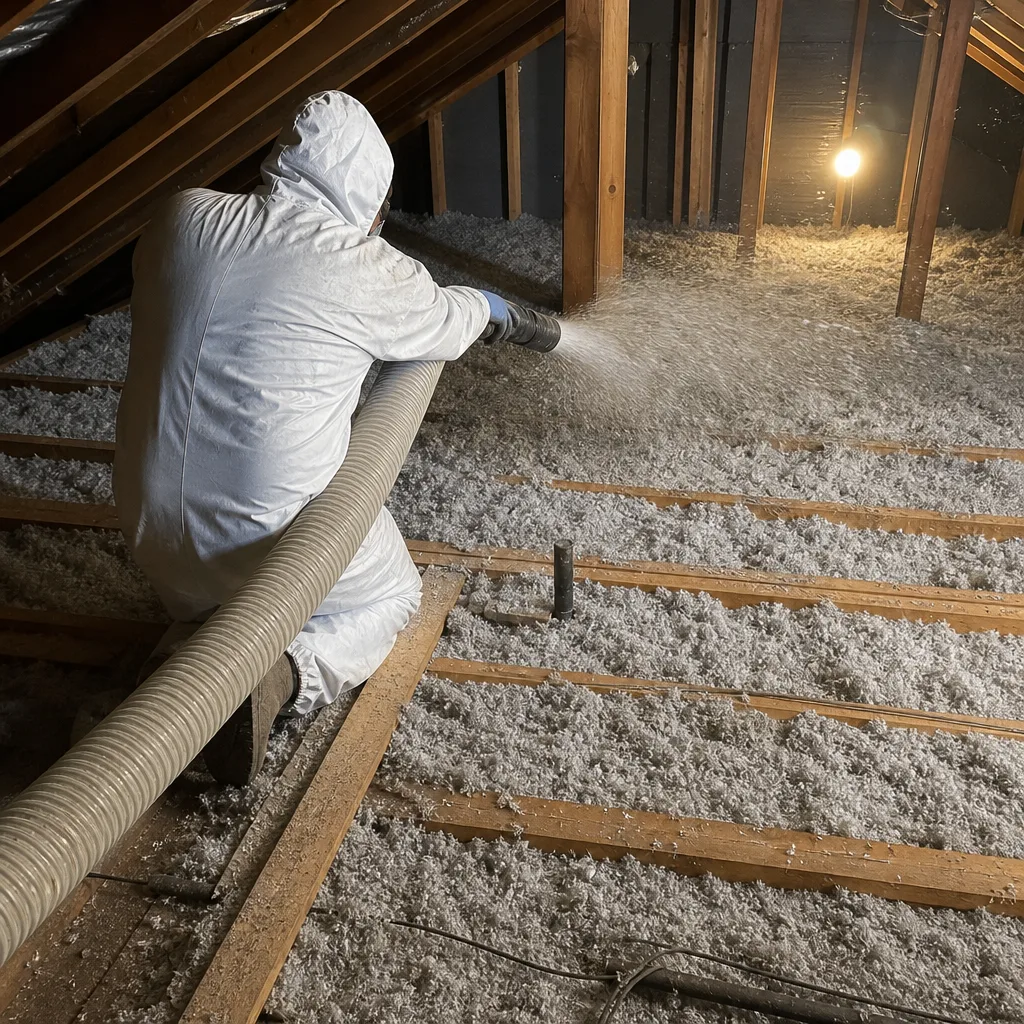
We carry and install Owens Corning, Johns Manville, and Knauf fiberglass, plus Rockwool mineral wool where fire resistance or moisture control matters. We don’t have a house brand. A 1970s Laguna Hills tract home with a crowded attic and old wiring may call for Rockwool’s density and fire-rating; a standard vented attic may get Johns Manville blown-in to R-38. We keep common batts, loose-fill bales, and vent components stocked for rapid turnaround in 92653 and 92654, so a Monday inspection can usually become a Thursday installation without ordering delays. Ruben Castellano’s rule is that the material has to earn its place in your attic, not in our warehouse.
Common Attic Insulation Problems We See in Laguna Hills Homes
- Compressed builder-grade batts. Original R-11 fiberglass installed in the 1970s and 80s has been heat-cycled under tile roofs for forty-plus years. In many Moulton Ranch attics we measure effective values of R-5 to R-7, which means the insulation is doing roughly half its job.
- Air gaps at top plates and can lights. Heat doesn’t just move through insulation; it moves around it. Unsealed penetrations at ceiling fixtures and top plates let attic air pour into living spaces, which is why a house can have “adequate” insulation on paper and still feel hot in August.
- Undervented tile-roof attics. Many original builds in 92653 were vented for a coastal climate, not a foothill one. Inadequate soffit intake means the attic becomes a heat reservoir that re-radiates into bedrooms until 10 p.m.
- Duct runs baking in the attic. Flexible ducts in unconditioned attics can lose 20 – 30% of their cooling before conditioned air ever reaches a register. We see this constantly in the older tract layouts off La Paz Road, where long duct runs cross the hottest part of the attic.
Pricing for Attic Insulation in Laguna Hills, CA
For a typical 1,500 sq ft attic in Laguna Hills, here’s what we quote most often:
- Air-sealing only: $900 – $1,800 depending on penetration count and accessibility.
- Blown-in cellulose or fiberglass to R-38: $1,800 – $3,200 including removal of settled batts.
- Full removal and replacement with Rockwool batts: $2,800 – $4,500 depending on attic height and access.
- Radiant barrier add-on: $1,200 – $2,500 for most tile-roof attics.
- Attic ventilation upgrades: $600 – $1,900 for new ridge vents, soffit vents, or ember-resistant replacements.
Tile roofs add labor cost because attic access through tile is slower than composition shingle. Homes with low-slope or flat sections cost more per square foot. We give a fixed quote after an attic inspection, and it doesn’t change unless we find something no one could see from the hatch. Estimates are free: call (855) 382-3451.
We Also Serve Cities Near Laguna Hills
Our Laguna Hills service area extends to the surrounding South Orange County communities. We regularly work in Laguna Woods, Lake Forest, Mission Viejo, and Coto De Caza, and the same crew and material range apply regardless of which side of the 5 Freeway you’re on. If you’re in any of these cities and your attic has the same tile-roof-and-settled-batts profile, the same factors apply.
Serving Laguna Hills, CA — Our Local Coverage Area
We’re based in the Laguna Hills area and know this community well. Use the map below to see our service coverage — if you’re nearby, we can almost certainly help.
FAQs About Attic Insulation in Laguna Hills
Your attic is hotter because you’re inland, at elevation, and under a concrete tile roof. Laguna Beach gets marine influence and cloud cover; Laguna Hills sits in the foothills where summer afternoons routinely hit the 90s and the sun beats on tile roofs that radiate heat into the attic for hours after the ambient temperature drops. It’s a real physical difference, not your imagination, and it’s why insulation and ventilation specs that work at the coast underperform here.
Look at the batts. If they’re paper-faced fiberglass and they’ve been in the attic since the Reagan administration, they’ve almost certainly compressed from their original depth. We measure R-value by depth and density, and in most Laguna Hills homes we find effective values of R-5 to R-8 where R-11 is labeled. If your upstairs runs significantly warmer than your downstairs, the insulation has already told you the answer.
Yes. Homes along the eastern ridgelines and canyon edges face genuine ember exposure during Santa Ana-driven fire events. Standard attic vents with quarter-inch mesh let embers through; ember-resistant vents use finer screening that stops them at the opening. If you’re backing up to open space in 92653, this is a low-cost insurance policy against a catastrophic ignition point. Call (855) 382-3451 and we’ll tell you whether your current vents meet the current standard.
Yes. Radiant barrier can be stapled to the underside of the rafters or laid over existing attic flooring without removing your tile roof. The installation is minimally invasive and takes most of a day. For tile-roof homes in Laguna Hills, it’s consistently one of the highest-R-value-per-dollar improvements we offer because the heat source it addresses is the same concrete tile that’s been baking your attic for decades.
For a builder-grade Laguna Hills attic with a standard vented configuration, the best return usually comes from air-sealing the attic floor, then blowing in fiberglass or cellulose to R-38. If your home runs a smart thermostat and you’re seeing long HVAC runtime during afternoon heat, the problem is usually the attic’s heat load, not the equipment. A radiant barrier becomes the priority if your attic has a south- or west-facing tile roof and runs 25 degrees or more above the living space. We’ll tell you which one actually fixes the comfort issue, and the estimate is free.
Call Thermal Insulation Co for Attic Insulation in Laguna Hills
If your attic is original to a 1970s or 1980s tract home, it’s time to look at it honestly. We’ll inspect it, measure what’s there, and give you a straight answer: what to keep, what to remove, and what to add so your house stops fighting the foothill sun at your expense. Call (855) 382-3451 and ask for Ruben. Free estimates, same-week scheduling in most Laguna Hills neighborhoods, and a materials recommendation based on your house, not our inventory.
Written by Ruben Castellano, Owner at Thermal Insulation Co, serving Laguna Hills since day one.