Fast, Reliable Attic Insulation Across La Crescenta-Montrose
Most homes in La Crescenta-Montrose were built in a different era, when insulation was an afterthought and energy was cheap. Today those same ranch houses, with their original open soffit vents and paper-thin attic coverage, fight a daily battle against foothill heat that didn’t exist when they were framed. We’re Thermal Insulation Co, a dedicated insulation contractor working across the 91214 zip code, and we specialize in retrofitting these older La Crescenta-Montrose attics correctly. The first step is understanding why your house gets so hot in the afternoon and so cold at night, even when the AC runs constantly. That’s not a mystery to us. Call (855) 382-3451 and we’ll walk you through what’s actually happening up there.
Why Thermal Insulation Co Is La Crescenta-Montrose’s Preferred Attic Insulation Company
We’re not a general contractor who picked up insulation as a side trade. Insulation is all we do. That focus matters in La Crescenta-Montrose, where the housing stock demands a specific kind of attention: 1940s and 1950s ranches with plaster ceilings, original framing, and ventilation strategies that made sense in 1955 and work against you now. Our crews know these houses. We’ve crawled through attics off Foothill Boulevard, worked on post-and-beam homes near Two Strike Park, and spent afternoons in attics off Rosemont Avenue where the afternoon heat radiates straight down through uninsulated top plates. Ruben Castellano, who leads our team, has spent enough time in foothill attics to know the difference between a house that needs simple top-up and one that needs a full air-sealing sequence first. When you call, you get that direct assessment, not a scripted pitch.
Radiant Barrier in La Crescenta-Montrose
Radiant barrier is a reflective material installed in the attic that reduces radiant heat gain, and in La Crescenta-Montrose’s sunny foothill climate, it’s often the most effective single upgrade for late-afternoon comfort. A typical radiant barrier installation for a 1,500-square-foot ranch in the 91214 area runs $1,800 to $3,200, depending on attic accessibility and whether we’re stapling to rafters or laying over existing insulation. The foothill sun beats directly on composition shingle roofs all summer, and that heat radiates downward into living space. Radiant barrier interrupts that transfer before it reaches your insulation.
Where It Pays Off Fastest
Homes with dark shingles and unshaded south-facing roof planes see the biggest difference. In La Crescenta-Montrose, that’s a lot of the original ranch stock, especially on streets running perpendicular to the foothill slope where the afternoon sun hits full force. We install radiant barrier with an air gap, which is the only way it actually performs. When we combine it with upgraded attic insulation, the two systems work together.
Sequencing With Insulation Work
Radiant barrier is not a substitute for R-value. It’s a complement. On a 1950s home with settled insulation, we recommend addressing the thermal barrier first, then adding radiant barrier as a separate measure. Doing it this way means you don’t spend money on a reflective layer that’s just covering the same problem. We’ll tell you honestly if your budget is better spent on air sealing and blown-in material before tackling radiant heat.
Attic Cleaning Services in La Crescenta-Montrose
Attic Cleaning Services in La Crescenta-Montrose involve removing years of accumulated debris, old insulation, dust, and sometimes rodent droppings before any new material goes in, and a full cleanout for a typical ranch here runs $1,200 to $2,500. This is not a luxury step. In these foothill houses, decades of dust and broken-down insulation create a layer of fine particulate that works its way down through wall cavities and around ceiling fixtures. Your indoor air quality starts in the attic.
What We Remove
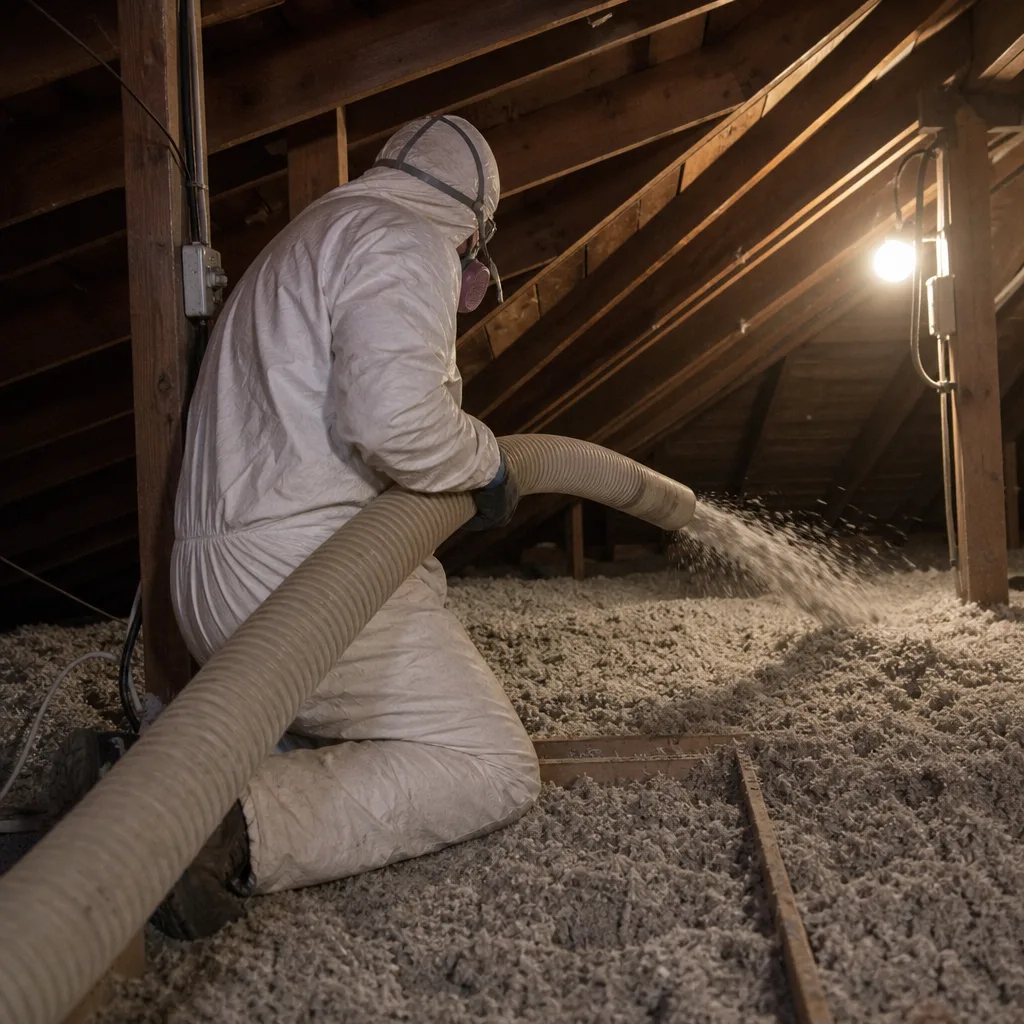
Old fiberglass batts that have compressed to nearly nothing, settled cellulose from a previous decade’s top-up, plaster dust from original construction, and whatever the squirrels brought in. Homes near the Verdugo foothills and along canyon edges often deal with rodent intrusion, and cleaning is the first step before any insulation upgrade. We bag and remove everything, using HEPA-filtered equipment to keep dust from migrating into living space.
When a Cleanout Precedes Insulation
If your attic insulation shows signs of water damage, rodent activity, or simply has less than 2 inches of compressed material, we recommend a full cleanout rather than blowing new material on top. You’re paying for R-value that won’t perform if it’s sitting on a dirty, uneven base. Clean first, then insulate. The math works.
What happens when you call
- 1
A real person answersNo phone trees — you reach a local pro.
- 2
You get an upfront price rangeHonest numbers before anyone is dispatched.
- 3
A background-checked tech heads outLicensed & insured, dispatched right away.
- 4
You approve before work beginsNothing starts until you say go.
Trusted Brands We Service in La Crescenta-Montrose
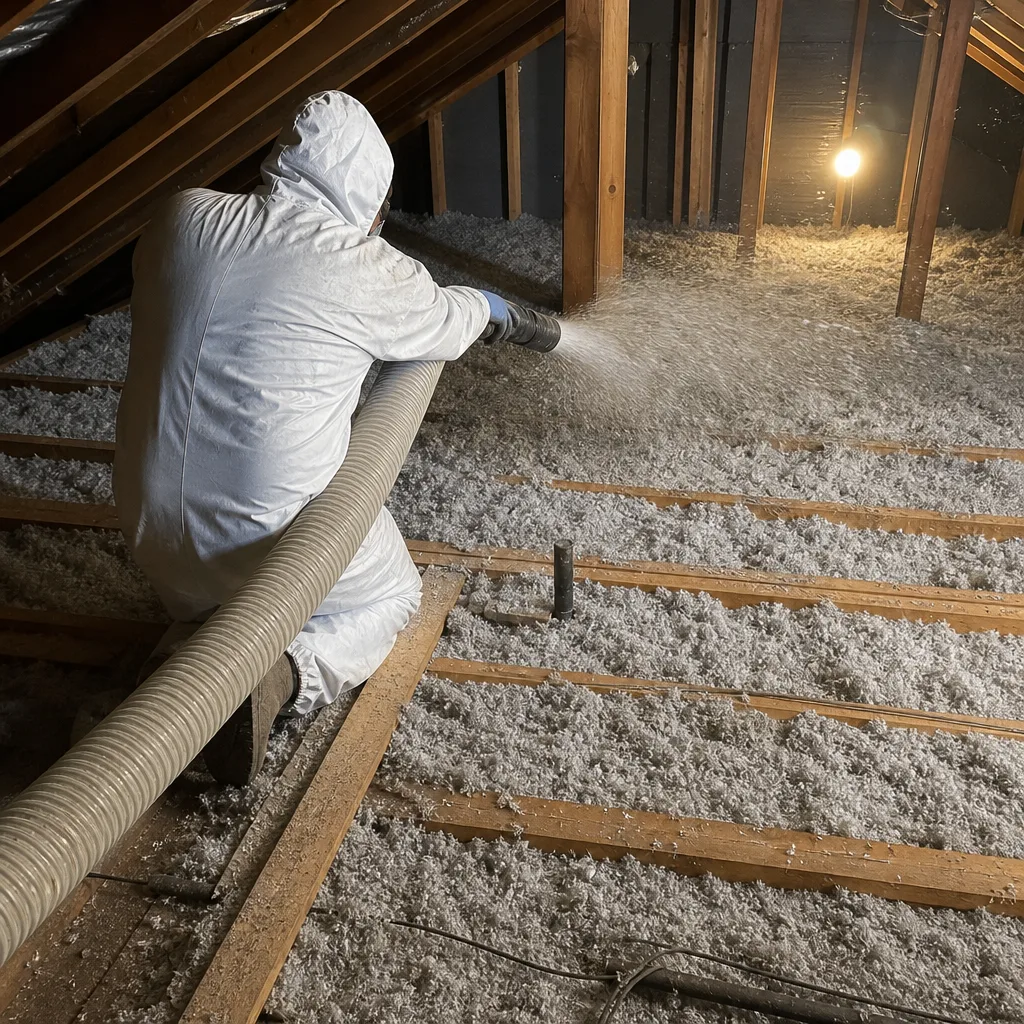
We carry Owens Corning, Johns Manville, and Knauf, and we stock the specific products that make sense for foothill ranch houses in the 91214 area. Owens Corning fiberglass works well for standard blown-in applications where cost-per-R-value matters. Johns Manville offers excellent batt products for accessible attics. Knauf gives us a strong loose-fill option that performs predictably in the uneven ceiling bays common in these older homes. Because we’re authorized across eight brands, not tied to one manufacturer, we match the material to your attic’s geometry and your home’s exposure. If you need a specific product matched to existing insulation, we can get it quickly without waiting on special orders from a supplier on the other side of the valley.
Common Attic Insulation Problems We See in La Crescenta-Montrose Homes
- Original soffit vents working against the house. Those open soffit vents were sized for an attic with almost no insulation. On a hot afternoon, they pull San Gabriel foothill air across unsealed top plates, erasing the benefit of any new R-value. Air sealing has to happen first.
- Sub-2-inch settled insulation. Many of these houses still have their original rock wool or early fiberglass, compressed to less than 2 inches. That’s about R-6 at best, and in a thermal zone that swings 30 degrees in a single day, it’s functionally nothing.
- Unsealed recessed lights. Original and early-retrofit can lights in plaster ceilings punch holes straight into the attic. Heat pours in during summer, conditioned air leaks out in winter, and wildfire ember intrusion becomes a real concern in this wildland-urban interface zone.
- Thin, uneven coverage over open framing. Original plaster ceilings and raised foundations mean blown material shifts over time, leaving valleys between ceiling joists and bare spots at the eaves. The result is rooms that feel fine in the center and drafty along the exterior walls.
Pricing for Attic Insulation in La Crescenta-Montrose, CA
A full attic insulation retrofit in La Crescenta-Montrose typically lands between $2,800 and $6,500 for a standard 1,200 to 2,000-square-foot ranch house. Blown-in fiberglass or cellulose top-up over existing material runs $1,800 to $3,400. Full cleanout with air sealing and new material starts around $3,500 and goes up based on attic accessibility, recessed light count, and whether baffles need retrofitting. Radiant barrier adds $1,800 to $3,200 as a separate measure. Homes with steep rooflines, tight attic access, or significant rodent damage land on the higher end. We give free estimates with exact pricing before any work starts, and we walk you through which line items are necessary versus optional. Call (855) 382-3451 to schedule a look at your attic.
We Also Serve Cities Near La Crescenta-Montrose
Our crews work throughout the Crescenta Valley and surrounding foothill communities. If you’re in Tujunga, La Cañada Flintridge, Sunland, or Burbank, we bring the same dedicated Attic Insulation expertise to your home. We know the housing stock in each of these areas and how it differs from what we see in Attic Insulation in La Crescenta-Montrose. Same material options, same approach, same honest assessment.
Serving La Crescenta-Montrose, CA — Our Local Coverage Area
We’re based in the La Crescenta-Montrose area and know this community well. Use the map below to see our service coverage — if you’re nearby, we can almost certainly help.
FAQs About Attic Insulation in La Crescenta-Montrose
Because the heat isn’t only traveling through your insulation. In La Crescenta-Montrose’s foothill climate, original open soffit vents pull hot afternoon air across unsealed top plates and around recessed lights, bypassing your insulation entirely. The fix is air sealing first, then insulation. If you added R-38 over unsealed penetrations, you’re still losing the fight. Call (855) 382-3451 and we’ll identify where the heat path actually is.
Sometimes, but not always. If the existing material is dry, uncompressed, and free of rodent waste, a clean top-up of blown fiberglass or cellulose can bring you to proper R-value for $1,800 to $3,400. If the old insulation is grey, broken down, or showing signs of moisture, you need a cleanout first. Adding new material over compromised base wastes the R-value you’re paying for.
Yes, but they need to be managed, not buried. The original soffit vents in La Crescenta-Montrose ranches were sized for a barely-insulated attic. When you add R-38 or R-49, those vents still need airflow, but the air has to move through the attic, not across your top plates. We install baffles to keep insulation from blocking the vents while directing airflow correctly. The vents stay functional. The heat path gets cut off.
La Crescenta-Montrose sits against the San Gabriel front country, which means ember intrusion is a real concern during fire season. Unsealed attic penetrations aren’t just an energy problem; they’re a path for wind-driven embers. We recommend air sealing as a standard part of any retrofit in the 91214 area, and in some cases mineral wool products like Rockwool make sense for their fire resistance. This is a different calculation than a flatland attic job.
We install fiberglass from Owens Corning, Johns Manville, and Knauf, plus GreenFiber recycled cellulose for blown applications. For homes with fire-resistance priorities or moisture concerns, we also work with Rockwool mineral wool. On a 1952 ranch off Rosemont Avenue, we pulled out under 2 inches of settled rock wool, foamed the can surrounds and top plates, installed baffles at the soffit vents, then blew in GreenFiber to bring the flat ceiling up to modern R-value. The specific material depends on your attic’s framing, your ceiling type, and your exposure. That’s the conversation we’d rather have with you in person.
Written by Ruben Castellano, Owner at Thermal Insulation Co, serving La Crescenta-Montrose and the Crescenta Valley foothill communities.