
Fast, Reliable Attic Insulation Across East San Gabriel
Attic insulation in East San Gabriel is usually a replacement job, not a new-construction job. Most of the homes here were built between the 1950s and 1970s, and the insulation that went in then has compressed, settled, or was barely adequate to begin with. That’s why we approach every East San Gabriel attic with a specific set of expectations: low-pitch roofs, stucco exteriors, recessed lights that were never sealed, and cooling bills that climb every summer. We’re Thermal Insulation Co, a dedicated insulation contractor based in Van Nuys, and we work in East San Gabriel regularly. If you’re tired of upstairs rooms that never cool down, call us at (855) 382-3451 for a free estimate.
Ruben Castellano leads our team, and he’s spent years focused on one trade: insulation. Not roofing, not windows, not general contracting. Just the materials and methods that control how heat moves through a house. For East San Gabriel homeowners, that specialization matters, because the right fix for a 1958 ranch on a quiet cul-de-sac isn’t the same as the right fix for a newer build in Alhambra or San Marino. We’ll tell you which method actually makes sense for your attic.
Why Thermal Insulation Co Is East San Gabriel’s Preferred Attic Insulation Company
Homeowners in East San Gabriel call us because we can explain what’s happening in their attic before we ever quote a price. That’s the difference between a contractor who happens to install insulation and a company that does nothing else. We carry fiberglass from Owens Corning, Johns Manville, and Knauf, plus GreenFiber recycled cellulose and mineral wool from Rockwool. That’s a material range most single-trade competitors don’t stock, and it means our recommendation for your home is driven by what your attic actually needs, not by what we happen to have on the truck.
We also bring three installation methods to every job: batts, blown-in loose-fill, and spray foam. For older East San Gabriel homes with low-pitch attics and tight access, blown-in fiberglass or cellulose is often the practical choice. For conditioned attic conversions, closed-cell spray foam from Icynene or Demilec may be the better call. We’ll walk you through the tradeoffs without pushing you toward the most expensive option by default. Our reputation in East San Gabriel is built on recommendations that hold up when you check them against building science.
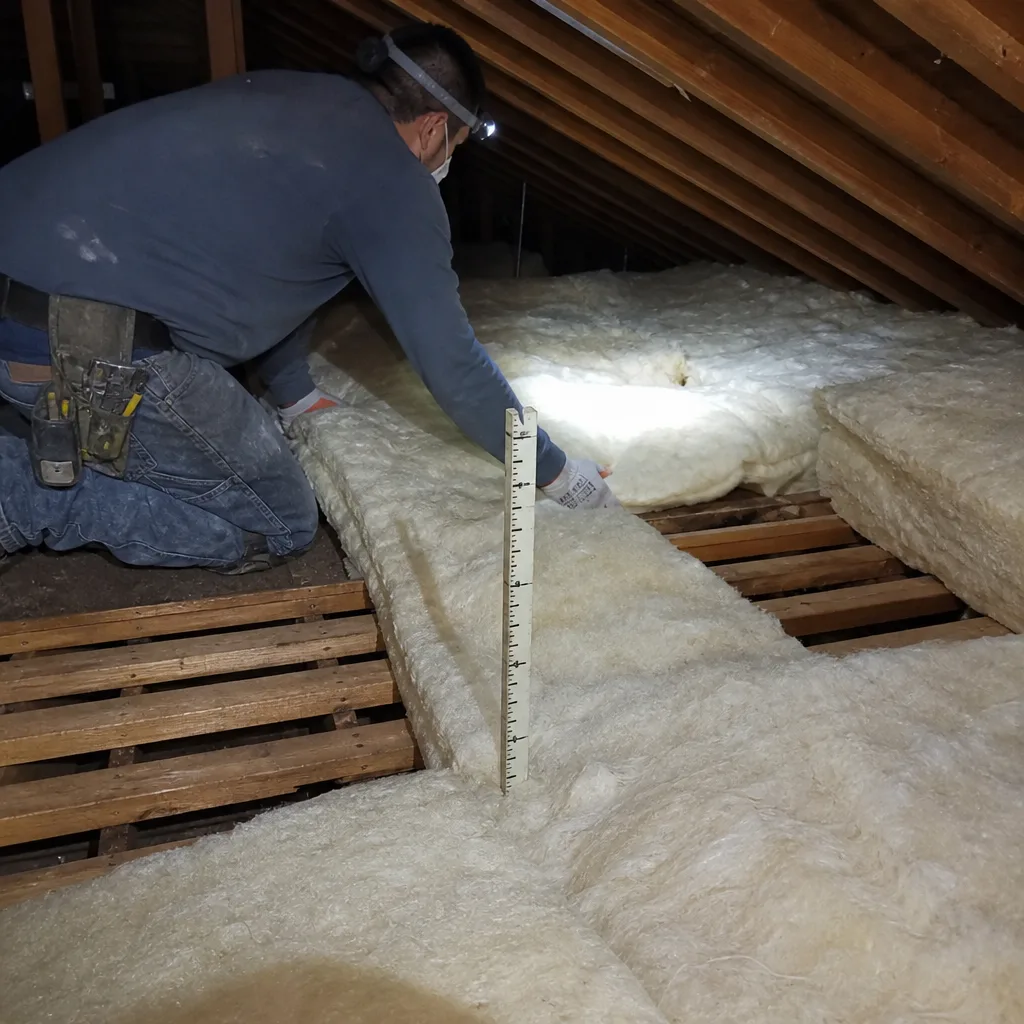
When you call, we schedule a time to inspect your attic, measure what’s there, and give you a written estimate with specific material and R-value targets. No vague promises about “more insulation.” Just numbers and a plan.
Insulation Contractors in East San Gabriel
Insulation contractors working in East San Gabriel face a specific set of challenges that you won’t find in newer parts of the San Gabriel Valley. The postwar tract homes and ranch-style houses that dominate the 91776 zip code were built with minimal attic insulation, often just a thin layer of fiberglass batts that’s now compressed to R-7 or less. On top of that, the low-pitch roof designs trap heat so effectively that attic temperatures can exceed 150°F on summer afternoons. A competent insulation contractor here has to address two problems at once: adding R-value and managing the heat that accumulates above the ceiling. Typical attic insulation work in East San Gabriel runs $1,800 to $4,200 for a full removal and replacement, with top-up jobs starting around $900. The final number depends on attic size, access difficulty, and whether air sealing or ventilation work is included.
Air Sealing Before Insulation
In East San Gabriel homes, air sealing is often the step that makes the biggest difference. Recessed lights, attic hatches, and plumbing penetrations allow hot attic air to seep into living spaces, which means your air conditioner works harder even after new insulation goes in. We seal these openings before installing new material so the R-value you pay for actually performs as specified.
Blown-In Fiberglass and Cellulose
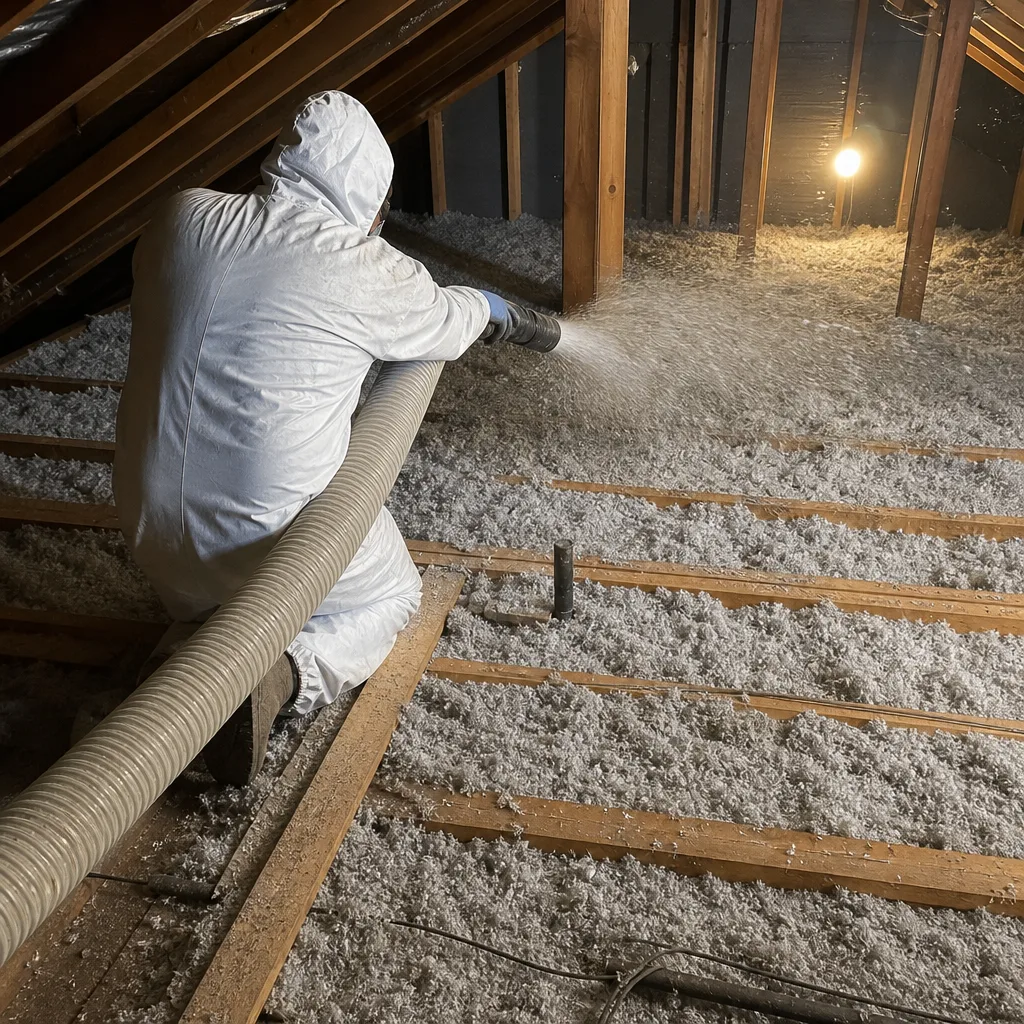
Blown-in insulation works well in East San Gabriel attics because it fills irregular joist bays and settles into the corners that batts miss. For older homes with original insulation still in place, we can blow new material over the top after air sealing, bringing the total R-value up to modern standards without a full tear-out. GreenFiber cellulose is a good fit for homeowners who want a recycled-content option, while Owens Corning or Knauf fiberglass offers predictable performance at a lower material cost.
Attic Ventilation in East San Gabriel
Attic ventilation in East San Gabriel is not an optional add-on when you’re dealing with low-pitch postwar roofs. Without adequate airflow, attic temperatures climb and stay high, which degrades insulation performance, shortens shingle life, and forces your cooling system to fight a heat load that shouldn’t be there. Proper ventilation includes intake vents at the soffits and exhaust vents at or near the ridge, balanced so air moves through the attic consistently. Ventilation work in East San Gabriel typically costs $600 to $1,900 depending on roof configuration and the number of vents needed. Combining ventilation with new insulation is the most cost-effective approach, since the two systems work together.
Radiant Barriers for Sun-Baked Attics
In East San Gabriel’s climate, a radiant barrier can reduce attic temperatures by 20 to 30 degrees when installed correctly on the underside of the roof deck. That’s a meaningful difference in a community where summer sun beats on low-pitch roofs from morning until evening. Radiant barrier works best in conjunction with good ventilation and sufficient insulation; it’s not a substitute for either.
Baffles and Soffit Vent Prep
Before we blow insulation into any East San Gabriel attic, we check that soffit vents aren’t blocked by old material or roof decking. Installing baffles keeps the intake path open so air can move from the soffits up to the ridge or gable vents. This step is easy to skip and easy to get wrong, and it’s one of the reasons we always prep the attic properly before adding insulation.
Trusted Brands We Service in East San Gabriel
We’re authorized to install products from eight insulation manufacturers, and for East San Gabriel customers that means we’re not tied to one product line. We use Owens Corning and Johns Manville fiberglass in attics where cost-effective R-value is the priority. We carry Knauf for jobs that need a specific batt configuration. GreenFiber recycled cellulose gives East San Gabriel homeowners a sustainability-focused option with good air-sealing characteristics. And for attics with moisture or fire-resistance concerns, Rockwool mineral wool is available. Having multiple brands stocked means faster turnaround for East San Gabriel jobs, because we’re not waiting on a distributor for a single product line. Ruben Castellano built the company this way deliberately, so the material recommendation matches the home’s needs.
Common Attic Insulation Problems We See in East San Gabriel Homes
- Settled original insulation from the 1950s-70s. The fiberglass batts installed when these homes were built have compressed over decades. What started as R-11 or R-13 is now closer to R-5 to R-7, leaving the ceiling with almost no thermal barrier.
- Gaps around recessed lights and attic hatches. Older East San Gabriel homes were built before air sealing was standard practice. Recessed light housings and attic access panels create direct pathways for hot attic air to pour into living spaces.
- Inadequate ventilation in low-pitch roofs. Many of the ranch-style homes in East San Gabriel have shallow roof cavities that don’t move air well. Heat builds up, insulation underperforms, and shingles bake from below as well as above.
- Attic temperatures exceeding 150°F in summer. The San Gabriel Valley sun is relentless in July and August. Without radiant barrier and proper venting, attics here get hot enough to make insulation itself less effective and strain AC systems throughout the house.
Pricing for Attic Insulation in East San Gabriel, CA
In East San Gabriel, attic insulation pricing breaks down roughly like this: a simple top-up over existing insulation runs $900 to $1,600 depending on attic size and target R-value. Full removal of old material, air sealing, and new blown-in insulation runs $1,800 to $4,200 for most homes in the 91776 zip code. Adding a radiant barrier typically adds $800 to $1,700 depending on roof deck area. Attic ventilation upgrades run $600 to $1,900. The biggest cost drivers are attic access difficulty, whether old insulation needs removal, and whether air sealing is included. We give free estimates, and the number we quote is the number you pay. Call (855) 382-3451 to schedule an inspection.
We Also Serve Cities Near East San Gabriel
Our Attic Insulation crew works throughout this part of the San Gabriel Valley. If you’re in East San Gabriel, we’re already nearby, and we also serve San Gabriel, Rosemead, Alhambra, and San Marino. The housing stock changes from city to city, but the need for honest, technically grounded insulation work stays the same. If your attic hasn’t been inspected in years, it’s worth a call.
Serving East San Gabriel, CA — Our Local Coverage Area
We’re based in the East San Gabriel area and know this community well. Use the map below to see our service coverage — if you’re nearby, we can almost certainly help.
FAQs About Attic Insulation in East San Gabriel
You need an upgrade if your attic insulation measures less than 10 to 12 inches deep, if it’s compressed or uneven, or if upstairs rooms run consistently warmer than the rest of the house in summer. Homes built in East San Gabriel during the 1950s-70s typically have 4 to 6 inches of settled material. We inspect attics free of charge and measure what’s actually there. Call (855) 382-3451 to set that up.
For East San Gabriel’s hot inland climate, we recommend R-38 to R-49 in the attic, which is higher than what most of these postwar homes currently have. The cooling season is long and intense here, so attic R-value matters more than in coastal areas. We typically blow in fiberglass or cellulose to R-38 as a practical target for most ranch-style homes.
Yes, radiant barrier can be installed in low-pitch attics, though the installation method depends on access and roof framing. We attach it to the underside of the roof deck, which reflects heat away from the attic space. In East San Gabriel, where summer attic temperatures regularly hit 150°F, a radiant barrier plus R-38 insulation makes a noticeable difference in upstairs comfort.
We install fiberglass from Owens Corning, Johns Manville, and Knauf, plus GreenFiber cellulose and Rockwool mineral wool. For older East San Gabriel homes, blown-in Owens Corning fiberglass is a common choice because it fills irregular joist bays well, but we’ll recommend specific products after inspecting your attic. We’re not tied to any single manufacturer.
Ventilation removes the superheated air that builds up in East San Gabriel attics, which keeps insulation at lower temperatures and prevents heat from radiating down into living spaces. Without ventilation, an R-38 attic can perform like R-20 because the insulation itself sits in 150°F air. Proper soffit intake and ridge or gable exhaust is part of almost every attic we upgrade here.
If your East San Gabriel home still has its original attic insulation, you’re paying more to cool it than you need to. We’ll inspect, measure, and give you a straight answer about what needs to change and what it will cost. Call (855) 382-3451 for a free estimate with Thermal Insulation Co.
Written by Ruben Castellano, Owner at Thermal Insulation Co, serving East San Gabriel and the San Gabriel Valley.