
Fast, Reliable Attic Insulation Across Covina
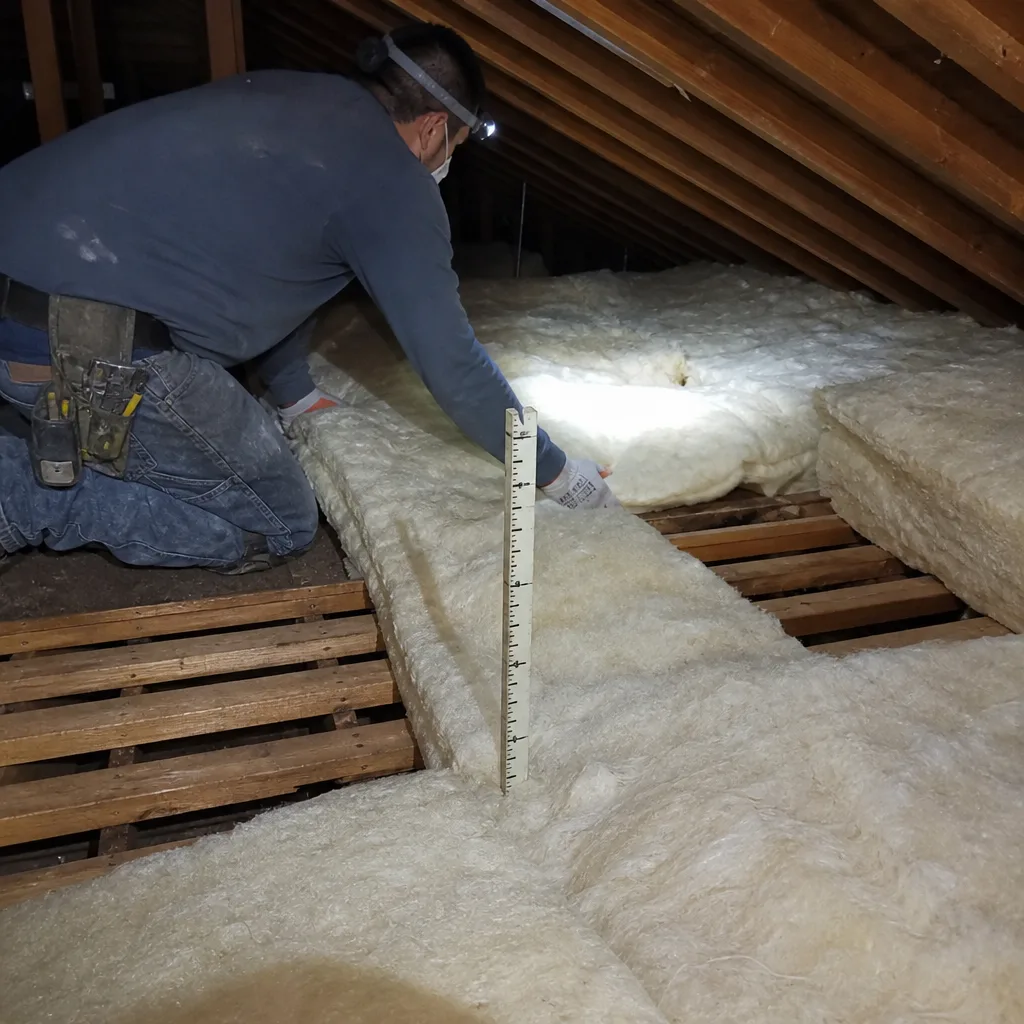
Attic insulation in Covina typically costs between $1,800 and $4,200 for a full replacement or top-up, with most projects completed in a single day. The homes here run the full spectrum: 1950s ranch houses in 91722 with almost nothing left in the attic, and 2005-built two-stories in 91724 where the builder-grade batts have compressed to half their original R-value. We’re Thermal Insulation Co, led by Ruben Castellano, and insulation is the only trade we work in. If you’re in Covina and want to know why your upstairs rooms won’t cool down in August, call (855) 382-3451 and we’ll walk you through what’s actually happening in your attic.
Why Thermal Insulation Co Is Covina’s Preferred Attic Insulation Company
We’re a dedicated insulation contractor, not a generalist who happens to own a blower machine. That focus matters in Covina because the housing stock demands different approaches block by block. A 1959 ranch near Cypress Street needs blown-in work and air sealing. A 1997 two-story up toward the 91724 foothills needs the opposite: removal of failed batts and a proper re-installation with attention to recessed lights and HVAC chases.
Ruben Castellano built this company around the idea that the right insulation for your home depends on your attic, your roof pitch, your existing material, and what you’re actually trying to fix. We carry eight material brands because no single product works for every Covina attic. We stock Owens Corning fiberglass for blown-in applications, Demilec spray foam for tight or awkward cavities, and GreenFiber cellulose for homeowners who want a recycled-content option. Most single-trade competitors carry one or two lines. We carry competing brands across categories, so our recommendations are driven by your attic’s needs, not inventory surplus.
Our crews respond to Covina calls throughout the week, and we schedule most attic jobs within a few days. For attic access problems in the older 91722/91723 ranches, we’ve done it enough times to know what we’ll find before we open the hatch.
Attic Ventilation in Covina
Attic Ventilation work in Covina means correcting the airflow that keeps your attic from turning into an oven during the San Gabriel Valley’s hot inland summers. Without proper intake and exhaust, attic temperatures climb past 140°F, which transfers heat into living spaces and forces your AC to run longer. In Covina, where cooling load dominates, ventilation is not optional.
We typically see ventilation problems in two Covina home types: older ranches with only a few passive roof vents, and 1980s-2000s homes where soffit vents got partially blocked by original blown insulation or were never adequate for the attic volume. The fix usually involves adding or clearing soffit vents, checking that baffles are in place at the eaves, and verifying exhaust capacity matches the attic square footage.
Soffit And Ridge Vent Corrections
Most Covina attics rely on passive stack effect: cool air enters low at the soffits, warm air exits high at the ridge. But if the soffit vents are painted over, clogged with old insulation, or simply too few, the system stalls. We clear the intakes and add baffles before any new insulation goes in, so the material we install doesn’t compound the problem.
Powered Attic Ventilation Repairs
Some Covina homeowners have powered attic fans that stopped working years ago. We inspect the unit, check the thermostat setting, and replace or rewire as needed. A functioning powered vent can drop attic temperature by 20-30 degrees on a hot day, which matters when your AC runs six months out of the year.
Radiant Barrier in Covina
Radiant Barrier installation in Covina applies a reflective foil layer under the roof deck to block radiant heat transfer from the hot roof surface into the attic air below. Given that Covina’s inland climate produces long stretches of 90°F+ summer weather and occasional Santa Ana-driven heat spikes, a radiant barrier can reduce attic temperatures by 15-25 degrees, which directly cuts the heat gain hitting your ceiling insulation.
The homes that benefit most are the two-story 1980s-2000s builds in 91724 and the ranch homes across 91722/91723 with south- or west-facing roof planes. A radiant barrier works alongside insulation rather than replacing it, so we typically install it when we’re already doing a full Attic Insulation upgrade rather than as a standalone job, which keeps the cost per square foot lower for Covina homeowners.
Roof Deck Foil Application
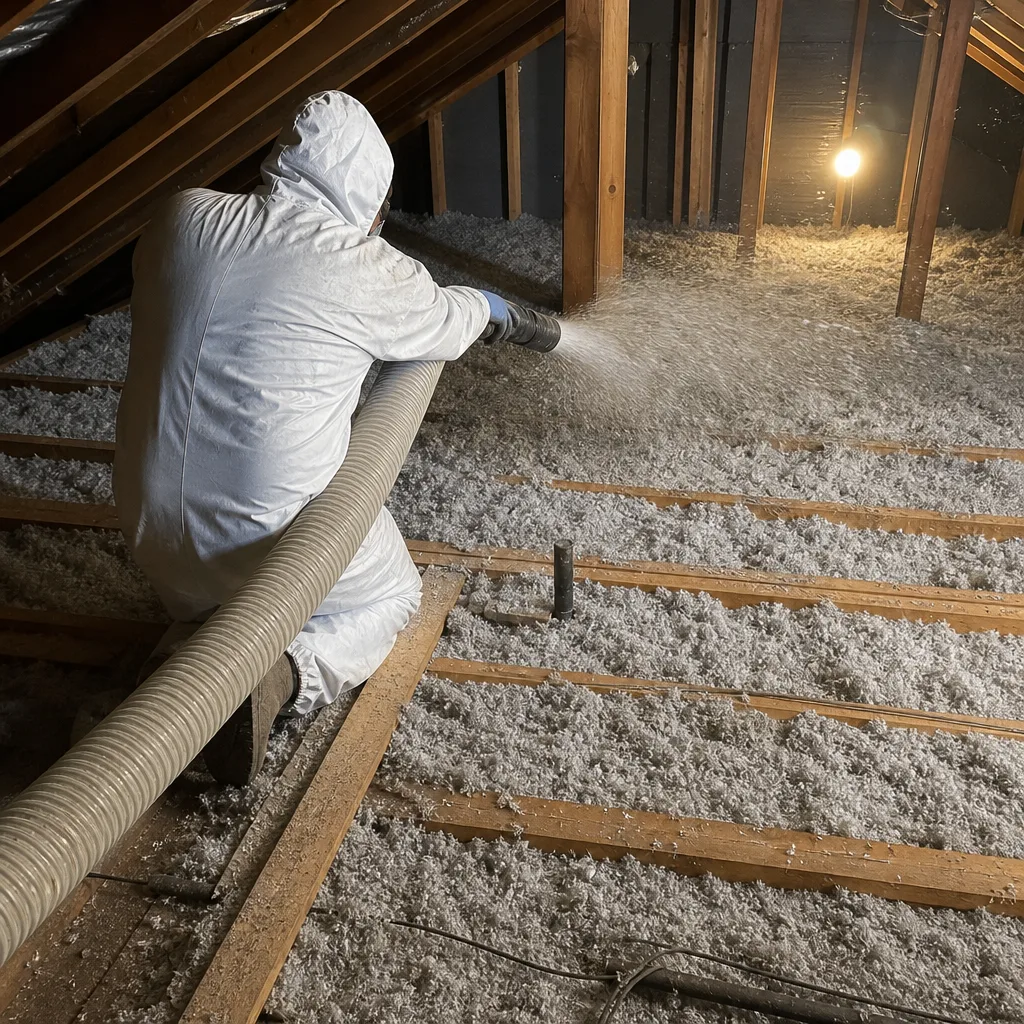
We staple the barrier to the underside of the roof rafters, leaving an air gap between the foil and the roof deck so the reflective surface can actually do its job. The air gap is non-negotiable; foil installed flat against the deck loses most of its reflective benefit. In low-pitch hip roofs common in 91722, this takes longer because the rafter bays are tight and the heat in the attic is punishing.
Attic Floor Radiant Barrier Options
For attics where roof deck application isn’t practical, we can lay the barrier over the existing insulation on the attic floor. This approach reflects heat trying to rise from the living space below and dust from the insulation, though it’s not as effective as roof deck application for reducing attic air temperature. We’ll tell you which method is actually worth doing for your roofline.
Trusted Brands We Service in Covina
We carry Owens Corning because their fiberglass blown-in product holds its loft and R-value better than most competitors in high-heat attics like Covina’s. We carry Demilec because their open-cell spray foam seals air leaks in tight cavities that loose-fill cannot reach. We carry GreenFiber because some Covina homeowners specifically request recycled-content cellulose, and we’d rather install it properly than talk them out of it. The brand follows the home’s needs, not the other way around. For Covina jobs, this means we stock enough material locally to handle same-week scheduling, and we don’t have to wait on supply chain delays from out-of-state distributors.
Common Attic Insulation Problems We See in Covina Homes
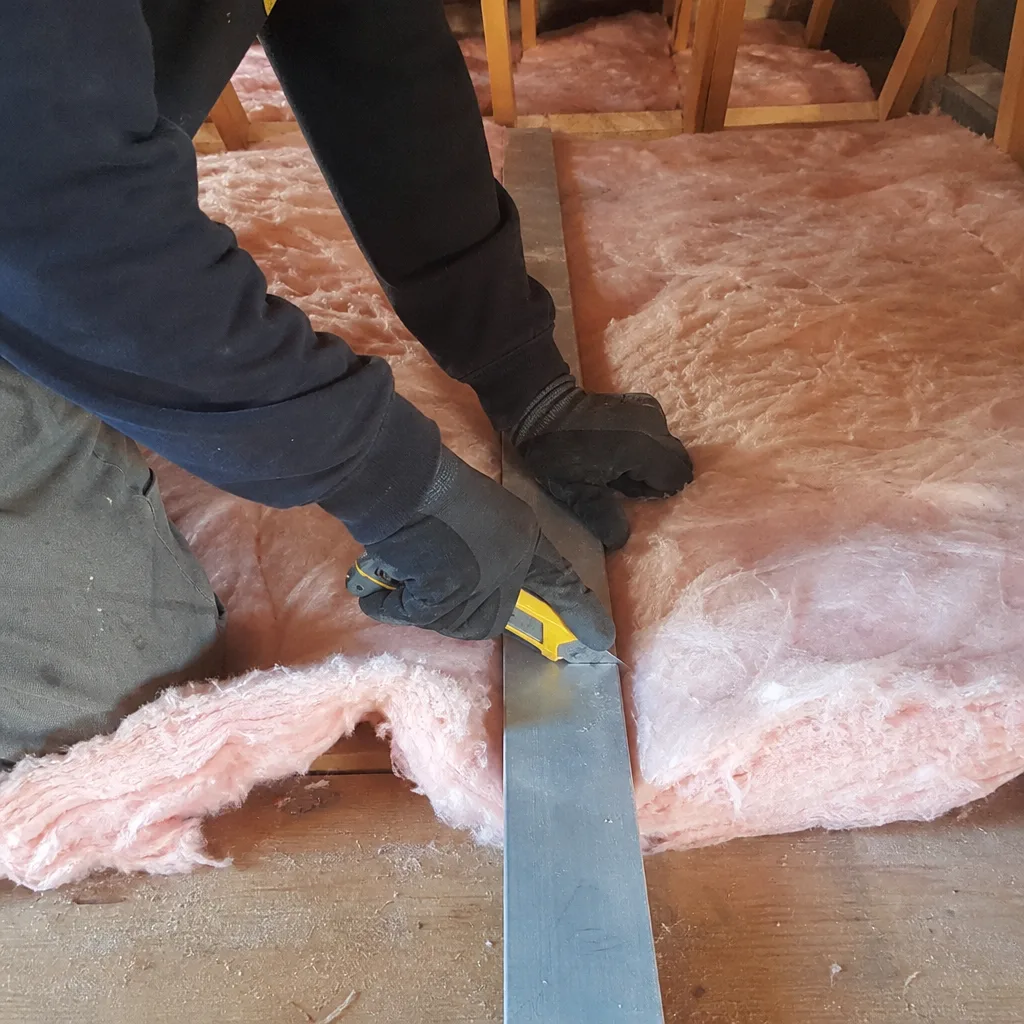
- Compressed builder-grade batts in 91724 subdivisions: The original R-19 fiberglass in many 1980s-2000s Covina homes has settled to R-12 or lower. The compression is worst around recessed can lights and HVAC chases, where installers stuffed batts rather than cutting them properly, leaving uninsulated gaps that create hot spots.
- Degraded rock wool in mid-century 91722/91723 ranches: Houses built in the 1950s and 60s often have a thin layer of original rock wool that’s compressed, dusty, and effectively doing nothing. Even when some insulation remains, the absence of air sealing means hot attic air infiltrates through top plates and wiring penetrations.
- Low-pitch hip roofs limiting attic access: Many older Covina ranches have hip roofs with shallow slopes, making the far eaves hard to reach with a blower hose. Inexperienced crews blow insulation unevenly or miss the eaves entirely, leaving the ceiling perimeter under-insulated.
- Missing or blocked soffit vents: In both old and new Covina construction, we routinely find soffit vents that were never installed, painted over during a re-roof, or buried under existing insulation. Without intake airflow, the attic can’t vent, and the insulation can’t perform as rated.
Pricing for Attic Insulation in Covina, CA
A full blown-in fiberglass attic insulation project in Covina typically runs $1,800 to $3,200 for a standard 1,200-1,800 square foot single-story home. Removal of old compressed batts or degraded rock wool adds $600 to $1,000. Adding a roof deck radiant barrier on a typical ranch runs $1,200 to $2,400 depending on roof complexity. For the newer 91724 two-story homes needing batt removal, air sealing, and re-insulation, expect $2,500 to $4,200. Attic ventilation corrections, including new baffles and additional soffit or ridge vents, run $400 to $1,100. These are Covina market ranges based on what we’ve quoted recently for homes in 91722, 91723, and 91724. Call (855) 382-3451 for an exact quote after we see your attic; estimates are free.
We Also Serve Cities Near Covina
Our crews work throughout the eastern San Gabriel Valley. If you’re in Covina, we’re already nearby, and we also routinely serve Irwindale, Azusa, Citrus, and West Covina. Same-week scheduling applies across the area. If you’re in one of these neighboring cities, call (855) 382-3451 and we’ll get you on the schedule the same way we do for Covina homeowners.
Serving Covina, CA — Our Local Coverage Area
We’re based in the Covina area and know this community well. Use the map below to see our service coverage — if you’re nearby, we can almost certainly help.
FAQs About Attic Insulation in Covina
Your R-19 batts are likely compressed to R-12 or less, especially if they were installed around recessed lights without proper cutting. We recently worked on a 2005-built two-story near the 91724 edge where the original builder-grade batts had settled unevenly and were stuffed around can lights rather than cut to fit. Our crew removed the old batts, air-sealed the penetrations, and blew in Owens Corning fiberglass to R-38, then added a radiant barrier on the south-facing roof deck. The homeowner reported their upstairs bonus room was noticeably cooler within a week. If your bills are still high, your ceiling insulation is probably underperforming even though it’s technically present. Call (855) 382-3451 and we’ll inspect it.
Yes. Covina’s cooling load dominates because the eastern San Gabriel Valley runs weeks of 90°F+ weather every summer, and Santa Ana events push temperatures higher. Attic insulation and radiant barrier work directly reduce the heat gain that forces your AC to run longer. Heating-side upgrades deliver smaller returns here because winters are mild. If you’re deciding where to spend your energy-efficiency budget, attic insulation is the highest-value upgrade for a Covina home.
Yes, we access attics in 1950s ranch homes throughout 91722 and 91723 regularly. The low-pitch hip roofs on these houses make the far eaves harder to reach, so our crews use extension hoses and work slowly to ensure even coverage to the ceiling perimeter. We also check whether the existing rock wool needs removal first. Call us to schedule an attic inspection and we’ll tell you exactly what your access situation allows.
For Covina’s climate, we recommend R-38 to R-49 for fiberglass or cellulose blown-in insulation, and R-30 to R-38 for spray foam depending on whether you’re using open-cell or closed-cell. The current Energy Star recommendation for our climate zone is R-49 for attic insulation, but many Covina homes can achieve meaningful improvement at R-38 without rafters getting buried. We’ll calculate your attic’s current level and tell you what makes sense for your roofline.
Yes, we inspect and correct attic insulation in newer 91724 homes even when they’re still under builder warranty. The most common issue we address is uneven or compressed batt installation that the builder’s warranty doesn’t cover. We’ll document what we find, give you a straight answer about whether a repair is worth doing now, and handle any top-up or removal work the same day. Call (855) 382-3451 for a free estimate.
Written by Ruben Castellano, Owner at Thermal Insulation Co, serving Covina and the eastern San Gabriel Valley with dedicated attic insulation expertise.