
Fast, Reliable Spray Foam Insulation Across Walnut Park
Spray foam insulation in Walnut Park requires a contractor who understands mid-century stucco construction, tight attic access, and LA County unincorporated building rules. Most Walnut Park homes were built between the 1920s and 1960s with little or no original insulation, which means retrofitting is not a nice-to-have. It’s the single most effective way to cut AC costs during summers that routinely push past 90°F. Our crews work in Walnut Park regularly and know the specific challenges these homes present before we ever climb into an attic. Call (855) 382-3451 to schedule an assessment.
Why Thermal Insulation Co Is Walnut Park’s Preferred Spray Foam Insulation Company
We are a dedicated insulation contractor, not a generalist who happens to spray foam. That distinction matters in Walnut Park, where older homes hide wiring and access issues that generic crews miss or mishandle. Our team works exclusively with insulation, and Ruben Castellano, our owner, has built the company around matching the right material and method to the home rather than pushing whatever product happens to be on the truck. For Walnut Park homeowners, that means an honest conversation about open-cell versus closed-cell foam, when blown-in makes more sense, and how to handle a closet scuttle without locking yourself out of the attic.
We carry products from eight nationally recognized manufacturers, including Icynene, Demilec, Owens Corning, and Johns Manville. That brand range matters here. Some Walnut Park attics need the high R-value and moisture resistance of closed-cell foam. Others are better served by open-cell foam’s breathability and lower cost. Because we stock competing brands across categories, our recommendation is driven by your home’s actual conditions: framing age, attic ventilation, moisture exposure, and how the space is accessed. That is the opposite of a one-size-fits-all pitch.
Spray Foam Attic Insulation in Walnut Park
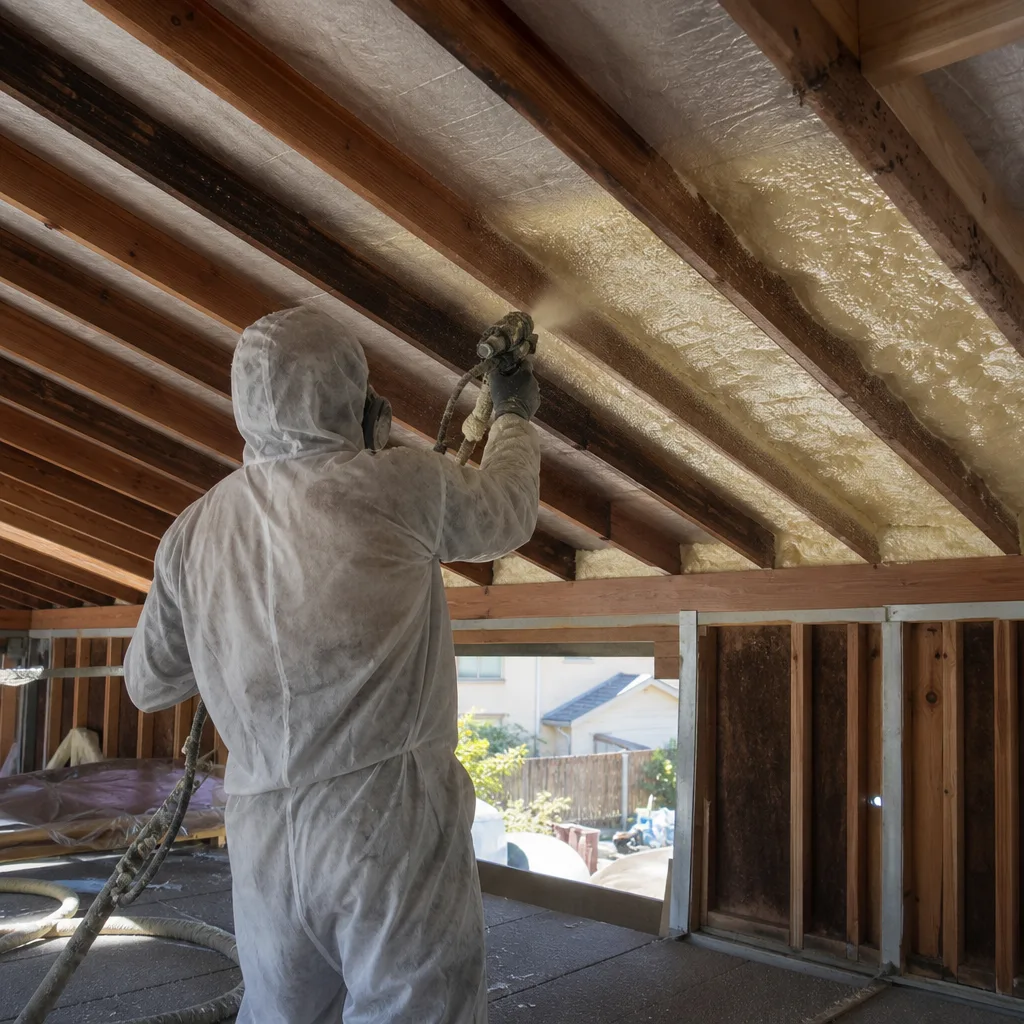
Spray foam attic insulation in Walnut Park is typically applied to the roofline, not the attic floor. That creates a conditioned attic space that keeps the brutal summer heat out of the living areas below. Homes here are mostly single-story stucco bungalows and small duplexes with wood-frame attics that act like heat traps from June through October. A proper roofline application can drop attic temperatures dramatically and reduce the strain on AC systems that run hard all summer.
Expect to pay between $2,800 and $6,500 for a full attic spray foam application in a typical Walnut Park bungalow. Smaller attics with limited square footage run lower. Homes with complicated rooflines, cathedral ceilings, or extensive prep work run higher. We provide a written quote before any work begins, and estimates are free.
Closet Scuttle Access Remediation
Many Walnut Park attics are reached through a small scuttle in a bedroom closet, not a hallway hatch. That access point is usually tight, and spraying foam directly against it without protection seals the attic shut permanently. We install a removable foam-board barrier over the scuttle opening before spraying, so you can still get into the attic for wiring, plumbing, or storage access later. This is a detail generic crews frequently miss, and it is one we handle on every Walnut Park job with this access type.
Roofline Application vs. Attic Floor
In Walnut Park’s hot, dry climate, roofline application outperforms attic floor insulation for most homes. Floor insulation still lets the attic itself bake to 130°F or higher, which radiates into the living space and works against whatever is on the floor. Roofline foam isolates the attic from the roof deck, so the entire attic stays closer to indoor temperatures. Ductwork running through the attic also benefits, since it is no longer sitting in a superheated space.
Spray Foam Wall Insulation in Walnut Park
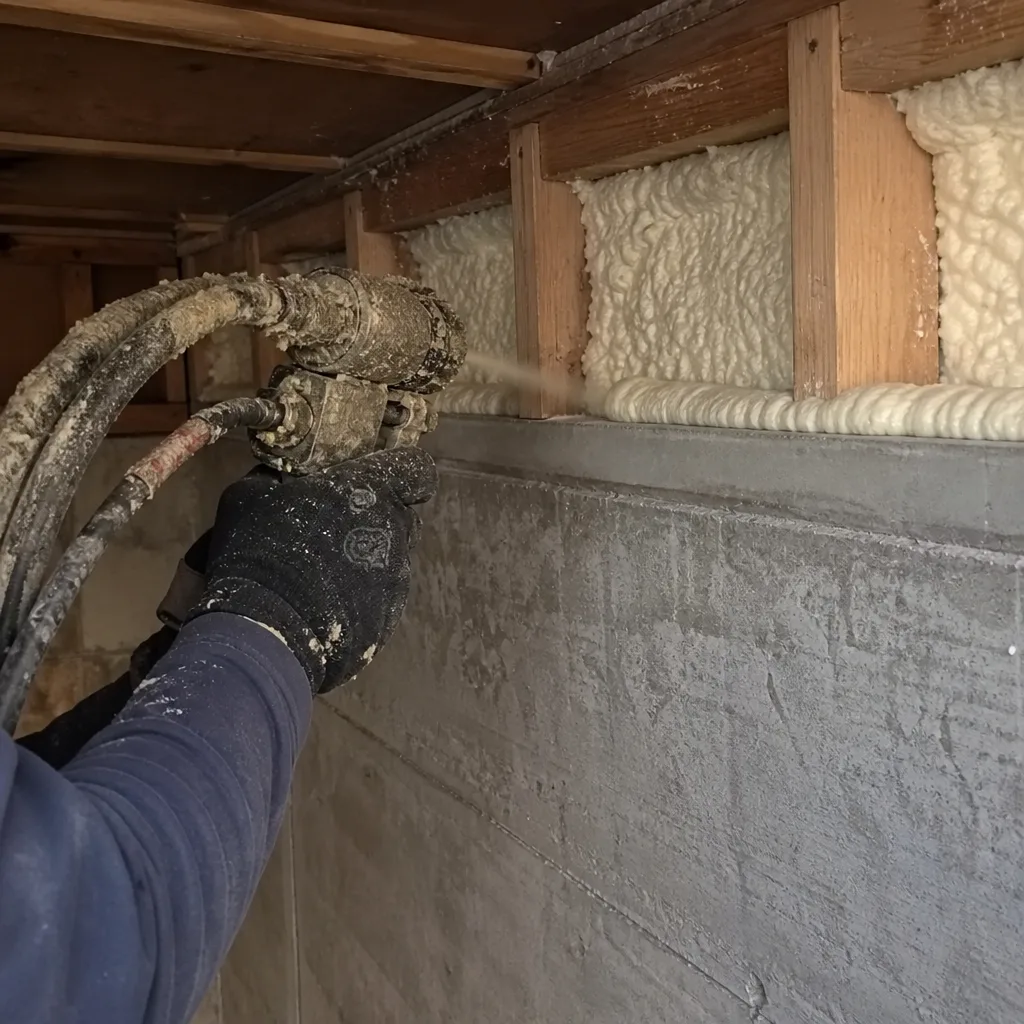
Spray foam wall insulation in Walnut Park usually involves injecting foam into existing wall cavities in homes that were built before wall insulation was standard practice. Most 1920s and 1950s-era bungalows here have empty or nearly empty wall cavities. That means the stucco exterior absorbs sun all day and transfers heat directly through the wall assembly into the interior. Foam injection fills those voids, creating an air seal and thermal barrier that changes how the home performs.
Wall foam retrofits in Walnut Park run roughly $3,200 to $8,000 depending on total wall cavity volume, number of stories, and whether we are doing the full perimeter or just sun-exposed walls. South- and west-facing walls deliver the fastest comfort payoff in this climate, and some homeowners start there before doing the rest of the envelope.
Injection Foam for Existing Stucco
Injection foam is the standard retrofit method for Walnut Park’s stucco homes. We drill small access holes through the exterior stucco or interior drywall, inject the foam into the cavities, and patch the holes. The foam expands to fill the irregular spaces between framing, providing both insulation and air sealing. For older homes with original wood framing, we use open-cell foam, which is more forgiving on movement and allows moisture to escape rather than trapping it against old lumber.
Air Sealing Benefits in Walnut Park’s Climate
Walnut Park’s energy problem is not just temperature. It is air movement. Warm outside air infiltrates through wall cracks, rim joists, and around windows, while conditioned air escapes the same way. Spray foam is uniquely effective at air sealing because it expands into the gaps that batt insulation simply cannot fill. Homeowners who notice rooms that never cool down in July and August are often dealing with air leaks as much as missing insulation. Foam addresses both problems at once.
Trusted Brands We Service in Walnut Park
Thermal Insulation Co is authorized to install products from Owens Corning, Johns Manville, Knauf, Rockwool, CertainTeed, Icynene, Demilec, and GreenFiber. For spray foam work in Walnut Park, we most often use Icynene and Demilec systems, because they cover the performance range these older homes need: open-cell for forgiving, breathable applications and closed-cell for higher R-value and moisture resistance. We keep foam materials stocked and ready for Walnut Park jobs, so scheduling does not depend on a distributor’s delivery window. Ruben Castellano selected these two foam lines specifically because they hold up in the LA Basin’s dry heat and have long track records in retrofit applications.
Common Spray Foam Insulation Problems We See in Walnut Park Homes
- Foam over live knob-and-tube wiring. Many Walnut Park homes built before the 1950s still have knob-and-tube circuits in the attic. Spraying foam directly over live K&T is a legitimate fire hazard and will fail inspection. We check for this on every job and coordinate with a licensed electrician when rewiring or shielding is required before insulation goes in.
- Sealed closet scuttles. We have seen multiple Walnut Park attics where a previous crew sprayed foam directly over the scuttle frame, making future access impossible without cutting through cured foam. Our crew always installs a barrier and documents the access point for the homeowner.
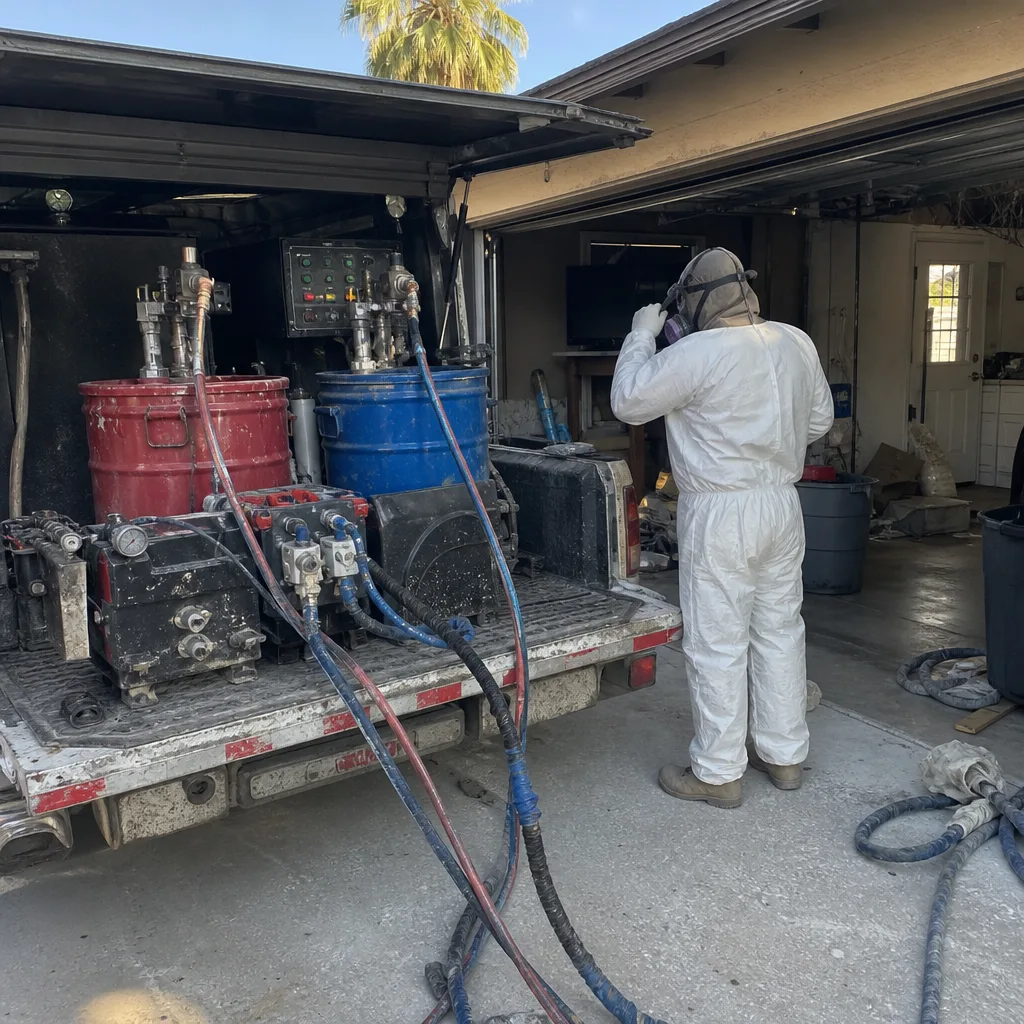
- Off-gassing from improper mix ratios. Closed attic spaces with limited ventilation amplify any off-gassing problems from poorly calibrated foam application. We calibrate our spray rigs before every job and monitor temperature and humidity conditions, because installing in Walnut Park’s summer heat requires adjusting ratios to get a proper cure.
- Deteriorated original batts left in place. Some Walnut Park attics have thin, crumbling fiberglass batts from decades ago. Spraying over them without removing or assessing them creates uneven coverage and can trap moisture. We remove contaminated or deteriorated material before applying foam to the roofline or ceiling deck, and we explain exactly what we found and what we did about it.
Pricing for Spray Foam Insulation in Walnut Park, CA
Spray foam pricing in Walnut Park breaks down by application. Attic roofline applications run $2,800 to $6,500 for typical bungalows, while wall retrofits run $3,200 to $8,000 depending on cavity volume and wall surface. Rim joist sealing around the foundation perimeter runs $1,200 to $2,800, and garage ceiling applications typically land between $1,800 and $4,200. Closed-cell foam runs about 50% more per board foot than open-cell, but delivers higher R-value per inch and acts as a moisture barrier. We walk through square footage, cavity depth, and access complications on every quote so you see exactly what drives the number. Call (855) 382-3451 for a free estimate tailored to your Walnut Park home.
We Also Serve Cities Near Walnut Park
Our crews work throughout Southeast LA County, including Walnut Park and neighboring Huntington Park, Bell, Cudahy, and Maywood. If you are in any of these areas and want an insulation assessment from a dedicated specialist, call (855) 382-3451. We schedule quickly across the 90255 area.
Serving Walnut Park, CA — Our Local Coverage Area
We’re based in the Walnut Park area and know this community well. Use the map below to see our service coverage — if you’re nearby, we can almost certainly help.
FAQs About Spray Foam Insulation in Walnut Park
Yes, in most cases. Old fiberglass batts that are thin, compressed, or contaminated should be removed before applying spray foam to an attic in Walnut Park, because they create uneven coverage and can trap moisture against the ceiling deck. Our crew assesses the existing material during the initial walkthrough and tells you whether removal is required. If the old insulation is in good condition and we are only air-sealing specific areas, removal may not be necessary. For an exact recommendation, call (855) 382-3451 and we will inspect your attic at no cost.
No, spray foam should never be applied directly over live knob-and-tube wiring. Walnut Park’s mid-century homes commonly still have this wiring in attics, and the heat generated by K&T circuits combined with foam encapsulation creates a fire hazard and fails LA County inspection. The wiring must be decommissioned, re-routed, or properly shielded by a licensed electrician before foam is applied. We coordinate that step as part of the project, so you do not have to manage two contractors and an inspection timeline on your own.
Spray foam insulates and air seals in one application, which is exactly what Walnut Park’s hot summers demand. By applying foam to the attic roofline, we prevent the attic from becoming a 130°F heat chamber that radiates into living spaces below. By sealing wall cavities, we stop hot outside air from infiltrating through gaps that fiberglass cannot fill. The result is a home that holds conditioned air longer, cycles the AC less often, and keeps upper-floor rooms and bedrooms closer to the thermostat set point. Call (855) 382-3451 for an assessment of where your home is losing the most conditioned air.
Most Walnut Park bungalows are accessed through a small scuttle in a bedroom or hallway closet, not a full-size attic hatch. That tight access affects how we move materials, how we vent the spray rig, and how we protect the opening during application. On a recent job off Alameda Street in Walnut Park, our crew found a 1950s stucco bungalow with a closet scuttle and original knob-and-tube wiring feeding two bedroom circuits. We worked with a licensed electrician to re-route and shield the wiring, then applied Icynene spray foam to the attic roofline, sealing the scuttle with a removable foam board. The homeowner immediately noticed a drop in attic heat and a quieter AC cycle. That scenario is common here, and we plan for it on every Walnut Park quote rather than discovering it mid-project.
Yes, when the right foam is used. For Walnut Park’s older wood-frame homes, we typically recommend open-cell spray foam because it allows moisture to pass through rather than trapping it against original lumber. Closed-cell foam is appropriate where higher R-value per inch or moisture resistance is required, but it is less forgiving on older assemblies that move and breathe. Our recommendation is based on the framing condition, ventilation, and whether the home has any history of moisture intrusion. Ruben Castellano and our crew have worked on enough 1920s and 1950s-era stucco homes in this area to know which applications hold up and which ones cause problems down the line. Call (855) 382-3451 to schedule an assessment and get a straight answer for your specific house.
Written by Ruben Castellano, Owner at Thermal Insulation Co, serving Walnut Park and surrounding Southeast LA County communities.