
Fast, Reliable Spray Foam Insulation Across Venice
If you live in Venice, you already know the drill: morning fog rolls off the Pacific, the marine layer hangs over the canals, and homes built in the 1920s through 1940s were never designed for this kind of moisture. Spray foam insulation in Venice isn’t just about staying comfortable. It’s about sealing your home against salt air, humidity, and decades of hidden moisture damage before it gets worse. We install open-cell and closed-cell spray foam in both 90291 and 90294, with crews who know Venice’s housing stock from the canals to Oakwood to the oceanfront walk streets. Call (855) 382-3451 for a free estimate, and we’ll send someone who actually knows Venice construction, not a generic crew from across town.
Why Thermal Insulation Co Is Venice’s Preferred Spray Foam Insulation Company
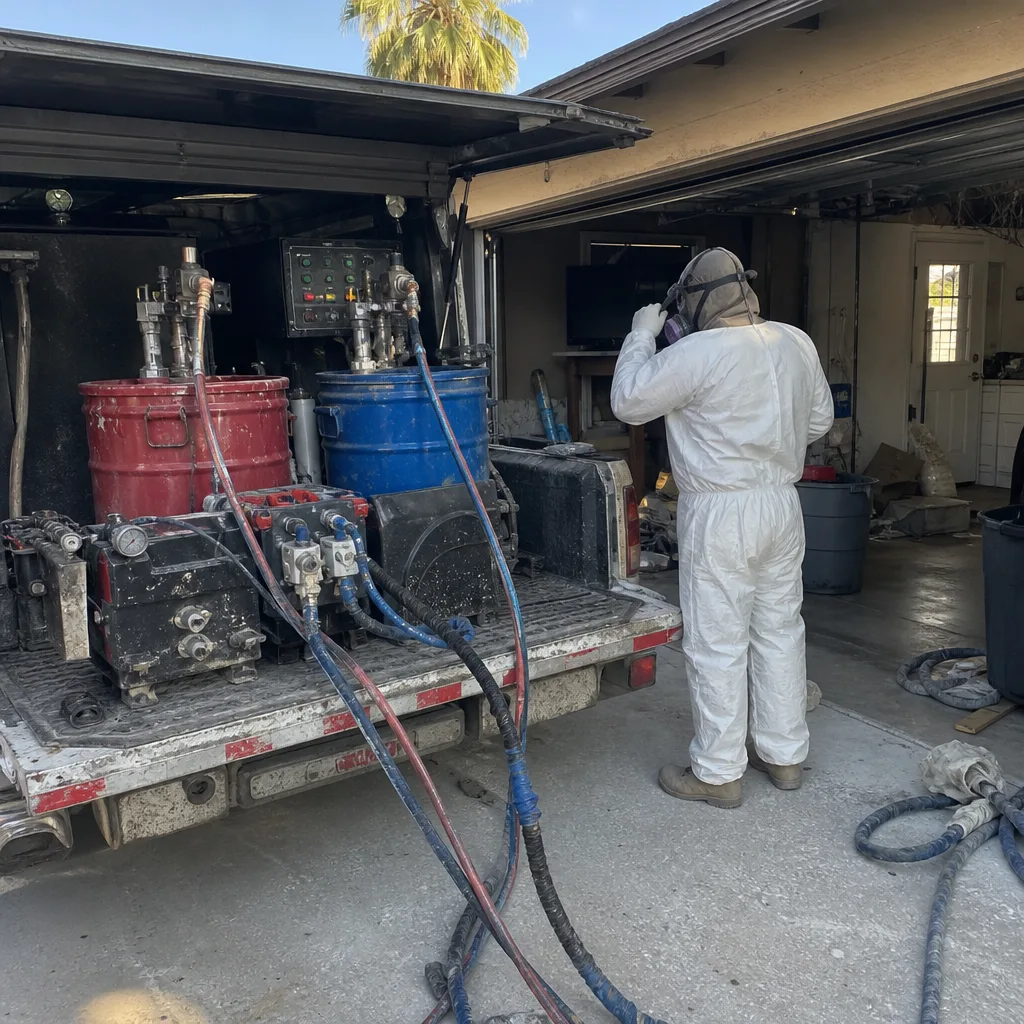
Thermal Insulation Co is a dedicated insulation contractor. We don’t do roofing on the side or bathrooms between jobs. Spray foam is one of three installation methods we run daily, alongside blown-in and attic batts, so when we recommend closed-cell foam for a Venice bungalow, it’s because the application calls for it, not because it’s the only product we stock. Ruben Castellano leads our team, and the same crew that handles attic retrofits in Oakwood also manages wall cavity spray foam near the Venice Canals. That consistency matters when you’re dealing with older homes and tricky crawlspaces.
Our timing to Venice runs 45 to 60 minutes from our Van Nuys yard, faster if the 405 is clear. For homeowners in 90291 east of Lincoln Boulevard, we’re typically on site within the hour for scheduled estimates. The walk streets off Abbott Kinney take a little longer just because of parking, but we plan for that. We’re familiar with the permit nuances for pre-1950 wood-frame homes in Venice and the building inspectors who work the westside. That local familiarity saves time and prevents surprises.
Spray Foam Wall Insulation in Venice
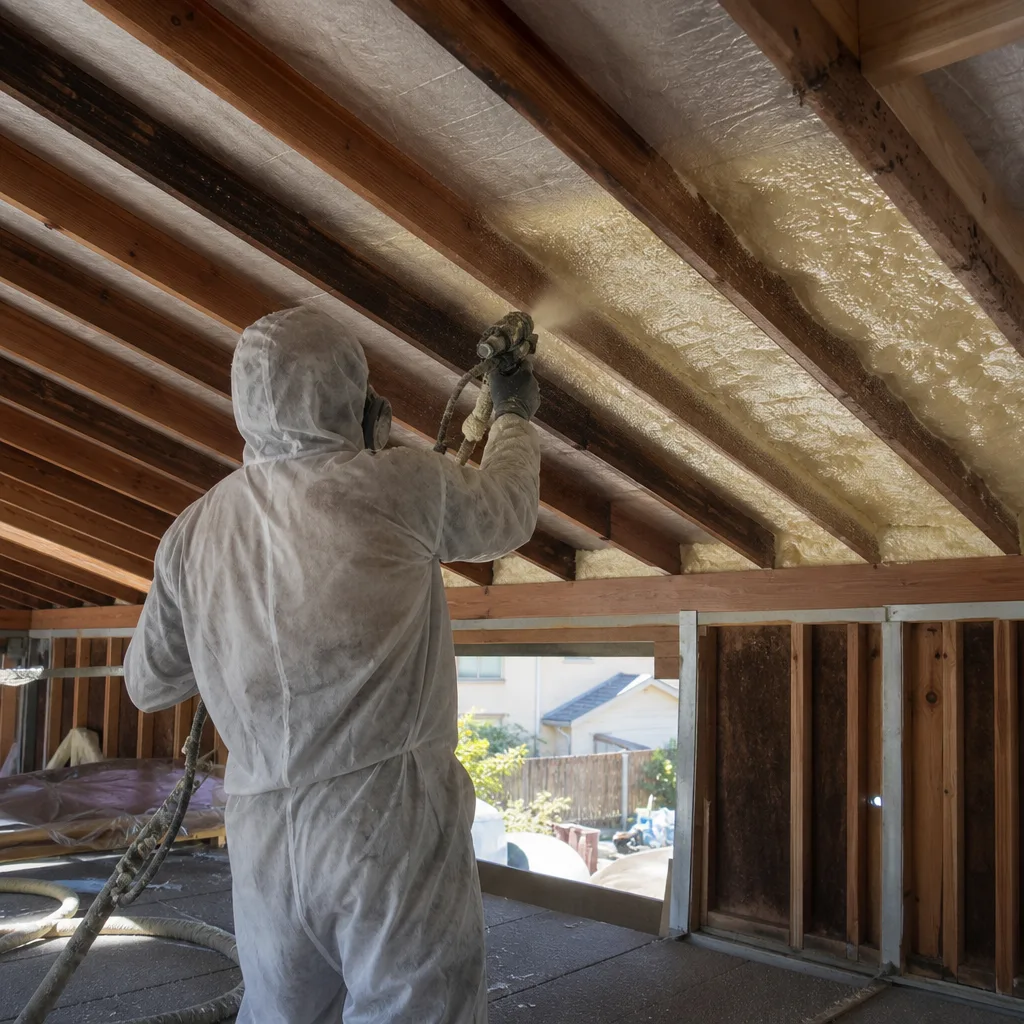
Spray Foam Wall Insulation in Venice is the most common retrofit we recommend for pre-1950 stucco bungalows and Craftsman cottages, because these homes typically have either zero wall insulation or original batt insulation that has been absorbing Pacific moisture for 70 to 100 years. The job involves accessing wall cavities, assessing existing material condition, removing anything wet or compressed, and then applying closed-cell foam directly to the sheathing and studs to create an air and moisture seal. Typical cost in Venice runs $3.50 to $6.00 per square foot of wall area, so a 1,200 square foot bungalow with exterior walls on all four sides usually lands between $6,000 and $9,500 depending on cavity access and how much old material needs removal first.
Moisture Remediation First
On a 1920s Craftsman near the Venice Canals, our crew found the original batt insulation behind the stucco walls soaked and compressed from years of fog and salt air. The interior walls felt cold, and the homeowner kept smelling something musty that never went away. We removed the wet batts, applied closed-cell spray foam to seal and insulate the wall cavities, and used moisture-resistant materials on the rim joists. Warm rooms, no more dampness, even during the worst June gloom.
Closed-Cell vs. Open-Cell for Wall Cavities
In Venice’s humid coastal zone, we typically recommend closed-cell foam for exterior wall cavities. It acts as its own vapor retarder at roughly 2 inches, which open-cell does not do as effectively. Open-cell has its place in interior partitions where sound control matters, but for a stucco wall facing the marine layer, closed-cell is the safer call.
Rim Joist Spray Foam in Venice
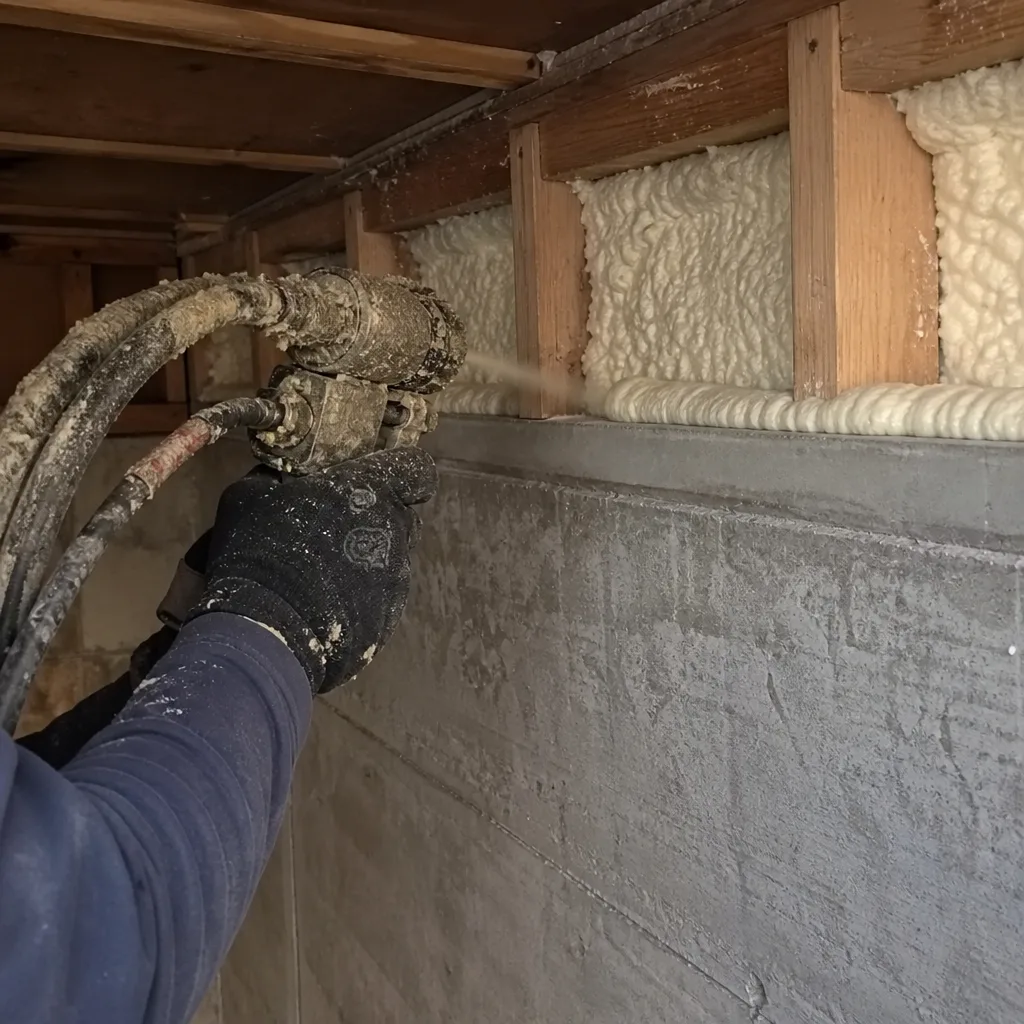
Rim joist spray foam in Venice is about stopping the stack effect and blocking moisture that migrates up from open crawlspaces. Nearly every Venice bungalow sits on a raised foundation with a vented crawlspace underneath, and when morning fog pushes in, that crawlspace air is damp. The rim joist area, where the floor framing meets the foundation, is the single largest air leak in most of these homes. In Venice, rim joist spray foam typically costs $18 to $24 per linear foot of rim joist, so a modest 1,000 square foot bungalow with 160 linear feet of rim joist runs $2,900 to $3,900. The work is usually done in a half day.
Salt Air and Fastener Corrosion
One thing we see in Venice more than anywhere else on the westside is corrosion of rim joist fasteners and framing hardware. Salt-laden air works its way into the crawlspace and eats at unprotected metal. When we spray foam rim joists here, we always check for existing corrosion and recommend corrosion-resistant fasteners if anything needs replacing before foam goes in. Foam over corroded hardware just seals the problem in.
Crawlspace Vapor Control
If the crawlspace has a dirt floor and no vapor barrier, we address that before or alongside rim joist work. Open-cell foam on a rim joist with no ground vapor barrier underneath can absorb moisture from the crawlspace air over time. Closed-cell avoids that issue and delivers a better air seal, which is why we lean toward closed-cell for rim joists in Venice, even though it costs a bit more per board foot.
Trusted Brands We Service in Venice
We carry Demilec and Icynene for spray foam applications, and we stock GreenFiber cellulose and Owens Corning and Johns Manville fiberglass for the blown-in and batt work that often accompanies a spray foam retrofit. The brand we recommend depends on what the home needs. Demilec’s closed-cell products hold up well in Venice’s high-humidity environment. GreenFiber gives Venice homeowners a recycled-content option when sustainability matters. Since we’re not tied to one manufacturer, we won’t try to fit your house to whatever is sitting in the warehouse. We will tell you which product makes sense for the cavity, the climate, and your budget.
Common Spray Foam Insulation Problems We See in Venice Homes
- Foam applied over wet or compressed batt insulation. In older stucco homes, the original batts behind exterior walls are often soaked from decades of fog infiltration. Spray foam applied directly over that traps moisture inside the wall cavity. Mold follows. We remove and remediate first, then insulate.
- Corroded rim joists and fasteners. Salt air near the oceanfront and canal blocks accelerates corrosion on exposed metal. Closed-cell foam helps seal out future moisture, but only if existing hardware is evaluated and replaced as needed before application.
- Open crawlspaces pulling in fog-driven humidity. Venice homes with dirt crawlspaces and no ground vapor barrier see elevated humidity under the floor system all year. Spray foam on floor joists in that environment can delaminate if the vapor barrier underneath isn’t addressed first.
- Inadequate gap-filling around old framing. Homes from the 1920s through 1940s often have irregular stud spacing and settling that leaves gaps at the top and bottom plates. If spray foam doesn’t fully seal those gaps, the air leak remains and the R-value you paid for never shows up on the utility bill.
Pricing for Spray Foam Insulation in Venice, CA
Wall cavity spray foam in Venice typically runs $3.50 to $6.00 per square foot of wall area, while rim joist work lands between $18 and $24 per linear foot. A full attic spray foam application on a standard Venice bungalow usually falls between $4,500 and $7,500. What moves the price: how much old material has to come out first, whether crawlspace vapor barriers need upgrading, and whether the home is a standard one-story or has a second story or garage ceiling to address. We give you a written estimate before any work starts, and we don’t charge for the visit. Call (855) 382-3451 to schedule a walkthrough in Venice, and we’ll give you numbers specific to your house, not a phone quote pulled from a chart.
We Also Serve Cities Near Venice
Our Venice crews regularly work in Santa Monica, Culver City, Ladera Heights, and Century City. The same moisture and marine-layer issues we handle in Venice show up in those neighborhoods too, just with different housing stock. If you’re in one of those areas, our Spray Foam Insulation team covers the entire westside, and we’re familiar with the construction patterns in each city. You can also see more about our Spray Foam Insulation in Venice service area here.
Serving Venice, CA — Our Local Coverage Area
We’re based in the Venice area and know this community well. Use the map below to see our service coverage — if you’re nearby, we can almost certainly help.
FAQs About Spray Foam Insulation in Venice
Moisture remediation comes first because spray foam is an air seal, and sealing moisture inside a wall cavity is worse than leaving it open. Most Venice homes built before 1950 have original batt insulation that has been absorbing marine-layer humidity for decades. If we spray foam over that wet material, the moisture has no escape route, and mold grows inside the wall. We remove the wet batts, check the sheathing and framing for rot, and only then apply foam. Call (855) 382-3451 and we’ll inspect your walls before quoting anything.
Closed-cell spray foam can reduce the amount of salt-laden air that reaches framing and fasteners by sealing the air leaks that carry it in. But foam itself doesn’t stop existing corrosion. If rim joist hardware or wall framing is already rusting, those components need to be replaced or treated before foam goes on. In high-salt zones like the canals and oceanfront blocks, we pair closed-cell foam with corrosion-resistant fasteners and check the framing condition as part of the job.
Closed-cell spray foam works best for exterior walls and rim joists in Venice because it acts as its own vapor barrier at around 2 inches of thickness. Open-cell foam is more permeable, which can be a benefit in some climates, but with Venice’s persistent high humidity and direct marine-layer exposure, closed-cell gives you the moisture resistance and air tightness that older stucco homes need. For interior partition walls where vapor management isn’t the concern, open-cell is a cost-effective option for sound deadening.
In open crawlspaces, we check the ground vapor barrier first. If the crawlspace floor is bare dirt and no vapor barrier is present, we install or upgrade that before applying foam to rim joists or floor framing. Then we use closed-cell foam on the rim joist area because it won’t absorb moisture from the crawlspace air the way open-cell can. This sequence prevents the delamination and mildew problems we see when foam is applied in damp crawlspaces without addressing the moisture source. Call (855) 382-3451 if you want a crawlspace assessment.
Yes, but only when installed correctly. Pre-1950 stucco homes in Venice have wall cavities that were never insulated or hold degraded original batt material. Closed-cell spray foam is well-suited to these cavities because it conforms to irregular framing and fills gaps that fiberglass can’t. The key is doing the moisture inspection and any necessary remediation before foam goes in. Skipping that step is where we see problems in older Venice homes, and it’s the main reason we won’t just shoot foam into a wall cavity without knowing what’s behind the stucco.
Written by Ruben Castellano, Owner at Thermal Insulation Co, serving Venice since day one.