
Fast, Reliable Spray Foam Insulation Across Van Nuys
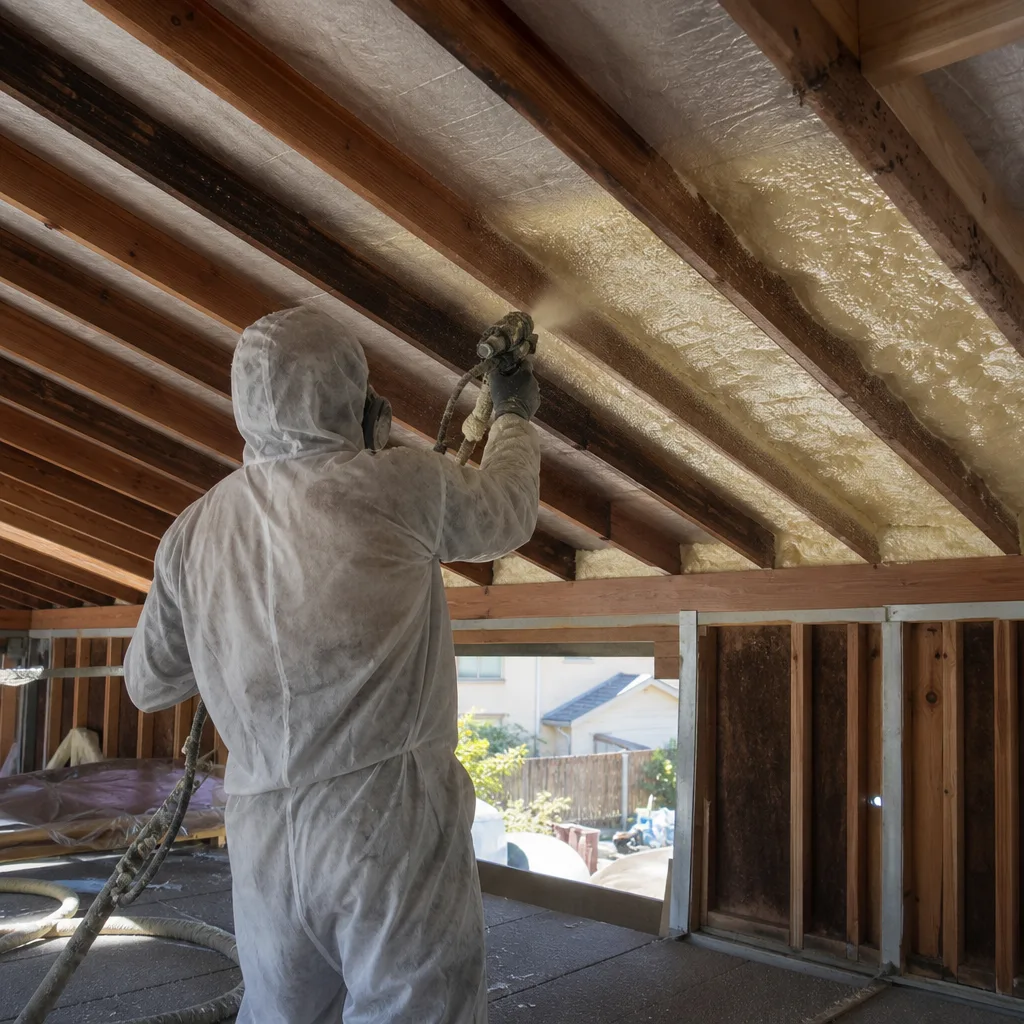
Van Nuys attics are a specific kind of problem. On a 100°F August afternoon, the air inside a shallow postwar attic can hit 150°F or worse. That heat doesn’t stay up there. It radiates down through your ceilings and into every room, and it’s the main reason your AC runs constantly from June through October. We work on these homes every week, all across Van Nuys, from the tract houses off Vanowen Street to the apartment buildings near Sepulveda Basin. Our crews know what’s behind these stucco walls and under these low-slope roofs, because we’ve opened up hundreds of them. If you’re ready to fix the real source of the heat, call (855) 382-3451 for a free estimate. We’ll walk the attic with you and tell you exactly what’s going on up there.
Why Thermal Insulation Co Is Van Nuys’s Preferred Spray Foam Insulation Company
Thermal Insulation Co is a dedicated insulation contractor. We don’t do plumbing, we don’t do roofing, and we don’t do windows. Insulation is the whole trade, and spray foam is one of three methods we install, alongside blown-in and batt. That matters because we’re not going to sell you spray foam if your attic really needs air sealing plus blown-in cellulose. We stock products from eight manufacturers, including Icynene, Demilec, and GreenFiber, so the material recommendation comes from what your house actually needs, not from what we happen to have on the truck. Ruben Castellano leads our team, and he’s spent years working in the kind of tight, hot attics that define Van Nuys housing stock.
Working in Van Nuys means working around 1940s and 1950s construction. We know where the top plates are in these homes, where the balloon-frame chases hide, and where the old blown-in insulation has settled into useless dust. That local familiarity cuts the guesswork out of the job. It also means our estimates account for what we’ll actually find when we open the attic hatch, not a generic square-footage number from a phone app. Response time to most Van Nuys neighborhoods is same-week, and we schedule estimates around your workday when we can. Our Spray Foam Insulation team has worked on everything from 900-square-foot bungalows off Sherman Way to four-unit apartment buildings near Valley College, and we treat each one as a separate problem with its own solution.
Crawl Space Spray Foam Insulation in Van Nuys
Crawl Space Spray Foam Insulation in Van Nuys addresses a problem most homeowners don’t notice until the floor feels hot or the cooling bill stops making sense. Many of the older wood-frame houses here sit on raised foundations with vented crawl spaces. That crawl space is open to the outside, and in the Valley, the outside is hot. Spray foam applied to the crawl space ceiling or the perimeter walls cuts off that heat source and keeps the floor stable. It also helps with moisture, which matters in Van Nuys because the summer is dry but the winter brings enough rain to raise crawl space humidity and invite mold into the floor framing.
When the Floor Won’t Cool Down
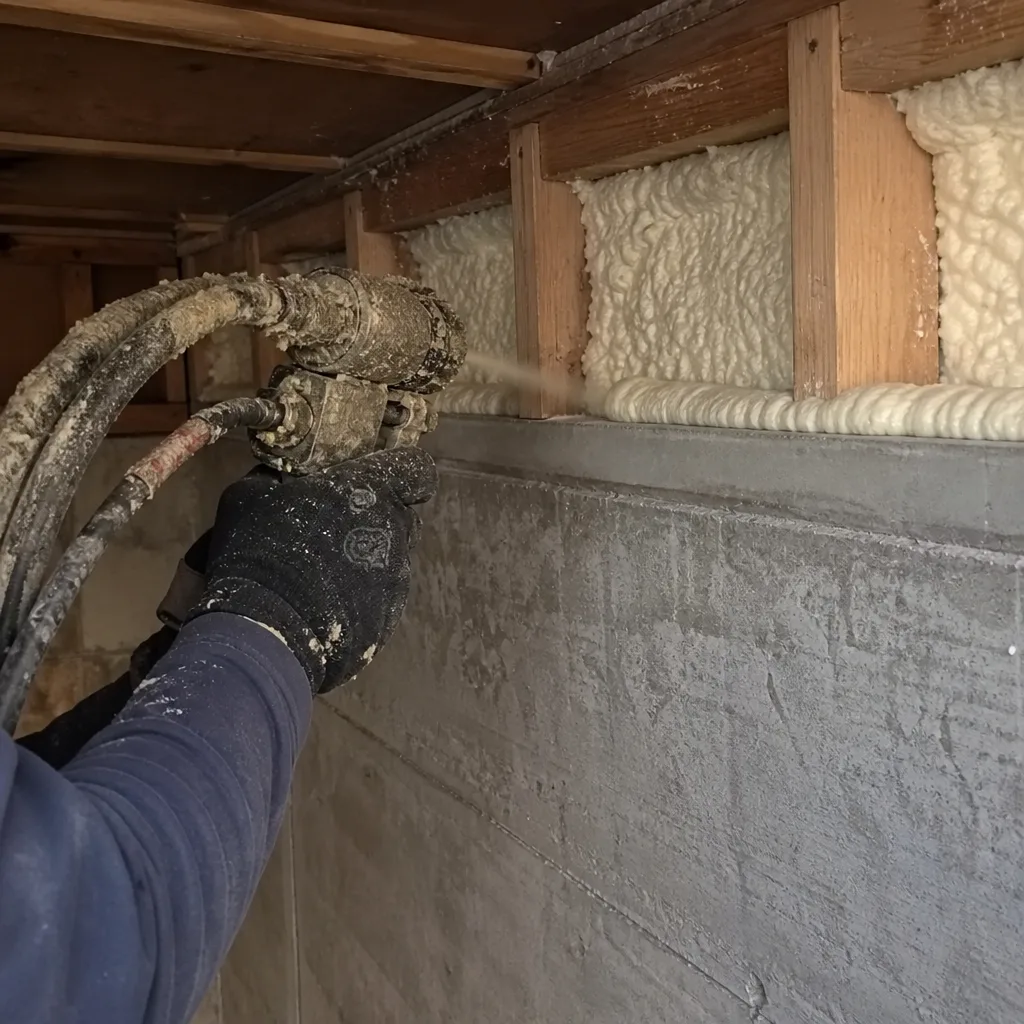
If you can feel heat coming up through the floorboards in July, the crawl space is the likely culprit. Closed-cell foam on the crawl space ceiling creates a thermal break between the hot air below the house and the living space above. We typically run a thin layer across the band joist and up the foundation walls, then treat any visible gaps or penetrations. In Van Nuys’s raised-foundation homes, this is often the single most impactful upgrade you can make outside the attic.
Moisture and Air Sealing Together
Crawl spaces in Van Nuys are not just hot. They’re also the entry point for dust, pollen, and the occasional rodent. Closed-cell spray foam acts as both an air barrier and a moisture barrier when applied correctly, which no batt or blown-in product can do in that environment. For homes near the Sepulveda Basin, where the water table is higher and the soil stays damp longer, this dual function is especially relevant.
Garage Spray Foam Insulation in Van Nuys
Garage Spray Foam Insulation in Van Nuys is about reclaiming usable square footage and protecting whatever shares a wall or ceiling with the garage. Most Van Nuys garages are uninsulated, and in a 1950s stucco ranch, the garage often sits under the same roofline as a bedroom or den. That means the garage ceiling is the bedroom floor’s heat source in summer. Spray foam on the garage ceiling, especially closed-cell foam at 2 inches or more, stops that heat transfer. It also quiets the space, which matters if you use the garage as a workshop, gym, or storage for anything temperature-sensitive.
Garages Attached to Living Space
If your garage shares a wall with the kitchen or a ceiling with a bedroom, the temperature in that garage is not isolated. It’s actively heating those rooms. We’ve measured garage ceilings in Van Nuys at 120°F while the adjacent bedroom struggles to hold 78°F. Spray foam on the shared surfaces, combined with air sealing around the door penetrations and the wall top plate, fixes the root cause rather than fighting it with more AC.
Detached Garages and Workshop Spaces
A detached garage that you want to use year-round needs its own thermal envelope. Closed-cell foam on the underside of the roof deck or on the walls makes the space usable in August without a dedicated AC unit. It also protects stored paint, electronics, and other heat-sensitive items that would otherwise degrade in a 130°F garage. Many Van Nuys homeowners use their detached garages as home offices or music studios, and spray foam is what makes that viable in the Valley heat.
Trusted Brands We Service in Van Nuys
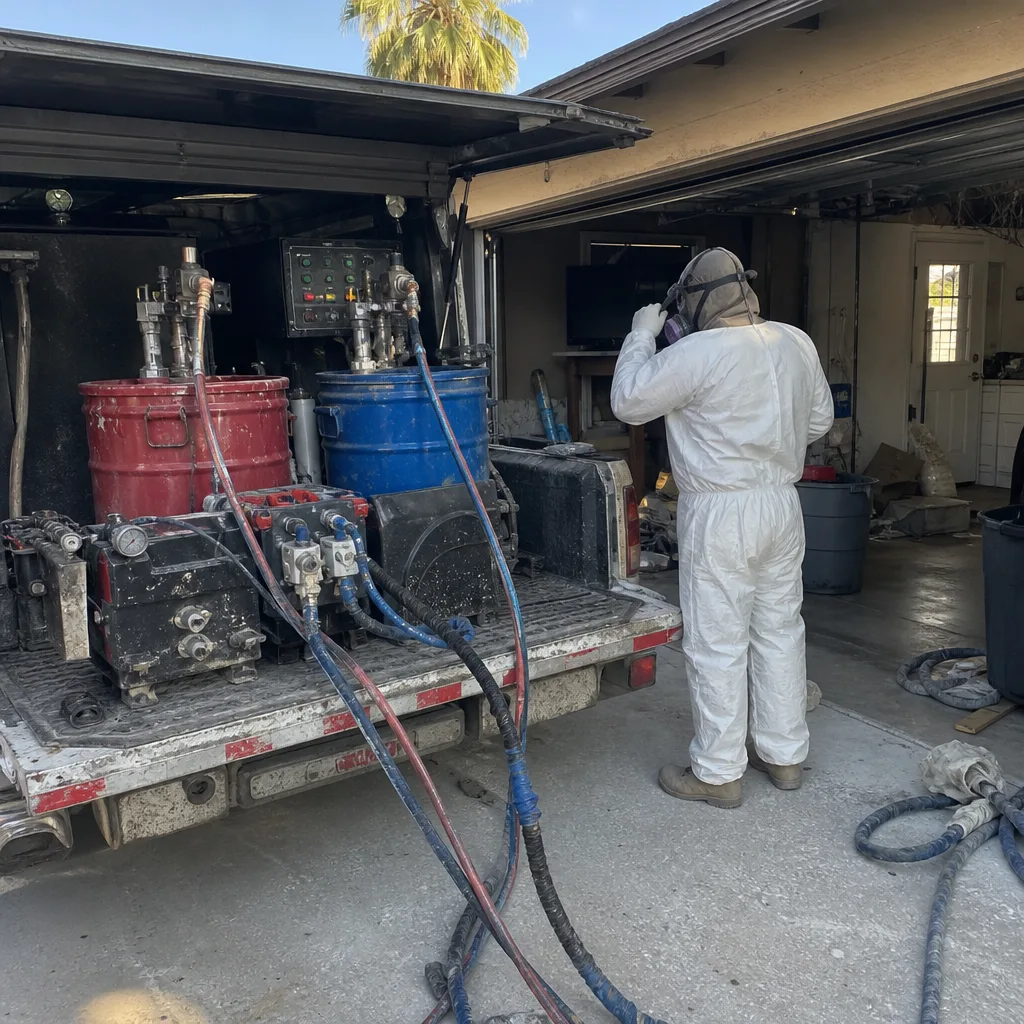
We install Icynene and Demilec spray foam because those two product lines give us the greatest control over open-cell and closed-cell performance, and we also handle Reflectix repair in Van Nuys when that system is the right fit. Demilec’s closed-cell foam delivers a high R-value per inch, which matters in Van Nuys’s shallow attics where there is not much room to work. Icynene’s open-cell product is better for wall cavities where you want air sealing and sound damping without the density. We also carry Owens Corning and Johns Manville batt products for jobs where spray foam is genuinely the wrong tool. Carrying competing brands across the same category means we can recommend what the house needs, not what our supplier pushed this quarter. For Van Nuys customers, that translates to a faster, more accurate recommendation on the first visit.
Common Spray Foam Insulation Problems We See in Van Nuys Homes
- Settled legacy insulation under new foam: Many Van Nuys attics still have the original blown-in fiberglass or rock wool from the 1950s and 1960s. It has settled, compressed, and sometimes decomposed into a dusty mat less than 2 inches thick. Spraying foam on top of that creates an uneven thermal barrier and traps the old material’s gaps. We remove it first.
- Foam applied to an unventilated attic: A closed attic with foam on the roof deck still needs airflow if it is vented unconditioned space. In Van Nuys, where the attic can hit 150°F, sealing it without adding soffit vents and a ridge vent traps superheated air and can cook the shingles from underneath. Ventilation and foam have to be designed together.
- Missed air-sealing points in old stucco frames: 1940s and 1950s stucco homes in Van Nuys often have open wall cavities and unsealed top plates that let hot air pour in from the attic and exterior. Foam that just covers the attic floor without sealing those bypasses leaves a major leak path. The foam looks fine, but the energy bill doesn’t move.
- Flat roof edges and parapet walls: Many Van Nuys apartment buildings and postwar commercial strips have flat or low-slope roofs with parapets. Spray foam applied to the underside of a flat roof without addressing the parapet wall creates a thermal bridge that feeds heat straight into the top-floor units. This is a fixable problem, but it requires knowing where to look.
Pricing for Spray Foam Insulation in Van Nuys, CA
Spray foam insulation in Van Nuys typically runs $2.75 to $6.50 per square foot of applied area, with closed-cell on the higher end of that range and open-cell on the lower. A crawl space job in a standard 1,000-square-foot ranch home lands between $1,800 and $3,400. A garage ceiling runs $900 to $2,200 depending on whether it’s attached to living space and how accessible the attic above it is. What moves the price is not just square footage. It’s removal of old insulation, the condition of the attic framing, whether we’re working on a flat roof or a pitched roof, and whether ventilation upgrades need to happen at the same time. Our estimates are free, and we’ll walk you through the line items before you commit to anything. Call (855) 382-3451 to schedule one.
We Also Serve Cities Near Van Nuys
Our crews regularly work in Spray Foam Insulation in Van Nuys and the surrounding Valley communities. That includes Valley Glen to the southeast, Sherman Oaks and Encino to the south, and North Hills to the northwest. If you’re in one of those neighborhoods and dealing with the same Valley heat, give us a call. We treat the whole San Fernando Valley as our service area, and same-week estimates are usually available in all of these cities.
Serving Van Nuys, CA — Our Local Coverage Area
We’re based in the Van Nuys area and know this community well. Use the map below to see our service coverage — if you’re nearby, we can almost certainly help.
FAQs About Spray Foam Insulation in Van Nuys
Yes, spray foam helps with Van Nuys heat more than any other insulation type because it addresses air movement, not just conductive heat. The Valley’s summer problem is not just that the attic is hot. It’s that hot attic air finds its way into the living space through unsealed gaps, and settled fiberglass does nothing to stop that. Closed-cell spray foam on the attic floor, combined with air sealing around top plates and penetrations, stops the convection loop that makes your upstairs bedrooms unbearable on 105°F days. We regularly see 15 to 25°F drops in upstairs room temperatures after a proper attic foam retrofit, but every house is different and we’ll tell you what to expect in yours. Call (855) 382-3451 for an assessment.
No, we do not recommend spraying foam over old blown-in insulation in Van Nuys, and in most cases we remove the old material first. The legacy blown-in fiberglass in these 1950s and 1960s attics has settled into a compressed mat, often with bare patches over the living areas. Foam applied on top of that creates an uneven base, wastes material, and hides the air leaks we need to seal first. We were called to a 1952 stucco ranch on Kittridge Street where the attic had settled fiberglass batts compressed to less than 2 inches over the living room. Our crew removed the failing batts, air-sealed the top plates, and applied 2 inches of closed-cell spray foam to the attic floor, then added a ridge vent and soffit baffles to keep the space breathing. The homeowner reported the upstairs bedroom finally held 78°F during a 108°F afternoon. Removal is not a hidden upcharge. It’s a line item, and we’ll show it to you up front.
The difference is which heat path you’re cutting off and what kind of foam makes sense for that space. Crawl space spray foam in Van Nuys targets heat and moisture rising from the ground and entering through the floor. We usually apply closed-cell foam to the crawl space ceiling and band joist, which also slows air movement through the vented foundation. Garage spray foam targets heat radiating through the garage ceiling into adjacent living space, or through garage walls. Closed-cell foam on the garage ceiling is the standard for attached garages, while detached garages may get open-cell on the walls plus closed-cell on the roof deck depending on how you use the space. If you’re not sure which problem you have, call (855) 382-3451 and we’ll take a look. Most Van Nuys homes have both, and fixing one without the other leaves a heat source you’ll feel by August.
Yes, in almost every Van Nuys attic, ventilation must be addressed as part of a spray foam job. The shallow, poorly ventilated attics in these postwar stucco homes already trap heat. Adding closed-cell foam to the attic floor without adding soffit vents or a ridge vent can make the space above the foam even hotter, because the heat now has nowhere to go. That superheated air sits against the roof deck and can shorten shingle life. The right approach is to remove the old insulation, seal the attic floor, apply the foam, and then make sure the attic can breathe. We factor this into every estimate. It’s not an optional add-on. It’s the difference between a correct job and a problematic one, and we’ll explain exactly why during the walkthrough.
Spray foam holds up significantly better than fiberglass or cellulose in Van Nuys’s dry heat because it does not settle or compress. Fiberglass batts lose performance as they age and shift in a hot attic, and blown-in cellulose can settle over time, especially in shallow attics where it starts thin. Closed-cell spray foam cures into a rigid, permanent layer that maintains its R-value and air-sealing properties for decades. The concern in Van Nuys is not the foam failing. It’s the foam being installed incorrectly on top of failed legacy insulation or into an unventilated attic. When the prep work is done right, closed-cell foam is the most durable insulation option for these houses. Call (855) 382-3451 and we’ll show you what’s in your attic right now, before you spend a dime.
In Van Nuys’s shallow, under-ventilated attics, adding spray foam without first removing the settled legacy insulation and addressing airflow creates exactly the kind of trapped-heat problem contractors in cooler climates never deal with. That’s the nuance most generic insulation pages miss, and it’s the difference between a foam job that actually lowers your cooling bill and one that just adds an invoice. We’ve been in enough of these attics to know what that difference looks like block by block. If you want a straight answer about your house, call (855) 382-3451. Estimates are free, and Ruben Castellano will make sure you get a recommendation that fits the way your home was actually built.
Written by the team at Thermal Insulation Co, serving Van Nuys with spray foam, blown-in, and attic insulation.