
Spray Foam Insulation in Studio City: Heat Defense for Hillside Homes
Spray foam insulation in Studio City typically costs $2,800 – $7,500 for a standard attic application, with wall insulation running $1,900 – $4,200 depending on cavity access and square footage. Most jobs here are completed in one to two days, including the long-hose setups that hillside streets require. If your attic turns into a radiant oven by June, the fix is usually air sealing plus foam, not more fiberglass. Call Thermal Insulation Co at (855) 382-3451 for a free estimate, and we’ll tell you which method actually makes sense for your house.
Key Takeaways:
- Studio City’s summer heat makes attic air sealing as important as R-value; foam does both in one pass.
- Hillside homes off Laurel Canyon and Coldwater often need long-hose spray foam application from the street, because attic hatches and stairways are too tight for rigs.
- We carry Icynene and Demilec spray foam systems, open-cell and closed-cell, and we’ll recommend the one that fits your roof deck and budget.
- This is what we do every day. Not a side service. Insulation is our only trade.
Fast, Reliable Spray Foam Insulation Across Studio City
We work in Studio City every week. The hillside streets off Laurel Canyon, the canyon-adjacent lots in the 91604 ZIP, the older ranch homes south of Ventura Boulevard near Coldwater Canyon – we know the houses here, and we know what happens to their attics when the east Valley heat kicks in. A Studio City call usually gets a crew on site within one to two business days, and we stage our trucks so that 91604 and 91614 are never far from a foam rig. When your attic is hitting 130°F and the upstairs bedrooms won’t cool below 80, waiting two weeks for a quote doesn’t work. Call (855) 382-3451 and we’ll get you scheduled.
Why Thermal Insulation Co Is Studio City’s Preferred Spray Foam Insulation Company
Homeowners here don’t need a generalist contractor who happens to own a foam gun. They need someone who has sprayed foam in tight rafter bays, sealed around 60-year-old recessed can lights, and run hoses up canyon driveways where the rig can’t park within 50 feet of the house. That’s the work we do in Studio City on a regular basis.
Thermal Insulation Co is a dedicated insulation contractor. Fiberglass, mineral wool, blown-in cellulose, spray foam – that’s the whole business. We carry eight brands, including Icynene and Demilec for foam, and Owens Corning and Rockwool for batt and blanket applications where they make more sense. No other trade on the truck. No siding crew, no window installers, just insulation. For Studio City homeowners, that means the person quoting your job knows exactly what an open-cell foam at R-3.7 per inch will do in a 1950s attic with discontinuous rafter bays, because they’ve done it a hundred times.
Spray Foam Attic Insulation in Studio City
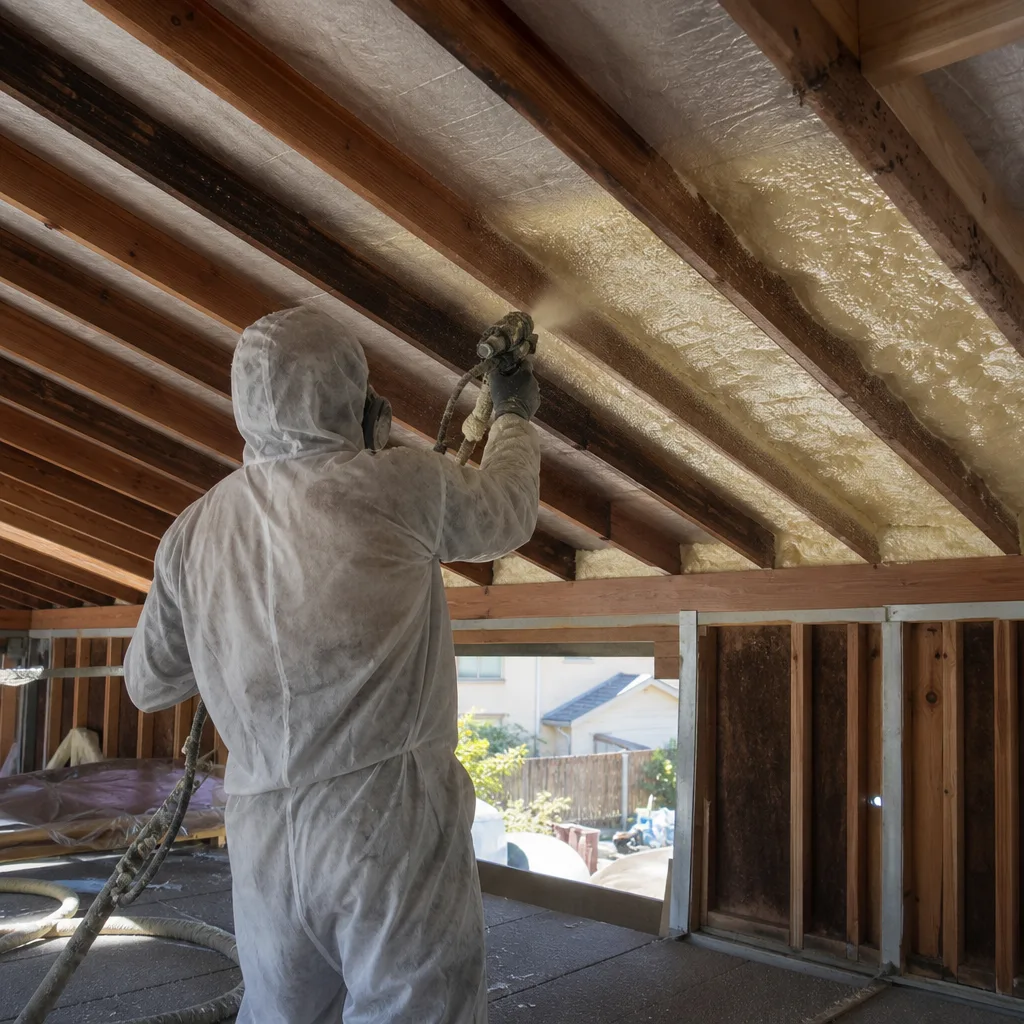
Spray Foam Attic Insulation in Studio City is usually a heat-defense job. The east San Fernando Valley sees summer highs past 100°F from May through October, and your attic becomes a radiant oven that cooks the ceiling below. Airborne heat moves through every gap around recessed lights, attic hatches, and plumbing penetrations. Foam addresses this differently than batts: it seals those gaps while it insulates. A typical Studio City attic application runs $2,800 – $7,500 depending on roof pitch, access, and whether the existing insulation needs removal first.
Open-Cell for Rafter Bays and Roof Decks
Open-cell spray foam is the workhorse for Studio City roof decks. It expands to fill irregular cavities, adheres to the underside of the roof sheathing, and quiets exterior noise from canyon traffic and the 101. Because it’s vapor-permeable, it allows moisture to dry – a real consideration in hillside homes where morning marine layer meets afternoon valley heat.
Closed-Cell for Tight Ceilings and Rim Joists
Closed-cell foam carries a higher R-value per inch and adds structural rigidity. In Studio City homes with low-pitch roofs and exposed rafter bays, that often means it’s the right choice where space is limited and you need maximum thermal break in a thin cavity. It costs more than open-cell, but when a 2×6 rafter bay is all you have, closed-cell delivers the R-value a 2×10 bay would need from open-cell.
Spray Foam Wall Insulation in Studio City
Spray Foam Wall Insulation in Studio City is common in remodels and additions where drywall is already open, or in retrofits where we drill and fill existing wall cavities. Original 1940s – 1960s homes in 91604 often have empty wall cavities or settled insulation that does almost nothing. Wall foam applications in Studio City typically run $1,900 – $4,200, depending on whether walls are open, whether we’re drilling through stucco or lap siding, and how many penetrations need sealing.
Drill-and-Fill for Existing Walls
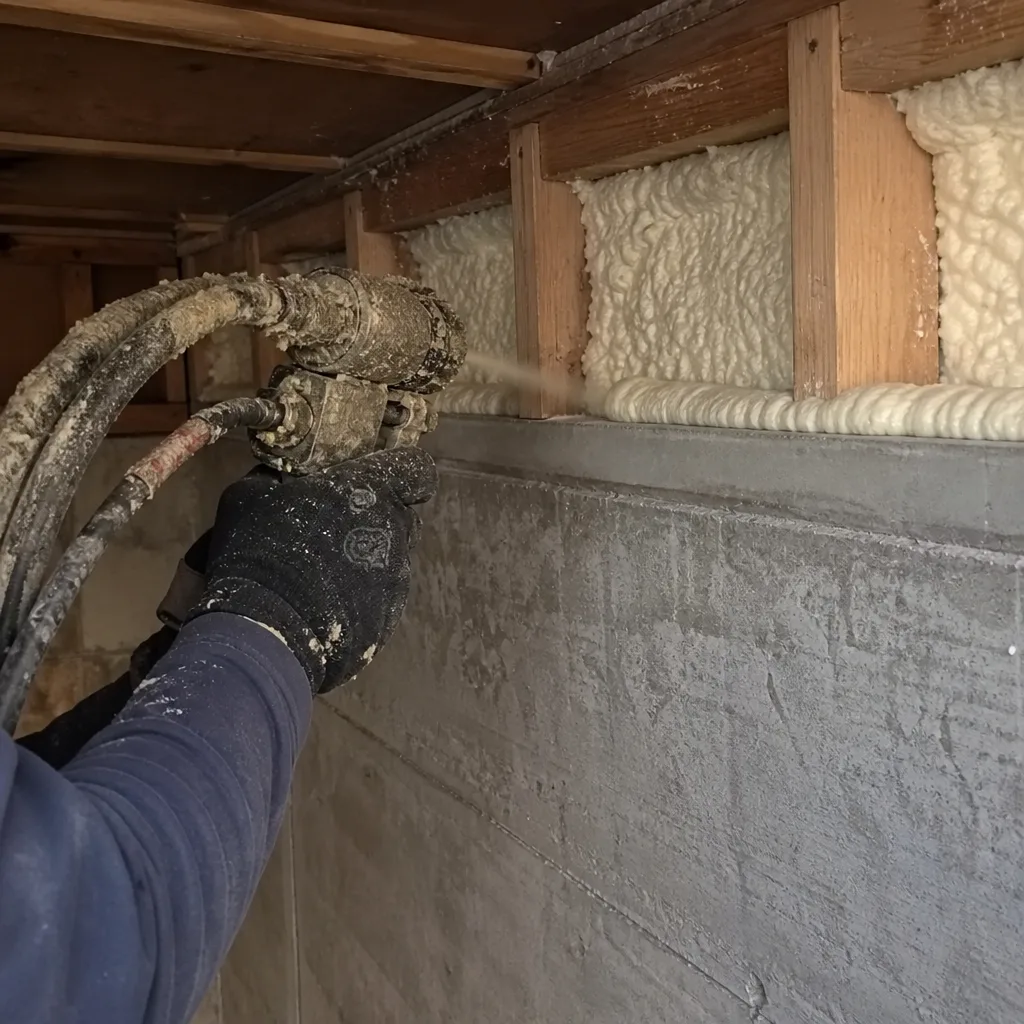
When the walls are closed, we drill small access holes and inject foam into each stud bay. This works well on the horizontal lap siding you see on many Studio City bungalows, and it’s faster and less invasive than tearing out drywall. The foam expands to fill the cavity and seals the band joist area at the same time.
Interior Air Sealing
Walls leak air. Outlets, window frames, baseboards – every one of them is a path for hot valley air to get inside. We seal those paths with foam before insulating, because a wall with R-13 batts and unsealed penetrations performs more like R-6. In a house that sits in direct Studio City sun, that gap is the difference between an AC that cycles off and one that runs all afternoon.
A Hillside-Specific Problem: Long-Hose Spray Foam Application
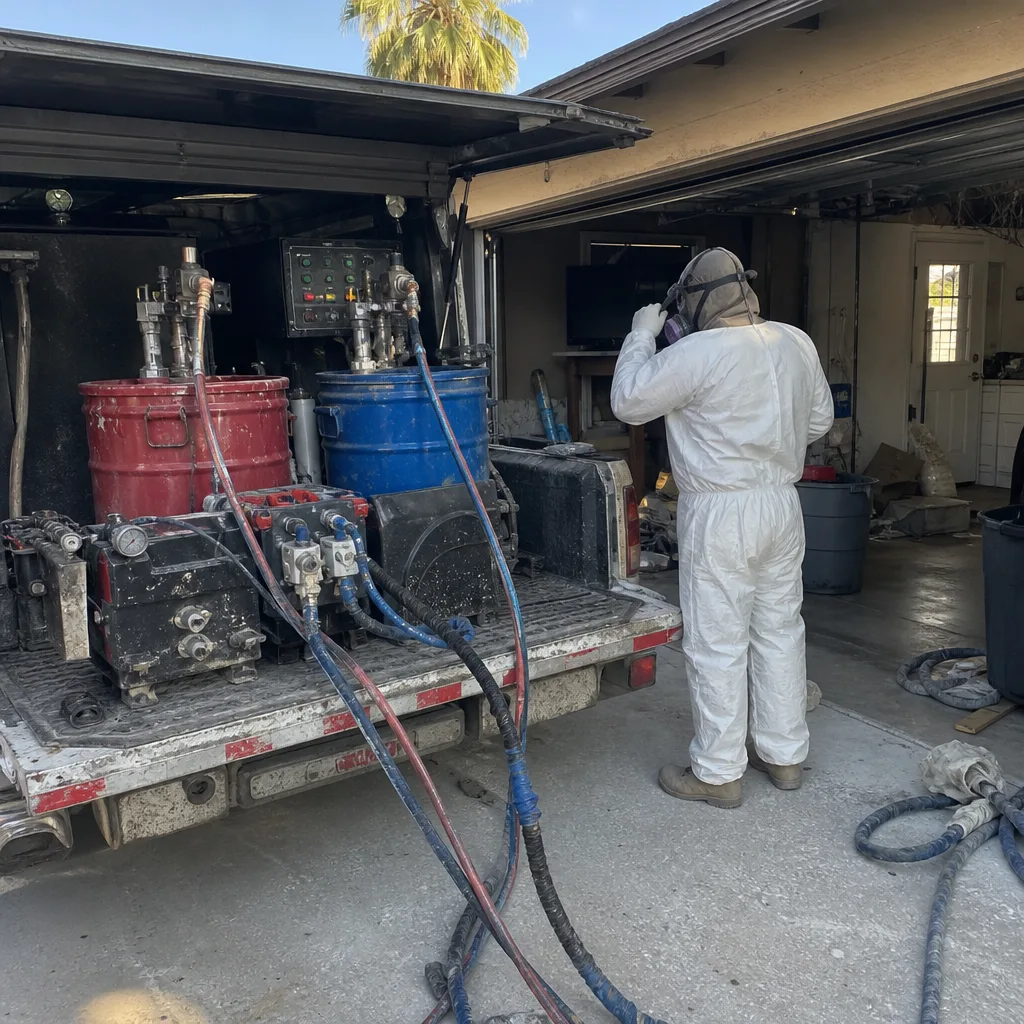
In Studio City’s hillside streets off Laurel Canyon and Coldwater, attic cavities are often too tight and rafter-obstructed for standard spray-foam rigs to park nearby and run short hoses. The houses sit on slopes, the garages are narrow, the driveways switchback. So our crews routinely run long hoses from a truck parked on the street – sometimes 150 feet or more – up to the attic access, through the house, and into the rafter bays. This technique rarely comes up in flat-roofed tract home neighborhoods on the LA basin side of the hills, because the rig can back right up to the garage. On a Studio City hillside, the truck stays on the street and the foam travels the distance. It requires a more experienced crew, a higher-output rig, and close attention to hose temperature and pressure, because long hose runs can compromise foam quality if they aren’t managed. We manage them every week.
This is the kind of detail that matters when you’re choosing a contractor. A crew that has only sprayed foam in flat, open attics will struggle with a 1950s hillside house where the attic access is a 22-inch scuttle hole in a hallway closet and the rafter bays are interrupted by three additions from different decades. We send the crews who know the drill.
A Field Example from a Studio City Ranch
On a 1950s ranch off Laurel Canyon, we found a low-pitch roof with exposed rafter bays and original fiberglass batts that had settled to half their depth. The attic access was a scuttle in a back bedroom closet, and the rafter bays narrowed to under 14 inches in several spots. After sealing around recessed can lights with Icynene spray foam, we blew GreenFiber cellulose through a long hose from our truck on the street to fill the irregular cavities. The homeowner reported the upstairs rooms stayed noticeably cooler during that July’s 100°F+ heat wave. That job required two methods and two materials, selected for the house, not for our inventory. That’s how we approach every Studio City project.
Trusted Brands We Service in Studio City
We install two of the industry’s leading spray foam systems: Icynene and Demilec, covering both open-cell and closed-cell applications. We also work with Owens Corning and Rockwool when a batt or mineral wool application makes more sense for a particular Studio City house. We carry these brands because they perform consistently in the conditions we see here – extreme attic heat, canyon dust, occasional winter cold snaps. We keep foam and sealant stocked for Studio City jobs, which means we don’t need to order in materials and push your start date back a week.
Common Spray Foam Insulation Problems We See in Studio City Homes
- Foam sprayed over old recessed can lights without sealing or IC-rated covers. In tight hillside attics, the can lights are often original to the 1950s or 1960s house. Spraying foam directly around them without proper covers traps heat and creates a fire risk.
- Uneven foam application from long-hose street setups. If the crew doesn’t monitor hose temperature and pressure, foam can arrive at the gun too cool or too thick, leaving gaps and thin spots in rafter-obstructed cavities. Our crews check pressure at the gun, not at the rig.
- Discontinuous attic cavities from multiple additions. Many Studio City homes have been added onto over the decades, and the attic space doesn’t always connect. Foam sprayed only in the main cavity leaves uninsulated pockets above the addition, which undermines the whole job.
- Settled fiberglass batts under newer blown-in insulation. We see homes where a previous contractor blew cellulose over collapsed batts without removing them. The result looks insulated but isn’t. Air still moves through the gaps, and the ceiling still radiates heat in August.
Pricing for Spray Foam Insulation in Studio City, CA
Expect to pay $2,800 – $7,500 for spray foam attic insulation in Studio City, with most full-attic projects landing around $4,000 – $5,500. Wall insulation runs $1,900 – $4,200 depending on access. Open-cell foam runs $0.85 – $1.50 per board foot installed; closed-cell runs $1.30 – $2.25 per board foot. Long-hose hillside applications add labor but usually not as much as homeowners fear – the hose setup takes an hour, not a day. Estates on Coldwater Canyon or off Mulholland with detached additions and multiple attic spaces land at the higher end. We give free estimates and we show you the square footage and board-foot math before you commit. Call (855) 382-3451 for an exact quote.
We Also Serve Cities Near Studio City
Our crews cover the surrounding valley and hillside communities every week. That includes North Hollywood, Universal City, Sherman Oaks, and West Hollywood, along with the rest of the Studio City service area. If you’re nearby and your attic is under-insulated, we’ll make the drive. The truck’s already in the neighborhood. For more on materials and methods, see our Spray Foam Insulation overview page.
Serving Studio City, CA — Our Local Coverage Area
We’re based in the Studio City area and know this community well. Use the map below to see our service coverage — if you’re nearby, we can almost certainly help.
FAQs About Spray Foam Insulation in Studio City
Yes. We run long hoses from the truck on the street up to the attic access, sometimes 150 feet or more. This is routine for our crews in the hills off Laurel Canyon and Coldwater. The key is monitoring hose pressure and foam temperature, which we do at the gun, not just at the rig. Call (855) 382-3451 and we’ll send a crew that’s done it before.
Open-cell Icynene is usually the right call for a 1950s ranch with original can lights. It expands to seal around the light housings, and we install IC-rated covers before spraying to prevent heat buildup and fire risk. Closed-cell is an option if you need more R-value per inch in a shallow rafter bay. Call (855) 382-3451 and we’ll tell you which fits your roof.
Usually yes. Old, settled batts block the foam from adhering to the roof deck or ceiling, and leaving them in place creates air pockets that undermine the seal. We remove and dispose old insulation as part of the job, then spray the foam directly onto the substrate. On some Studio City jobs where the old batts are in decent shape, we can work around them, but removal gives you the best result.
Spray foam handles Studio City attic heat by sealing the air paths that let heat radiate downward through the ceiling. An unsealed attic can hit 130°F or more in July, and that heat moves through gaps around lights and hatches. Foam stops that air movement. Open-cell foam also allows moisture to dry slowly, which matters when canyon mornings bring marine layer humidity and afternoon sun bakes the roof deck.
We install Icynene and Demilec spray foam systems, in both open-cell and closed-cell formulations. We carry both because different Studio City houses need different things. A tight hillside attic with 2×6 rafter bays might need closed-cell Demilec. A larger roof deck with standard framing might do fine with open-cell Icynene. We recommend based on the house, not on which brand we have left in the truck.
Call Thermal Insulation Co for Studio City Spray Foam Insulation
If your Studio City home cooks in summer and your AC can’t keep up, the problem is probably in the attic and the walls. Get the right insulation for your house, not whatever a generalist contractor happens to stock. Call (855) 382-3451 today for a free estimate. We’ll inspect your attic, show you the math, and tell you honestly whether spray foam, blown-in, or batt is the right fix.
Written by Ruben Castellano, Owner at Thermal Insulation Co, serving Studio City and the San Fernando Valley.