
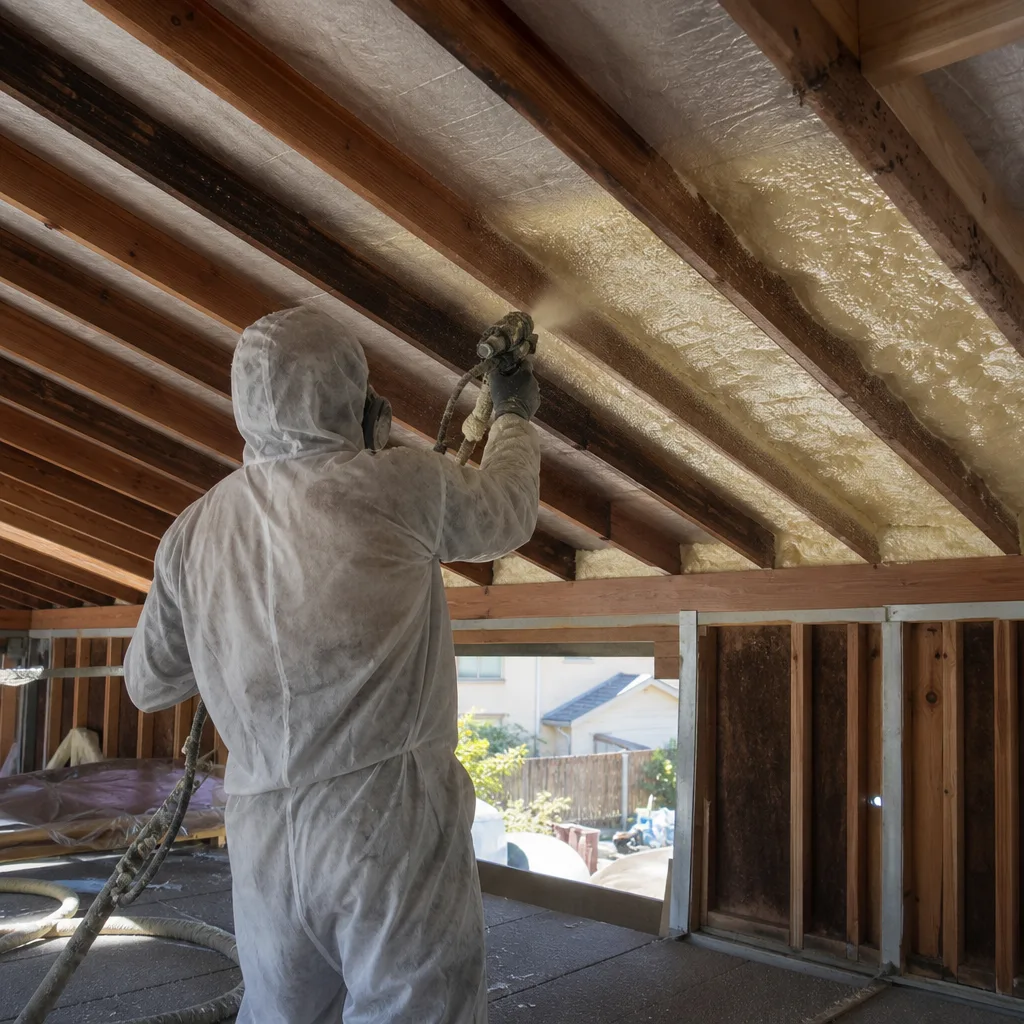
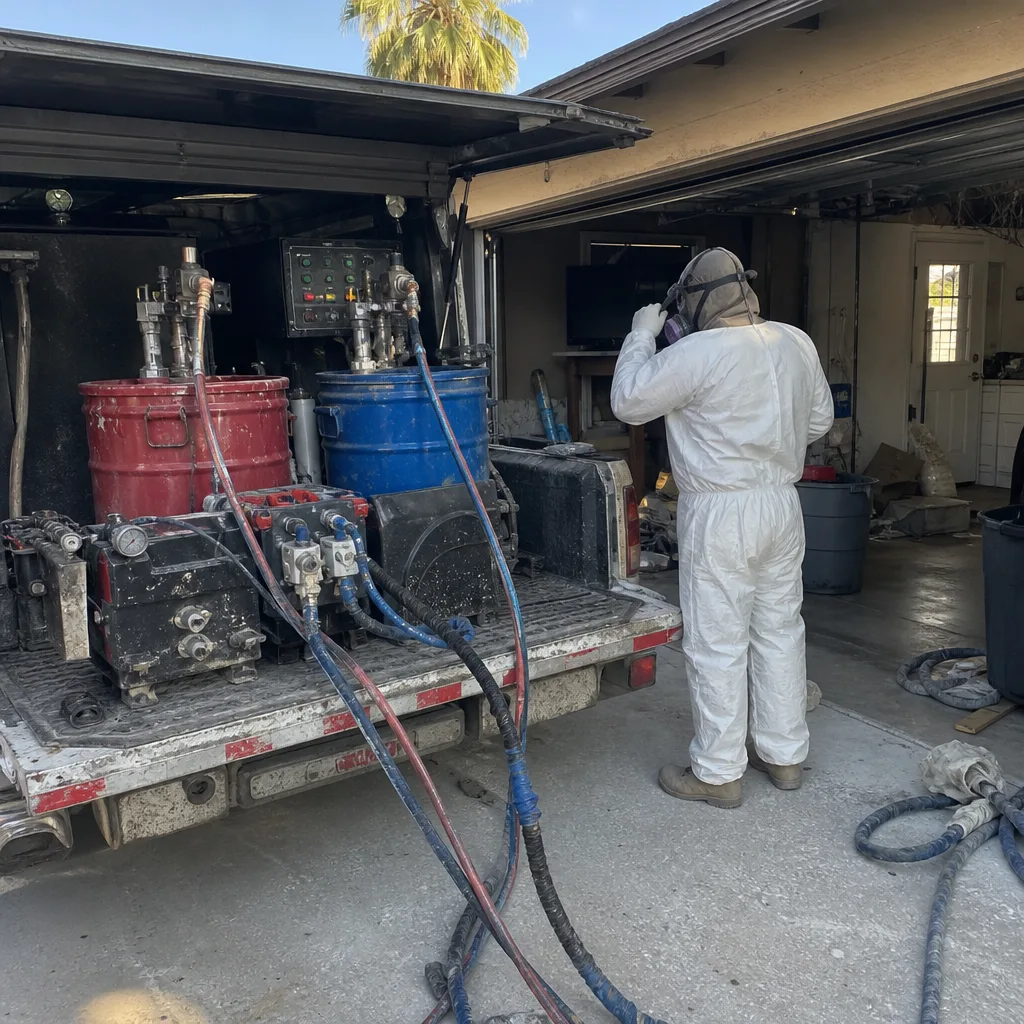
Fast, Reliable Spray Foam Insulation Across San Antonio Heights
Spray foam insulation in San Antonio Heights typically costs $1,500 – $4,800 for a full attic application, with closed-cell running higher than open-cell. Most jobs can be scheduled within 3 – 5 business days, and our crews know the area well enough to account for the foothill access roads and large-lot layouts that can slow down a crew unfamiliar with the neighborhood. If your home off Euclid Avenue or Carnelian Street has an attic that bakes in the afternoon and freezes by morning, call (855) 382-3451 for a free estimate. We bring two of the industry’s strongest foam brands, Icynene and Demilec, and we’ll tell you honestly which one makes sense for your home, not whichever one we happen to have more of in stock.
Why Thermal Insulation Co Is San Antonio Heights’s Preferred Spray Foam Insulation Company
Insulation is our only trade. We don’t do roofing on the side, we don’t moonlight as general contractors. That focus means our crew has spent years applying open- and closed-cell foam across the Inland Empire foothills, including San Antonio Heights homes with all their quirks: post-2003 Grand Prix Fire rebuilds, original 1960s framing, vented attics, and the kind of diurnal temperature swings that expose a bad insulation job within a single season.
Ruben Castellano leads our crew. He’s walked attics in this unincorporated county island enough times to know what to look for before foam ever leaves the truck: eave vent clearances, fire-rated wall penetrations from the post-fire rebuilds, and the original batt insulation that’s been compressed and useless for decades. We approach every San Antonio Heights job as a building-science problem first. The right method follows from what the house actually needs.
We stock materials from eight manufacturers, including Owens Corning, Johns Manville, and Knauf. That breadth matters here because San Antonio Heights homes don’t all have the same needs. A 1958 ranch on a half acre with original 2×4 walls needs a different approach than a 2005 custom rebuild with fire-rated sheathing. We don’t match your home to one product line. We match the product to your home.
Closed Cell Spray Foam Insulation in San Antonio Heights
Closed Cell Spray Foam Insulation is the higher-density option we recommend for most San Antonio Heights attics, especially vented attics that still follow the original design from the 1950s through 1980s. At roughly R-6.5 to R-7 per inch, it acts as an air barrier, vapor barrier, and insulation in one application. For a typical 1,200 – 1,800 square-foot attic in San Antonio Heights, closed-cell application to the roof deck runs $2,800 – $4,800. The cost reflects more than material: it covers removing old fiberglass batts, air-sealing top plates and penetrations, and detailing around eave vents and fire-rated assemblies.
Homes rebuilt after the 2003 Grand Prix Fire present a specific challenge. Many kept their original vented attic design while adding fire-rated exterior walls. Closed-cell foam works well here because it can be applied to the underside of the roof deck while the crew carefully seals around eave vents with fire-rated intumescent sealant. That detail preserves both the insulation envelope and the wildfire resistance the rebuild was designed for. The payoff in San Antonio Heights is real: summer afternoons hit 90 – 100°F and winter nights dip near freezing. Closed-cell foam stabilizes the attic temperature so the rest of the house stops fighting a 40-degree swing every day.
Where Closed-Cell Makes Sense
We specify closed-cell for roof decks, rim joists, and any San Antonio Heights home where the attic will be conditioned or semi-conditioned. It’s also the right call when Santa Ana winds are a factor, because it doesn’t just insulate. It seals against the hot, ember-laden air that pushes into attic cavities during wind events. For garage ceiling applications, closed-cell adds both thermal control and structural rigidity to the framing.
What the Installation Involves
A closed-cell job in San Antonio Heights starts with removing whatever’s already up there. That usually means original fiberglass batts from the 1960s or 1970s that have compressed to half their rated R-value. We air-seal around top plates, electrical penetrations, and any plumbing chases, then apply the foam. Cleanup and a post-application inspection are standard. Most closed-cell attics take one full day, occasionally two on larger custom homes.
Open Cell Spray Foam in San Antonio Heights
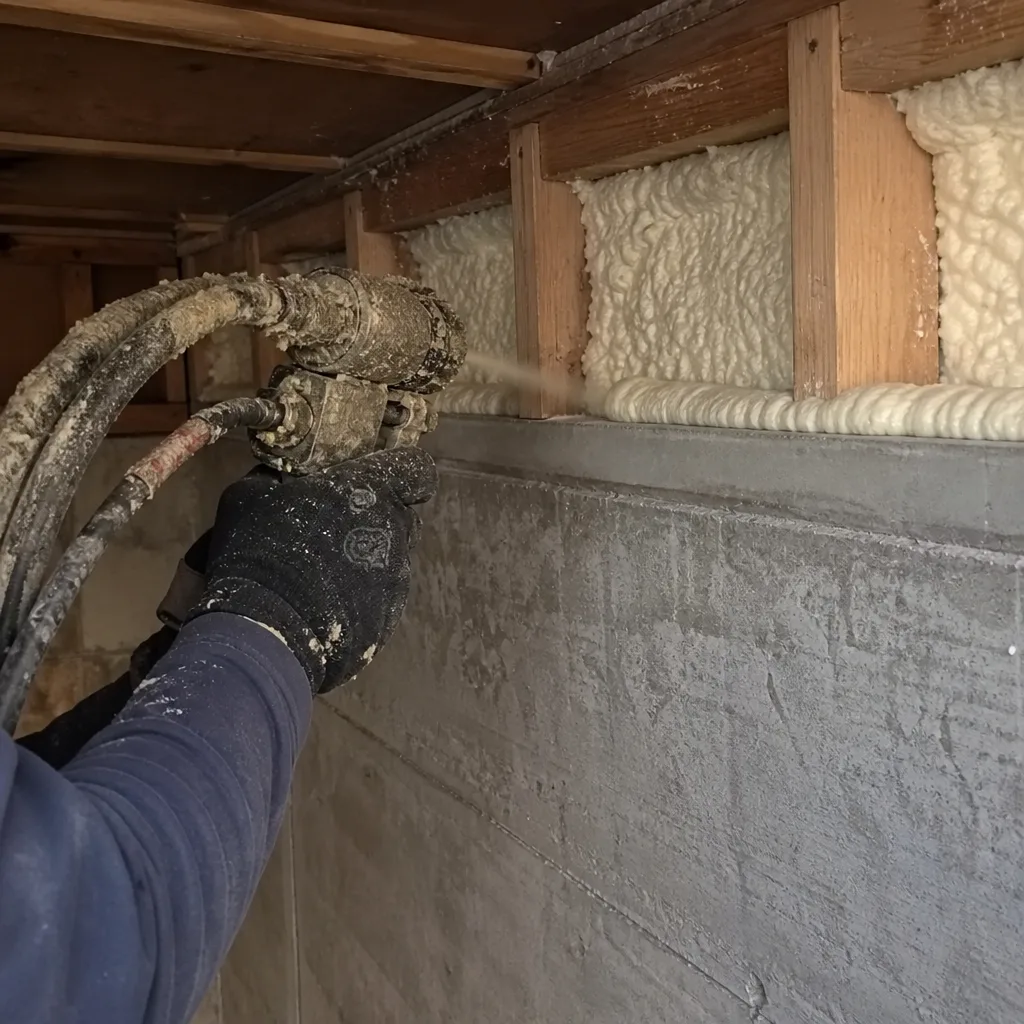
Open Cell Spray Foam is the lighter, more cost-effective option we install in San Antonio Heights when the attic is already well-ventilated or when the homeowner’s priority is noise reduction and air sealing rather than maximum R-value per inch. At roughly R-3.5 to R-3.8 per inch, open-cell is softer and more expansive than closed-cell, which makes it excellent for filling irregular cavities in older 1950s and 1960s framing. A typical San Antonio Heights attic application runs $1,500 – $2,800. It’s not the right product for every attic here, and we’ll tell you when it’s not.
Open-cell is not a vapor barrier, so in San Antonio Heights’s dry foothill climate that’s less of a concern than it would be in a coastal city. But the large temperature swings mean open-cell should be paired with good attic ventilation, not used as the sole defense. We see too many cases where someone applied open-cell directly over original fiberglass batts without removal, trapping moisture in the transition zone and causing the foam to delaminate within a few seasons. We don’t do that. The old material comes out first, every time.
When Open-Cell Fits the House
For homeowners in San Antonio Heights looking to quiet a bedroom under the attic or reduce the heat that radiates through hallway ceilings, open-cell is often enough, especially when budget is a constraint. It seals air gaps better than any batt or blown-in product. But if the attic vents directly to the outside and Santa Ana winds are a seasonal reality, closed-cell is usually the more durable answer. We walk through that tradeoff before any work begins.
Noise Reduction and Air Sealing
Open-cell foam has a sound-dampening quality that closed-cell doesn’t match. Homes on the larger lots along the base of the San Gabriel Mountains don’t have close neighbors on every side, but wind noise against roof vents and the echo of foothill traffic can still find its way in. Open-cell deadens that. For an attic over a master bedroom, open-cell under the roof deck and along the gable ends makes a noticeable difference within the first week.
Trusted Brands We Service in San Antonio Heights
We carry Icynene and Demilec foam systems because those two brands give us the open-cell and closed-cell range this market actually needs. We also stock fiberglass and mineral wool products from Owens Corning, Johns Manville, and Knauf for jobs where spray foam isn’t the right tool. One brand can’t serve every house up here. A 1970s ranch on a terraced lot near San Antonio Dam needs something different than a 2005 rebuild with fire-rated sheathing. Because we carry competing brands, we’re not pressured to sell you the one we happen to have a surplus of. We recommend based on R-value targets, moisture conditions, and how your particular attic breathes. That’s the only honest way to do this work.
Common Spray Foam Insulation Problems We See in San Antonio Heights Homes
- Foam applied over original fiberglass batts without removal. We’ve pulled apart foam that was sprayed directly onto 1960s batt insulation. The foam can’t bond properly, moisture gets trapped in the old fiberglass, and the foam delaminates within a few seasons of San Antonio Heights’s hot-cold cycling. The old material has to come out first, no exceptions.
- Eave vents sealed shut during a well-meaning retrofit. On homes rebuilt after the 2003 Grand Prix Fire, the fire-rated exterior assemblies often changed the way the attic was supposed to ventilate. If a previous crew sealed the eave vents to stop drafts, the result is a hot attic that pushes heat back into the living space. We reopen and detail those vents with fire-rated materials so the assembly still functions as designed.
- Open-cell foam in a vented attic exposed to Santa Ana conditions. Open-cell works in a sealed attic. In a vented attic, the wind-driven hot air and embers degrade the foam’s surface over time. We’ve seen open-cell installs in San Antonio Heights where the R-value dropped noticeably within five years because the attic never stopped breathing outside air.
- Ignoring the rim joist and cantilevered floors. Many San Antonio Heights homes have floor systems that hang out over the hillside or over a crawlspace. If the rim joist isn’t sealed and insulated, the stack effect pulls hot air through the floor framing all summer. Closed-cell foam at the rim joist is one of the highest-return fixes we do in this area, and it gets overlooked constantly.
Pricing for Spray Foam Insulation in San Antonio Heights, CA
Here’s what we see across San Antonio Heights and the adjacent foothill communities: open-cell attic application runs $1,500 – $2,800 for a typical 1,000 – 1,500 square-foot footprint. Closed-cell on the roof deck runs $2,800 – $4,800. Rim joist work is usually $900 – $1,600. Garage ceiling spray foam is typically $600 – $1,200 depending on ceiling area and whether old drywall or batt insulation needs to come down first. The big variables are attic access, how much old material has to be removed, and the condition of the framing underneath. We give free estimates and the number we quote is the number you pay, unless we uncover something structural you need to know about before foam goes in. Call (855) 382-3451 and we’ll walk the attic with you.
We Also Serve Cities Near San Antonio Heights
Our crews work throughout the foothill corridor, including Upland, Claremont, Rancho Cucamonga, and Montclair. The climate and housing stock shift slightly between these cities, and so does the right insulation approach. For background on our spray foam methods and the brands we carry, see our Spray Foam Insulation team page. If you’re reading this from anywhere in the foothills, we can help. Learn more about our local work here: Spray Foam Insulation in San Antonio Heights.
Serving San Antonio Heights, CA — Our Local Coverage Area
We’re based in the San Antonio Heights area and know this community well. Use the map below to see our service coverage — if you’re nearby, we can almost certainly help.
FAQs About Spray Foam Insulation in San Antonio Heights
No, and we won’t do it. Spray foam needs direct contact with the substrate to bond correctly. Original fiberglass batts from the 1950s through 1980s are usually compressed, dusty, and acting as a moisture trap. Foam applied over them will delaminate, and the trapped moisture can lead to framing damage over time. We remove the old material, inspect the cavity, and then apply foam. Call (855) 382-3451 and we’ll show you what we’d take out and why.
Spray foam can work with fire-rated assemblies, but the detailing matters. Homes rebuilt after the 2003 Grand Prix Fire in San Antonio Heights often kept original vented attic designs while adding fire-rated exterior walls. The foam must be kept clear of eave vents and applied so it doesn’t compromise the fire-rated wall penetrations. We use fire-rated intumescent sealant at those junctions. This keeps the attic insulation performing without undoing what the fire-rated assembly was designed to do.
Closed-cell is usually the better choice for vented attics in San Antonio Heights. Because it’s an air barrier as well as insulation, it reduces the amount of hot outside air that infiltrates through roof vents during the summer and Santa Ana wind events. Open-cell in a vented attic is more vulnerable to wind-driven heat and ember degradation over time. If you want to keep the vented design, closed-cell on the roof deck is the more durable long-term approach.
We install Icynene and Demilec spray foam systems. Both brands cover open-cell and closed-cell applications, and we choose between them based on the specific project requirements: R-value target, moisture conditions, and the condition of the framing. We also carry Owens Corning, Johns Manville, Knauf, Rockwool, CertainTeed, and GreenFiber products for homes where spray foam isn’t the right method. Call (855) 382-3451 for a recommendation specific to your attic.
Spray foam, particularly closed-cell, seals the gaps where embers enter: eave vents, soffit gaps, and the junction between the roof deck and exterior walls. During a Santa Ana event, embers don’t need open flame to ignite a house. They need a gap. Closed-cell foam tightens those gaps. It’s not a fireproofing product, and it doesn’t replace a fire-rated assembly, but it does reduce the pathways where wind-driven embers find their way into the attic. For homes rebuilt after 2003 with fire-rated exteriors, proper foam detailing preserves the performance of that assembly rather than working against it. For an attic assessment in San Antonio Heights, call (855) 382-3451.
Written by Ruben Castellano, Owner at Thermal Insulation Co, serving San Antonio Heights and the surrounding foothill communities.